
Low-angle photography demands more than simply placing a camera near the ground. A suitable tripod needs a stable footprint, flexible positioning, and enough clearance for your camera, lens, or accessories.
We’ve selected 10 camera tripods for low-angle shots, including compact tabletop designs, flexible mini tripods, overhead-capable models, and full-size travel tripods. Use the guide below to match tripod size, stability, and adjustability to your shooting style.
Best 10 Camera Tripods for Low Angle Shots Picks for 2026
Versatile Tabletop Pick

- 11.8–25-inch adjustable height
- 3-way head for multi-angle shooting
- Includes phone/tablet holder and bag
Best For: Travelers needing a compact, flexible tabletop tripod
Heavy-Duty Low-Angle Stand

- 24mm–190mm height range
- 40kg stated load capacity
- Accessory mounting ports
Best For: Low-angle camera, gimbal, and accessory setups
Macro-Friendly Tabletop Option

- 6.7–19.7-inch adjustable height
- 360-degree ball head with bubble level
- 11-pound load rating
Best For: Macro and tabletop photography with flexible framing
Overhead and Ground-Level Flexibility
K&F Concept 76-Inch Tripod

- 17.3–76.7-inch height range
- Rotating extension boom for overhead shots
- 17.6-pound load capacity
Best For: Creators needing low, overhead, and full-height perspectives
Best Pocket Vlogging Tripod
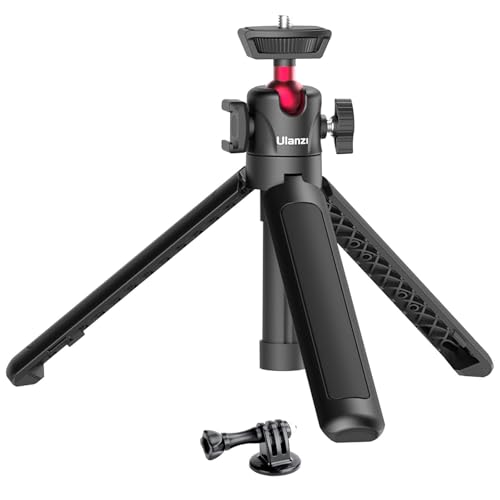
- 360° ball head for flexible angles
- Cold shoe for a mic or LED light
- Compact 170 g travel-friendly design
Best For: Travel vlogging and compact cameras
Best Heavy-Duty Low-Angle Tripod
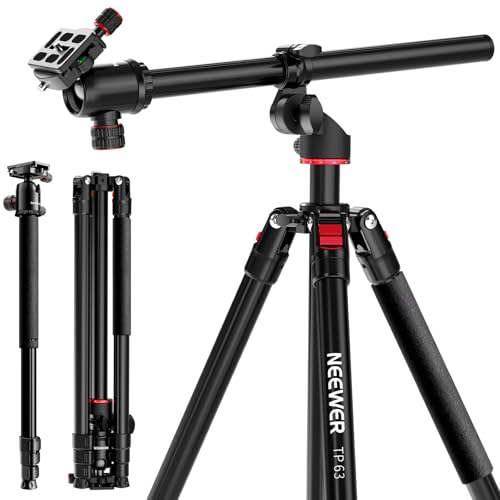
- Horizontal center column for unusual perspectives
- Supports up to 22 lb (10 kg)
- Converts to a monopod
Best For: Heavy cameras and versatile outdoor shooting
Best Flexible Wraparound Tripod

- Wraparound legs suit uneven mounting points
- Built-in phone holder with cold shoe
- Vertical and horizontal shooting support
Best For: Phones and compact cameras in creative locations
Best Lightweight Low-Angle Tripod

- Minimum height of 6.3 inches with an inverted center column
- Lightweight carbon-fiber design weighs 1.87 pounds
- Supports cameras up to 8.8 pounds
Best For: Travel photographers shooting macro, panoramic, and low-angle images
Best Tall Versatile Low-Angle Tripod

- Reversible center column enables lower-angle and macro shooting
- Extends from 23 to 81 inches
- Converts into a 31- to 83-inch monopod
Best For: Users needing low-angle flexibility plus tall tripod and monopod modes
Best Heavy-Duty Tabletop Low-Angle Tripod

- 24- to 107-millimeter adjustment for tabletop shooting
- All-metal base supports up to 40 kilograms
- 160-gram design includes accessory mounting holes
Best For: Vlogging, filming, and gimbal setups requiring a stable low tabletop base
Versatile Tabletop Pick – JOILCAN 25-Inch Mini Tripod
For camera tripods for low angle shots, the JOILCAN offers a useful combination of compact size and adjustable height. Its legs extend from 11.8 to 25 inches, while the 3-way pan head supports horizontal, vertical, overhead, and panoramic shooting.
Best For: Travelers and creators who need a lightweight tabletop tripod for cameras, phones, tablets, or spotting scopes.
Pros:
- Adjustable height and compact 12-inch folded size.
- 3-way pan head supports multiple shooting orientations.
- Aluminum construction, non-slip feet, and a weight hook improve stability.
- Includes a phone/tablet holder, quick-release plate, and carrying bag.
Cons:
- Maximum height is limited to 25 inches.
- Not water resistant.
With a 6.5-pound load rating and 1.3-pound weight, this is a practical choice for low-positioned compositions and portable setups, though it is not intended for full-height tripod work.
Heavy-Duty Low-Angle Stand – Zeadio Metal Mini Tripod
The Zeadio is built specifically for compact, low-positioned setups, making it a strong option among camera tripods for low angle shots. Its height adjusts from 24 millimeters to 190 millimeters, and its all-metal body is rated to support up to 40 kilograms.
Best For: Cameras, gimbals, action cameras, lights, microphones, and other gear that needs a rugged low-angle base.
Pros:
- Very low 24-millimeter minimum height for ground-level perspectives.
- CNC-machined aluminum construction with a 40-kilogram load rating.
- Three 1/4-inch threaded holes and auxiliary ports support accessories.
- Lightweight 242-gram design with rubberized feet.
Cons:
- Maximum height is only 190 millimeters.
- Does not include a camera head for independent panning or tilting.
- Not water resistant.
This is the most purpose-built choice here for stable, extremely low camera placement. Its compact height range makes it less suitable when you need a raised tabletop or standing perspective.
Macro-Friendly Tabletop Option – NEEWER 20-Inch Mini Tripod
The NEEWER tabletop tripod is a balanced option for camera tripods for low angle shots, especially when macro work benefits from a closer camera position. Its five-section legs adjust from 6.7 to 19.7 inches, and the ball head provides 360-degree movement.
Best For: Macro photographers and videographers who want a portable aluminum tripod with flexible leg angles.
Pros:
- Low 6.7-inch minimum height suits close and low-perspective compositions.
- Five-section legs provide adjustable height up to 19.7 inches.
- 360-degree ball head, bubble level, and Arca-type quick-release plate.
- Supports up to 11 pounds and has non-slip feet.
Cons:
- Maximum height is lower than a full-size tripod.
- Supplied notes list compatibility primarily with cameras rather than a phone holder.
- Not water resistant.
Its low minimum height and ball-head control make it well suited to tabletop, macro, and ground-level framing. The 19.7-inch maximum keeps it portable but limits elevated shooting.
Overhead and Ground-Level Flexibility – K&F Concept 76-Inch Tripod
For photographers who need both low and high viewpoints, the K&F Concept provides a broad 17.3-to-76.7-inch height range. Its removable extension boom and rotating center-column design make it a versatile choice among camera tripods for low angle shots, overhead work, and panoramic framing.
Best For: Creators who want one portable tripod for ground-level, overhead, panoramic, and full-height camera work.
Pros:
- Adjusts from 17.3 to 76.7 inches for low-to-high shooting.
- Extension arm moves from 0 to 180 degrees and rotates horizontally 360 degrees.
- 28-millimeter metal ball head supports flexible positioning.
- Folds to 15.3 inches and includes a carrying bag.
Cons:
- At 3.63 pounds, it is heavier than the compact mini-tripod options.
- Not water resistant.
- Its 17.3-inch minimum is higher than dedicated ground-level mini stands.
This is the most versatile all-purpose option in the group. It can handle low-angle compositions, but photographers seeking the closest-to-ground perspective may prefer a tripod with a lower minimum height.
Best Pocket Vlogging Tripod – ULANZI MT-16
If you need camera tripods for low angle shots while traveling or filming at a desk, the ULANZI MT-16 is a compact option. Its 360° ball head supports flexible positioning, while the four-level extendable design lets it work as a mini tripod, handle grip, or selfie stick.
Best For: Lightweight vlogging, desktop filming, travel, and low-angle shots with compact cameras or action cameras.
Pros:
- 360° ball head supports vertical and angled shooting.
- Four-level adjustment improves flexibility and stability over the earlier design.
- Cold shoe accommodates a microphone or LED video light.
- Compact 22.5 cm size and 170 g weight suit travel use.
Cons:
- Weight limit is 0.5 kg, and vertical mode is limited to 500 g.
- Phone holder is not included.
- It is not water resistant.
The MT-16 is best when portability matters more than heavy-duty support. It offers useful angle control for low shots, but users with larger cameras should choose a tripod with a higher load rating.
Best Heavy-Duty Low-Angle Tripod – NEEWER TP63
For camera tripods for low angle shots that also need height and load capacity, the NEEWER TP63 offers a versatile setup. Its center column can move horizontally for unusual perspectives, while the inverted legs and adjustable height range support both low and elevated compositions.
Best For: DSLR and camcorder users shooting low angles, sports, weddings, landscapes, and other demanding setups.
Pros:
- Horizontal center column provides 360° rotation and 120° vertical tilt.
- Adjusts from 25.2 inches to 65 inches, or up to 90.6 inches with the center column.
- Supports equipment up to 22 lb (10 kg).
- Converts into a monopod and includes a ball head with an Arca-type quick-release plate.
Cons:
- At about 1,860 g, it is less lightweight than a mini travel tripod.
- Sandbag for the stability hook is not included.
- Its larger setup may be excessive for compact cameras or casual desktop use.
The TP63 is the most adaptable choice here for photographers who want low-angle control without giving up full-height shooting. Its metal construction and 10 kg capacity make it better suited to heavier equipment and outdoor work.
Best Flexible Wraparound Tripod – ULANZI MT-11UL
The ULANZI MT-11UL is a flexible choice among camera tripods for low angle shots, especially when you need to position a phone or compact camera on uneven surfaces. Its bendable legs can wrap around poles, branches, and furniture, while the ball head supports both horizontal and vertical framing.
Best For: Smartphone vlogging, compact cameras, and creative low-angle shots on irregular or elevated surfaces.
Pros:
- Flexible legs wrap around posts, branches, chairs, and other supports.
- Hidden phone holder fits phones from 65–95 mm wide.
- Ball head supports vertical and horizontal shooting.
- Cold shoe supports a microphone or LED light, and the 1/4-inch thread supports accessories.
Cons:
- Weight limit is 450 g, limiting use with larger cameras.
- It is not water resistant.
- Flexible legs may be less suitable than a rigid tripod for heavy, stationary setups.
The MT-11UL stands out for adaptable placement rather than maximum height or load capacity. It is a practical pick for creators who want to wrap a tripod around nearby objects or set up a low shot on uneven terrain.
Best Lightweight Low-Angle Tripod – Sirui Traveler 5C
For camera tripods for low angle shots, the Sirui Traveler 5C stands out with a minimum height of 6.3 inches and an inverted center column for macro and ground-level perspectives. Its carbon-fiber build keeps the tripod portable while still supporting up to 8.8 pounds.
Best For: Travelers and photographers who want a lightweight carbon-fiber tripod for low-angle, macro, panoramic, and portrait shooting.
Pros:
- Inverted center column supports extreme low-angle and macro photography.
- Carbon-fiber construction weighs just 1.87 pounds and supports up to 8.8 pounds.
- Five-section legs adjust from 6.3 to 54.3 inches and fold to 13 inches.
- Includes a 360-degree ball head and Arca Swiss quick-release plate.
Cons:
- Its 54.3-inch maximum height is shorter than that of some full-size tripods.
- It is not water resistant.
The Traveler 5C is a strong match for photographers who prioritize portability without giving up dedicated low-angle functionality. Its compact folded size and flexible leg angles make it especially practical for travel and uneven shooting locations.
Best Tall Versatile Low-Angle Tripod – JOILCAN 81-Inch Tripod
The JOILCAN combines full-size reach with low-angle flexibility, making it a versatile choice among camera tripods for low angle shots. Its reversible center column facilitates lower-angle and macro photography, while independently adjustable leg angles help it adapt to uneven ground.
Best For: Photographers and outdoor users who need one aluminum tripod for low-angle work, tall compositions, scopes, and monopod use.
Pros:
- Reversible center column supports lower-angle and macro photography.
- Adjusts from 23 to 81 inches and folds to 16.5 inches.
- Three independent leg-angle settings help accommodate uneven terrain.
- Converts to a monopod with a 31- to 83-inch adjustable height.
Cons:
- At 2.34 kilograms, it is heavier than a compact carbon-fiber travel tripod.
- The listed minimum height of 23 inches is higher than some dedicated tabletop or ground-level tripods.
The JOILCAN is best when you want low-angle capability without sacrificing height or versatility. Its reversible column and monopod conversion broaden its usefulness, although the aluminum construction makes it less lightweight for travel.
Best Heavy-Duty Tabletop Low-Angle Tripod – Zeadio DV-HDE-HB27
The Zeadio DV-HDE-HB27 is a compact tabletop option for camera tripods for low angle shots, extending from 24 to 107 millimeters. Its all-metal CNC-machined aluminum construction supports up to 40 kilograms and provides mounting points for accessories such as lights, microphones, and monitors.
Best For: Vloggers, filmmakers, and gimbal users who need a highly portable, stable base for tabletop and low-angle setups.
Pros:
- Adjusts from 24 to 107 millimeters for low-angle and tabletop shooting.
- All-metal construction supports up to 40 kilograms.
- Weighs only 160 grams for easy transport.
- Three ARRI-compatible 1/4-inch threaded holes and three auxiliary holes support accessories.
Cons:
- Its maximum height of 107 millimeters is limited to tabletop and low-position use.
- It is not water resistant.
The Zeadio is a specialized support base rather than a conventional full-height tripod. Choose it when stability, a very low camera position, accessory mounting, and minimal carry weight matter more than elevated viewpoints.
How We Picked the Best Camera Tripods for Low Angle Shots
We focused on the features that matter when positioning a camera close to the floor, table, or subject: minimum height, leg or column adjustment, head movement, footprint stability, load capacity, portability, and mounting compatibility. The selection includes options for phones, action cameras, mirrorless cameras, DSLRs, microphones, lights, and overhead compositions.
Because low-angle work can involve unusual camera positions, we also considered whether each design offers flexible legs, a ball head, horizontal or overhead positioning, multiple mounting threads, or a compact form suitable for travel.
Quick Comparison
| Tripod type | Best for | Main advantage |
|---|---|---|
| Mini tabletop | Desk, floor, and product shots | Compact and quick to position |
| Flexible or extendable mini | Vlogging and uneven surfaces | Adaptable camera placement |
| Overhead tripod | Top-down and low-to-high compositions | Longer reach and creative angles |
| Full-height travel tripod | Travel and mixed-height shooting | Greater range and versatility |
| Heavy-duty metal stand | Large cameras or accessories | Higher stability and load support |
Key Buying Factors for Camera Tripods for Low Angle Shots
Minimum Height and Leg Positioning
Check the tripod’s lowest usable height rather than its maximum height. Short legs, independently adjustable legs, or a reversible center column can make it easier to place the lens close to the ground without forcing awkward angles.
Stability and Load Capacity
Choose a tripod rated comfortably above your camera and lens weight, especially if you use a telephoto lens, external monitor, microphone, or light. Wider feet and metal construction can improve stability, but they may add bulk.
Head Movement and Mounting Options
A 360-degree ball head helps aim the camera toward the subject while the legs remain planted. Look for a standard 1/4-inch mount and verify compatibility with your quick-release plate, phone holder, gimbal, or action camera.
Portability and Surface Grip
For travel, favor a lightweight model that folds small and sets up quickly. Rubber feet or flexible legs are useful on smooth floors, desks, rocks, and other uneven surfaces. If shooting outdoors, consider wind resistance and avoid extending every section when maximum stability matters.
Who Should Buy Which Camera Tripods for Low Angle Shots?
Choose a mini tabletop tripod for product photography, desk videos, tabletop demonstrations, or low floor-level compositions with a compact camera or phone. Choose a flexible or extendable mini model if you vlog, use uneven surfaces, or need a quick handheld-to-tripod transition.
Choose an overhead model for top-down crafts, cooking, unboxing, and detail shots, while full-height travel tripods suit photographers who need both low perspectives and conventional eye-level framing. Choose a heavy-duty metal stand when your setup includes heavier cameras, gimbals, lights, or other accessories and stability is more important than minimum weight.