
A good camera slider can turn a static setup into a controlled tracking shot, reveal, or time-lapse. The right model depends on more than rail length: motor control, payload, portability, mounting options, and setup speed all affect your results.
We’ve compared 10 options across compact, manual, and motorized designs so you can match your camera slider for video to your shooting style, equipment, and budget.
Best 10 Camera Slider for Video Picks for 2026
Best Motorized Long-Track Pick
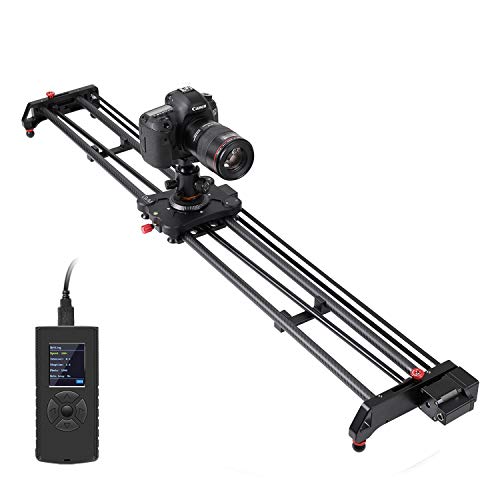
- Programmable tracking and time-lapse controls
- 48-inch carbon-fiber track with 5 kg capacity
- Includes battery, remote, cables, and bag
Best For: Automated tracking shots and longer camera moves
Best Compact Smart-Rig Option
IFOOTAGE Shark Slider Pico Pro

- Compact 15.7-inch motorized slider
- Works with phones, action cameras, and DJI Pocket models
- Supports cameras up to 2.4 pounds
Best For: Portable smartphone and action-camera filming
Best Manual Travel Slider
Zecti 24-Inch Carbon-Fiber Slider

- Lightweight 1.4-pound carbon-fiber design
- Works horizontally, vertically, diagonally, or sideways
- Supports up to 4.4 pounds
Best For: Portable manual slides with small cameras and phones
Best Skater Dolly Alternative
Vidpro SK-22 Professional Skater Dolly
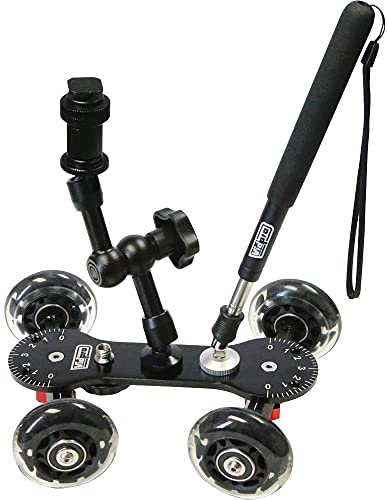
- 25-pound payload for heavier camera rigs
- Adjustable wheels support curves and 360-degree circles
- Seven mounting points plus handle and magic arm
Best For: Low-level tracking and curved panning shots
Long-Track Motorized Pick
NEEWER ER1 47.2-Inch Motorized Slider

- 47.2-inch carbon-fiber rail with 11lb horizontal capacity
- App-controlled video and time-lapse movement
- Includes 4400mAh battery; charger sold separately
Best For: Long tracking shots, product videos, and time-lapse work
Portable Manual Pick
NEEWER CS1M 16-Inch Carbon Fiber Slider

- Lightweight 16-inch rail weighs 615g
- Includes ball head, phone clamp, and action-camera mount
- Quiet four-bearing slide with adjustable legs
Best For: Travel-friendly manual slides with phones and action cameras
Best Compact Motorized Slider

- Automated time-lapse, video, and round-trip modes
- Adjustable feet and multi-angle mounting
- 2.5 kg recommended maximum load
Best For: Compact studio, interview, and time-lapse setups
Best Long-Rail App-Controlled Slider
GVM 48-Inch Carbon Fiber Slider

- 120 cm rail for extended camera travel
- Wireless iOS and Android app control
- Six shooting modes with programmable motion
Best For: Advanced studio and filmmaking setups
Best Portable Wireless Slider
GVM 32-Inch Carbon Fiber Slider

- Bluetooth app control for programmable movement
- Six modes for tracking, video, and time-lapse
- Carbon-fiber build with adjustable leveling legs
Best For: Mobile creators, YouTube studios, and location shoots
Best Motorized Long-Track Pick – GVM 48-Inch Motorized Slider
If you want a camera slider for video with programmable movement, the GVM 48-inch model offers motorized tracking, time-lapse, and panoramic shooting modes. Its carbon-fiber construction, adjustable feet, and multiple mounting threads make it suitable for larger camera setups and tripod-based production.
Best For: Automated tracking shots, time-lapse work, and longer lateral camera moves.
Pros:
- Programmable start and end points, speed, interval, stop time, and photo count.
- 48-inch carbon-fiber track supports up to 5 kg.
- Supports manual and motorized operation, with panoramic shooting and auto-loop modes.
- Includes a battery, charger, remote, cables, and carrying bag.
Cons:
- At 11.8 pounds and 48 inches long, it is less portable than compact sliders.
- It is not water resistant.
The GVM is the most feature-rich option here for repeatable, automated camera movement. Choose it when production control and track length matter more than travel convenience.
Best Compact Smart-Rig Option – IFOOTAGE Shark Slider Pico Pro
For creators who need a small camera slider for video, the IFOOTAGE Shark Slider Pico Pro is designed for smartphones, action cameras, DJI Osmo Pocket models, and lightweight cameras. Its 15.7-inch size and motorized operation suit compact setups where smooth movement is more important than a long travel distance.
Best For: Smartphone, action-camera, and compact-camera cinematic shots.
Pros:
- Compact 15.7-inch design for smaller shooting setups.
- Compatible with smartphones, DJI Osmo Pocket 3/4, action cameras, and cameras.
- Supports up to 2.4 pounds and includes image stabilization.
Cons:
- Its 2.4-pound payload is lower than larger camera sliders.
- The short track limits the length of lateral moves.
This is a practical choice for mobile creators who want motorized movement without carrying a full-size rail. Check your camera and accessory weight before buying.
Best Manual Travel Slider – Zecti 24-Inch Carbon-Fiber Slider
The Zecti 24-inch is a lightweight manual camera slider for video that prioritizes portability and flexible positioning. Its carbon-fiber rail, adjustable legs, multiple mounting holes, and compatibility with cameras and phones make it useful for travel, tabletop work, and small production kits.
Best For: Manual tracking shots with lightweight cameras, phones, and action cameras.
Pros:
- Lightweight 1.4-pound design with a carrying bag.
- Supports horizontal, vertical, diagonal, and sideways operation.
- Adjustable legs, rubber feet, and a bubble level help with setup.
- Supports up to 4.4 pounds and includes 1/4-inch and 3/8-inch mounting holes.
Cons:
- It is manually operated rather than motorized.
- Overtightened screws may cause noisy or less-smooth movement.
- It is not water resistant.
The Zecti offers a good balance of low weight and mounting flexibility for manual work. Follow the adjustment guidance carefully to maintain smooth movement.
Best Skater Dolly Alternative – Vidpro SK-22 Professional Skater Dolly
The Vidpro SK-22 takes a different approach to a camera slider for video: instead of a straight rail, it uses adjustable rubber wheels for low-level tracking and panning. Its aluminum chassis, multiple mounting points, and 25-pound capacity make it a versatile option for heavier cameras and curved movements.
Best For: Low-angle tracking, curved moves, and panning with heavier camera equipment.
Pros:
- Supports up to 25 pounds for DSLR, camcorder, and recording setups.
- Adjustable axles enable straight lines, broad curves, and 360-degree circles.
- Seven 1/4-inch mounting points support cameras, extension arms, and ball joints.
- Includes a 27-inch extendable handle and articulated magic arm.
Cons:
- It rolls on a surface rather than traveling on a dedicated rail.
- It is intended for low-level movement, so it is less suited to elevated track shots.
Choose the SK-22 when creative panning and curved ground-level movement are more important than a conventional slider rail. Its high payload is especially useful for heavier camera rigs.
Long-Track Motorized Pick – NEEWER ER1 47.2-Inch Motorized Slider
The NEEWER ER1 is a camera slider for video creators who want automated movement across a long 47.2-inch rail. App control, optional remote control, time-lapse settings, and a quiet motor make it suitable for repeatable product shots, tracking moves, and extended camera motion.
Best For: Creators who need a long motorized rail for product videos, time lapses, and controlled horizontal or angled shots.
Pros:
- Long 120cm carbon-fiber rail supports up to 11lb horizontally.
- App control offers manual, video, and time-lapse modes with adjustable speed, interval, and exposure.
- Included 4400mAh NP-F750 battery supports hours of filming, while the silent stepper motor minimizes distractions.
- Supports horizontal, 45-degree tilt, tracking, and 120-degree panorama setups.
Cons:
- USB-C charger is not included.
- 2.4G remote control is not included.
- Minor shake may occur during macro photography.
Choose the ER1 when rail length and automated control matter more than compactness. Its carbon-fiber construction and tripod threads improve portability and setup flexibility, but buyers should budget for a compatible charger and remember that macro work may need extra stabilization.
Compact Dolly Pick – NEEWER DL100 3-Wheel Motorized Dolly
The NEEWER DL100 is a compact camera slider for video setups that need motorized movement without a long rail. Its adjustable wheel angle can create straight or circular paths, while the wireless remote lets you change direction, speed, or pause movement from up to 19.7 feet away.
Best For: Smartphone, action-camera, and lightweight DSLR users who want portable automated dolly movement.
Pros:
- Three adjustable speeds range from 1.4cm/s to 3.0cm/s.
- Adjustable wheel angle supports straight-line and circular routes.
- Built-in 1800mAh rechargeable battery provides up to six hours of service time.
- Convertible 1/4-inch to 3/8-inch screw supports cameras, phones, and action-camera adapters.
Cons:
- Maximum recommended load is 6.6lb, limiting heavier camera setups.
- The compact dolly does not provide the extended travel of a rail slider.
- Accessories such as phone holders and action-camera adapters are not included.
The DL100 is a practical choice when portability and route flexibility outweigh maximum payload or long travel. Its rechargeable battery and remote control simplify mobile shooting, while the wheel adjustments give it more creative path options than a basic straight-moving dolly.
Portable Manual Pick – NEEWER CS1M 16-Inch Carbon Fiber Slider
The NEEWER CS1M is a compact camera slider for video creators who prefer hands-on control and broad mounting compatibility. Its 16-inch carbon-fiber rail, adjustable legs, ball head, phone clamp, and action-camera mount make it a flexible option for travel, tabletop work, and lightweight outdoor setups.
Best For: Mobile creators using phones, action cameras, mirrorless cameras, or lightweight DSLRs for smooth manual slides.
Pros:
- Four precision bearings provide smooth, quiet movement along the 40cm rail.
- Adjustable legs elevate from 2cm to 5cm and help balance the slider on uneven ground.
- Included ball head rotates 360 degrees and tilts 90 degrees.
- Includes a phone clamp and action-camera mount, plus 1/4-inch and 3/8-inch mounting threads.
Cons:
- Maximum horizontal load is 4.4lb, with lower limits for tilted or vertical use.
- The 16-inch rail offers less travel than longer sliders.
- It is a manual slider rather than a motorized model.
The CS1M suits creators who value a lightweight kit and adaptable mounting over automated movement. At 615g and with a carrying bag, it is easy to transport, while the adjustable legs and included accessories make it especially useful for varied mobile shooting locations.
Best Compact Motorized Slider – 27-Inch GVM Aluminum Slider
If you need a practical camera slider for video with automated movement, this 27-inch GVM model combines a stable aluminum-alloy rail with time-lapse, video, and automatic round-trip modes. Its adjustable feet and multiple mounting threads make it suitable for tabletop setups or tripod-supported shooting.
Best For: Creators who want a compact motorized slider for interviews, photography, time-lapse work, and straightforward video moves.
Pros:
- Supports time-lapse, video, and automatic round-trip shooting modes.
- Adjustable non-slip feet help level the slider on different surfaces.
- Supports horizontal, vertical, and 45-degree shooting with multiple 1/4-inch and 3/8-inch ports.
- Works with cameras, DSLRs, video cameras, and cellphones up to a 2.5 kg recommended load.
Cons:
- The aluminum construction weighs about 2.36 kg.
- It is not water resistant.
- The listed folded length is 26.8 inches, so it is less compact than shorter sliders.
This GVM slider is a solid choice when you want motorized camera movement without moving up to a much longer rail. Its 27-inch length and versatile mounting options suit controlled studio and location setups, while the included bag and wired controls help keep the package practical.
Best Long-Rail App-Controlled Slider – GVM 48-Inch Carbon Fiber Slider
For larger camera moves, this 48-inch GVM is a camera slider for video built around a carbon-fiber rail, app control, and programmable motion. It supports tracking, panoramic, time-lapse, and video shooting, with adjustable start and end points, speed, intervals, and looping.
Best For: Filmmakers, studio creators, and advanced photographers who need long travel and detailed wireless motion programming.
Pros:
- Offers six shooting modes, including tracking, panoramic, time-lapse, and video capture.
- iOS and Android app control allows wireless adjustment of motion parameters.
- Carbon-fiber construction is designed for stable, anti-shake movement.
- Multiple ports and adjustable legs support tripod mounting and horizontal, vertical, or 45-degree setups.
Cons:
- At 120 cm and approximately 4 kg, it is less portable than shorter sliders.
- Battery average life is listed as approximately two hours.
- It is not water resistant.
The extended rail gives this model more room for sweeping dolly movements, while app-based programming adds control for repeatable shots and time-lapses. It is best suited to users who can accommodate its larger footprint and want more flexibility than a basic wired slider provides.
Best Portable Wireless Slider – GVM 32-Inch Carbon Fiber Slider
This 32-inch GVM offers a useful balance of portability and programmable movement for anyone shopping for a camera slider for video. Its carbon-fiber rail, Bluetooth app control, adjustable legs, and six shooting modes support repeatable tracking, time-lapse, panoramic, and video shots.
Best For: YouTubers, filmmakers, and photographers who want wireless control and a lighter carbon-fiber slider for studio or location work.
Pros:
- App control lets you set start and end points, speed, dwell time, and pause intervals.
- Six shooting modes support tracking, panoramic, time-lapse, and video projects.
- Eight-layer carbon fiber is designed for smooth, stable, anti-shake motion.
- Adjustable legs, a carry bag, and included shutter-release cables support flexible setups.
Cons:
- The product details list a 5-pound weight, which may still matter for frequent travel.
- Wireless control depends on a compatible iOS or Android device.
- It is not water resistant.
Compared with a basic manual rail, this model emphasizes wireless programming and portability. The 32-inch length provides useful movement for many studio and creator setups, while the carbon-fiber build and included bag make it easier to take on location.
How We Picked the Best Camera Slider for Video
We focused on the features that matter during real shoots: usable travel length, motion smoothness, supported camera weight, drive and control options, mounting flexibility, battery or power requirements, and portability. The selection includes simple rolling dollies for low-angle work, compact sliders for travel, and longer motorized rails designed for repeatable moves, time-lapse, and product or studio production.
Because specifications can vary by configuration, confirm the listed payload, included accessories, power source, and app compatibility before ordering—especially if you use a cinema camera, heavy lens, gimbal, or fluid head.
Quick Comparison
- Best for long tracking moves: A 47- or 48-inch motorized slider provides more travel for interviews, product shots, and controlled parallax.
- Best for portability: A compact 15.7- or 16-inch slider is easier to pack and suits smaller cameras, phones, and action cameras.
- Best for repeatable automation: App-controlled motorized models make it easier to program speed, direction, time-lapse, and round-trip movements.
- Best for simple low-angle movement: A skater dolly or three-wheel dolly offers quick setup without a full rail system.
- Best for value and control: Manual carbon-fiber or aluminum sliders avoid batteries and motors while still producing smooth operator-controlled moves.
Key Buying Factors for a Camera Slider for Video
Travel Length and Usable Movement
Longer rails create broader lateral moves, but they also add weight and require more room. A compact slider is often more practical for tabletop work, travel, and small studios. Check whether the advertised length is total rail length or actual carriage travel.
Payload and Mounting Stability
Calculate the combined weight of the camera, lens, battery, cage, monitor, and head. Choose a slider with comfortable capacity rather than operating at its limit. Multiple mounting points can improve stability on tripods, while a ball head or fluid head may be necessary for precise framing.
Manual Versus Motorized Control
Manual sliders are fast to deploy and reliable when you need hands-on control. Motorized systems are better for consistent speed, programmed moves, motion repetition, and time-lapse. Look for adjustable speed, direction control, quiet operation, and a dependable battery system.
Portability and Setup
Carbon-fiber rails typically reduce carrying weight, while aluminum models may offer a sturdy, economical option. Consider folded or packed dimensions, tripod compatibility, leveling requirements, and whether the included accessories are genuinely useful for your camera.
Who Should Buy Which Camera Slider for Video?
Travel filmmakers and creators: Choose a compact slider that supports your camera and packs easily. A shorter rail is usually worth the reduced setup time.
Product shooters and studio teams: Select a motorized model with app control, repeatable movement, and enough travel for the composition you use most often.
Interview and event videographers: A mid-length slider offers useful movement without the bulk of a full 48-inch system. Prioritize fast setup and quiet operation.
Budget-conscious beginners: Start with a manual slider or dolly. It teaches movement control and avoids battery, app, and motor concerns.
Time-lapse specialists: Favor a motorized Camera Slider for Video with programmable movement, stable power, and dependable round-trip or interval control.