
Wildlife photography puts demanding lenses in harsh, unpredictable conditions. The right hood can reduce stray light, improve contrast, and add a useful layer of protection when you are tracking subjects outdoors.
This roundup compares 10 camera lens hoods for wildlife photography, including lens-specific models, universal options, camouflage covers, and flexible anti-reflection hoods.
Best 10 Camera Lens Hoods for Wildlife Photography Picks for 2026
Camouflage Field Cover

- Realtree Max5 camouflage design
- Mesh window and adjustable closures
- Built-in storage compartments
Best For: Discreet wildlife photography in the field
Glass Glare Specialist

- Helps reduce reflections through glass
- Fits lenses up to 8 inches in diameter
- Portable universal-style design
Best For: Wildlife photography through windows or glass
Long-Lens Protection
easyCover Sigma 300-600mm Cover

- Made for Sigma 300-600mm F4 lens
- Neoprene and nylon protective layer
- True Timber Kanati camouflage
Best For: Dedicated protection for a Sigma super-telephoto lens
Universal Window Hood
ULHgo Anti-Reflection LensSkirt
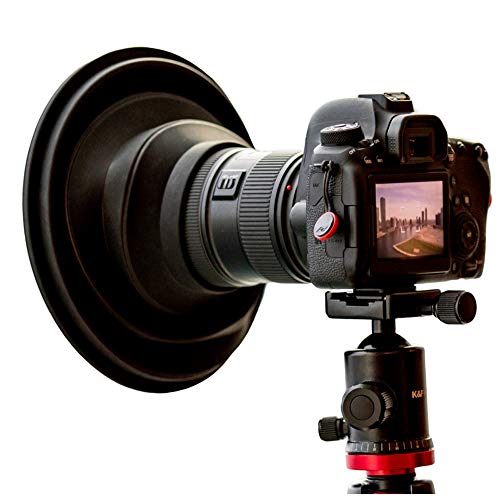
- Fits 49/52mm to 82mm filter threads
- Soft, stretchy, packable construction
- Includes microfiber carry bag
Best For: Multi-lens shooting through glass
Best Packable Option

- Accordion-style design packs down small
- Fits 72mm to 112mm lenses
- Includes a lifetime replacement warranty
Best For: Large lenses and super-telephoto setups needing portable flare control
Best Rubber Reflection Control
Universal 72-112mm Rubber Lens Hood

- Controls reflections from bright mixed-light sources
- Soft rubber provides a secure fit
- Folds flat for pocket or pouch storage
Best For: 72mm to 112mm lenses used in changing light
Telephoto Flare Shield

- Fits selected Canon telephoto zooms
- Matte interior helps reduce flare
- Reversible and compatible with 58mm accessories
Best For: Canon wildlife photographers using compatible 75-300mm, 90-300mm, or EF-S 55-250mm lenses
Window and Water Glare Control

- Blocks reflections against glass
- Reduces glare from bright surfaces
- Folds flat for travel storage
Best For: Photographers using 72-112mm lens barrels in travel, aquarium, or reflective outdoor settings
Secure Adjustable Flare Control

- Screw-mount design stays secure
- Rotating ring adjusts hood position
- Tulip shape helps control stray light
Best For: Canon Rebel and other cameras using compatible 58mm front-filter-thread lenses
Camouflage Field Cover – LensCoat Lenshide Max5
LensCoat Camouflage Camera Lens Tripod Cover Blind Lenshide Lightweight, Realtree Max5 (lclh2m5)
Check Price On AmazonFor wildlife photographers who need camera lens hoods for wildlife photography with added concealment, the LensCoat Lenshide combines a camouflage exterior with a lightweight, breathable design. Its adjustable closures help secure the cover around the lens and behind your head.
Best For: Wildlife photographers seeking a camouflage lens cover with hands-free concealment and storage.
Pros:
- Realtree Max5 camouflage pattern supports a discreet outdoor setup.
- Expanded mesh window and Velcro closure help position the cover over your head.
- Elastic cinch cord helps secure it around the lens.
- Integrated pouch, belt loops, D-rings, and an internal accessory pocket add storage options.
Cons:
- Designed as a lens cover and blind rather than a conventional rigid hood.
- Compatibility details are listed broadly as cameras, so lens fit should be confirmed.
At just 1.6 ounces, this LensCoat option is aimed at photographers who prioritize portability, camouflage, and practical field organization.
Glass Glare Specialist – Lenskirt Anti-Reflection Hood
The Lenskirt is a flexible, universal-style option among camera lens hoods for wildlife photography, especially when shooting through viewing windows or glass. It is designed to help block reflections and remove glare while accommodating lenses up to 8 inches in diameter.
Best For: Photographers taking wildlife images through glass, observation windows, or vehicle windows.
Pros:
- Designed to prevent reflections and reduce glass glare.
- Fits lenses up to 8 inches in diameter and works with lenses as wide as 15mm.
- Compatible with cameras using compatible lenses across a universal mount design.
- Portable design weighs 3.84 ounces.
Cons:
- It is not water resistant.
- Its primary purpose is shooting through glass, not general weather protection or camouflage.
If reflections are the main problem in your wildlife setup, the Lenskirt offers a focused solution without requiring a lens-specific fit.
Long-Lens Protection – easyCover Sigma 300-600mm Cover
easyCover Lens Protection for Sigma 300-600mm F4 DG OS Sports True Timber Kanati Camouflage
Check Price On AmazonFor photographers using a Sigma 300-600mm F4 DG OS Sports lens, this easyCover protection system is a specialized alternative to general camera lens hoods for wildlife photography. Its neoprene-and-nylon construction is intended to help shield the lens from outdoor elements, bumps, and scratches.
Best For: Sigma 300-600mm F4 DG OS Sports users who want dedicated camouflage protection for outdoor wildlife work.
Pros:
- Designed specifically for the Sigma 300-600mm F4 DG OS Sports lens.
- True Timber Kanati camouflage suits outdoor wildlife environments.
- Neoprene and nylon construction provides a protective layer around the lens.
- Designed to keep the lens fully functional while covered.
Cons:
- Compatibility is highly lens-specific.
- At 0.3 kg, it is heavier than lightweight cover options.
- The supplied information describes protective coverage rather than glare-control performance.
This is best viewed as a dedicated protective and camouflage cover for one substantial telephoto lens, not a universal hood.
Universal Window Hood – ULHgo Anti-Reflection LensSkirt
The ULHgo is a soft, stretchable choice among camera lens hoods for wildlife photography, particularly for glare-free images through windows. It accommodates lenses with filter threads from 49/52mm up to 82mm and packs down compactly for travel.
Best For: Wildlife photographers who shoot through glass and need a flexible hood that fits multiple lenses.
Pros:
- Fits lenses with filter threads from 49/52mm through 82mm, subject to the stated fit requirements.
- Soft construction helps it stretch across multiple lenses and pack into tight spaces.
- Designed to reduce reflections and glare when photographing through windows.
- Includes a soft microfiber carry bag for transport and storage.
Cons:
- Its soft design may not provide the rigid impact protection of a hard hood.
- It is primarily intended for anti-reflection use through glass rather than camouflage.
- Fit should be checked against the lens diameter and filter-thread range.
With its broad stated size range, compressible construction, and included case, the ULHgo is a practical multi-lens option for window-based wildlife photography.
Best Packable Option – KUVRD Universal Lens Hood
For wildlife photographers who need flexible camera lens hoods for wildlife photography, the KUVRD Universal Lens Hood is designed for larger lenses and super telephotos. Its accordion-style construction packs down easily while expanding to help block flare in the field.
Best For: Photographers using larger DSLR, mirrorless, cine, medium-format, or super-telephoto lenses who prioritize portability and adaptable protection.
Pros:
- Folds compactly for storage in a bag, backpack, or pocket.
- Fits lenses with front diameters from 72mm to 112mm.
- Can extend to block flare or fold backward to help protect against the elements.
- Includes a lifetime replacement warranty.
Cons:
- May vignette on ultra-wide and fisheye lenses at focal lengths below 20mm.
- Its universal fit requires checking compatibility with your lens.
This is a practical choice when wildlife outings demand a hood that travels light and adapts to different large lenses. Confirm the diameter and focal-length limitations before ordering.
Best Precision Fit – K&F CONCEPT 67mm Tulip Lens Hood
The K&F CONCEPT 67mm Tulip Lens Hood is a straightforward option among camera lens hoods for wildlife photography when your lens has a matching 67mm thread. Its flower-shaped profile is designed to reduce stray light and vignetting while adding basic front-element protection.
Best For: Wildlife photographers with a compatible 67mm-thread lens who want a secure, purpose-shaped hood and a reusable cleaning cloth.
Pros:
- Helps limit glare and stray light in backlit, side-lit, and night scenes.
- Flower-shaped design is intended to reduce vignetting.
- Composite construction helps protect against dust, droplets, accidental contact, and minor collisions.
- Includes a washable microfiber cleaning cloth.
Cons:
- Only compatible with lenses using a 67mm filter thread.
- Requires checking the diameter marking on the lens before purchase.
Choose this hood if your lens is clearly marked with a 67mm diameter and you prefer a conventional threaded fit. Its fixed compatibility makes measurement especially important.
Best Rubber Reflection Control – Universal 72-112mm Rubber Lens Hood
This flexible rubber hood is a useful choice for wildlife photographers comparing camera lens hoods for wildlife photography and needing broad compatibility. It is designed to absorb stray light and reflections while folding flat for easy transport between hides, trails, and roadside locations.
Best For: Photographers using lenses with 72mm to 112mm front diameters who want soft, flexible flare control for mixed or low-light scenes.
Pros:
- Helps reduce reflections from windows, headlights, lamps, and other bright sources.
- Soft rubber edge is designed to grip securely without scratching the lens body or filter threads.
- Folds flat and springs back into shape for convenient carrying.
- Works across studio, street, and evening shooting conditions.
Cons:
- Fit depends on measuring the lens front diameter accurately.
- Supplied as a single hood, with no listed cleaning accessory or warranty.
This model suits photographers who value flexible construction and reflection control over a compact, conventional threaded hood. Measure the lens first to confirm the 72-112mm range.
Telephoto Flare Shield – JJC ET-60 Lens Hood
For photographers comparing camera lens hoods for wildlife photography, the JJC ET-60 is a model-specific option for several Canon telephoto zooms. Its matte interior helps reduce stray light, while the extended ABS design adds some protection during outdoor shooting.
Best For: Canon users with compatible 75-300mm, 90-300mm, or EF-S 55-250mm lenses who want a reversible, lightweight hood.
Pros:
- Compatible with a broad range of specified Canon RF, EF, and EF-S telephoto lenses.
- Matte interior helps minimize flare and improve contrast in bright conditions.
- Accepts 58mm filters and lens caps and reverses for storage.
- Lightweight, durable ABS construction provides added front-element protection.
Cons:
- Not compatible with Canon EF 75-300mm IS USM or EF-S 55-250mm IS STM lenses.
- Fit is limited to the listed compatible lens models.
- It is not water resistant.
This is a practical choice when exact Canon lens compatibility is confirmed. Check your lens model carefully before ordering, especially if it is an IS USM or IS STM version.
Window and Water Glare Control – Universal Silicone Lens Hood
This foldable silicone hood is a flexible option among camera lens hoods for wildlife photography, particularly when shooting through glass or near reflective water. Its soft rim presses against surfaces to block reflections, and the hood folds flat for travel.
Best For: Travel and wildlife shooters using lenses with a 72-112mm outer diameter, especially for aquariums, aircraft windows, storefronts, and bright outdoor scenes.
Pros:
- Soft silicone rim helps block reflections when pressed against glass.
- Reduces stray-light glare from water, wet streets, and other bright surfaces.
- Folds flat and weighs just 3.88 ounces for convenient storage.
- Works with standard and telephoto lenses within the specified barrel range.
Cons:
- Requires a 72-112mm lens-barrel outer diameter; it does not use filter-thread size for fit.
- Ultra-wide lenses may show slight corner vignetting.
- Fit depends on seating the silicone evenly around the lens rim.
Its main advantage is versatility around glass and reflective environments rather than a fixed, lens-specific fit. Measure the widest front barrel section before purchasing.
Secure Adjustable Flare Control – Altura Photo 58mm Lens Hood
For photographers seeking camera lens hoods for wildlife photography, the Altura Photo 58mm hood offers a screw-mount connection designed to stay secure during active shooting. Its rotating rear locking ring allows the tulip hood to be positioned for changing light.
Best For: Canon Rebel and other cameras using lenses with a 58mm front filter thread, including compatible EF-S 18-55mm lenses and selected Nikon lenses.
Pros:
- Threads directly onto the lens for a secure, rattle-free fit.
- Rotating locking ring allows adjustable hood positioning.
- Tulip shape helps block stray light without vignetting on supported lenses.
- Hard rubber construction helps shield the front element from minor impacts.
Cons:
- Only fits lenses with a 58mm front filter thread.
- Compatibility should be verified before ordering, even among Canon Rebel systems.
- The supplied notes do not specify compatibility with long telephoto lenses.
This hood is best suited to 58mm standard or zoom lenses where secure mounting and adjustable shading matter. Confirm the diameter symbol on the lens or beneath the cap before purchase.
How We Picked the Best Camera Lens Hoods for Wildlife Photography
We focused on fit, glare control, portability, weather and field practicality, and compatibility with common wildlife lenses. The selection includes rigid tulip hoods, collapsible rubber and silicone designs, flexible anti-reflection hoods, and camouflage protection for large telephoto setups.
Lens-specific models were considered for secure installation, while universal hoods were included for photographers who use several lenses or frequently change equipment. We also looked for features that matter in the field, such as foldability, lightweight construction, unobtrusive finishes, and access to the lens controls.
Quick Comparison
| Type | Best For | Main Advantage |
|---|---|---|
| Lens-specific rigid hood | Dedicated telephoto lenses | Secure fit and dependable shading |
| Universal flexible hood | Multiple lenses | Adjustable coverage and portability |
| Anti-reflection hood | Glass, hides, and low-profile shooting | Helps limit reflections around the lens |
| Camouflage cover or hood | Concealed outdoor setups | Breaks up the lens shape and protects the barrel |
Key Buying Factors
Compatibility and Fit
Check the exact lens model, hood bayonet, filter thread, or supported diameter before buying. A loose universal hood may shift during use, while an incorrect rigid hood can cause vignetting or fail to mount. For zoom lenses, confirm compatibility across the full focal-length range.
Glare and Reflection Control
Wildlife scenes often include bright sky, water, snow, or open woodland. A properly sized hood blocks off-axis light without appearing in the frame. Flexible anti-reflection designs can be especially useful near hides or viewing ports, but they may require more careful positioning than a standard bayonet hood.
Portability and Handling
Look for a foldable or reversible design if your kit spends time in a backpack. Large telephoto hoods should be light enough not to make handholding awkward. Make sure the hood does not obstruct zoom rings, autofocus controls, lens caps, or tripod collars.
Protection and Outdoor Use
A hood can help shield the front element from branches, light rain, dust, and accidental bumps, but it is not a substitute for a rain cover. Camouflage covers may also reduce the visual prominence of a large lens, which can be useful when photographing cautious animals.
Who Should Buy Which Camera Lens Hoods for Wildlife Photography?
Choose a lens-specific hood if you want the most secure fit for one telephoto lens. These are generally the simplest option for photographers who prioritize reliability and fast setup.
Choose a universal flexible hood if you own several lenses or want one compact accessory that can adapt to different diameters. Verify measurements carefully and expect to spend a little more time positioning it.
Choose an anti-reflection design for shooting through hides, blinds, or reflective viewing windows, where stray reflections can compromise an otherwise sharp image.
Choose camouflage protection if you regularly work outdoors with a prominent telephoto lens and want added barrel coverage alongside a less conspicuous appearance. Whichever style you select, prioritize accurate compatibility and unobstructed framing over appearance alone.