
Camera lens adapters can unlock lenses, filters, and creative options that would otherwise stay locked to a single system. The right adapter can save money, expand your kit, and keep older gear useful on newer cameras.
In this roundup, we focus on practical adapters for photographers and filmmakers who want reliable fit, useful compatibility, and the best value for their mount.
Best 10 Camera Lens Adapters Picks for 2026
Canon RF Lens Compatibility

- Supports EF/EF-S lenses on EOS R bodies
- Dust- and water-resistant build
- Metal mounts on both sides
Best For: Canon shooters keeping EF lenses on EOS R cameras
Nikon-to-Sony E Mount
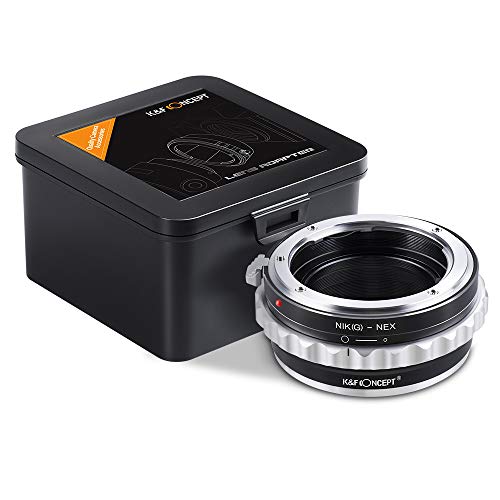
- Adapts Nikon G/F/AI/AIS lenses to Sony E-mount
- Includes aperture control ring
- Supports infinity focus and metering
Best For: Sony E-mount users adapting Nikon F-mount lenses
Canon EF on EOS M

- Made for Canon EOS M cameras
- Supports Canon EF lenses
- Simple Canon-branded fit
Best For: Canon EOS M owners using EF lenses
Filter Size Conversion

- 18 step-up and step-down rings included
- Covers 37mm to 82mm sizes
- Aviation aluminum alloy construction
Best For: Users matching filter threads across accessories
Canon EF to EOS R Adapter

- Supports Canon EF/EF-S lenses on EOS R bodies
- Passes EXIF data and supports aperture control
- Metal mounts and weather sealing add durability
Best For: Canon users who want to adapt EF/EF-S lenses to EOS R cameras
Step-Up Filter Ring Set
9-Piece Multi-Size Filter Adapters

- Nine sizes from 37-49 mm to 77-82 mm
- Adapts larger filters to smaller lens threads
- Durable anodized aluminum construction
Best For: Photographers standardizing filters across multiple lens diameters
Nikon F to Sony E Adapter

- Adapts Nikon F lenses to Sony E-mount bodies
- Supports TTL metering but stays fully manual
- No electrical contacts or autofocus support
Best For: Sony E-mount users who are comfortable shooting manual with Nikon F lenses
Classic Manual Adapter

- M42 screw mount to Micro Four Thirds
- No electrical contacts; manual use only
- Brass and aluminum construction
Best For: Manual shooters adapting M42 lenses to Olympus or Panasonic MFT bodies
Pro Iris Adapter
Canon EF to Micro Four Thirds with Iris

- Fits Canon EOS EF full-frame lenses on MFT
- Integrated aperture iris for light adjustment
- All-metal build with solid, precise fit
Best For: MFT users adapting Canon EF full-frame lenses with manual light control
Cine Lens Adapter

- Adapts B4 2/3-inch ENG cine lenses to MFT
- Infinity focus or beyond allowed
- All-metal build with chrome-plated brass mounts
Best For: Filmmakers using B4 ENG cine lenses on Micro Four Thirds bodies
Canon RF Lens Compatibility – Canon EF-EOS R Adapter
Canon Mount Adapter EF-EOS R, Black | Allows -S Lens Compatibility with the R CameraExterior
Check Price On AmazonIf you want to use Canon EF or EF-S glass on a newer EOS R body, this camera lens adapter keeps the setup straightforward. It is designed for EOS RP, EOS R, EOS R6, and EOS R5 cameras, with a mount that matches EF lenses and a rugged, weather-resistant build for everyday use.
Best For: Canon shooters who need reliable EF/EF-S lens compatibility on EOS R mirrorless bodies.
Pros:
- Supports EF and EF-S lenses on EOS RP, EOS R, EOS R6, and EOS R5
- Dust- and water-resistant construction
- Metal mounts on both lens and camera sides
- Made for a clean, standard adapter setup
Cons:
- Only useful for compatible Canon EF/EF-S to EOS R combinations
- Does not add extra lens features beyond mount compatibility
For Canon users staying in the EF system, this adapter is a practical way to bridge older lenses to EOS R bodies without overcomplicating the setup. The rugged build is a plus if you plan to swap lenses often or shoot in less controlled conditions.
Nikon-to-Sony E Mount – K&F Concept F Mount Adapter
This camera lens adapter lets Nikon G, F, AI, and AIS lenses mount on Sony E-mount and Sony NEX bodies. It includes an aperture control ring, allows infinity focus, and supports AE priority or manual stop-down metering, making it a useful manual adapter option for photographers who want to keep using Nikon glass on Sony mirrorless cameras.
Best For: Sony E-mount and NEX users adapting Nikon F-mount lenses with manual aperture control.
Pros:
- Fits Nikon G, F, AI, and AIS lenses
- Works with Sony E-mount and Sony NEX bodies
- Includes an aperture control ring
- Allows infinity focus and metering support
Cons:
- Not compatible with all Sony bodies listed in the notes, including a7S, a7 II, a7S II, and a7R II
- AI lens use limits aperture ring functionality
- Focus position at infinity may need checking carefully
If you need a manual adapter for Nikon lenses on Sony mirrorless cameras, this one offers broad lens compatibility and practical controls. Just make sure your camera body is on the supported list before buying.
Canon EF on EOS M – Canon EOS M Mount Adapter
For Canon EOS M owners who want to use EF lenses, this camera lens adapter is a direct mount solution from Canon. It is built for the Canon EOS M Digital Camera and is intended to let EF lenses work with that system in a simple, native-branded package.
Best For: Canon EOS M users looking for a Canon-made EF lens adapter.
Pros:
- Designed specifically for Canon EOS M cameras
- Supports Canon EF lens mounting
- Canon-branded adapter for a straightforward fit
- Suitable for automatic and manual shooting modes listed in the notes
Cons:
- Only relevant to Canon EOS M and EF lens combinations
- Not water resistant
- Does not broaden compatibility beyond the specified system
This is a focused option if your goal is simply to attach EF lenses to an EOS M body. It is best suited to Canon users who want a direct, system-matched camera lens adapter rather than a more universal third-party solution.
Filter Size Conversion – K&F Concept 18-Piece Ring Set
This camera lens adapter set is for changing filter thread sizes, not mounting lenses to camera bodies. It includes step-up and step-down rings across common sizes, so you can match filters, hoods, flashes, and lens converters without replacing all your accessories.
Best For: Photographers who need a multi-size filter thread adapter kit for common accessory combinations.
Pros:
- 18-piece set with step-up and step-down rings
- Covers common sizes from 37mm to 82mm
- Designed for tight fit with no wobbling or cross-threading
- Made from aviation aluminum alloy
Cons:
- Does not adapt lenses to camera mounts
- Only useful for filter thread size conversion
- Requires checking your exact thread sizes before ordering
As a practical accessory kit, this set is useful when you need flexibility across multiple filters and attachments. It is a smart buy if your main goal is to standardize accessories rather than change camera lens mounts.
Canon EF to EOS R Adapter – EF/EF-S to EOS R Mirrorless
Lens Mount Adapter EF-EOS R for Canon EF/EF-S Lens to Canon EOS R RP R5 R6 R7 R10 Cameras
Check Price On AmazonIf you want to keep using Canon EF/EF-S glass on an EOS R body, this camera lens adapter is built for that exact job. It adds electronic communication, supports IS stabilization, and passes EXIF data while preserving practical controls like autofocus speed and aperture adjustment from the camera side.
Best For: Canon shooters moving to EOS R who want to keep EF/EF-S lenses in active use.
Pros:
- Compatible with Canon EF/EF-S lenses on EOS R, RP, R5, R6, R7, and R10 bodies
- Built-in IS stabilization support for more accurate, clearer focus
- Gold-plated pins help with signal transmission and EXIF data transfer
- Metal mounts on both lens and camera sides add a rugged feel
Cons:
- Made for Canon EF/EF-S to EOS R use only
- Not a universal adapter for other lens or camera mounts
This is a strong pick if your priority is preserving familiar Canon lens handling on a newer mirrorless body. The combination of AF support, aperture control, and weather sealing makes it a practical everyday mount adapter rather than a simple mechanical spacer.
Step-Up Filter Ring Set – 9-Piece Multi-Size Filter Adapters
Step-up camera lens adapters are a simple way to use larger filters on smaller lenses, and this 9-ring set covers a wide spread of common sizes. Instead of buying duplicate filter kits for every lens diameter, you can match the ring to the lens and keep using the same filters.
Best For: Photographers who want one filter set to work across multiple lens sizes.
Pros:
- Includes 9 step-up sizes from 37-49 mm through 77-82 mm
- Lets you fit a larger filter onto a smaller-diameter lens
- Made from durable anodized aluminum
- Useful for cameras with interchangeable lenses
Cons:
- Only works as a step-up solution, not a step-down ring set
- No coating included
For filter compatibility on a budget, this set is a straightforward solution. The aluminum build is a practical upgrade over plastic, and the range of sizes makes it easier to standardize on fewer filters across different lenses.
Nikon F to Sony E Adapter – Manual F Mount to E-Mount
If you want to mount Nikon F lenses on a Sony E-mount mirrorless camera, this manual camera lens adapter keeps the lens usable without changing your lens collection. It supports TTL metering, but exposure and focus remain manual, so it fits best when you are comfortable working without autofocus or electronic diaphragm control.
Best For: Sony E-mount shooters who want to use Nikon F lenses with manual control.
Pros:
- Fits Nikon F-mount lenses to Sony NEX and E-mount mirrorless cameras
- Allows TTL metering for exposure support
- Gives older lenses a new use on modern Sony bodies
- No electrical contacts, keeping the design simple
Cons:
- Autofocus and automatic diaphragm do not work
- Exposure and focus must be adjusted manually
- Lenses without a manual aperture ring stop down to their smallest f/stop
This adapter makes the most sense if you are comfortable shooting manually and mainly want mechanical compatibility. It is a practical bridge for extending the life of Nikon F glass on a Sony mirrorless system, but it is not a convenience-focused option.
Classic Manual Adapter – M42 to Micro Four Thirds
If you’re shopping for camera lens adapters to bring an M42 screw-mount lens onto a Micro Four Thirds body, this K&F Concept ring is a straightforward manual solution. It has no electrical contacts, so exposure and focus are handled manually, and the brass-and-aluminum build is aimed at a precise mechanical fit.
Best For: photographers who want to use M42 glass on Olympus or Panasonic Micro Four Thirds cameras with full manual control.
Pros:
- Fits M42 lenses to Micro Four Thirds cameras without electronics
- Made of brass and aluminum, not plastic
- Supports a wide range of Olympus PEN, OM-D, and Panasonic Lumix bodies
- Designed for precise fit and manual operation
Cons:
- No electrical contacts, so autofocus and electronic aperture control are unavailable
- Exposure and focus must be adjusted manually
- Infinity focus should be checked carefully through the viewfinder
For adapting vintage M42 lenses, this is a practical low-complexity option that focuses on fit and manual usability. It makes the most sense if you’re comfortable working without electronic communication between lens and camera.
Pro Iris Adapter – Canon EF to Micro Four Thirds with Iris
Among camera lens adapters for Micro Four Thirds, this Fotodiox Pro model stands out because it accepts Canon EOS EF full-frame lenses and adds an integrated aperture iris for incoming light adjustment. It is built as an all-metal adapter with a precise fit, so it suits users who want a solid mechanical connection for adapted EF glass.
Best For: Micro Four Thirds shooters who want to mount Canon EF full-frame lenses and manually control light with an integrated iris.
Pros:
- Compatible with Canon EOS EF full-frame lenses on MFT cameras
- Integrated aperture iris for adjusting incoming light
- Precision all-metal construction with a solid, no-wiggle fit
- Infinity focus or beyond is allowed
Cons:
- Will not mount EF-S lenses
- Requires manual operation rather than electronic lens control
- Fit is optimized for MFT bodies only
This is a practical adapter if your kit centers on EF full-frame lenses and you want a sturdier, more controlled mounting solution. The built-in iris adds flexibility, but the compatibility limit to EF lenses is important to note before buying.
Cine Lens Adapter – B4 ENG to Micro Four Thirds
If you need camera lens adapters for professional broadcast glass, this Fotodiox Pro ring mounts B4 2/3-inch ENG cine lenses to Micro Four Thirds mirrorless bodies. It is built with a precision all-metal design and chrome-plated brass mounts for a secure connection, making it a focused tool for specialty video or cine setups.
Best For: videographers and filmmakers adapting B4 ENG cine lenses to Micro Four Thirds cameras.
Pros:
- Mounts B4 (2/3″) ENG cine lenses to Micro Four Thirds bodies
- Infinity focus or beyond is allowed
- Precision all-metal construction for demanding use
- Chrome-plated brass mount(s) for a secure fit
Cons:
- Designed for a very specific B4-to-MFT application
- Not intended for general still-photo lens families
- No electronic lens communication
This adapter is best viewed as a specialized professional accessory rather than a general-purpose option. If your workflow depends on B4 ENG cine lenses, the secure metal construction and infinity focus support make it a strong match.
How We Picked These Camera Lens Adapters
We prioritized compatibility breadth, build quality, mount security, and real-world usefulness. The best Camera Lens Adapters should seat firmly, preserve stable handling, and match the needs of your workflow—whether that means autofocus support, purely mechanical use, or filter conversion.
Quick Comparison
Some adapters are designed for direct lens-to-camera mounting, while others solve accessory and filter problems. That means the right choice depends on whether you need to adapt EF, F, M42, B4, or EOS M gear, or simply change filter thread sizes without affecting image quality.
Key Buying Factors for Camera Lens Adapters
Mount Compatibility
Start with the exact lens mount and camera mount. Even small differences in mount type, flange distance, or crop format can make an adapter unusable. Double-check whether the adapter is for Canon EF to RF, Nikon F to Sony E, M42 to Micro Four Thirds, or another specific pairing.
Electronic Vs. Manual Operation
Some Camera Lens Adapters preserve electronic communication, while others are fully manual. If you need autofocus, aperture control, or image stabilization support, verify those features before buying. For cine, vintage, or specialty use, manual adapters are often enough.
Optical and Mechanical Design
A well-made adapter should hold the lens securely with minimal play. Metal construction, precise tolerances, and a smooth mount release matter more than flashy extras. For filter ring sets, accuracy in thread size is essential to avoid vignetting or cross-threading.
Intended Use
Choose an adapter based on your goal. Standard mount adapters suit photographers adapting legacy lenses. Step-up ring kits are ideal for sharing filters across lenses. Iris-equipped adapters may help filmmakers control exposure on adapted glass, while cine lens adapters are built for video-oriented systems.
Who Should Buy Which Camera Lens Adapters?
If you shoot with Canon RF, Sony E, Micro Four Thirds, or a mixed vintage lens kit, Camera Lens Adapters can be one of the most cost-effective upgrades you buy. Photographers who want the simplest path should look for a direct mount adapter matched to their lens and body. Filmmakers and specialty users may get more value from iris control, cine support, or filter adapter kits. If your needs are mostly about flexibility, pick the adapter that solves the exact compatibility problem rather than the one with the most features.