
Using classic glass on modern cameras can be a smart way to save money and expand your creative options. The right adapter makes that possible while preserving practical aperture control.
Below, we focus on the best camera lens adapters with aperture control for 2026, with an eye toward compatibility, build quality, and everyday usability.
Best 10 Camera Lens Adapters with Aperture Control Picks for 2026
Manual Aperture Option
Nikon F to Sony E with G-Type Control

- Manual aperture ring for Nikon G lenses
- Supports Nikon F, G, AI, AIS, D, AF-S lenses
- No glass or electronic contacts inside
Best For: Sony E users adapting Nikon lenses with manual aperture control
Micro Four Thirds Match
Nikon F to MFT with Manual Aperture Ring

- Manual aperture ring for Nikon G lenses
- Works with many Olympus and Lumix MFT bodies
- Mechanical design with no glass or contacts
Best For: MFT users adapting Nikon lenses with manual aperture control
Classic Mechanical Pick
Sony A-Mount to Fuji X with Aperture Dial

- Integrated aperture control dial
- Supports Sony A-Mount and Minolta AF lenses
- All-metal build with infinity focus support
Best For: Fuji X users adapting Sony A-Mount or Minolta AF lenses
Manual Adapter Pick
Sony A / Minolta AF to Leica L with Aperture Ring

- Manual aperture ring on the adapter
- Infinity focus with no glass inside
- Aviation-grade metal construction
Best For: Manual shooters adapting Sony A/Minolta AF lenses to Leica L cameras
Budget G-Lens Adapter
Nikon F G-Type to Canon EF with Dial
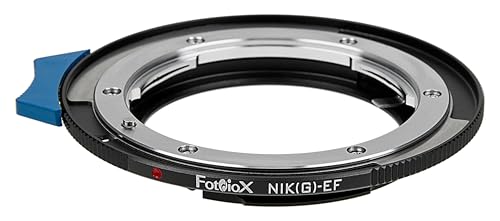
- Built-in aperture dial for G-type lenses
- All-metal body with secure fit
- Infinity focus allowed
Best For: Canon EF/EF-S users adapting Nikon F G-type lenses
Mirrorless Manual Pick
Sony A-Mount to E-Mount with Aperture Ring

- Manual aperture control ring included
- Infinity focus guaranteed
- Fits many Sony E-mount bodies
Best For: Sony A-mount lens owners using E-mount mirrorless bodies
Manual Control Pick
Sony A/Minolta AF to Canon EF-M Adapter

- Aperture control ring for manual adjustment
- Works with Sony A Minolta AF lenses on EF-M bodies
- No glass or electronic contacts inside
Best For: Canon EF-M users who want manual aperture control
Versatile Nikon-to-Sony Option
K&F Concept Nikon G to Sony E Adapter
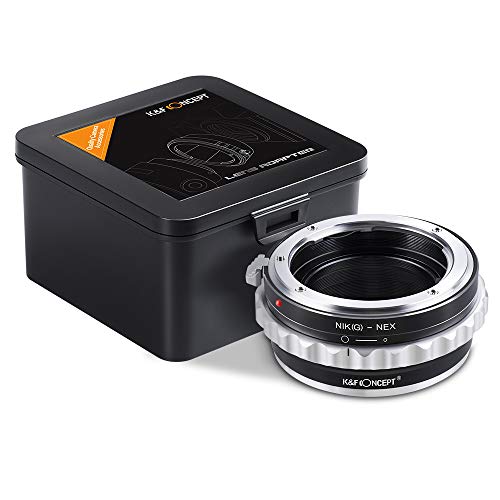
- Aperture control ring for manual stop-down use
- Works with Nikon G, F, AI, and AIS lenses
- Supports infinity focus on Sony E/NEX bodies
Best For: Sony E-mount users wanting manual control with Nikon lenses
RF Manual Adapter Choice
Sony A/Minolta AF to Canon RF Adapter

- Manual aperture ring with smooth damping
- Made for Sony A/Minolta AF lenses on Canon RF
- Infinity focus supported with no glass inside
Best For: Canon RF shooters adapting Sony A/Minolta AF glass
Manual Aperture Option – Nikon F to Sony E with G-Type Control
If you want camera lens adapters with aperture control for Nikon F glass on Sony E bodies, this PHOLSY adapter gives you a simple manual solution. It supports Nikon G, F, AI, AIS, D, and AF-S lenses, adds a dedicated aperture control ring for G-type lenses, and keeps the setup fully mechanical with no glass in the path.
Best For: Sony E shooters who want to use Nikon F/G lenses and adjust aperture manually on the adapter.
Pros:
- Built-in aperture control ring for manual adjustment on Nikon G lenses
- Infinity focus is allowed with no electronic contacts or glass inside
- Compatible with a wide range of Sony E-mount cameras
- All-metal aviation-grade aluminum and magnesium alloy construction
Cons:
- No autofocus, so all settings must be adjusted manually
- Requires setting the camera to shoot with no lens attached
This is a practical pick if you value direct aperture control and a secure mechanical fit over automation. It keeps the lens’s native image quality intact while giving you a straightforward way to adapt Nikon F lenses to Sony E.
AF-Friendly Choice – Canon EF/EF-S to EOS M with Aperture Control
Among camera lens adapters with aperture control, this EF-EOS M adapter stands out for Canon EOS M users who want native-style operation from EF and EF-S lenses. It supports aperture control from the camera side, includes fast autofocus, and passes along shutter, aperture, and ISO data for a more integrated shooting experience.
Best For: Canon EOS M owners who want EF/EF-S compatibility with autofocus and in-camera aperture control.
Pros:
- Controls the lens aperture directly from the camera side
- Fast auto-focusing speed for supported EF/EF-S lenses
- Built-in IS stabilization and EXIF signal transmitting
- Metal mounts on both lens and camera sides for rugged use
Cons:
- Only for Canon EF and EF-S lenses to Canon EOS M bodies
- Includes a tripod-support design that may add bulk
This adapter is the most feature-rich option here if you want control plus convenience, not just a basic mechanical mount. Its combination of AF, stabilization support, and aperture control makes it especially practical for everyday Canon mirrorless use.
Micro Four Thirds Match – Nikon F to MFT with Manual Aperture Ring
If you need camera lens adapters with aperture control for Micro Four Thirds, this PHOLSY adapter is built to mount Nikon F-mount lenses on MFT bodies. It offers a manual aperture control ring for Nikon G lenses, keeps the design fully mechanical, and supports infinity focus without adding glass between the lens and camera.
Best For: Olympus and Panasonic MFT users who want to adapt Nikon lenses with manual aperture adjustment.
Pros:
- Manual aperture control ring for Nikon G lenses
- Compatible with a broad list of Olympus OM SYSTEM and Lumix MFT cameras
- No electronic contacts or glass inside the adapter
- Infinity focus allowed with a tight, precise fit
Cons:
- No autofocus support
- Camera must be set to shoot with no lens attached
This is a straightforward mechanical adapter for photographers who want lens compatibility and direct aperture adjustment without extra optics. It’s a strong fit if you already work manually and want to preserve the native rendering of your Nikon lenses on MFT.
Classic Mechanical Pick – Sony A-Mount to Fuji X with Aperture Dial
For shooters comparing camera lens adapters with aperture control, this Fotodiox option is a classic mechanical bridge from Sony Alpha A-Mount and Minolta AF DSLR lenses to Fuji X-mount mirrorless bodies. Its integrated aperture control dial lets you adjust lens aperture on the adapter itself, while the all-metal build and precision fit are aimed at dependable use.
Best For: Fuji X photographers who want to mount Sony A-Mount or Minolta AF lenses with manual aperture adjustment.
Pros:
- Integrated aperture control dial on the adapter
- Supports Sony Alpha A-Mount and Minolta AF DSLR lenses on Fuji X
- Infinity focus or beyond is allowed
- All-metal anodized aluminum construction with precision craftsmanship
Cons:
- No electronic communication mentioned
- Designed specifically for Fuji X-mount mirrorless cameras
This adapter is a solid no-frills choice if you want manual aperture control and a durable metal build. It focuses on compatibility and mechanical reliability rather than added electronic features.
Manual Adapter Pick – Sony A / Minolta AF to Leica L with Aperture Ring
If you want camera lens adapters with aperture control for pairing Sony A / Minolta AF glass with a Leica L body, this PHOLSY adapter gives you a fully manual route with a built-in aperture control ring. It keeps the setup simple: no electronic contacts, no glass, and infinity focus support, so the focus is on preserving your lens’ native look while adding manual control.
Best For: Photographers who want to adapt Sony A / Minolta AF lenses to Leica L cameras with manual aperture adjustment.
Pros:
- Built-in aperture control ring for manual adjustment on the adapter
- Infinity focus allowed, with no glass inside to affect image quality
- Solid aviation-grade aluminum and magnesium alloy construction
- Tight-fitting design helps prevent light leakage
Cons:
- No autofocus or electronic communication
- Camera menu must be set to shoot with no lens attached
This is a practical pick if you already know you want a purely manual adapter and value a comfortable, progressive-damping aperture ring. It’s built for photographers who are comfortable handling settings on the lens side and want a precise, durable mount connection.
Budget G-Lens Adapter – Nikon F G-Type to Canon EF with Dial
For camera lens adapters with aperture control on Nikon F-mount G-type lenses, this Fotodiox option is designed to bring those lenses onto Canon EF and EF-S bodies with a built-in aperture dial. It’s a straightforward manual solution for using vintage or workhorse lenses on modern digital cameras while keeping the setup all-metal and mechanically secure.
Best For: Canon EF and EF-S users who want manual aperture control with Nikon F G-type lenses.
Pros:
- Built-in aperture dial for aperture control on G-type lenses
- All-metal construction with a secure, solid fit
- Infinity focus allowed
- Designed to adapt a wide range of lenses to modern digital cameras
Cons:
- Manual-only operation with no electronic functions
- Specifically aimed at Nikon F-mount G-type lenses, not a universal fit
This adapter makes sense if you want a durable, no-frills way to use G-type Nikon glass on Canon EF/EF-S bodies and need physical aperture adjustment on the adapter itself. The emphasis is on dependable mechanics rather than extra features.
Mirrorless Manual Pick – Sony A-Mount to E-Mount with Aperture Ring
If you’re comparing camera lens adapters with aperture control for Sony systems, this Fotasy manual adapter lets Sony A-mount AF lenses fit Sony E-mount mirrorless bodies with a manual aperture control ring. It offers infinity focus and keeps the design simple, but it does not transmit electronic functions, so everything beyond mounting is handled manually.
Best For: Sony shooters who want to use A-mount lenses on E-mount cameras with manual aperture adjustment.
Pros:
- Includes an aperture control ring for manual lens adjustment
- Infinity focus guaranteed
- Compatible with a wide range of Sony E-mount cameras
- No electrical contacts keeps the design straightforward
Cons:
- No autofocus or automatic diaphragm operation
- Manual operation only, with no electronic communication
This is a useful choice if you already own Sony A-mount lenses and want a simple way to keep using them on E-mount bodies. The adapter is best suited to photographers comfortable working manually and who specifically need direct aperture control.
Manual Control Pick – Sony A/Minolta AF to Canon EF-M Adapter
If you want to use Sony A Minolta AF lenses on a Canon EF-M body, this camera lens adapter with aperture control gives you a manual way to mount and adjust the lens without changing your glass. It is designed for EF-M cameras, supports infinity focus, and keeps the setup simple because there are no electronic contacts or glass elements in the adapter.
Best For: Canon EF-M shooters who want manual aperture control with Sony A/Minolta AF lenses.
Pros:
- Built-in aperture control ring for manual adjustment on the adapter
- Compatible with Sony A Minolta AF mount lenses and Canon EF-M cameras
- No electronic contacts or glass, so there is no optic degradation from the adapter
- Supports infinity focus and a precise, tight-fitting connection
Cons:
- No autofocus, so all settings must be adjusted manually
- Requires a camera menu change to shoot with no lens attached
- Only works with Canon EF-M (EOS M) bodies
Overall, this is a practical choice if aperture control matters more to you than automation. The durable aluminum and magnesium alloy build, plus the progressive damping ring, make it a solid manual-use adapter for compatible EF-M setups.
Versatile Nikon-to-Sony Option – K&F Concept Nikon G to Sony E Adapter
For photographers looking for camera lens adapters with aperture control, this K&F Concept option lets Nikon F-mount lenses work on Sony E-mount and NEX bodies with manual handling. It supports infinity focus and is designed for AE Priority or manual stop-down metering, making it a straightforward pick for controlled shooting with compatible Nikon lenses.
Best For: Sony E-mount shooters adapting Nikon F-mount lenses who want a manual aperture ring.
Pros:
- Has an aperture control ring and fits all Nikon mount lenses
- Supports Nikon G, F, AI, and AIS lens types on Sony E-mount
- Infinity focus is allowed
- Allows AE Priority and manual stop-down metering
Cons:
- Will not fit Sony a7S, a7 II, a7S II, or a7R II
- AI lenses can mount, but the aperture control ring cannot be used with them
- No autofocus is provided
This adapter is a strong fit if you need broad Nikon compatibility and want manual aperture control on Sony E bodies. Just check camera and lens compatibility carefully, since the notes call out model limits and a difference in how AI lenses interact with the ring.
RF Manual Adapter Choice – Sony A/Minolta AF to Canon RF Adapter
This camera lens adapter with aperture control is built for using Sony A Mount or Minolta AF lenses on Canon EOS RF cameras, with manual adjustment handled directly on the adapter. It offers infinity focus, no electronic contacts, and no glass, so it keeps the setup focused on compatibility and manual operation rather than automation.
Best For: Canon RF users who want to adapt Sony A/Minolta AF lenses with manual aperture control.
Pros:
- Manual aperture control ring with progressive damping design
- Compatible with Sony A Mount and Minolta AF lenses on Canon RF bodies
- Supports infinity focus
- No electronic contacts or glass inside the adapter
Cons:
- No autofocus
- All settings must be adjusted manually
- Only suitable for compatible Canon EOS RF cameras
For RF shooters who already own Sony A or Minolta AF glass, this adapter offers a clean, no-frills way to keep using those lenses. The durable metal construction and precise fit make it a sensible manual adapter when aperture control is the key requirement.
How We Picked the Best Camera Lens Adapters with Aperture Control
We prioritized adapters that give you reliable aperture control, solid mount fit, and clear compatibility between the lens and camera system. We also favored models that are practical for real-world use, whether you shoot stills or video.
Because Camera Lens Adapters with Aperture Control vary a lot by mount, we looked closely at whether the adapter supports G-type/Nikon-style electronic-aperture lenses, manual aperture control where needed, and secure mechanical fit without adding unnecessary complexity.
Quick Comparison
Most options in this roundup fall into two broad groups: adapters for lenses that already have an aperture ring, and adapters with a built-in control mechanism for lenses that do not. If your lens lacks a physical aperture ring, built-in aperture control is essential. If your lens already has one, a simpler adapter may be enough.
Key Buying Factors for Camera Lens Adapters with Aperture Control
Mount Compatibility
Start with the exact lens mount and camera mount. A great adapter is useless if it does not match your specific system. Pay attention to crop-sensor versus full-frame camera bodies as well, since the adapter must fit physically and still allow proper lens alignment.
Aperture Control Type
Some adapters preserve or simulate aperture control for G-type lenses, while others use a manual lever or ring. Choose the style that matches your lens behavior and your shooting preferences. For video shooters, smoother, repeatable aperture adjustments can matter more than absolute convenience.
Build Quality and Tolerances
Good adapters should mount firmly with minimal play. Loose fit can hurt focus consistency and confidence, especially with heavier lenses. Metal construction and clean machining usually outperform bargain models with rough edges or inconsistent tolerances.
Features Vs. Simplicity
Not every setup needs extra controls. If you regularly swap lenses across systems, a feature-rich adapter can be worthwhile. If you mainly want a dependable manual solution, a simpler adapter may be more reliable and easier to live with.
Who Should Buy Which Camera Lens Adapters with Aperture Control?
Choose a camera lens adapter with aperture control if you own legacy glass, want to keep using older favorites, or need more affordable access to quality lenses. Shooters using Nikon F G-Type, Sony A-mount, or Canon EF/EF-S lenses across mirrorless bodies will benefit most from this category.
If you want the least hassle, pick an adapter that matches your exact mount pair and offers the aperture handling your lens requires. If you often shoot video, prioritize smooth control and consistent operation. If you only need occasional stills use, durability and fit should come first.