
Creating a smooth time-lapse starts with consistent timing, reliable triggering, and equipment that matches your camera or shooting environment. The right intervalometer can automate exposures, reduce camera shake, and make long-duration projects easier to manage.
This roundup covers wired and wireless timer remotes for Canon, Sony, and Nikon cameras, plus standalone time-lapse cameras designed for extended outdoor recording. Use the guide below to narrow your options by compatibility, runtime, control method, and shooting needs.
Best 10 Camera Intervalometers for Time Lapse Photography Picks for 2026
Professional Precision
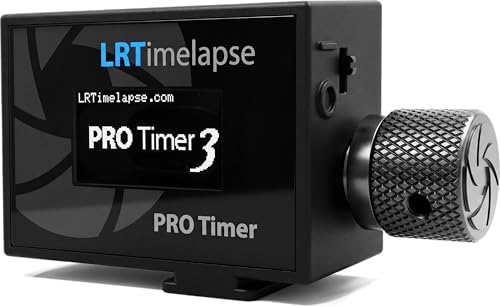
- 0.1-second interval adjustments
- Interval ramping for smooth transitions
- Rechargeable battery and OLED display
Best For: Advanced time-lapse and astrophotography workflows
Classic Wireless Control
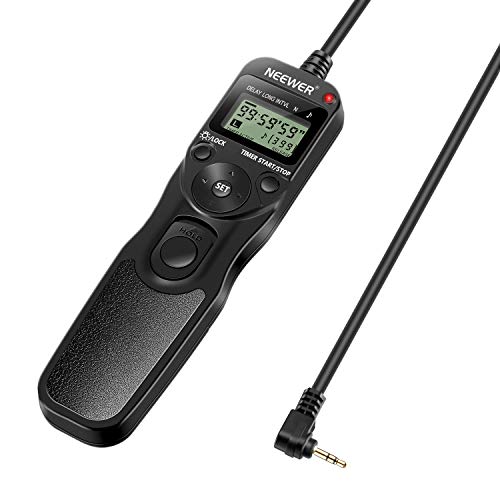
- Up to 10-meter radio range
- Timer delays up to nearly 100 hours
- Supports listed Canon and Pentax models
Best For: Basic wireless interval shooting with compatible cameras
Long-Term Outdoor Capture
Dsoon TL3000 4K Time-Lapse Camera
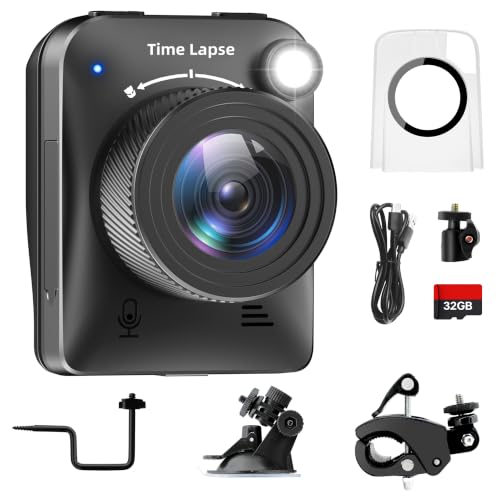
- 4K photo and video time-lapse modes
- IP66 protection for outdoor use
- Up to 180 days at five-minute intervals
Best For: Construction, weather, and plant-growth monitoring
Simple Wired Timing
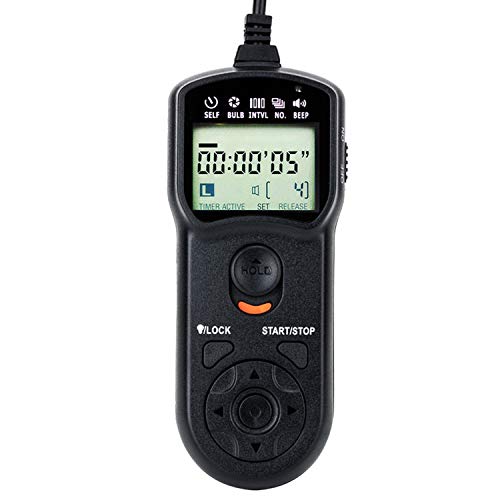
- Interval and long-exposure timer modes
- Backlit LCD for dark conditions
- One-second to nearly 100-hour timer range
Best For: Canon users wanting straightforward wired time-lapse control
Best Long-Run Camera

- 4K video at 30 fps
- Up to 90 days in power-saving mode
- Schedules up to four recording sessions daily
Best For: Unattended nature, weather, and scientific time-lapse projects
Best Wired Value
- Interval, self-timer, and long-exposure modes
- Settings from 1 second to nearly 100 hours
- Backlit LCD with camera-shake-reducing wired trigger
Best For: Sony users shooting tripod-based time lapses
Best Wireless Range
Rechargeable Sony Intervalometer
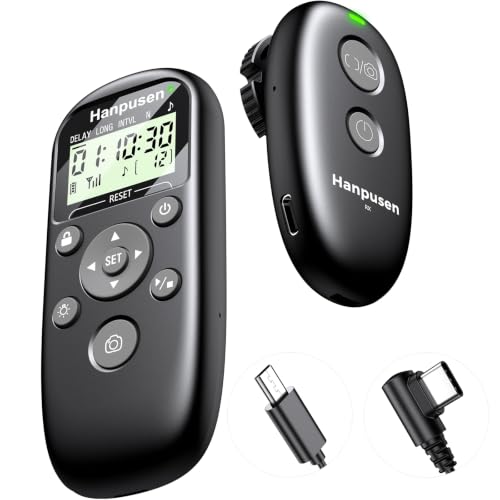
- Wireless range up to 196 feet
- Wired and wireless connection modes
- Rechargeable battery with OLED display
Best For: Sony users shooting distant or low-light time-lapse scenes
Best Wired Canon Pick
- Interval, long-exposure, and self-timer modes
- Timer range up to 99 hours, 59 minutes, 59 seconds
- Backlit LCD and compact 90cm wired design
Best For: Canon photographers shooting time-lapses and long exposures
Best Wireless Nikon Pick

- Wireless range of approximately 60 meters
- Rechargeable battery with USB-C charging
- Supports interval, bulb, delay, and long-exposure modes
Best For: Nikon time-lapse, astro, and remote camera setups
Best Sony Wired Pick
Sony Intervalometer With Backlit LCD
- Timer range from 1 second to 99 hours, 59 minutes, 59 seconds
- Supports up to 399 photos or unlimited shooting
- Backlit LCD with wired shake-free triggering
Best For: Sony photographers using compact wired time-lapse control
Professional Precision – PRO Timer 3.5 Intervalometer
LRTimelapse PRO Timer 3.5 Camera Interval Timer for Time-Lapse and Astrophotography
Check Price On AmazonThe PRO Timer 3.5 is a highly flexible choice among camera intervalometers for time lapse photography, especially for demanding time-lapse and astrophotography work. It supports 0.1-second interval adjustments, interval ramping, time-controlled shooting, and a special mirrorless-camera setting.
Best For: Advanced time-lapse and astrophotography users who want precise control and interval ramping.
Pros:
- Operates two cameras at once and removes unwanted autofocus delays.
- Offers 0.1-second interval adjustments and smooth interval ramping.
- Glove-friendly rotary control, high-contrast OLED display, rechargeable battery, and dual mounting options.
Cons:
- The required camera release cable is not included.
- Its advanced feature set may be more than casual users need.
With fast operation, saved settings, and motion-control compatibility, this is a feature-rich intervalometer for serious workflows. Confirm the required release cable before ordering.
Classic Wireless Control – Neewer LCD Timer Remote
The Neewer LCD Timer Remote is a straightforward option among camera intervalometers for time lapse photography, with timer delays adjustable from one second to nearly 100 hours. Its radio-frequency design provides up to 10 meters of range for compatible Canon and Pentax cameras.
Best For: Canon and Pentax owners seeking basic wireless timer control and remote shooting.
Pros:
- Timer delay adjusts from 0 seconds to 99 hours, 59 minutes, 59 seconds in one-second increments.
- Offers up to 10 meters of stated range.
- Supports a broad list of older Canon, Pentax, and Samsung camera models.
Cons:
- Compatibility is limited to the listed camera models.
- Requires two AAA batteries.
- The supplied notes do not specify additional interval-ramping or long-exposure features.
This remote suits photographers who value wireless operation and simple timer programming. Carefully check your exact camera model before purchase, particularly if you use a newer body.
Long-Term Outdoor Capture – Dsoon TL3000 4K Time-Lapse Camera
The Dsoon TL3000 takes a different approach to camera intervalometers for time lapse photography: it is a dedicated 4K time-lapse camera rather than a controller for an interchangeable-lens camera. With IP66 protection, a 32GB card, and battery life rated up to 180 days at five-minute intervals, it is designed for extended outdoor recording.
Best For: Construction, weather, plant-growth, and other long-duration indoor or outdoor projects.
Pros:
- Captures 4K images and supports photo time-lapse, video time-lapse, and timed shooting.
- IP66 waterproof housing and included mounting accessories support outdoor installation.
- Includes a 32GB TF card and supports cards up to 512GB.
- Offers manual macro-to-infinity focusing and a 90-degree viewing display.
Cons:
- It is a standalone camera, not a timer remote for an existing camera.
- Manual focus requires setup for the intended subject distance.
- Its six-month battery claim is based on a five-minute capture interval.
For projects that need months of unattended documentation, the TL3000 combines weather protection, storage, and long battery life in one package. It is best evaluated as a complete time-lapse camera rather than a conventional intervalometer.
Simple Wired Timing – JJC TM-F2 Intervalometer
The JJC TM-F2 is a practical wired option among camera intervalometers for time lapse photography, offering self-timer, interval-timer, long-exposure, and exposure-count settings. Its timer range runs from one second to 99 hours, 59 minutes, 59 seconds, while the backlit LCD helps with operation in dark conditions.
Best For: Canon users who want an affordable wired controller for time-lapse and shake-free shooting.
Pros:
- Combines self-timer, interval timer, long-exposure timer, and exposure-count functions.
- Supports settings from one second to nearly 100 hours.
- Includes a backlit LCD and a 90cm cable.
- Uses two AAA alkaline batteries and has a compact design.
Cons:
- The wired connection limits operating distance to the 90cm cable length.
- Compatibility is centered on the listed Canon cameras and should be verified before purchase.
- Requires two AAA batteries.
This controller covers the core timing features needed for many Canon time-lapse setups without adding wireless complexity. Check the connector and camera compatibility carefully, especially when using newer Canon models.
Best Long-Run Camera – 4K Time-Lapse Camera
The ATLI X10 is a self-contained option for camera intervalometers for time lapse photography, combining 4K video capture, scheduled sessions, and extended battery life. Its app-based setup and independent operation suit projects where a conventional camera-and-intervalometer setup would be less convenient.
Best For: Long-duration nature, weather, scientific, and unattended time-lapse projects.
Pros:
- Captures 4K video at 30 fps with an 8MP 1/1.8-inch CMOS sensor.
- Supports scheduled recording for up to four sessions per day, week, or selected days.
- Its 4,400mAh battery can provide up to 90 days in power-saving mode.
- Offers app control, Wi-Fi, USB-C transfer, and exposure times up to 30 seconds.
Cons:
- It is not water resistant, so outdoor setups need weather protection.
- The fixed camera system does not offer the interchangeable-lens flexibility of a DSLR or mirrorless setup.
- Setup and downloads depend on the ATLI Cam+ app or physical media and USB-C transfer.
The X10 is more than a timer accessory: it is a dedicated time-lapse camera designed to stay in place and run efficiently. Choose it when long battery life and automated scheduling matter more than using your existing camera lenses.
Best Wired Value – Sony Intervalometer Remote
The JJC TM-F2 is a straightforward wired choice among camera intervalometers for time lapse photography, with timer controls for interval shooting, long exposures, and self-timed releases. Its broad Sony compatibility makes it useful for photographers who want a dedicated physical controller without relying on a wireless connection.
Best For: Sony camera owners who prefer a compact wired intervalometer for tripod-based time lapses and long exposures.
Pros:
- Provides self-timer, interval timer, long-exposure timer, and exposure-count settings.
- Timer intervals can be set from 1 second to 99 hours, 59 minutes, and 59 seconds.
- Wired triggering helps reduce camera shake during captures.
- Backlit LCD and lock functions support operation in dark or extended shooting sessions.
Cons:
- The 90cm cable limits placement flexibility compared with a wireless remote.
- It requires two AAA alkaline batteries.
- Compatibility is specifically centered on listed Sony camera models.
For compatible Sony bodies, the TM-F2 covers the core timing functions needed for time-lapse and long-exposure work at a compact size. Its main tradeoff is the short wired range, but that also keeps operation simple and predictable.
Best Wireless Range – Rechargeable Sony Intervalometer
The Hanpusen remote is a flexible option among camera intervalometers for time lapse photography, pairing wireless control with a wired mode and a rechargeable battery. Its OLED display and extended transmission range make it suitable for photographers who need to adjust or trigger a compatible Sony camera from a distance.
Best For: Sony shooters needing wireless freedom for star trails, long exposures, landscapes, and time-lapse setups.
Pros:
- Offers wireless 2.4GHz control up to 196 feet, or 60 meters, in unobstructed conditions.
- Includes both wireless and wired connection modes for flexible shooting setups.
- Rechargeable built-in battery eliminates routine disposable battery changes.
- OLED display supports parameter setup in low-light environments.
Cons:
- Compatibility should be checked carefully against the supplied Sony model list.
- Wireless range is specified for unobstructed conditions and may vary in use.
- The system includes a transmitter and receiver, adding more components to manage than a basic wired remote.
This Hanpusen kit is the strongest fit when distance and connection flexibility are priorities. The rechargeable design and dual wired/wireless operation add convenience for longer projects, while the transmitter-and-receiver setup requires more preparation than a simple cable remote.
Best Wired Canon Pick – Compact Canon Intervalometer
If you need camera intervalometers for time lapse photography with a Canon camera, this JJC wired remote offers straightforward timer control without relying on a wireless connection. It supports interval, long-exposure, self-timer, and exposure-count settings in a compact, battery-powered design.
Best For: Canon shooters who want a simple wired intervalometer for time-lapse work, long exposures, and shake-free triggering.
Pros:
- Supports interval, long-exposure, self-timer, and exposure-count settings.
- Timer range spans 1 second to 99 hours, 59 minutes, and 59 seconds.
- Backlit LCD improves visibility in dark conditions.
- Compact 90cm wired controller helps reduce camera shake.
Cons:
- Limited to compatible Canon cameras and a 0.9-meter wired range.
- Requires two AAA alkaline batteries.
This is a practical choice when reliability and uncomplicated physical controls matter more than wireless reach. Confirm that your Canon model uses the supported connection before buying.
Best Wireless Nikon Pick – Long-Range Nikon Timer Remote
For Nikon users comparing camera intervalometers for time lapse photography, this rechargeable wireless system combines interval timing with a claimed operating range of approximately 60 meters. It includes a transmitter, receiver, connecting cables, and USB-C charging support for extended sessions.
Best For: Nikon photographers who need wireless triggering for time-lapse, astro, long-exposure, or remote camera setups.
Pros:
- Supports bulb, delay, long-exposure, interval, and count settings.
- 2.4GHz wireless operation reaches approximately 60 meters.
- Built-in rechargeable battery supports extended use and USB-C charging.
- Includes two connecting cables for broader camera compatibility.
Cons:
- Requires a receiver and the correct connecting cable for the camera.
- The listed compatibility is centered on Nikon models, so model verification is important.
Its wireless range and rechargeable design make it the most flexible option here for cameras positioned away from the photographer. Check the included cable compatibility with your exact Nikon model before ordering.
Best Sony Wired Pick – Sony Intervalometer With Backlit LCD
This JJC remote is a focused option for Sony owners seeking camera intervalometers for time lapse photography. Its wired connection, illuminated display, and broad timer range provide hands-on control for time-lapses, long exposures, and shake-free shutter release.
Best For: Sony photographers who prefer a compact wired timer with flexible interval and exposure-count controls.
Pros:
- Offers self-timer, interval, long-exposure, and exposure-count functions.
- Timer can be set from 1 second to 99 hours, 59 minutes, and 59 seconds.
- Supports up to 399 photos or unlimited shooting.
- Backlit LCD is designed for viewing in dark conditions.
Cons:
- Wired range is limited to 90 centimeters.
- Requires an AAA alkaline battery.
With its useful count settings and simple wired operation, this remote suits extended interval sequences where wireless control is unnecessary. Verify compatibility with your specific Sony camera before purchase.
How We Picked the Best Camera Intervalometers for Time Lapse Photography
We focused on products that support interval shooting and offer a practical fit for different time-lapse workflows. The selection includes dedicated intervalometer remotes for major camera systems as well as standalone cameras for construction monitoring, weather, plants, and other long-duration projects.
We considered camera compatibility, interval and timer functions, wired versus wireless operation, battery design, app connectivity, weather resistance, image or video resolution, and ease of setup. Because compatibility varies by camera model and connector, verify your exact camera before ordering.
Quick Comparison
| Type | Best suited for | Main advantage |
|---|---|---|
| Wired intervalometer | Traditional DSLR and mirrorless cameras | Simple, dependable triggering without relying on wireless pairing |
| Wireless intervalometer | Remote shooting and reduced camera movement | Convenient operation from a distance |
| Standalone time-lapse camera | Outdoor monitoring and unattended projects | Built-in camera, battery, and long-duration controls |
| App-connected time-lapse camera | Construction, nature, and remote scenes | Remote configuration and project monitoring |
Key Buying Factors
Camera and Connector Compatibility
Start with the exact camera model, not just the brand. Canon, Sony, and Nikon cameras may use different remote ports, and newer bodies can require a different intervalometer than older models. Check the supported model list and connector style before buying.
Interval, Delay, and Exposure Controls
For basic sequences, look for adjustable interval timing and a repeat count or unlimited mode. More advanced projects benefit from programmable delay, exposure duration, and interval settings. These controls help coordinate sunrise, sunset, star trails, or changing light.
Power and Shooting Duration
A small remote is usually powered by replaceable batteries or the camera itself, while standalone units rely on internal batteries or external power. For multi-day work, prioritize long battery life, charging options, low-power modes, and storage capacity.
Weather Protection and Image Quality
Outdoor monitoring calls for weather resistance and a housing designed for extended exposure. Standalone models should also be judged by resolution, field of view, low-light performance, and whether they save individual frames, finished video, or both.
Wireless Range and Control
Wireless remotes are useful when touching the camera could cause vibration, but range and reliability depend on the environment. App-controlled cameras add convenience for setup and monitoring, though they may require a stable phone connection or Wi-Fi workflow.
Who Should Buy Which Camera Intervalometers for Time Lapse Photography?
Choose a wired intervalometer if you want a straightforward, affordable tool for a compatible DSLR or mirrorless camera. It is a strong choice for tripod-based landscapes, star trails, and studio sequences.
Choose a wireless intervalometer if you frequently shoot from a distance or want to avoid touching the camera after framing. Confirm wireless range and whether the timer functions work independently of the remote connection.
Choose a standalone time-lapse camera for unattended construction, plant, weather, or landscape monitoring. These models are more self-contained and can be easier to leave in place for weeks or months.
Choose an app-connected 4K model when remote setup, high-resolution footage, and long battery life matter more than using your interchangeable-lens camera. Whichever type you select, match the device to the project duration, environment, and camera system before purchasing.