
Great food photography depends on controlled, flattering light—and the right flash can make textures, colors, and plating details look far more consistent.
These 10 lighting options include manual speedlights, macro ring flashes, and continuous LED lights for tabletop studios, close-ups, and portable shooting.
Best 10 Camera Flashes for Food Photography Picks for 2026
Shadowless Macro Ring Flash

- Even ring illumination with diffuser
- Eight lens adapter rings included
- 11 manual brightness levels
Best For: Close-up food and macro photography
Color-Critical LED Panel

- CRI 95+ for natural-looking food color
- 2500K–9000K adjustable color temperature
- Portable rechargeable continuous light
Best For: Portable tabletop food and video lighting
Compact Manual Hot-Shoe Flash
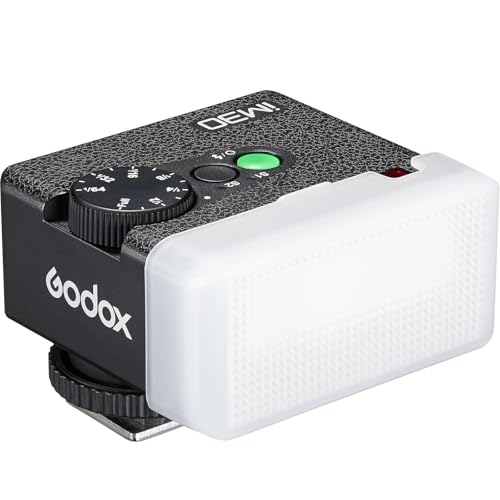
- Lightweight 78g portable design
- Seven manual power levels
- Diffuser cover included
Best For: Simple portable fill light with compatible cameras
Flexible Dual-Arm Macro Light

- Two independently bendable light arms
- 10 brightness levels with separate control
- 5600K, CRI 95+ continuous LEDs
Best For: Directional close-up food and macro lighting
Complete Kit Pick

- GN33 output with eight adjustable power levels
- Manual, S1, and S2 shooting modes
- Includes stand, pouch, and 12 color filters
Best For: Entry-level tabletop and product photography kits
Continuous Light Pick
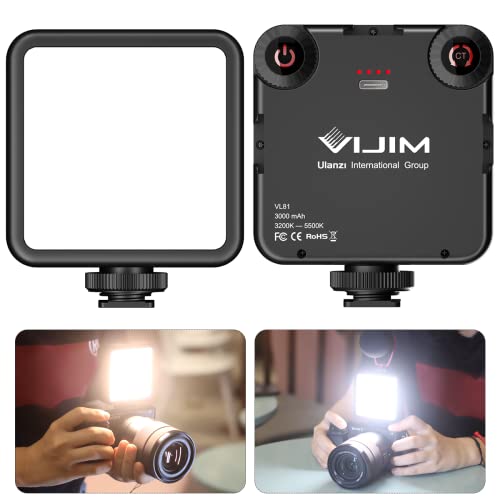
- 3200K–5600K bi-color output with CRI95
- Softbox provides gentler continuous illumination
- 3000mAh rechargeable battery with USB-C charging
Best For: Close-up food photos, video, and smartphone content
Compact Manual Pick

- 20Ws output with 1/128-to-1/1 manual control
- Lightweight 150g body with built-in battery
- No TTL or HSS; requires manual exposure settings
Best For: Portable tabletop setups with standard single-contact hot shoes
Budget Everyday Pick
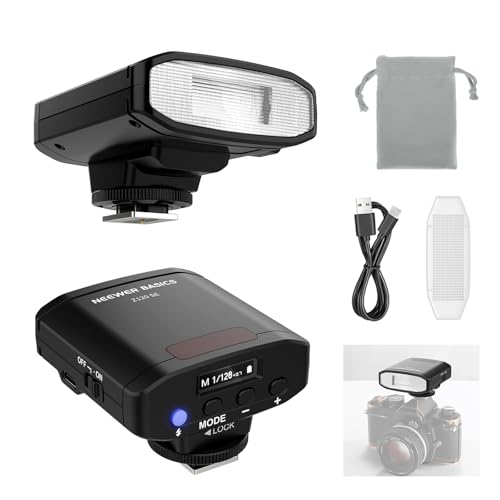
- GN12 output with 5600K daylight color
- Manual, S1, and S2 modes
- 128g body with up to 500 full-power flashes
Best For: Beginners building a simple manual tabletop lighting setup
Shadowless Macro Ring Flash – Godox ML150 II
For photographers seeking camera flashes for food photography, the Godox ML150 II offers even, surrounding illumination that can help reveal texture while reducing harsh shadows. Its diffuser, manual power control, and broad adapter-ring selection make it especially practical for close-up food and tabletop work.
Best For: Macro-style food photography, close-up subjects, and users who need adaptable lens compatibility.
Pros:
- Surrounding ring light produces shadowless illumination and controlled contrast.
- Includes eight adapter rings for 49mm through 77mm lens diameters.
- Offers 11 brightness levels for more precise manual adjustments.
- Built-in diffuser softens the light quality.
Cons:
- Uses four AA batteries.
- Its guide number of 12 is oriented toward close-up rather than long-distance lighting.
- Wired connectivity may be less convenient than a fully wireless setup.
The ML150 II is a focused choice when even, close-range lighting matters more than broad studio coverage. Its ring design and included adapters make it one of the more specialized options here for detailed food shots.
Color-Critical LED Panel – Ulanzi VL120 RGB
The Ulanzi VL120 is a compact continuous-light alternative for camera flashes for food photography. Its CRI 95+ output is designed to preserve natural-looking colors, while adjustable color temperature, brightness, and a built-in battery support flexible tabletop setups.
Best For: Food photographers who prefer continuous preview lighting, portable fill light, and adjustable color effects.
Pros:
- CRI 95+ output helps food retain natural-looking color.
- Color temperature adjusts from 2500K to 9000K.
- Small, portable design works as a key or backlight.
- Built-in 3100mAh battery supports up to three hours of continuous lighting and charging while in use.
Cons:
- It is a constant LED panel rather than a traditional flash.
- Not water resistant.
- Maximum brightness is specified at 1250 lux from 0.3 meters, so it is primarily suited to close-range lighting.
Choose the VL120 when seeing the lighting effect continuously is more useful than a burst of flash power. Its compact size and high color-rendering rating make it convenient for food, video, and small-product scenes.
Compact Manual Hot-Shoe Flash – Godox iM30 Mini Flash
The Godox iM30 is a lightweight option for photographers comparing camera flashes for food photography and wanting a simple hot-shoe unit. It provides seven manual power levels, a diffuser cover, and up to 230 flashes from two AAA batteries for straightforward fill light.
Best For: Portable food photography with compatible single-contact hot-shoe cameras.
Pros:
- Compact 78g design is easy to carry.
- Seven power levels range from 1/64 to full power.
- Guide number 15 provides useful fill light in varied environments.
- Diffuser cover helps reduce harsh shadows and protects the flash head.
Cons:
- Requires two AAA batteries, which are sold separately.
- Wide-angle or telephoto lenses may produce shadows.
- Compatibility depends on a single-contact hot shoe; camera compatibility should be verified before purchase.
The iM30 suits simple, mobile setups where low weight and manual control are priorities. It is less specialized than a ring flash, but its diffuser and adjustable output make it a practical general-purpose option for compatible cameras.
Flexible Dual-Arm Macro Light – JJC LED-ARM2
The JJC LED-ARM2 takes a flexible approach to camera flashes for food photography by using two bendable LED arms instead of a conventional flash burst. Independent positioning and brightness control let you place fill light around close-up dishes, ingredients, jewelry, and other small subjects.
Best For: Macro food photography requiring directional, adjustable fill from two flexible light arms.
Pros:
- Two independently controlled 11.4-inch bendable arms provide precise light placement.
- Offers left, right, or double-light modes with 10 brightness levels.
- 5600K daylight-balanced LEDs and CRI 95+ support natural-looking color.
- Built-in battery charges via USB-C.
Cons:
- Maximum battery runtime is about 90 minutes in double-light mode.
- It is a continuous LED light, not a traditional flash.
- Cold-shoe mounting may require a separate mounting solution for some setups.
The LED-ARM2 is a strong fit for controlled close-ups where directional shaping is important. Its dual-arm design offers more placement flexibility than a fixed panel, although the shorter runtime may matter during longer shoots.
Manual Control Pick – NEEWER TT560 Speedlite
For photographers seeking camera flashes for food photography, the NEEWER TT560 offers straightforward manual control and useful bounce positioning. Its eight power levels and tilting, swiveling head let you adjust light for tabletop scenes, but it requires compatible camera settings and hands-on exposure control.
Best For: Food photographers who want an affordable manual flash for controlled indoor setups and off-camera optical triggering.
Pros:
- Eight manual power levels from 1/128 to full power support precise adjustments.
- GN38 output provides useful reach for tabletop and small studio scenes.
- Tilts 0°–90° and rotates 0°–270° for bounce and directional lighting.
- Supports S1/S2 optical slave modes and PC sync for off-camera setups.
Cons:
- No TTL, HSS, automatic flash exposure, or camera-menu control.
- Requires four AA batteries, which are not included.
- Fujifilm and other compatible mirrorless cameras must use mechanical shutter mode.
The TT560 is a practical choice when you are comfortable setting flash power, ISO, aperture, and shutter speed manually. Check the detailed compatibility list before ordering, especially if using a newer or unusual camera body.
Complete Kit Pick – PHOTOOLEX FK300 Speedlite
The PHOTOOLEX FK300 is a practical option among camera flashes for food photography, combining manual output control with S1 and S2 optical triggering. It also includes a stand, pouch, and color filters, making it a convenient starting kit for tabletop experiments.
Best For: Beginners and product photographers who want a universal manual flash with basic accessories included.
Pros:
- Eight power levels range from 1/128 to full power for exposure control.
- Manual, S1, and S2 modes support on-camera or optical off-camera use.
- GN33 output and 5600K color temperature suit indoor product and food scenes.
- Includes a protective pouch, flash stand, and 12 color filters.
Cons:
- It is a manual flash without TTL automation.
- The listed FK300 version does not include a trigger.
- It is not water resistant.
With its universal single-contact hot shoe and broad camera compatibility, the FK300 keeps setup relatively simple. Its included accessories add flexibility, while the manual design favors photographers who prefer consistent, hands-on lighting adjustments.
Continuous Light Pick – ULANZI VL-81 LED
The ULANZI VL-81 is a continuous LED alternative for camera flashes for food photography. Its adjustable 3200K–5600K color range, CRI95 rating, softbox, and built-in battery make it useful when you want to preview the lighting effect while arranging food and props.
Best For: Food creators, smartphone shooters, and video setups that need portable continuous illumination rather than a flash burst.
Pros:
- Adjustable warm-to-daylight color temperature from 3200K to 5600K.
- CRI95 lighting is designed for natural-looking color rendering.
- Softbox helps provide a softer, less glaring light source.
- Built-in 3000mAh battery offers up to 150 minutes at maximum brightness and up to 480 minutes at minimum brightness.
Cons:
- This is a constant LED light, not a conventional flash speedlite.
- It is not water resistant.
- The compact light may provide less peak output than a dedicated flash for freezing motion.
The VL-81 is especially convenient for close-up food photos, video, and live content because its continuous output is easy to position and preview. Its three cold shoes also allow additional lights or accessories to be attached, though you should choose a speedlite instead if you need high-power flash bursts.
Compact Manual Pick – NEEWER Z160 SE Mini Flash
For photographers seeking compact camera flashes for food photography, the NEEWER Z160 SE offers adjustable manual output in a small, lightweight design. Its 20Ws output, 6000K color temperature, and S1/S2 optical slave modes can suit controlled tabletop setups, provided you are comfortable setting exposure manually.
Best For: Food photographers using standard center-contact hot shoes who want a portable manual flash for tabletop or small studio setups.
Pros:
- Compact 150g design helps reduce hand fatigue and fits easily in a camera bag.
- Manual power adjusts from 1/128 to 1/1 for controlled lighting.
- Built-in 1200mAh battery supports up to 650 full-power flashes.
- S1/S2 optical slave modes support simple off-camera triggering.
Cons:
- No TTL, HSS, camera-menu control, or automatic flash exposure.
- Works with Fujifilm and other compatible mirrorless cameras only in mechanical shutter mode.
- USB power adapter is not included.
The Z160 SE is a practical choice when you want repeatable manual lighting and low carrying weight. It is less suitable for fast-changing scenes or users who prefer automatic exposure.
Macro Detail Choice – NEEWER RF1-S Ring Flash
Among camera flashes for food photography, the NEEWER RF1-S stands out for close-up work on compatible Sony cameras. Its ring design provides 80-degree coverage around the lens, while independently controlled flash tubes can help shape illumination across detailed food subjects.
Best For: Sony photographers shooting close-up food details, ingredients, plating, or product-style tabletop images.
Pros:
- 80-degree coverage helps evenly brighten macro subjects and reduce harsh shadows.
- TTL, manual, and MULTI modes provide automatic, controlled, or stroboscopic lighting.
- Independent A/B tubes allow adjustable 8:1-to-1:8 lighting ratios.
- Includes eight lens adapter rings and four color gel filters.
Cons:
- Designed for Sony cameras rather than broad cross-brand compatibility.
- Requires four AA batteries and provides 100-1500 flashes depending on use.
- Its ring-flash format is more specialized than a conventional hot-shoe flash.
The RF1-S is the most feature-rich option here for Sony-based close-up food imagery. TTL support and adjustable tube ratios add flexibility, while the ring format is best reserved for macro-oriented compositions.
Budget Everyday Pick – NEEWER BASICS Z120 SE
The NEEWER BASICS Z120 SE is a straightforward option for camera flashes for food photography when you need a small, affordable manual speedlite for controlled shoots. It offers GN12 output, a 5600K color temperature, a diffuser, and optical slave modes for simple lighting arrangements.
Best For: Beginners and creators who need a lightweight manual flash for food, product, studio, or general everyday photography.
Pros:
- Very compact 128g body is convenient for travel and on-camera use.
- Manual output ranges from 1/128 to 1/1 for repeatable exposure control.
- Built-in 2000mAh battery supports up to 500 full-power flashes.
- Translucent diffuser provides softer fill light for compatible lenses.
Cons:
- No TTL, HSS, camera-menu control, or automatic flash exposure.
- Recommended for lenses 88mm or shorter; longer lenses may underexpose the lower frame.
- Compatible cameras need a standard center trigger pin, and mirrorless cameras may require mechanical shutter mode.
The Z120 SE keeps the essentials simple and portable. It is a sensible starter flash for repeatable tabletop lighting, but photographers wanting automatic exposure or more advanced synchronization should look elsewhere.
How We Picked the Best Camera Flashes for Food Photography
We focused on lighting tools that suit real food-shooting workflows: tabletop compositions, close-up details, recipe content, restaurant work, and portable setups. We considered output control, color consistency, recycle or battery performance, compatibility, mounting flexibility, and how easily each option can be softened or repositioned.
The list includes both traditional flashes and continuous LED lights because each solves a different problem. Flash is useful for freezing motion and overpowering ambient light, while LED lighting makes it easier to preview shadows and brightness before taking a photo.
Quick Comparison
| Lighting type | Best for | Main advantage | What to watch |
|---|---|---|---|
| Macro ring flash | Close-up food details | Even front lighting | Can look flat without added shaping |
| Manual speedlight | Budget tabletop studios | Adjustable, directional output | Requires manual exposure practice |
| Mini flash | Travel and compact cameras | Small size | Lower power and limited control |
| LED video light | Recipe videos and previews | Constant, visible illumination | Usually less powerful than flash |
Key Buying Factors for Camera Flashes for Food Photography
Power and Control
Food is usually photographed at close range, so extreme flash power is not always necessary. Look for adjustable output, ideally across a broad range, so you can preserve highlights on glossy sauces, glassware, and pale plates. Higher output is more useful when bouncing light or working with larger modifiers.
Light Quality and Shaping
A bare flash can create harsh shadows and bright specular highlights. Check whether the unit works with a softbox, umbrella, bounce card, diffuser, or reflector. Ring flashes provide even illumination around the lens but may need side light or negative fill to create depth.
Color and Consistency
A daylight-balanced flash can simplify white-balance settings, while a bi-color or RGB LED gives more creative control. For food, consistent color is generally more valuable than dramatic effects, especially when photographing ingredients and finished dishes for menus or listings.
Compatibility and Triggering
Confirm hot-shoe compatibility before buying. Some flashes are fully manual and use a single contact; others support brand-specific TTL functions. TTL can speed up changing compositions, but manual control is often more predictable in a fixed tabletop setup.
Battery and Workflow
Consider recycle time, battery capacity, charging method, and whether the light can stay powered through a long session. Rechargeable LED lights are convenient for video and behind-the-scenes work, while replaceable or easily recharged flash batteries can be practical for still photography.
Who Should Buy Which Camera Flashes for Food Photography?
- Choose a macro ring flash if you regularly photograph plated details, garnishes, textures, or small ingredients from close range.
- Choose a manual speedlight if you want an affordable starting point for bounced or diffused tabletop lighting.
- Choose a compact mini flash if portability matters more than maximum output and you use a smaller camera setup.
- Choose an LED light if you shoot food video, need to preview shadows, or want one light for both stills and motion.
- Choose a more powerful, battery-powered unit if you work quickly, use modifiers, or need consistent output across many dishes.
For the most natural-looking results, pair any of these lights with diffusion and a reflector. Position the main light to reveal texture from the side or rear, then use the reflector to control shadows rather than eliminating them completely.