
A capable field monitor can make focusing, exposure, framing, and client viewing much easier—especially when wireless video keeps the director or camera operator free from extra cables.
This roundup compares 10 options across wireless transmission, screen brightness, camera control, monitoring tools, and portability so you can match the monitor to your shooting style and budget.
Best 10 Camera Field Monitors with Wireless Video Picks for 2026
Best All-in-One Wireless Monitor

- 7-inch 1000-nit REC.709 display
- Transmitter, receiver, and monitor modes
- Camera control, LUTs, and streaming
Best For: Professional crews needing an integrated wireless monitoring hub
Best Brightness Value
NEEWER F700 7-inch Field Monitor

- 2000-nit 1080p touchscreen
- 4K HDMI loop-in and loop-out
- Waveform, vectorscope, LUTs, and false color
Best For: Daylight monitoring with a separate wireless-video transmitter
Best for Multi-User Shoots
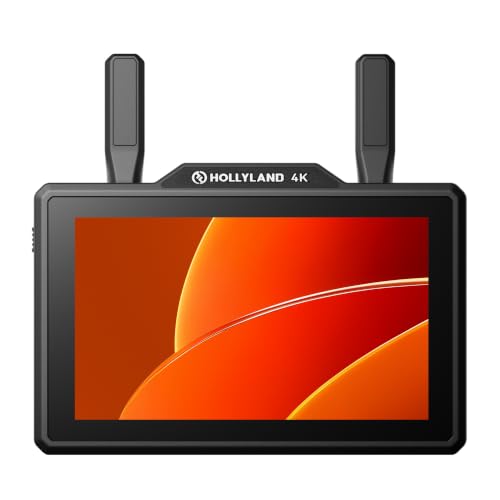
- 5.5-inch 1500-nit display
- HDMI and SDI with 60ms latency
- Up to 400m range and four receivers
Best For: Film and live-production crews sharing wireless video
Best Lightweight Camera Control

- 245g lightweight design
- Wired touchscreen camera control
- HDMI 3D LUT output for wireless workflows
Best For: Compact rigs using a separate wireless transmitter
Bright Outdoor Monitoring
NEEWER F700 7" Monitor with Battery
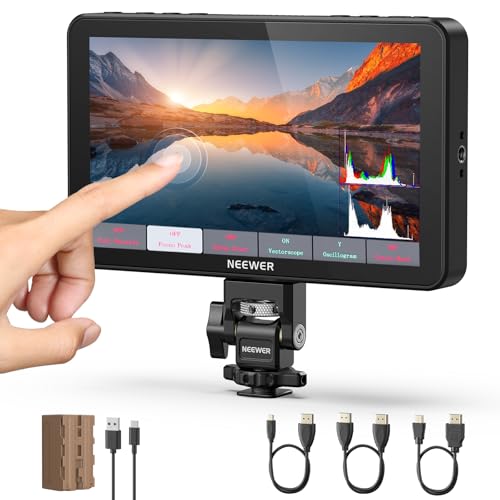
- 2000-nit touchscreen for daylight visibility
- 4K HDMI loop-through and pro monitoring tools
- Includes 5200mAh NP-F750 battery
Best For: Outdoor HDMI monitoring with included battery power
Wireless Camera Control
Portkeys LS7P 7" Touchscreen Monitor

- Wireless control for many supported camera models
- Adjusts aperture, shutter, ISO, and white balance
- Supports up to four monitors within 50 meters
Best For: Multi-camera workflows using compatible cameras
High-Brightness Value Pick

- 2000-nit display with automatic brightness adjustment
- 4K HDMI loop-through and extensive scopes
- Uses optional NP-F batteries or USB-C power
Best For: Bright HDMI monitoring for users with existing NP-F batteries
Best for Camera Control
Portkeys LH5C 5.4-inch Monitor

- Touchscreen control for compatible Sony, Canon, and Panasonic cameras
- 800-nit display with 10-bit color and Rec.709 coverage
- Freeze-frame overlays, waveform, LUTs, and professional assist tools
Best For: Filmmakers needing wired camera control and detailed on-set monitoring
Best Bright Touchscreen Value
VILTROX DC-550 5.5-inch Monitor

- 1200-nit touchscreen for clearer daylight viewing
- 4K HDMI input/output with 1080p native display
- Includes NP-F550 battery, cables, sunshade, and case
Best For: Outdoor shooters wanting a bright, ready-to-use HDMI monitor
Best Large-Screen Budget Pick

- Large 7-inch IPS screen with 1280x800 resolution
- Includes 4400mAh battery, ball head, cables, and sunshade
- Focus peaking, histogram, safe frames, freeze, and pixel-to-pixel tools
Best For: Creators wanting a large, affordable wired HDMI field monitor
Best All-in-One Wireless Monitor – Accsoon CineView M7H Pro
Accsoon CineView M7H Pro 4K60 Wireless Video Transmitter Receiver&Camera Monitor, 7" Camera Control
Check Price On AmazonFor productions that need camera field monitors with wireless video, the Accsoon CineView M7H Pro combines a 7-inch monitor, wireless transmitter, and receiver in one compact unit. Its 1000-nit, factory-calibrated display, camera-control options, LUT tools, and SRT/RTMP streaming support make it especially versatile for professional HDMI workflows.
Best For: Filmmakers and live-production teams that want one device for monitoring, wireless transmission, reception, camera control, and streaming.
Pros:
- Three operating modes: monitor, transmitter, and receiver.
- Factory-calibrated REC.709 display with Delta E below 2 and 1000-nit brightness.
- Supports camera control, 3D LUT processing, and SRT/RTMP streaming.
- Can transmit wirelessly to up to four compatible devices.
Cons:
- Camera control and live streaming are limited to Monitor Mode.
- Compatibility varies by camera model and control method.
- Its feature-rich design may be more than needed for basic on-camera monitoring.
The M7H Pro is a strong choice when a shoot benefits from an integrated wireless-video hub rather than a monitor alone. Confirm camera compatibility and the required CineView ecosystem before buying.
Best Brightness Value – NEEWER F700 7-inch Field Monitor
The NEEWER F700 is a practical 7-inch monitor for daylight shooting, though it is a wired HDMI model rather than a wireless video system. Its 2000-nit touchscreen, HDMI loop-through, extensive exposure tools, and flexible battery options make it a useful foundation for a camera rig that uses a separate wireless transmitter.
Best For: Shooters who prioritize a very bright display and detailed monitoring tools over built-in wireless transmission.
Pros:
- 2000-nit 1080p touchscreen with manual and automatic backlight control.
- HDMI input and loop-out support up to 4K formats.
- Includes waveform, vectorscope, histogram, false color, zebras, and focus peaking.
- Supports NP-F batteries, USB-C charging, and DC power.
Cons:
- Does not include built-in wireless video transmission or reception.
- NP-F batteries and the DC cable may require separate purchasing depending on the package.
- The monitor is substantially heavier when used with two batteries.
Choose the F700 if your wireless-video setup will be handled by another device and you want maximum screen brightness plus professional exposure aids. Its loop-through output can also simplify connection to an external transmitter or recorder.
Best for Multi-User Shoots – Hollyland Pyro 5 4K
The Hollyland Pyro 5 is designed for camera field monitors with wireless video, pairing a 5.5-inch, 1500-nit display with integrated transmission and reception. Its HDMI and SDI connectivity, 60ms latency, up to 400m line-of-sight range, and support for up to four receivers suit collaborative film, event, and live-production environments.
Best For: Crews that need wireless video distribution to multiple monitors in film production, live events, or ENG/EFP work.
Pros:
- Combines a transmitter, receiver, and monitor in one unit.
- Supports HDMI and SDI input/output with 4K30 input and output.
- Provides 60ms latency and up to 400m line-of-sight transmission range.
- Offers dual-band frequency hopping, RTMP streaming, 3D LUTs, and recording features.
Cons:
- The 5.5-inch display is smaller than the 7-inch panels in this roundup.
- Its advanced wireless ecosystem may be unnecessary for simple single-camera monitoring.
- Actual range depends on shooting conditions and line of sight.
The Pyro 5 is a compelling fit when reliable wireless distribution matters more than having the largest screen. Its SDI support and multi-receiver capability broaden its usefulness on professional sets and live productions.
Best Lightweight Camera Control – Portkeys LH7C 7-inch Monitor
The Portkeys LH7C is a lightweight 7-inch wired monitor for camera operators who need touchscreen control and a clean rig. It is not a wireless transmitter or receiver by itself, but its HDMI 3D LUT output can feed a separate wireless transmitter for consistent color across a production team.
Best For: Gimbal, cage, and compact-rig users who want wired camera control, LUT output, and a low-weight monitoring setup.
Pros:
- Supports wired touchscreen control for a broad range of Sony, Canon, and Panasonic cameras.
- 7-inch 1000-nit panel with 10-bit color support and up to 20 custom 3D LUTs.
- HDMI 3D LUT output can send a graded signal to a wireless transmitter or director monitor.
- Weighs about 245g and includes 1/4-inch mounting threads.
Cons:
- Wireless video requires a separate transmitter and receiver system.
- Battery is not included.
- Camera-control compatibility depends on the specific model and current firmware.
The LH7C makes sense as a lightweight control monitor within a larger wireless-video workflow. Its LUT output is particularly useful when the camera operator needs to share a consistent, graded image with remote viewers.
Bright Outdoor Monitoring – NEEWER F700 7" Monitor with Battery
For filmmakers seeking camera field monitors with wireless video, the NEEWER F700 is a bright, feature-rich option for HDMI-based monitoring. Its 2000-nit touchscreen, 4K HDMI loop-through, and built-in exposure tools are useful for outdoor production and detailed on-set evaluation, although wireless video transmission is not listed among its supplied features.
Best For: Outdoor DSLR and mirrorless shoots that need a high-brightness monitor, professional scopes, and flexible battery power.
Pros:
- 2000-nit 7-inch IPS touchscreen with automatic or manual backlight control.
- 4K HDMI loop input and output with headphone monitoring.
- Includes a 5200mAh NP-F750 battery and supports USB-C charging, NP-F batteries, and DC power.
- Offers waveform, vectorscope, false color, zebras, histogram, focus peaking, HDR, and custom 3D LUT support.
Cons:
- Wireless video capability is not specified; operation is HDMI-based.
- The included battery adds weight, bringing the monitor to about 23.1 ounces with battery.
- DC cable, headphones, and SD card are not included.
The F700 stands out when visibility in bright conditions and comprehensive monitoring tools matter most. Its included battery and dummy-battery output also make it a practical choice for longer field setups.
Wireless Camera Control – Portkeys LS7P 7" Touchscreen Monitor
Among camera field monitors with wireless video, the Portkeys LS7P is the most focused on wireless camera control rather than wireless video transmission. Its built-in wireless module supports compatible cameras from major brands, while the 1000-nit touchscreen provides a practical interface for adjusting key camera settings and touch focus.
Best For: Multi-camera crews and operators who need wireless control of compatible Sony, Canon, Nikon, Panasonic, Blackmagic, RED, or ARRI cameras.
Pros:
- Built-in wireless control for supported cameras from major manufacturers.
- Can adjust aperture, shutter speed, ISO, and white balance from the monitor.
- Supports control of up to four compatible Portkeys monitors within 50 meters.
- Includes Log Stop exposure zones, freeze-frame comparison, and dual LUT calibration features.
Cons:
- The supplied information describes wireless camera control, not wireless video transmission.
- At 1000 nits, it is less bright than the 2000-nit NEEWER options in this roundup.
- Compatibility and functions depend on the camera model and current firmware.
The LS7P is the specialized pick for crews that want to operate compatible cameras from the monitor. Update the firmware as directed, especially because the supplied notes mention improvements for fan noise and fan-speed control.
High-Brightness Value Pick – NEEWER F700 7" Monitor
If you are comparing camera field monitors with wireless video but primarily need a dependable wired display, this battery-free NEEWER F700 offers strong HDMI monitoring fundamentals. It combines a 2000-nit IPS touchscreen with 4K loop-through, exposure-assist tools, custom LUT support, and automatic brightness adjustment for changing conditions.
Best For: Shooters who already own NP-F batteries and want a bright, flexible HDMI field monitor without paying for an included battery.
Pros:
- 2000-nit IPS touchscreen with ambient-light-assisted automatic brightness adjustment.
- 4K HDMI loop input and output supports a broad range of video formats.
- Includes waveform, vectorscope, false color, zebras, histogram, HDR, and focus-peaking tools.
- Accepts NP-F550/750/970 batteries and USB-C power, and can provide 8V/1.5A dummy-battery output.
Cons:
- Battery is not included.
- Wireless video transmission is not listed; the monitor uses HDMI connectivity.
- DC cable, headphones, and SD card are not included.
This version is a sensible choice for users who already have compatible NP-F batteries or prefer to choose their own power setup. Its high brightness and extensive image-analysis tools give it strong value for outdoor and production monitoring.
Best for Camera Control – Portkeys LH5C 5.4-inch Monitor
For camera field monitors with wireless video searches that actually need a wired control workflow, the Portkeys LH5C offers direct touchscreen control for selected Sony, Canon, and Panasonic cameras. Its bright 800-nit display, extensive monitoring tools, and freeze-frame overlay make it well suited to demanding on-location shoots.
Best For: Filmmakers who want touchscreen camera control, shot-matching tools, and accurate monitoring in a compact field monitor.
Pros:
- Touchscreen control of aperture, shutter speed, ISO, and white balance on compatible cameras
- 1920×1152 display with 800-nit brightness, Rec.709 coverage, and 10-bit color depth
- Includes waveform, histogram, false color, focus peaking, zebra, audio meters, and 3D LUT support
- Freeze-frame overlay comparison helps match continuity and composition
Cons:
- Wireless video transmission is not listed; camera connection is via HDMI and control is wired
- Battery is not included
- Full camera compatibility varies by model, with some features dependent on firmware
The LH5C is a feature-rich choice when control and professional image-assist tools matter more than built-in wireless transmission. Verify your camera model before buying, and plan on supplying an NP-F battery or USB-C power.
Best Bright Touchscreen Value – VILTROX DC-550 5.5-inch Monitor
The VILTROX DC-550 is a practical option for camera field monitors with wireless video searches when daylight visibility and flexible HDMI monitoring are priorities. Its 1200-nit touchscreen, 4K HDMI input/output, included battery, and professional exposure tools make it ready for outdoor production.
Best For: DSLR, mirrorless, camcorder, and cinema-camera users who want a bright touchscreen monitor with loop-through HDMI and included power accessories.
Pros:
- 1200-nit 5.5-inch IPS touchscreen is designed for daylight viewing
- Supports up to 4K 30Hz HDMI input and output for loop-through monitoring
- Offers waveform, vector graph, histogram, false color, focus assist, HDR, and 3D LUT support
- Includes an NP-F550 battery, sunshade, cables, cold-shoe adapter, and carry case
Cons:
- Wireless video transmission is not specified; connectivity is HDMI-based
- Native panel resolution is 1920×1080 despite support for higher-resolution HDMI signals
- Included NP-F550 battery may provide less capacity than larger NP-F options
With its high brightness and generous accessory bundle, the DC-550 is one of the more convenient choices for mobile shooting. It is especially appealing if you want a touchscreen interface and HDMI loop-out without purchasing a battery separately.
Best Large-Screen Budget Pick – NEEWER F100 7-inch Monitor
For shoppers comparing camera field monitors with wireless video, the NEEWER F100 is a straightforward wired HDMI monitor that emphasizes a large viewing area and a useful included kit. Its 7-inch screen, rechargeable battery, sunshade, and focus-assist tools suit basic field production and content creation.
Best For: Creators who prefer a larger 7-inch preview screen and need an affordable monitor with included battery and mounting accessories.
Pros:
- Large 7-inch IPS display with 1280×800 resolution and matte finish
- Supports numerous HD video formats through its full HDMI input
- Includes focus peaking, histogram, safe frames, image flip, freeze, and pixel-to-pixel tools
- 4400mAh F750 battery provides a stated runtime of about 3.5 hours
Cons:
- Wireless video capability is not listed; it uses HDMI input
- 450-nit brightness is lower than the brighter monitors in this roundup
- Display resolution is 1280×800 rather than Full HD
The F100 makes sense when screen size and an all-in-one accessory package are more important than maximum brightness or resolution. Its included battery, ball head, cables, and sunshade reduce setup costs, though outdoor users should rely on the hood for better visibility.
How We Picked These Camera Field Monitors with Wireless Video
We selected monitors and monitor-transmitter combinations based on the features that matter most on set: screen visibility, supported video formats, wireless range and latency, monitoring tools, camera control, connectivity, power options, and overall practicality. Because not every model includes a built-in wireless transmitter and receiver, check the product configuration carefully before buying. Some are complete wireless monitoring systems, while others are wired field monitors designed to pair with separate video transmitters.
We also considered whether each model suits bright outdoor work, handheld rigs, studio production, interviews, filmmaking, or remote client monitoring. Stated specifications can vary by camera, cable, firmware, environment, and wireless interference, so treat range figures as ideal-condition estimates rather than guaranteed working distances.
Quick Comparison
| What to Compare | Best For |
|---|---|
| Built-in wireless transmission | Remote viewing and cable-free camera operation |
| High brightness, 1,000 nits or more | Outdoor shoots and direct sunlight |
| 7-inch display | Detailed focus checking and client viewing |
| 5.4- to 5.5-inch display | Compact rigs, gimbals, and handheld cameras |
| Camera control support | Adjusting compatible cameras from the monitor |
| HDMI loop-through and 3D LUTs | On-set viewing, grading previews, and multiple displays |
Key Buying Factors for Camera Field Monitors with Wireless Video
Wireless Performance
Look beyond advertised distance. Low latency is important for camera operation, while reliable transmission matters more than maximum range in crowded locations. Confirm whether the unit includes both transmitter and receiver hardware, supports your camera’s output resolution and frame rate, and can transmit to the intended monitor, phone, tablet, or receiver.
Brightness and Screen Size
For outdoor production, prioritize a genuinely bright display, a sun hood, and a matte or glare-resistant surface. A 7-inch screen provides more room for focus and exposure tools; a smaller display saves weight on gimbals and compact cameras.
Monitoring and Control Tools
Useful features include waveform, vectorscope, false color, zebras, focus peaking, anamorphic de-squeeze, frame guides, histogram, and 3D LUT support. Camera control is model-specific, so verify compatibility with your exact Sony, Canon, ARRI, or other camera body rather than relying on a general compatibility label.
Power and Rigging
Check battery type, DC input, USB power options, runtime, mounting points, and total rig weight. HDMI loop-through can simplify multi-monitor setups, while durable frames and locking connections are valuable for frequent production work.
Who Should Buy Which Camera Field Monitors with Wireless Video?
Choose a wireless transmitter-and-monitor system if you need director viewing, remote camera operation, or fewer cables around a moving rig. Choose a high-brightness 7-inch monitor if outdoor visibility and detailed focus checking are priorities. A compact 5.4- or 5.5-inch model is better for gimbals, run-and-gun filming, and lightweight builds. Camera operators using supported Sony or ARRI bodies should prioritize compatible wired or wireless control, while budget-focused buyers can select a straightforward HDMI monitor and add wireless transmission later if needed.