
Camera external recorders with HDMI input can turn a camera, console, security system, or legacy video source into a more flexible recording setup. The right model depends on whether you need 4K pass-through, standalone recording, live streaming, multi-input switching, or support for older connections.
We selected 10 options spanning compact capture boxes, screen-equipped recorders, HDMI camera systems, and versatile video converters. Use the guide below to match recording quality, connectivity, controls, and workflow to your setup before buying.
Best 10 Camera External Recorders with Hdmi Input Picks for 2026
Best Standalone DVR

- 4K pass-through with 1080p60 recording
- H.265 encoding helps save storage space
- Records to drives, microSD, or NAS
Best For: PC-free recording and flexible home media capture
Best DVD Archiving Option
Panasonic DMR-ES25S DVD Recorder
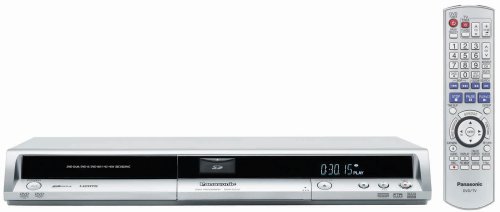
- FireWire input for compatible camcorders
- Records several DVD formats
- HDMI up-conversion to 1080p
Best For: Camcorder dubbing and DVD-based video archiving
Best Direct-Display Camera
LINOVISION HD1080P Security Camera

- Direct HDMI or VGA output
- 1080p video with a wide 103.5° view
- HDTVI loopout supports DVR recording
Best For: Monitoring and DVR-connected security camera installations
Best Portable 4K Capture Device
UNISHEEN UR-M2 Capture Recorder

- 4K60 input with 1080p60 recording
- HDMI and DisplayPort over USB-C
- Compact plug-and-play design
Best For: Portable capture, streaming, and mixed HDMI/USB-C setups
Versatile 4K Capture Box
HDMI and Analog Video Recorder

- Captures HDMI up to 4K30 or 1080p60 with audio
- Digitizes VHS and other analog sources up to 480p
- Standalone recording with 5-inch LCD preview
Best For: Mixed HDMI and analog capture without a computer
Industrial 4K Camera Output

- Provides 4K30 HDMI and USB outputs
- Supports simultaneous HDMI and USB display
- Manual 4x varifocal zoom lens with industrial housing
Best For: Fixed monitoring and HDMI capture setups needing a camera source
Dual-Input 4K Capture Recorder
7-Inch PIP HDMI Video Recorder

- Accepts two HDMI sources up to 4K60
- Offers PIP, POP, and PMP multiview layouts
- Records to SD or USB with a built-in 7-inch monitor
Best For: Multi-camera and multi-source HDMI capture workflows
Premium 4K Standalone Recorder
ZowieREC 4K HDMI Video Recorder

- PC-free recording up to 4K at 30fps
- 4K pass-through with TF card or USB storage
- Pause, schedule, and resume recording functions
Best For: Standalone 4K recording from HDMI-output devices
Simple 1080p USB Recorder
1080P HDMI Video Capture Card HD Game Recorder
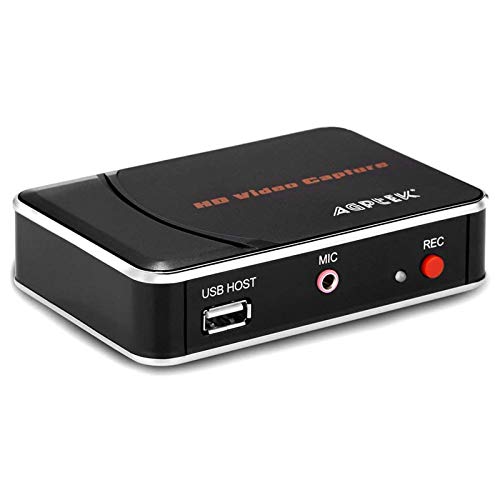
- One-touch 1080p recording without a PC
- Saves to USB flash drives or external hard drives
- Adds commentary through a 3.5mm microphone input
Best For: Simple local recording of cameras, consoles, and HDMI sources
Multi-Input Field Recorder
UR500A 1080p60 Video Recorder with 7-Inch Screen
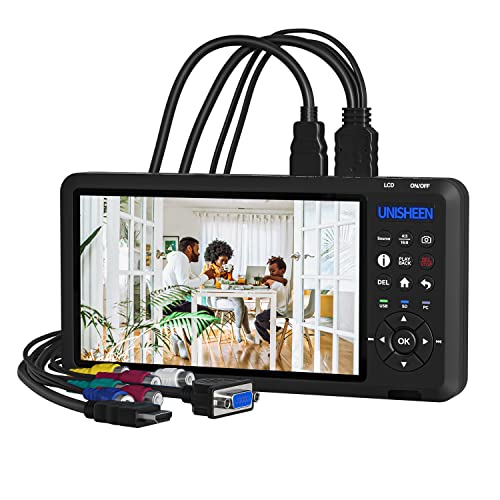
- Captures HDMI and four additional video input types
- Built-in 7-inch preview screen and HDMI loop-out
- Supports local recording and USB streaming with OBS
Best For: Mixed-source capture, field monitoring, and legacy video equipment
Best Standalone DVR – AVerMedia EZRecorder 330G
The AVerMedia EZRecorder 330G is a practical choice among camera external recorders with HDMI input when you want 4K pass-through and Full HD recording without connecting a PC. It accepts HDMI sources such as camcorders, DSLRs, and game consoles, while supporting flexible storage through external drives, microSD cards, or NAS.
Best For: Users who want PC-free 1080p60 recording, 4K viewing, and flexible storage options.
Pros:
- Passes through 4K content while recording in Full HD.
- Uses H.265 encoding to reduce file sizes while retaining video quality.
- Supports external hard drives, microSD cards, and NAS storage.
- Can stream directly to YouTube, Facebook, or Twitch without a PC.
Cons:
- Does not support recording encrypted or HDCP-protected content.
- MicroSD card is not included.
- Remote-control batteries are not included.
With its standalone operation, IR blaster, and scheduled recording support, the EZRecorder 330G is a versatile option for home media recording and console capture, provided your source does not use HDCP.
Best DVD Archiving Option – Panasonic DMR-ES25S DVD Recorder
The Panasonic DMR-ES25S is a legacy-style recording solution for shoppers comparing camera external recorders with HDMI input and physical-media support. It combines DVD recording with a FireWire input for direct camcorder dubbing, plus HDMI up-conversion for compatible displays.
Best For: Users archiving camcorder footage to DVD and handling older analog or FireWire-based setups.
Pros:
- Includes a FireWire port for direct dubbing from compatible camcorders.
- Records to DVD-R/RW, DVD+R/RW, and DVD-RAM media.
- Offers HDMI output with up-converted video up to 1080p.
- Includes composite, S-Video, component, RF, and SD card connectivity.
Cons:
- Its HDMI connection is listed as an output rather than an HDMI recording input.
- Designed around DVD recording instead of modern file-based capture.
- Uses NTSC analog video formatting.
The DMR-ES25S makes the most sense for DVD and camcorder archiving rather than contemporary HDMI capture. Check your source device and media requirements carefully before choosing it for a modern recording workflow.
Best Direct-Display Camera – LINOVISION HD1080P Security Camera
The LINOVISION HD1080P is a security camera rather than a standalone recorder, but it can complement camera external recorders with HDMI input by providing direct HDMI or VGA video output. Its loopout and switchable video formats also support connection to a DVR or XVR for continuous recording.
Best For: Indoor or outdoor monitoring setups that need direct display and a compatible DVR/XVR recording path.
Pros:
- Outputs HD video directly to an HDMI monitor or TV without an encoder or DVR.
- Provides a 2MP 1080p image and a 103.5-degree field of view.
- Includes HDTVI loopout for continuous DVR or XVR recording.
- IP67-rated construction supports indoor and outdoor installation.
Cons:
- It is a camera, not a standalone HDMI video recorder.
- Uses a fixed 2.8mm lens rather than a variable lens.
- Requires a separate DVR or XVR for ongoing recording.
This model is best viewed as an HDMI-output camera source. Pair it with a compatible recorder when you need stored footage, while using its direct output for low-delay monitoring.
Best Portable 4K Capture Device – UNISHEEN UR-M2 Capture Recorder
The UNISHEEN UR-M2 is a compact option for camera external recorders with HDMI input, supporting 4K60 input and 1080p60 recording in a portable 107 × 60 × 18 mm design. It also accepts DisplayPort over USB-C, making it useful for cameras, game consoles, computers, phones, and other compatible sources.
Best For: Portable game capture, camera recording, live streaming, and setups that need HDMI or USB-C DisplayPort input.
Pros:
- Supports 4K60 input and 1080p60 recording.
- Accepts HDMI or DisplayPort over USB-C.
- Plug-and-play operation does not require additional drivers.
- Includes AUX connectivity for headphones or microphones.
Cons:
- Records using H.264 rather than the more storage-efficient H.265 format.
- Its compact interface may require compatible USB-C or HDMI cabling for each source.
- Listed recording resolution is up to 1080p60 despite 4K60 input support.
The UR-M2 stands out for portability and broad source compatibility. It is a strong fit for creators who need quick capture and monitoring, especially when 4K pass-through and USB-C connectivity are more important than 4K recording.
Versatile 4K Capture Box – HDMI and Analog Video Recorder
For shoppers comparing camera external recorders with HDMI input, the SoundBeast 4K HD Video Capture Box stands out for combining HDMI and analog capture in a standalone unit. It can record to removable storage without a computer, while also supporting Windows-based USB streaming through OBS.
Best For: Users digitizing footage from HDMI cameras, camcorders, VHS, VCRs, DVDs, and other analog sources who want a built-in preview screen.
Pros:
- Captures HDMI video up to true 4K at 30 fps or 1080p at 60 fps with audio.
- Supports AV, VHS, VCR, DVD, Hi8, and MiniDV capture up to 480p.
- Standalone operation with a 5-inch LCD, built-in speaker, and MP4 recording to SD card or USB storage.
- Includes a remote, HDMI cable, AV adapter, USB cable, charger, and two-year warranty.
Cons:
- Does not record or stream copyrighted or content-protected HDMI sources.
- USB live streaming is limited to Windows and OBS; Mac and XSplit are not supported.
- Storage media is not included.
This is a flexible choice when your setup includes both modern HDMI equipment and legacy analog video. Its built-in display and no-computer recording are especially practical, though protected sources and platform limitations should be checked before purchase.
Industrial 4K Camera Output – Manual-Zoom HDMI USB Camera
Although it is a camera rather than a standalone recorder, this ELP model is relevant to camera external recorders with HDMI input because it provides a direct HDMI feed alongside USB output. Its manual varifocal lens and industrial housing make it suited to fixed monitoring or production setups that need flexible framing.
Best For: Industrial monitoring, presentations, and camera setups that need simultaneous HDMI display and USB computer connectivity.
Pros:
- Outputs 4K video at 30 fps through HDMI and USB.
- HDMI and USB outputs can operate simultaneously in three selectable display modes.
- 2.8–12mm manual varifocal lens provides 4x optical zoom plus 2x digital zoom.
- UVC plug-and-play support works with computers, Android devices, Raspberry Pi, and direct HDMI displays.
Cons:
- Manual focus and manual zoom require hands-on adjustment.
- This is a camera and does not provide built-in video recording.
- It is not water resistant.
The ELP is best viewed as a 4K HDMI source for a separate recorder, monitor, or capture system. Its concurrent outputs and adjustable lens are useful, but buyers needing an all-in-one recording device will need additional hardware.
Dual-Input 4K Capture Recorder – 7-Inch PIP HDMI Video Recorder
For more advanced camera external recorders with HDMI input, this two-channel capture box accepts up to two 4K60 HDMI sources and adds source switching, multiview layouts, and a built-in 7-inch screen. It can record to SD or USB storage and stream to OBS on Windows, Mac, or Linux.
Best For: Multi-source camera, console, or presentation workflows that benefit from two HDMI inputs and picture-in-picture monitoring.
Pros:
- Two HDMI inputs support sources up to 4K60.
- Provides PIP, POP, and PMP layouts for multi-source viewing.
- Built-in 7-inch monitor enables preview and playback without relying on a separate display.
- Records MP4 video to SD, USB flash, or USB hard drives and supports Windows, Mac, and Linux streaming.
Cons:
- Outputs captured video at 1080p60 rather than 4K.
- SD cards and USB storage are not included.
- Does not record or stream copyrighted or content-protected HDMI sources.
This UNISHEEN UR500 is a strong fit for operators who need two HDMI sources and on-device monitoring in a portable recorder. Its 1080p output and content-protection restriction are important considerations if your workflow requires 4K recording or protected video capture.
Premium 4K Standalone Recorder – ZowieREC 4K HDMI Video Recorder
For shoppers comparing camera external recorders with HDMI input, the ZowieREC stands out as a standalone option with 4K pass-through and recording features. It records without a PC, supports TF card or USB storage, and can pause, resume, or schedule sessions.
Best For: Users who want standalone 4K HDMI recording for cameras, consoles, computers, or other HDMI-output devices.
Pros:
- Records up to 4K at 30fps without a PC.
- Supports 4Kp60 pass-through and 1080p120 input, with recording up to 1080p60.
- Offers TF card and USB storage, plus pause, resume, and scheduled recording.
- Premium aluminum casing and included remote controller.
Cons:
- Does not support protected or copyrighted HDMI sources.
- AV-to-HDMI adapter is not included.
- Recording at 4K input is downgraded to 1080p60.
This is a feature-rich pick for buyers prioritizing PC-free recording and smooth HDMI pass-through. Check the supported resolutions carefully if native 4K recording is essential.
Simple 1080p USB Recorder – 1080P HDMI Video Capture Card HD Game Recorder
This MYPIN model is a straightforward choice among camera external recorders with HDMI input, especially for users who want one-touch 1080p recording without a computer. It saves directly to a USB flash drive or external hard drive and includes a microphone input for commentary.
Best For: Console, camera, and HDMI-source users who need simple 1080p recording directly to USB storage.
Pros:
- Records 1080p video directly to USB storage without a PC.
- Supports USB 3.0 and USB 2.0, with USB flash drives up to 128GB and hard drives up to 2TB.
- Includes a 3.5mm TRS microphone input for external commentary.
- One-touch start and stop operation.
Cons:
- Does not support live streaming or software such as OBS Studio and VLC.
- Does not work directly with a PC for recording.
- Microphone input does not record party chat.
Choose this recorder for uncomplicated local capture rather than streaming. Its direct-to-USB workflow is convenient, but buyers needing OBS compatibility should consider another model.
Multi-Input Field Recorder – UR500A 1080p60 Video Recorder with 7-Inch Screen
For buyers seeking flexible camera external recorders with HDMI input, the UNISHEEN UR500A combines HDMI capture with DVI, CVBS, VGA, and YPBPR inputs. Its built-in 7-inch screen, multiple storage options, USB streaming support, and battery compatibility make it suited to varied recording setups.
Best For: Users capturing video from modern and legacy sources, monitoring on location, or connecting the recorder to a computer for streaming.
Pros:
- Captures up to 1080p60 from sources up to 4K30.
- Accepts HDMI, DVI, CVBS, VGA, and YPBPR inputs.
- Provides a built-in 7-inch preview screen and HDMI loop-out.
- Records to SD cards, USB flash drives, or external hard drives and supports USB streaming with OBS.
Cons:
- Storage media and compatible batteries are sold separately.
- Protected or copyrighted HDMI sources appear as a black screen.
- Requires a USB 2.0 interface for computer use.
The UR500A is the most versatile option here for mixed-source capture and field monitoring. Its broad input selection and battery support are useful, though the required accessories add to the setup cost.
How We Picked the Best Camera External Recorders with Hdmi Input
We compared these Camera External Recorders with Hdmi Input by focusing on practical workflow features rather than headline resolution alone. Key considerations included maximum input and recording resolution, frame-rate support, 4K pass-through, standalone operation, storage or computer requirements, audio handling, monitoring, and compatibility with cameras, consoles, displays, and legacy video equipment.
We also considered versatility. Some products are purpose-built HDMI capture boxes, while others add screen monitoring, multiple inputs, analog connections, scheduling, or camera functionality. Because “HDMI recorder” can describe several types of equipment, confirm the intended use and supported signal formats before purchasing.
Quick Comparison
| Best For | Features to Prioritize |
|---|---|
| Standalone camera recording | No-PC operation, reliable storage, HDMI input, and clear recording controls |
| Live streaming and capture | USB output, low-latency pass-through, audio support, and software compatibility |
| 4K workflows | 4K input and pass-through, appropriate HDMI version, and confirmed recording limits |
| Multi-source production | Two or more HDMI inputs, picture-in-picture modes, switching, and monitoring |
| Legacy media conversion | Composite, component, VGA, DVI, or other inputs alongside HDMI |
Key Buying Factors for Camera External Recorders with Hdmi Input
Recording Resolution and Pass-Through
Check the difference between input support, recording resolution, and pass-through resolution. A unit may accept a 4K signal while recording at 1080p, or pass 4K to a display without saving 4K files. Match the recorder to your camera’s output, desired file quality, and monitor.
Standalone Operation and Storage
If you want to record without a computer, choose a model with standalone controls and verify whether it uses an SD card, USB drive, internal storage, or another medium. Check supported capacity, file formats, recording duration, and whether storage is included.
Connections and Audio
HDMI compatibility is not universal. Look for the required full-size, mini, or micro HDMI connection and confirm support for the camera’s frame rates and color format. For sound, check embedded HDMI audio, analog inputs, headphone monitoring, microphone support, and audio sync controls.
Copy Protection and Signal Compatibility
Many consumer capture devices cannot record content-protected HDMI sources. They are generally intended for cameras, unprotected gameplay, presentations, and compatible video equipment. Verify HDCP limitations and supported resolutions before buying.
Monitoring and Controls
A built-in display can help with framing, source checking, and field operation, while a compact box may be better for desk or rack setups. Consider buttons, remote control, on-screen menus, scheduled recording, and whether pass-through remains available while recording.
Who Should Buy Which Camera External Recorders with Hdmi Input?
Choose a compact HDMI capture box if you primarily need to record a camera or console and stream through a computer. Prioritize USB compatibility, pass-through, audio handling, and low-latency performance.
Choose a standalone recorder if you want simple field or living-room recording without a PC. Look for dependable storage support, clear controls, and the resolution you actually plan to save.
Choose a multi-input or screen-equipped model for presentations, production, training, or switching between cameras and other sources. Confirm input limits and picture-in-picture modes.
Choose a legacy-compatible recorder when converting VHS, DVD, camcorder, VGA, DVI, or component sources. Extra inputs are valuable, but check scaling, cable requirements, and capture quality before committing.