
Wildlife photography asks a lot from your gear bag: fast access, real weather resistance, and enough space for long lenses and field essentials. The right backpack helps you stay mobile without sacrificing protection.
Below, we’ve rounded up 10 options built for different shooting styles, from compact day packs to larger designs made for telephoto setups and demanding outdoor use.
Best 10 Camera Backpacks for Wildlife Photographers Picks for 2026
Long Glass Specialist
Think Tank BackLight Long Lens Backpack

- Built for 600mm f/4 or 800mm f/5.6 setups
- Back-panel access keeps harness cleaner
- 32L capacity with tripod/monopod mounting
Best For: Wildlife shooters carrying super-telephoto lenses
Pro Access Workhorse
Lowepro ProTactic BP 450 AW III

- Four access points for fast gear retrieval
- Modular belt and pouches add flexibility
- Molded dividers protect changing kits
Best For: Wildlife photographers who need quick access and modular storage
Balanced Field Pack
K&F CONCEPT 20L Camera Backpack

- 20L layout for a camera, lenses, and tripod
- Side access plus full back unzip
- Waterproof nylon with foam padding
Best For: Photographers wanting a lightweight 20L wildlife day bag
Versatile Hard-Shell Organizer
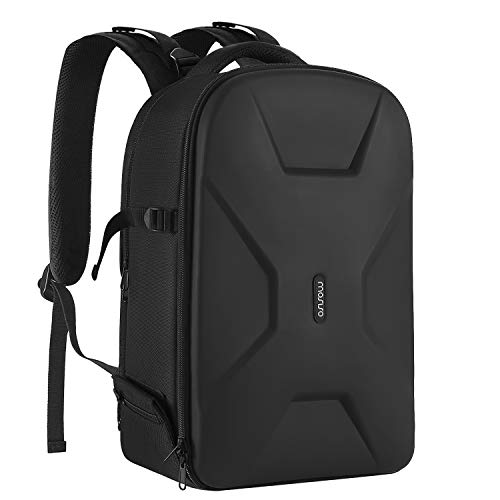
- Customizable padded insert compartment
- Waterproof hard-shell front protection
- Fits 16-inch laptop plus tripod holder
Best For: Photographers who want flexible gear storage with travel-ready protection
Quick-Access Travel Pack
K&F CONCEPT 25L Camera Backpack

- Side and front openings for fast gear access
- Three-tier compartment layout with flexible dividers
- Includes rain cover and padded laptop sleeve
Best For: Photographers who need quick access and a tidy 25L travel bag
Rugged Outdoor Tactical Pack
SDYSM Waterproof Camera Backpack

- Water-resistant build with included rain cover
- Chest and waist straps for hiking comfort
- Side/front openings and MOLLE webbing
Best For: Outdoor photographers needing rugged protection and stable carry
Hardshell Protection Pick
K&F CONCEPT Hardshell DSLR Camera Bag
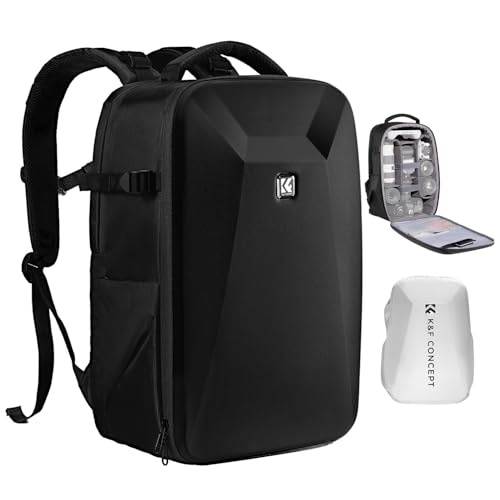
- EVA hard shell with padded shock protection
- 22L interior with modular inserts
- Tripod strap plus 15.6-inch laptop compartment
Best For: Photographers who want a compact protective pack for travel and field use
Lightweight Day Hike Choice
K&F CONCEPT Lightweight Camera Backpack

- Only 1.96 lb for easier all-day carry
- Front-opening design with flexible dividers
- Rain cover included for weather protection
Best For: Lightweight carry for short hikes, scouting, and everyday use
Expedition-Ready Carry
Besnfoto 25L Waterproof Camera Backpack
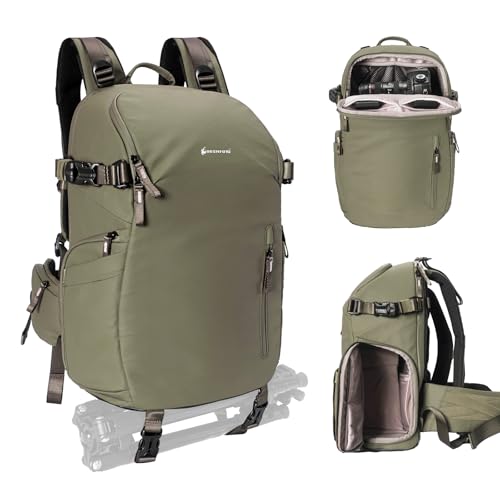
- 25L capacity with top-and-bottom storage
- Water-resistant fabric with padded shock protection
- Tripod holder and waist belt for outdoor carry
Best For: Longer outings with multiple lenses, tripod, and extra field gear
Expandable Everyday Pick – K&F CONCEPT 22L Expandable Camera Backpack
If you want camera backpacks for wildlife photographers that can flex between travel mode and field-ready storage, this K&F CONCEPT pack is a practical choice. Its expandable chamber, quick dual access, and water-resistant build make it useful for moving between hides, trails, and general shooting days without overcomplicating your setup.
Best For: Wildlife shooters who want a versatile mid-size pack with fast access and room for extra accessories.
Pros:
- Flexible 50:50 to 20:80 interior split adapts to different gear layouts.
- Expandable front pouch adds about 4L for filters, batteries, or a small drone.
- Top and side openings make gear retrieval quicker in the field.
- Dedicated 15.6″ laptop sleeve keeps camera gear separated from electronics.
Cons:
- At 1.7 kg, it is not the lightest option for long hikes.
- Best suited to compact-to-moderate setups rather than very large telephoto rigs.
The main appeal here is flexibility: it gives wildlife photographers a protective, organized pack with fast access and a useful expandable front section. If your kit changes from trip to trip, this model is built to stay adaptable.
Long Glass Specialist – Think Tank BackLight Long Lens Backpack
Think Tank BackLight Long Lens Backpack for Cameras with Super Telephoto Lenses - Slate Black
Check Price On AmazonAmong camera backpacks for wildlife photographers, this Think Tank BackLight stands out because it is built around long telephoto glass. It is designed to carry large lenses attached to a gripped body, while the back-panel opening and included rain cover support working in rough outdoor conditions.
Best For: Wildlife photographers carrying super-telephoto lenses and full pro bodies on day outings.
Pros:
- Designed for lenses up to 600mm f/4 or 800mm f/5.6 attached to a gripped body.
- Back-panel access lets you reach gear without setting the harness in dirt or mud.
- Tripod/monopod mounting on the front and side adds field versatility.
- 32L capacity includes 7L of front storage for layers, food, and other day-trip items.
Cons:
- At 4.8 lbs., it is heavy before you even load camera gear.
- Its long-lens layout is specialized, so it is less adaptable for small everyday kits.
This is a purpose-built bag for photographers who already know they need to move big glass safely. If your wildlife work depends on long lenses, the layout and harness are clearly designed for that job.
Pro Access Workhorse – Lowepro ProTactic BP 450 AW III
If you want camera backpacks for wildlife photographers that prioritize access and organization, the Lowepro ProTactic BP 450 AW III is built for demanding field use. Its four access points, modular accessory system, and molded divider setup make it easy to manage a changing kit during long days outside.
Best For: Wildlife photographers and hybrid shooters who need quick access, modular storage, and a rain cover.
Pros:
- Four access points include dual side doors, top access, and full back access.
- ActivZone harness is designed for carry comfort during long sessions.
- Modular accessory system includes a removable utility belt and included pouches.
- MaxFit divider system helps organize and protect photo/video gear precisely.
Cons:
- At 28L, it is roomy but not as specialized for very large telephoto lenses as dedicated long-lens packs.
- Its feature set may be more than casual users need for simple outings.
This is a strong all-around option if you want flexible access and professional-level organization in one bag. For wildlife work that shifts between stills, video, and mixed gear, it offers a lot of control.
Balanced Field Pack – K&F CONCEPT 20L Camera Backpack
For wildlife photographers who want a simpler pack with practical storage, this K&F CONCEPT 20L backpack covers the basics well. It combines side access, a full back opening, waterproof nylon, and a padded layout that can handle a camera kit plus everyday essentials on outdoor shoots.
Best For: Photographers who want a lightweight, organized 20L bag for shorter wildlife outings.
Pros:
- Holds a camera, up to four lenses, a tripod, and accessories according to the supplied layout.
- Side access and full back unzip improve convenience and organization.
- Waterproof high-density nylon and EPE foam padding improve protection.
- Includes a 15.6-inch laptop compartment and adjustable chest belt.
Cons:
- 20L capacity is modest for photographers carrying larger wildlife kits.
- It is more general-purpose than a specialized long-lens backpack.
This pack is a sensible choice when you want a comfortable, protected carry without moving up to a larger professional bag. It fits well for shorter field sessions where organization and quick access matter more than maximum volume.
Versatile Hard-Shell Organizer – MOSISO Camera Backpack
For wildlife photographers who need one bag to handle camera bodies, lenses, and a few travel extras, this MOSISO camera backpack for wildlife photographers offers a practical hard-shell layout with customizable storage. The top padded insert compartment can be reconfigured for different gear setups, while the separate laptop sleeve and multiple accessory pockets help keep small essentials easy to reach in the field.
Best For: Photographers who want a waterproof, travel-friendly backpack with flexible interior dividers and a laptop compartment.
Pros:
- Removable padded dividers let you customize the main camera storage.
- Hard-shell front and foam padding add shock and drop protection.
- Tripod/monopod holder, side pocket, and anti-theft back pocket add useful organization.
- Fits a 16-inch laptop and includes a trolley belt for travel.
Cons:
- At 3.2 pounds, it is not the lightest option.
- Hard-shell styling may feel less flexible than softer camera bags.
This is a strong all-around pick if you want a camera bag that balances protection, organization, and travel convenience. It is especially appealing for photographers who carry both gear and a laptop on longer wildlife trips.
Quick-Access Travel Pack – K&F CONCEPT 25L Camera Backpack
If you want a camera backpack for wildlife photographers that makes it easier to grab gear quickly, this K&F CONCEPT 25L bag is built around fast access and customizable organization. The side opening and full front opening are useful when you need to reach a camera or lens without unpacking everything, and the three-tier layout gives you a structured way to separate lenses, bodies, and a drone.
Best For: Photographers who value quick side access, a rain cover, and a compact 25L layout for travel.
Pros:
- Side opening and full front opening improve access and organization.
- Three-tier compartment design supports flexible gear layouts.
- Includes a rain cover for weather protection.
- Padded laptop compartment and tripod/water bottle side strap add versatility.
Cons:
- No chest strap is included.
- 25L capacity may be tight for photographers carrying a lot of gear.
This model is a sensible choice for photographers who prioritize efficient access over maximum volume. It keeps the layout simple while still covering the essentials for outdoor shooting and travel.
Rugged Outdoor Tactical Pack – SDYSM Waterproof Camera Backpack
Built for long hikes and rough conditions, this SDYSM camera backpack for wildlife photographers focuses on protection, comfort, and outdoor utility. The adjustable dividers, water-resistant fabric, and included rain cover help safeguard gear, while the chest and waist straps, ventilated back panel, and quick-access openings make it easier to carry and use in the field.
Best For: Outdoor photographers who want a rugged pack with strong weather protection, stability, and tactical features.
Pros:
- Water-resistant fabric, reinforced stitching, and rain cover improve protection.
- Chest and waist straps plus a ventilated back panel support all-day comfort.
- Side and front openings allow quick access to gear.
- MOLLE webbing adds extra attachment options for outdoor use.
Cons:
- Tactical styling may not appeal to everyone.
- The feature set may be more than casual users need.
This is a strong fit for demanding field work where stability and weather resistance matter. It is especially useful if you want a camera pack that can handle longer hikes and harsher outdoor environments.
Hardshell Protection Pick – K&F CONCEPT Hardshell DSLR Camera Bag
If you want camera backpacks for wildlife photographers that prioritize protection on rough field days, this K&F CONCEPT hardshell bag is built around a one-piece EVA shell and padded interior. The 22L layout uses modular inserts for camera bodies, lenses, and flashes, while still leaving room for a 15.6-inch laptop and small accessories.
Best For: Wildlife photographers who want a protective travel backpack with organized gear storage and laptop space.
Pros:
- Hard shell EVA front and foam padding help buffer gear against shock and drops.
- Removable modular dividers let you customize the camera and lens layout.
- Tripod strap, side pocket, and hidden back pocket add practical carrying options.
- Breathable padded back panel and shoulder straps improve comfort on longer carries.
Cons:
- The 22L capacity is smaller than larger expedition-style camera packs.
- Hard-shell construction may feel less flexible for packing bulky extras.
For photographers who value gear security over maximum storage, this is a solid protective option. It works especially well when you need a compact, organized pack for travel, hikes, and quick access to essentials.
Lightweight Day Hike Choice – K&F CONCEPT Lightweight Camera Backpack
For wildlife photographers who need camera backpacks for wildlife photographers that stay light on the shoulders, this K&F CONCEPT model keeps weight down at 1.96 lb while still fitting a DSLR, lenses, accessories, and a 14-inch laptop. The front-opening design and removable dividers make it easy to switch from camera duty to everyday use.
Best For: Wildlife shooters who want a compact, lightweight pack for short trips, city scouting, or light hiking.
Pros:
- Very light at 1.96 lb, making it easier to carry all day.
- Front access panel helps you grab gear quickly.
- Five dividers and multiple pockets improve gear organization.
- Includes a rain cover and splash-resistant 600D fabric for extra protection.
Cons:
- Smaller dimensions limit how much pro gear you can pack.
- Tripod carrying is limited to a lightweight tripod, monopod, or selfie stick.
This is a smart pick when portability matters more than maximum capacity. It offers a practical mix of weather protection, simple organization, and everyday flexibility.
Expedition-Ready Carry – Besnfoto 25L Waterproof Camera Backpack
This Besnfoto pack is the largest option here and suits camera backpacks for wildlife photographers who need room for more gear on longer outings. Its 25L build uses a top-and-bottom compartment layout, removable dividers, quick-access openings, and a tripod holder, all wrapped in water-resistant fabric with padded shock protection.
Best For: Wildlife photographers carrying multiple lenses, a tripod, and extra field essentials on hikes or travel days.
Pros:
- 25L capacity with two main compartments gives you more packing flexibility.
- Water-resistant, rainproof fabric and splash-proof zipper add weather protection.
- Tripod holder, side bottle pockets, and waist belt support outdoor use.
- Quick-access doors for both compartments make gear retrieval faster.
Cons:
- Larger size may be more than you need for minimal camera kits.
- Heavier-duty feature set can feel bulkier than compact day packs.
If your wildlife shoots involve more gear and longer time in the field, this backpack is the most versatile of the three. It balances storage, access, and weather resistance in a practical travel-ready layout.
How We Picked These Camera Backpacks for Wildlife Photographers
We focused on packs that make sense in the field: secure camera storage, practical access, comfortable carry, and weather-ready materials. For wildlife photography, a backpack has to handle more than standard mirrorless kits, so we prioritized designs that can support heavier loads and awkward lens shapes.
We also looked for useful extras such as tripod holders, rain covers, laptop sleeves, and expandable storage. Those features matter when you’re hiking, waiting, or moving between locations with changing conditions.
Quick Comparison: What Matters Most
When comparing Camera Backpacks for Wildlife Photographers, think in terms of shooting style. Smaller packs are better for short outings and lighter mirrorless kits. Mid-size packs usually offer the best balance of carry comfort and storage. Larger packs make more sense if you regularly bring telephoto lenses, extra bodies, or field accessories.
Access style matters too. Back-panel access can improve security, while side access can help you reach a camera faster. If you shoot from blinds, vehicles, or uneven terrain, that difference can save time.
Key Buying Factors for Camera Backpacks for Wildlife Photographers
Lens and Body Capacity
Wildlife shooters often carry longer lenses than general photographers. Check whether the pack can fit your longest lens mounted or stored, plus space for a second body, batteries, and filters.
Comfort and Load Support
Padding, shoulder strap shape, sternum support, and hip belt design matter a lot once your kit gets heavy. A bag that feels fine in the store can become tiring after a long hike.
Weather Protection
Look for water-resistant fabric, included rain covers, and sealed zippers when possible. In the field, dust, moisture, and sudden weather changes are common.
Access and Organization
Good internal dividers keep gear stable and easier to reach. External pockets for snacks, filters, and a water bottle are especially useful for all-day wildlife outings.
Carry Options
If you use a tripod or monopod, make sure the backpack includes a secure holder. For travel-heavy setups, a laptop compartment can also be valuable for backing up files on the go.
Who Should Buy Which Camera Backpacks for Wildlife Photographers?
Choose a compact pack if you mostly shoot local wildlife with a mirrorless or smaller DSLR kit. Go mid-size if you want the best all-around option for hikes, hides, and mixed gear. Pick a larger, more specialized backpack if you routinely carry super telephoto lenses or need maximum protection and organization.
For most buyers, the best choice is the pack that matches your longest lens, your typical walking distance, and the weather conditions you actually shoot in. That balance will matter more than any single feature on the spec sheet.