
A cellular trail camera can show you what visits after dark without requiring a trip to pull an SD card. The right choice depends on more than nighttime image quality: reliable coverage, battery life, and the cost of sending photos matter just as much.
These 10 options include no-glow and solar-equipped models, plus cameras suited to different monitoring budgets. Use the buying guide below to narrow the field before choosing a camera and data plan.
Best 10 Cellular Trail Camera with Night Vision Picks for 2026
Best for Remote Monitoring
MagicEagle 4G Solar Trail Camera

- 13,000mAh battery; solar-panel compatible
- No-SIM automatic network selection
- 940nm no-glow IR and 0.3-second trigger
Best For: Remote game trails and fewer battery trips
Best for On-Site Playback
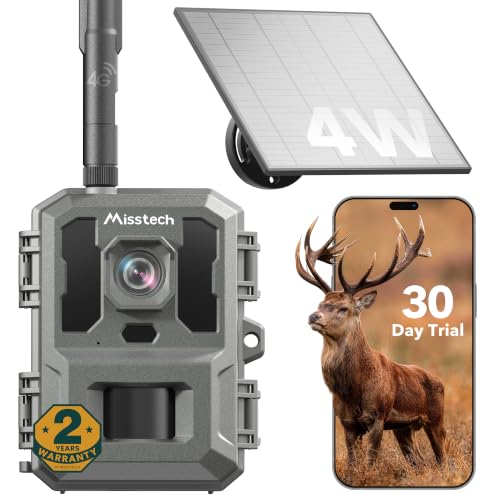
- 2-inch screen for local playback
- 0.1-second trigger and app alerts
- 4W solar panel and 940nm no-glow IR
Best For: Farms and trails needing local and remote viewing
Best for Simple Setup

- Pre-installed SIM and antenna
- AT&T/Verizon auto-connect
- Built-in storage; no SD card needed
Best For: Quick setup for hunting or property monitoring
Best for Deer Scouting

- AI buck detection and instant alerts
- 40MP photos and low-glow night vision
- Four-carrier auto-connect and built-in GPS
Best For: Buck-focused scouting with remote alerts
Best Starter Pack
SPYPOINT FLEX-M with 32GB microSD Card

- 32GB microSD card included
- Free plan: up to 100 photos monthly
- 28MP photos and 720p video
Best For: First-time cellular scouting with a bundled memory card
Best Fast Trigger

- 0.4-second motion trigger
- 96-foot low-glow IR flash
- IP66 weather protection
Best For: Fast-moving game where AT&T coverage is available
Best Two-Camera Pack

- Two cameras in one pack
- Low-glow night vision
- Listed at 28MP photos and 720p video
Best For: Covering two scouting locations with cellular cameras
Best Solar-Powered Pick

- Built-in solar panel and internal battery
- Selectable no-glow or low-glow night vision
- On-demand requests and live app viewing
Best For: Long-term scouting with fewer battery-change visits
Best Budget-Friendly Pick

- Free 100-photo monthly transmission plan
- Automatic cross-carrier connectivity
- 28MP photos and 720p video
Best For: Basic cellular scouting with a no-fee photo allowance
Best Simple Pick

- Two cameras for separate locations
- Selectable no-glow or low-glow illumination
- 40MP photos and 1080p video with sound
Best For: Monitoring two trails or scouting spots
Best for Remote Monitoring – MagicEagle 4G Solar Trail Camera
The MagicEagle is a cellular trail camera with night vision for locations where frequent battery changes are inconvenient. Its 13,000mAh battery, solar-panel compatibility, and 940nm no-glow infrared LEDs suit long-term wildlife monitoring.
Best For: Monitoring remote game trails with app-based live viewing and fewer battery trips.
Pros:
- Automatically selects a cellular network without a physical SIM card.
- 0.3-second trigger and 940nm no-glow infrared illumination.
- Built-in A-GPS and movement alerts add theft-recovery tools.
Cons:
- Included free data is limited to 100MB and expires 30 days after activation.
- Solar operation requires a compatible solar panel.
This is a strong fit if power endurance and remote access matter most. Check the ongoing data options before deploying it for a full season.
Best for On-Site Playback – Misstech 4G LTE Trail Camera
The Misstech is a cellular trail camera with night vision that remains useful when you want to review footage at the tree: its built-in 2-inch screen allows local playback without a subscription. A 4W solar panel and 940nm no-glow LEDs round out its outdoor setup.
Best For: Farm or wildlife monitoring where both phone alerts and on-site footage review are useful.
Pros:
- Built-in screen provides local photo and video review.
- 0.1-second motion trigger and app push alerts.
- Supports on-demand 2K live streaming and shared app access.
Cons:
- App connectivity, live feeds, and alerts require a cellular plan after the trial.
- Fully user-provided SIM cards are not supported.
Choose this model if local playback is as important as remote checking. Its app features depend on continued cellular service, so account for that ongoing cost.
Best for Simple Setup – TACTACAM REVEAL X 3.0
The TACTACAM REVEAL X 3.0 is a cellular trail camera with night vision aimed at straightforward deployment. Its pre-installed antenna and SIM simplify setup, while automatic selection between AT&T and Verizon helps it use the stronger available signal.
Best For: Hunters and rural property owners who want quick setup without buying an SD card.
Pros:
- Pre-installed SIM and antenna streamline activation.
- Built-in storage eliminates the need for a separate SD card.
- Sub-half-second trigger, three-shot burst, and a listed 96-foot night-vision range.
Cons:
- Automatic carrier selection is limited to AT&T and Verizon.
- Solar accessories are optional rather than included in the listed package.
The built-in storage and ready-to-scan setup reduce common installation chores. Check carrier coverage at your specific site before relying on its remote alerts.
Best for Deer Scouting – Moultrie EDGE 3
The Moultrie EDGE 3 is a cellular trail camera with night vision geared toward deer scouting. Its 40MP photos, low-glow infrared illumination, AI buck detection, and real-time alerts help you sort activity without visiting the camera.
Best For: Deer hunters who want buck-focused alerts and app-based camera management.
Pros:
- Automatically connects across four major U.S. cellular networks.
- AI buck detection and instant photo or video alerts.
- 0.5-second trigger, 100-foot detection range, and built-in GPS.
Cons:
- Cellular plans start at $9.99.
- Low-glow infrared illumination is not no-glow.
- Rechargeable battery packs and solar panels are compatible accessories, not listed as included.
The EDGE 3 offers a focused feature set for tracking deer movement. Its low-glow flash and ongoing plan cost are the key trade-offs to weigh.
Best Starter Pack – SPYPOINT FLEX-M with 32GB microSD Card
If you want a cellular trail camera with night vision that is ready for setup without a separate memory-card purchase, this FLEX-M pack includes a 32GB microSD card. It sends photos through the SPYPOINT app without Wi-Fi and offers 28MP photos and 720p video.
Best For: First-time cellular scouting with an included memory card and a free, limited photo plan.
Pros:
- Includes a 32GB microSD card, installation strap, and preactivated SIM cards.
- Free plan transmits up to 100 photos per month; paid plans are available.
- Automatically manages cross-carrier connectivity and supports photo, video, and time-lapse modes.
Cons:
- Video resolution is limited to 720p.
- Solar panels for extended power are sold separately.
This is a practical pick if simple setup and predictable entry-level transmission costs matter more to you than higher-resolution video.
Best Fast Trigger – TACTACAM REVEAL X 2.0
For a cellular trail camera with night vision aimed at moving game, the REVEAL X 2.0 pairs a 0.4-second trigger with a low-glow infrared flash rated to 96 feet. It delivers photos to the REVEAL app over AT&T 4G LTE, so routine image checks do not require a trip to the camera.
Best For: Scouting moving game where trigger speed and a long low-glow flash range are priorities.
Pros:
- 0.4-second trigger and 96-foot low-glow infrared flash.
- IP66 weather protection for outdoor deployment.
- Month-to-month data plans with no activation fee or annual commitment.
Cons:
- Requires a compatible 16–32GB Class 10 U3 SD card.
- Cellular image delivery relies on AT&T 4G LTE coverage.
Built-in Wi-Fi is for in-field setup; cellular service handles remote photo delivery. Check AT&T reception at your intended location before committing to this model.
Best Two-Camera Pack – SPYPOINT FLEX-M Twin
If you need a cellular trail camera with night vision at two scouting locations, the FLEX-M Twin pack supplies two cameras. The listed specifications include low-glow night vision, 28MP photos, 720p video, and automatic cross-carrier connectivity without Wi-Fi.
Best For: Monitoring two trails or property locations with app-based photo delivery.
Pros:
- Two cameras, two installation straps, and preactivated SIM cards are included.
- Automatic multi-network connection helps avoid manual carrier selection.
- Supports GPS location in the app, time-lapse modes, and 0.5-second triggering.
Cons:
- Listed video resolution is 720p, not 1080p.
- Compatible rechargeable battery packs are not included.
The notes mix FLEX-M2 marketing claims with FLEX-M twin-pack specifications; the listed 28MP and 720p specifications are the safer figures to use when comparing this bundle. It makes the most sense when you want two cellular viewpoints in one purchase.
Best Solar-Powered Pick – SPYPOINT FLEX-S-DARK
If you want a cellular trail camera with night vision that needs fewer battery changes, the FLEX-S-DARK combines a built-in solar panel and internal battery with discreet no-glow LEDs. Its app also supports on-demand photo and video requests and live viewing where cellular coverage is available.
Best For: Long-term scouting where minimizing trips to the camera matters.
Pros:
- Built-in solar charging; SPYPOINT states power can last up to 11 months, depending on use.
- Remotely selectable no-glow or low-glow night settings.
- 40MP photos, 1080p video with sound, and a free 100-photo-per-month transmission plan.
Cons:
- Battery life varies with usage and available solar charging.
- Sending more than 100 photos per month requires a paid plan.
The solar power system is the main reason to choose this model; its remote viewing features add flexibility when you need to check a site without visiting it.
Best Budget-Friendly Pick – SPYPOINT FLEX-M
The FLEX-M is a practical entry point if you need a cellular trail camera with night vision and do not need the higher-resolution video of the other models here. It captures 28MP photos and 720p video, with automatic cross-carrier connectivity and a free allowance of 100 transmitted photos per month.
Best For: Buyers prioritizing basic cellular scouting and a no-fee photo allowance.
Pros:
- Free plan transmits up to 100 photos per month with no commitment.
- Automatically monitors available carrier networks without manual selection.
- Photo, video, Time-Lapse, and Time-Lapse+ modes offer flexible monitoring.
Cons:
- 720p video is lower resolution than the 1080p video offered by the other two models.
- Compatible solar panels are sold separately.
Choose the FLEX-M if cellular access and flexible capture modes matter more to you than built-in solar power or 1080p footage.
Best Simple Pick – SPYPOINT FLEX-DARK Twin
For monitoring two locations, this twin pack provides two FLEX-DARK cellular trail cameras with night vision. Each offers remotely selectable no-glow or low-glow settings, 40MP photos, and 1080p video with sound, with images sent through the SPYPOINT app.
Best For: Covering two trails or scouting spots with matching cellular cameras.
Pros:
- Includes two FLEX-DARK cameras and two installation straps.
- No-glow night vision helps avoid visible illumination.
- Automatic cross-carrier connectivity and a free 100-photo-per-month plan are available for each camera.
Cons:
- Each camera needs its own photo plan; higher transmission allowances cost extra.
- Despite the product title, the supplied camera details specify battery power and do not confirm an included solar panel.
The two-camera format makes sense for wider coverage, but confirm the included power accessories before buying if solar operation is a priority.
How We Picked the Best Cellular Trail Camera with Night Vision
We focused on practical differences across the 10 selected products: stated night-vision features, power options, cellular operation, trigger specifications, and whether a listing includes useful extras such as an SD card or solar panel. These are comparison points, not results from hands-on testing. Advertised megapixels, trigger speeds, and battery capacities do not guarantee sharper nighttime photos or better performance at your site.
Quick Comparison: Where to Start
For a straightforward cellular setup, compare the TACTACAM Reveal X 2.0 and X 3.0, Moultrie Edge 3, and SPYPOINT Flex-M options by total plan cost and the features you need. The SPYPOINT Flex-M and SD Card Pack includes a card; the Flex-M Twin is worth considering if you need two camera locations. If minimizing visible flash is a priority, look at the no-glow models from MagicEagle and SPYPOINT. For locations where battery changes are difficult, compare the solar-equipped MagicEagle, SPYPOINT Flex-S Dark, and SPYPOINT Flex-Dark Twin. Check what each bundle includes before comparing prices.
Key Buying Factors for a Cellular Trail Camera with Night Vision
Coverage and Ongoing Cost
Verify that the camera supports a cellular network with service at the exact placement site; phone coverage nearby is not proof of a reliable connection under tree cover or in a hollow. Check whether a data plan, activation, or subscription is required, how many photos are included, and whether video uploads cost extra. A camera’s purchase price is only part of its long-term cost.
Night Images and Detection
No-glow infrared LEDs are useful when you want to minimize visible light at the camera. Compare sample night images when available, paying attention to subject detail and the stated illumination range rather than megapixels alone. Trigger speed matters for animals crossing a narrow trail, while detection range and camera placement matter for wider clearings. Published specifications are a starting point, not a substitute for positioning the camera well.
Power, Storage, and Weather Protection
Solar charging can reduce service visits, but panel placement and available sunlight affect its value. Check the required batteries, whether a solar panel is included, and the camera’s expected performance in local temperatures. Confirm SD card requirements and whether photos remain on the card if cellular transmission fails. For exposed sites, follow the manufacturer’s weather-resistance guidance and mount the camera where standing water cannot collect around it.
Who Should Buy Which Cellular Trail Camera with Night Vision?
Choose a basic single-camera option if you are testing one trail or gate and want to learn your actual coverage and plan usage first. Consider a twin bundle when you already have two useful locations; compare its price with buying two cameras separately. Pick a no-glow model for discreet nighttime monitoring, or a solar-equipped model when trips to replace batteries are inconvenient and the panel can get sufficient light. Whatever you choose, confirm network compatibility, included accessories, and current plan terms before checkout.