
An electric car can be quiet while parked, but its dash cam still needs power. Choosing the right setup means balancing video coverage, usable footage, and the battery impact of parking recording.
These 10 options range from straightforward front-and-rear cameras to systems that also record the cabin or sides. Here’s what to check before you buy.
Best 10 Dash Cam for Electric Cars Picks for 2026
Best for Easy Controls
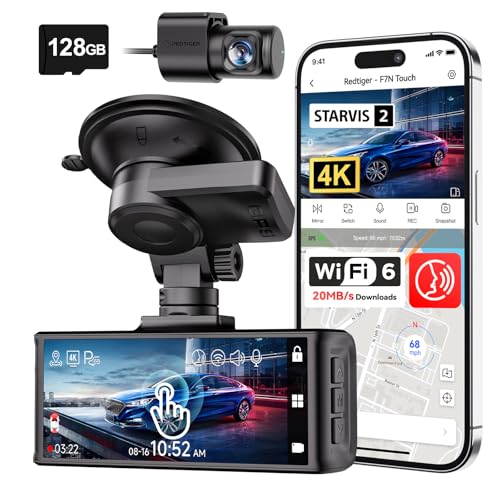
- 4K front and 1080p rear recording
- Voice, touch, and button controls
- 128GB card included
Best For: Drivers who want flexible controls and dual-camera coverage
Best for All-Around Coverage
Neideso N300 Four-Channel Dash Cam

- Four adjustable camera views
- GPS and 5GHz Wi-Fi
- Hardwire kit needed for parking mode
Best For: Drivers seeking multiple exterior and interior viewpoints
Best Straightforward Dual Cam

- 4K front and 1080p rear video
- STARVIS 2 with HDR/WDR
- Memory card included
Best For: Commuters seeking a conventional front-and-rear setup
Best for Cabin Coverage
70mai T800E Three-Channel Dash Cam

- 4K front, 1080p cabin and rear
- Switchable interior infrared
- 64GB card included
Best For: Rideshare and family drivers who want cabin footage
Best for Easy Setup
TOOXYZ J13 Three-Channel Dash Cam

- 4K front, 1080p cabin and rear
- 64GB card included
- Parking accessory sold separately
Best For: Drivers who want front, cabin, and rear footage
Simple Three-View Setup

- Front, cabin, and rear cameras
- 32GB card included
- 1296p recording; 32GB card limit
Best For: A basic three-view setup with included storage
Best for Night Driving

- STARVIS 2 front sensor and GPS
- 128GB card included
- Upscaled, not native, 4K front video
Best For: Low-light front-and-rear footage with GPS
Best with Extra Features
Terunsoul 4K Three-Channel Dash Cam

- 4K front and rear; 1080p cabin
- GPS and dual-band Wi-Fi 6
- 128GB card included
Best For: EV drivers who also want cabin footage
Best Heavy-Duty Pick

- Sony STARVIS 2 front sensor
- 4K front and 2K rear footage
- 128GB card included
Best For: Nighttime front-and-rear recording
Best for Side Coverage
ZMOPO D435 Four-Channel Dash Cam

- Four simultaneous 1080p views
- 128GB card and supercapacitor
- GPS logger sold separately
Best For: Front, rear, and side-view recording
Best for Easy Controls – REDTIGER F7N TOUCH
If you want a dash cam for electric cars that’s straightforward to operate, the REDTIGER F7N TOUCH pairs 4K front and 1080p rear recording with voice commands, a touchscreen, and physical buttons. Its STARVIS 2 sensor and HDR/WDR support help capture footage in changing light.
Best For: Drivers who want flexible controls and a front-and-rear view.
Pros:
- Includes a 128GB card for loop recording.
- Built-in GPS and app access over 5.8GHz Wi-Fi.
- G-sensor locks footage when an impact is detected.
Cons:
- Parking monitoring requires a separate hardwire kit.
- Rear recording is 1080p rather than 4K.
This is a practical pick if you prefer controlling the camera without relying solely on your phone. Budget for the hardwire kit if parked coverage is a priority.
Best for All-Around Coverage – Neideso N300 Four-Channel Dash Cam
For shoppers comparing a dash cam for electric cars with wider coverage, the Neideso N300 offers four adjustable cameras and recording modes that cover multiple sides of the vehicle. Its interior infrared LEDs also make it worth considering if you regularly carry passengers.
Best For: Drivers who prioritize multiple viewing angles over a simple two-camera setup.
Pros:
- Four-channel design with adjustable camera angles.
- Built-in GPS, 5GHz Wi-Fi, and phone-app access.
- Voice commands and G-sensor footage locking.
Cons:
- Requires its cigarette-lighter charger for power; Wi-Fi does not make it wireless.
- Parking mode needs a separate hardwire kit.
- No cloud storage or remote monitoring is included.
Choose the N300 when additional viewpoints matter most. Check the available recording modes before buying: resolution varies with the number of channels in use.
Best Straightforward Dual Cam – REDTIGER F7NP
The REDTIGER F7NP is a dash cam for electric cars if your priority is clear front-and-rear footage without extra cabin cameras. It records in 4K up front and 1080p at the rear, with a STARVIS 2 sensor plus HDR/WDR for varied lighting.
Best For: Commuters who want a conventional two-camera setup with GPS and app access.
Pros:
- Wide 170° front and 140° rear views.
- Included memory card and automatic loop recording.
- Supercapacitor design and built-in GPS.
Cons:
- Parking modes require a separate hardwire kit.
- Rear footage is limited to 1080p.
Its strengths are familiar, useful basics: dual recording, quick Wi-Fi access to clips, and automatic event locking. Add the hardwire kit only if you need monitoring while parked.
Best for Cabin Coverage – 70mai T800E Three-Channel Dash Cam
If you need a dash cam for electric cars that also records the cabin, the 70mai T800E combines 4K front video with 1080p interior and rear cameras. Switchable infrared recording on the interior camera is useful for nighttime passenger trips.
Best For: Rideshare or family drivers who want road, cabin, and rear footage.
Pros:
- Three-channel recording with switchable interior IR.
- Built-in GPS, Wi-Fi 6 app transfers, and voice control.
- Includes a 64GB card and supports cards up to 512GB.
Cons:
- Continuous parking monitoring requires a compatible hardwire kit.
- 4G connectivity is not supported.
The T800E makes the most sense when cabin footage is genuinely useful; otherwise, a two-camera model may be simpler. Its supercapacitor is rated for operation from 14°F to 140°F.
Best for Easy Setup – TOOXYZ J13 Three-Channel Dash Cam
If you want a dash cam for electric cars that watches passengers as well as the road, the TOOXYZ J13 records front, cabin, and rear views at 4K, 1080p, and 1080p, respectively. Its included 64GB card lets you start recording without a separate storage purchase.
Best For: Drivers who want cabin coverage alongside front and rear footage.
Pros:
- Three-channel recording with a 170° front field of view.
- 5G Wi-Fi and the Viidure app support viewing and downloading footage.
- Loop recording and G-sensor emergency locking help preserve collision clips.
Cons:
- Parking monitoring requires a separately sold accessory.
- Some Viidure app features require a membership.
The J13 makes sense when recording the cabin is a priority. Budget for the extra parking accessory if you also want monitoring after the vehicle is turned off.
Simple Three-View Setup – SUVCON J06 Dash Cam
For a straightforward dash cam for electric cars, the SUVCON J06 covers the front, cabin, and rear with a windshield-mounted setup. It includes a 32GB card and records at up to 1296p, making it a practical option if you want three views without buying storage first.
Best For: Drivers seeking a basic three-camera setup with a memory card included.
Pros:
- Wide-angle front, cabin, and waterproof rear cameras help reduce blind spots.
- Four infrared LEDs support cabin recording in low light.
- Loop recording and a G-sensor provide routine recording and impact-triggered footage locking.
Cons:
- 1296p resolution is lower than the 4K-front options in this roundup.
- Listed maximum supported card size is 32GB.
Choose the J06 for broad coverage and a simple included kit, rather than higher-resolution front footage or room to expand storage.
Best for Night Driving – ROVE R2-4K Dual Dash Cam
If nighttime image capture matters most in a dash cam for electric cars, the ROVE R2-4K Dual pairs a Sony STARVIS 2 front sensor with HDR and an F1.5 aperture. It records 2.5K front footage upscaled to 4K, plus 1080p rear footage; the front recording is not native 4K.
Best For: Drivers prioritizing low-light front footage, GPS data, and front-and-rear coverage.
Pros:
- STARVIS 2 front sensor and HDR are designed to improve low-light footage.
- Built-in GPS records route, location, and speed information.
- Includes a 128GB card and supports cards up to 1TB.
- Dual-band Wi-Fi supports app-based downloads.
Cons:
- Advertised 4K front video is upscaled from 2.5K, not native 4K.
- 24-hour parking mode requires a separately purchased hardwire kit.
- No cabin-facing camera is listed.
The ROVE is the strongest fit here for buyers focused on front-and-rear driving footage with GPS and low-light features. Add the hardwire kit to your plans if parked-vehicle recording is essential.
Best with Extra Features – Terunsoul 4K Three-Channel Dash Cam
If you want a dash cam for electric cars that records the road and passengers, this Terunsoul model pairs 4K front and rear cameras with a 1080p cabin camera. It also includes a 128GB card, so you can start recording without buying storage separately.
Best For: EV drivers who want front, rear, and cabin footage, especially for rideshare or night driving.
Pros:
- 4K front and rear recording plus a 1080p cabin view with four infrared lights.
- Built-in GPS records speed and location; dual-band Wi-Fi 6 supports app access and downloads.
- Includes a 128GB card and supports cards up to 512GB.
Cons:
- Parking monitoring requires a separate hardwire kit.
- Three cameras mean more footage to store and review.
The cabin camera is the main reason to choose this over a simpler front-and-rear setup. Plan for the additional hardwire kit if parked-car recording is a priority.
Best Heavy-Duty Pick – LHSYJ 4K Dual Dash Cam
For drivers shopping for a dash cam for electric cars with an emphasis on low-light footage, this LHSYJ dual-camera model combines a 4K front camera using a Sony STARVIS 2 sensor with a 2K rear camera. A 128GB card is included.
Best For: EV drivers who prioritize front-and-rear recording on nighttime trips.
Pros:
- Sony IMX675 STARVIS 2 front sensor and F1.5 front aperture are designed for low-light recording.
- Records 4K front and 2K rear footage simultaneously.
- 5.8GHz Wi-Fi enables app playback and downloads; a 128GB card is included.
Cons:
- Parking monitoring requires an additional hardwire kit.
- No cabin or side-view camera is listed.
Choose this one if image capture after dark matters more to you than extra camera angles. Its two-channel layout keeps the focus on the road ahead and behind.
Best for Side Coverage – ZMOPO D435 Four-Channel Dash Cam
If side views are your priority in a dash cam for electric cars, the ZMOPO D435 uses four 1080p cameras to record the front, rear, left, and right simultaneously. Its adjustable front cameras can also be angled to capture interior footage.
Best For: EV drivers who prefer multiple viewing angles over higher-resolution front footage.
Pros:
- Four simultaneous 1080p views cover the front, rear, and both sides.
- Includes a 128GB card and a built-in supercapacitor.
- 5GHz Wi-Fi supports app access; loop recording and incident locking help manage footage.
Cons:
- Parking mode needs an optional ACC hardwire kit.
- GPS requires a separately purchased logger.
- Each camera records at 1080p rather than 4K.
This is the pick for broader angle coverage, not maximum resolution. Budget for the optional accessories if you also need parking recording or location data.
How We Picked the Best Dash Cam for Electric Cars
We compared the listed camera configurations, stated resolution, sensor and night-vision claims, connectivity, and included memory cards. We also considered how each setup might fit an EV owner’s priorities: documenting traffic, covering a parked car, or recording a rideshare cabin. Specifications alone cannot establish real-world image quality or reliability, so check current sample footage, warranty terms, and verified owner feedback before purchasing.
Quick Comparison: Which Camera Layout Fits?
Front and rear: The simplest choice for most drivers. These systems cover the road ahead and traffic behind without adding cabin footage or extra camera wiring.
Three-channel: Add an interior camera when passenger activity matters. Confirm whether the third channel faces the cabin and whether it has infrared illumination if you drive at night.
Four-channel or 360-degree: Consider these for broader side or cabin coverage, especially in busy parking areas. More cameras usually mean more wiring, storage use, and power draw. “360-degree” describes the intended coverage; check actual camera placement for blind spots.
Key Buying Factors for a Dash Cam for Electric Cars
Parking Power and Battery Protection
Parking mode generally needs a compatible hardwire kit or another dedicated power source; an included USB cable alone may not enable continuous parked recording. Check the car’s accessory-power behavior, the camera’s voltage cutoff, and hardwire-kit compatibility. EV traction batteries and 12-volt systems vary by model, so follow your vehicle maker’s guidance and use a qualified installer if needed. A cutoff helps protect the 12-volt battery but does not guarantee unlimited recording time.
Readable Footage, Not Just Resolution
4K can help preserve detail, but sensor performance, exposure, windshield glare, and compression affect whether a plate is readable. STARVIS 2-equipped models may be worth considering for challenging light, but compare actual day and night clips. Check the resolution recorded by each channel when all cameras run together, not just the headline front-camera figure.
Storage, Heat, and Everyday Use
Multi-channel recording fills cards faster. Look for high-endurance microSD compatibility, straightforward loop recording, and an easy way to save an incident clip. Included cards vary in capacity; confirm the supported maximum and format the card as directed. If your EV spends hours in direct sun, check the dash cam’s operating-temperature rating and mounting location. Wi-Fi can simplify transfers, while GPS can add location and speed data where you choose to use it.
Who Should Buy Which Dash Cam for Electric Cars?
For a typical commute, start with a front-and-rear model, then prioritize clear night footage and an installation plan. Rideshare drivers should look at three-channel options with useful cabin coverage. Drivers concerned about side impacts while parked can consider four-channel systems, provided the extra wiring and power demand make sense. If parking recording is your main reason for buying, choose the power setup first; even the best Dash Cam for Electric Cars cannot capture a parked incident after its power supply shuts off.