
The right DI box can help integrate microphones, instruments, and other sources with recording interfaces, mixers, and stage systems. For vocal-focused setups, the best choice depends on your microphone type, signal chain, available inputs, and whether you need passive simplicity or active flexibility.
We’ve selected 10 DI boxes with different connection options, power requirements, channel counts, and noise-control features so you can narrow the field before buying.
Best 10 Di Boxes for Recording Vocals Picks for 2026
Reliable Passive Choice
Radial Pro DI Passive Direct Box

- Passive mono design with custom transformer
- Rugged construction for studio or stage
- Suitable for instruments and professional consoles
Best For: Musicians needing a durable mono DI for live or studio connections
Flexible Stereo Routing

- Dual inputs handle stereo or mixed mono
- Stereo XLR and thru outputs
- USB-C or 9V battery power options
Best For: Players and recordists needing flexible stereo DI routing
Compact Budget Workhorse
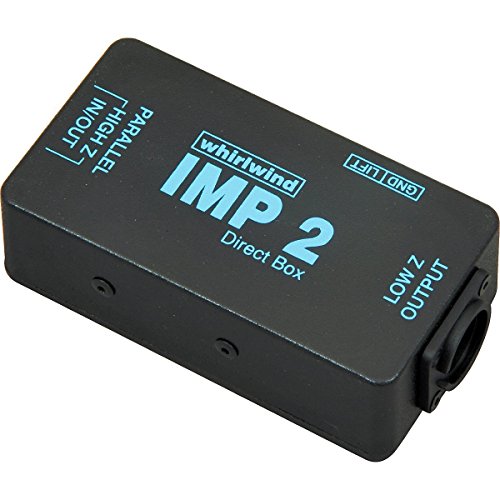
- Affordable single-channel passive design
- Converts unbalanced signals to balanced mic level
- Compact build with riveted TRHL transformer
Best For: Budget-conscious users needing simple single-channel signal conversion
Studio-Ready Passive Signal Path
Samson S-Max MD1 Passive Mono DI

- Passive operation needs no power
- Ground lift helps address hum
- Thru output supports amps and pedals
Best For: Studio and stage setups needing passive DI conversion with thru routing
Most Flexible Power Options
Bolanle J22 Active Stereo DI Box

- Runs on phantom, battery, or USB power
- Dual channels retain stereo separation
- Ground lift and polarity reversal controls
Best For: Flexible studio, rehearsal, and live setups
Best Passive Hum Control
Donner Special-I Passive DI Box

- Transformer isolation reduces hum and buzz
- Converts unbalanced signals to balanced XLR
- Thru output supports amplifier routing
Best For: Simple passive recording and stage signal matching
Best Dual-Channel Value

- Two channels support multiple sources
- Ground lift helps reduce hum and buzz
- Steel chassis suits regular use
Best For: Affordable multi-source studio and live routing
Simple Passive Choice

- Balanced XLR conversion
- Ground lift for hum control
- No batteries or external power
Best For: Basic studio and stage signal routing
Low-Noise Studio Routing
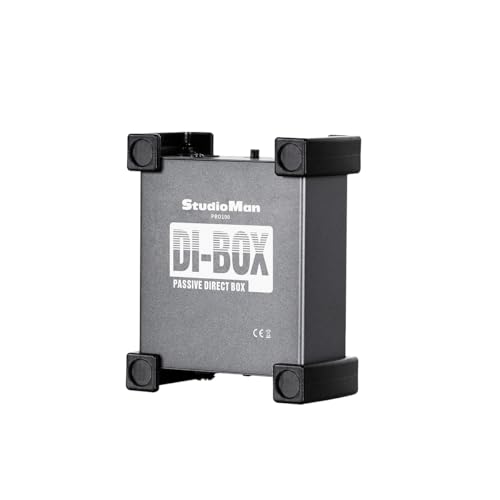
- Impedance-matching transformer
- Ground-loop hum reduction
- Compact aluminum housing
Best For: Portable studio, rehearsal, and stage rigs
Flexible Stage-to-Studio Routing

- Thru and balanced outputs
- Ground lift and isolation transformer
- 50KΩ impedance matching
Best For: Simultaneous amp monitoring and mixer feeds
Reliable Passive Choice – Radial Pro DI Passive Direct Box
For musicians comparing DI boxes for recording vocals and other sources, the Radial Pro DI is a rugged passive option for connecting instruments and line-level equipment to professional audio systems. Its custom transformer, XLR connectivity, and durable I-beam construction suit both studio and live use.
Best For: Acoustic guitars, bass, keyboards, drum machines, and professional snake systems or consoles.
Pros:
- Passive mono design with a custom transformer.
- Rugged I-beam construction and stainless-steel enclosure.
- Designed for live or studio performances.
- Includes a 2-year warranty.
Cons:
- Mono operation limits stereo applications.
- Passive design may not suit users specifically seeking an active DI.
The Radial Pro DI is a straightforward, durable choice when dependable mono signal connection matters more than extra features or stereo routing.
Flexible Stereo Routing – Dual-Input Active DI Box
This active DI box stands out among DI boxes for recording vocals when you need dual-input flexibility and multiple power options. It accepts stereo or mixed-mono sources and provides both thru and XLR outputs for instruments, processors, keyboards, or consumer audio equipment.
Best For: Guitar, bass, keyboards, stereo sources, effects processors, and setups requiring stereo or mono routing.
Pros:
- Dual 1/4-inch inputs support stereo or mixed-mono audio.
- Provides dual thru outputs and stereo XLR outputs.
- Can be powered through USB-C charging or a 9V battery slot.
- Ground-lift functionality helps address buzz and hum.
Cons:
- 9V battery is not included.
- Active operation adds charging or battery management.
- Heavier and larger than the compact passive options listed here.
Choose this model when stereo connectivity and routing flexibility are priorities. Its active design and dual power methods offer useful versatility, though they require more setup than a purely passive box.
Compact Budget Workhorse – Whirlwind IMP 2 Passive DI
The Whirlwind IMP 2 is a compact, economical option for shoppers considering DI boxes for recording vocals and instrument tracks. Its transformer converts an unbalanced line- or instrument-level signal to a balanced, low-impedance mic-level output for use with typical recording and mixing equipment.
Best For: Home studios, live setups, and anyone needing an affordable single-channel DI for instrument or line-level sources.
Pros:
- Converts unbalanced signals to balanced low-impedance mic level.
- Single-channel footprint is compact and easy to place.
- Uses a TRHL transformer riveted to the chassis.
- Offers professional-quality construction at an economical price.
Cons:
- Single-channel design does not support stereo sources.
- Supplied notes do not list a thru output or ground-lift feature.
The IMP 2 focuses on the core DI task without unnecessary complexity. It is a practical pick for straightforward, single-channel recording or stage signal conversion.
Studio-Ready Passive Signal Path – Samson S-Max MD1 Passive Mono DI
The Samson S-Max MD1 is a passive choice for DI boxes for recording vocals and instrument sources, with 1/4-inch input and balanced XLR output connections. Its transformer-based circuitry, ground lift, and sturdy steel chassis make it suitable for both studio and stage signal handling.
Best For: Guitar and keyboard players, USB interface users, and recording setups that need a thru connection for an amplifier or pedals.
Pros:
- Passively operates without batteries or phantom power.
- Provides balanced mic-level XLR output from an unbalanced source.
- Ground lift helps fight buzz and hum.
- Thru output supports pedals, amplifiers, or parallel tracking.
Cons:
- Single-channel mono operation limits stereo use.
- Its 14-gauge steel chassis weighs more than an ultra-compact DI.
The MD1 balances useful routing features with a simple passive signal path. It is especially appealing when you want to send a dry signal to a mixer or interface while retaining a feed for an amp or pedals.
Most Flexible Power Options – Bolanle J22 Active Stereo DI Box
For recording vocals, the Bolanle J22 is a practical active DI box when you need flexible power and two-channel connectivity. It can run from 48V phantom power, a 9V battery, or 5V USB, while its balanced XLR outputs suit mixers, audio interfaces, and PA systems.
Best For: Musicians and home studios needing stereo operation and multiple powering options.
Pros:
- Supports 48V phantom, 9V battery, or 5V USB power.
- Dual channels preserve stereo separation for keyboards and synths.
- Ground lift and polarity reversal help manage noise and signal issues.
- Metal housing is designed for stage and studio use.
Cons:
- Batteries are not included.
- Its dual-channel design may be more than needed for a single-source setup.
The J22 stands out among DI boxes for recording vocals when setup flexibility matters. Its power choices and noise-control features make it a versatile option for changing studio, rehearsal, and live environments.
Best Passive Hum Control – Donner Special-I Passive DI Box
The Donner Special-I is a straightforward passive choice among DI boxes for recording vocals and other instrument sources. Its transformer-based design converts an unbalanced instrument- or line-level signal to a balanced mic-level output, with isolation intended to reduce hum and buzz.
Best For: Recording and live setups that need passive signal conversion and ground-loop isolation.
Pros:
- Transformer isolation helps address ground-loop hum and buzz.
- Provides impedance and signal matching for mixers and amplifiers.
- Supports instrument or line-level unbalanced inputs and balanced XLR output.
- Includes a thru connection for sending signal to an amplifier while feeding the PA.
Cons:
- Passive operation does not offer the multiple power options of an active DI.
- The plastic construction may be less rugged than a metal-housed alternative.
With its passive circuit and transformer isolation, the Special-I is a sensible pick when hum reduction and uncomplicated routing are priorities. It is especially useful for connecting instruments to balanced recording or PA inputs.
Best Dual-Channel Value – Pyle-Pro PDC22 Passive DI Box
The Pyle-Pro PDC22 offers two passive channels for connecting instruments, keyboards, processors, or other unbalanced sources to a recording mixer or PA. For anyone comparing DI boxes for recording vocals, its hum-cancellation function and dual-channel format provide useful routing flexibility.
Best For: Budget-conscious musicians who need two channels for instruments or line-level sources.
Pros:
- Two channels accommodate multiple sources.
- Connects keyboards, guitars, bass, processors, and consumer stereo outputs.
- Ground lift and transformer-style impedance conversion help reduce hum.
- All-steel chassis is built for durability.
Cons:
- It is a passive unit, so it does not provide active DI gain or power options.
- The supplied notes describe a detachable AC power cord, but do not specify additional active functionality.
The PDC22 is a versatile dual-channel option for studios and live rigs that need basic unbalanced-to-balanced connectivity. Its steel construction and broad source compatibility make it a practical value-oriented choice.
Simple Passive Choice – StudioMan DI-1
For musicians comparing DI boxes for recording vocals and other studio sources, the StudioMan DI-1 is a straightforward passive option for converting a high-impedance, unbalanced signal into balanced mic-level XLR output. Its ground lift and parallel 1/4-inch connections make it practical when routing a source to both a mixer and amplifier.
Best For: Home studios, live setups, and musicians who want a no-power DI with basic ground-loop control.
Pros:
- Converts high-impedance unbalanced signals to balanced XLR output.
- Ground lift switch helps isolate input and output grounding.
- Passive design needs no batteries or external power.
- Parallel 1/4-inch jacks support simultaneous amp and mixer connections.
Cons:
- It is a single-channel unit.
- Passive DI operation is primarily suited to instrument and line-style sources rather than a direct microphone connection.
The DI-1 is a sensible pick when reliability and simple routing matter more than extra controls. Its 50KΩ input impedance, ground switch, and compact passive design cover common studio and stage needs.
Low-Noise Studio Routing – StudioMan PRO100
When evaluating DI boxes for recording vocals and supporting studio equipment, the StudioMan PRO100 offers passive 1/4-inch-to-XLR conversion with impedance matching and ground-loop hum reduction. Its compact aluminum housing and dual XLR outputs suit recording, rehearsal, and stage workflows.
Best For: Studio and rehearsal setups needing quick, passive connectivity with a durable, compact enclosure.
Pros:
- Provides balanced XLR conversion from an unbalanced 1/4-inch source.
- Impedance transformer is designed to improve compatibility between instruments and mixers or amplifiers.
- Requires no batteries or external power.
- Anti-vibration silicone pads help reduce movement and stage shocks.
Cons:
- It is a single-channel passive DI box.
- Its 1/4-inch input is intended for instrument or line-style sources, not direct microphone input.
The PRO100 emphasizes fast setup and practical noise management. Choose it if you value a compact aluminum build, passive operation, and dual XLR output options in a studio or live rig.
Flexible Stage-to-Studio Routing – PRORECK DC21
For shoppers considering DI boxes for recording vocals alongside instruments and playback sources, the PRORECK DC21 combines impedance matching, ground isolation, and dual-output routing. The thru jack lets an unbalanced signal feed an amplifier while the balanced output runs to a mixer or PA.
Best For: Musicians and small studios that need simultaneous amplifier monitoring and balanced mixer or recording connections.
Pros:
- 50KΩ impedance and transformer-based matching support guitars, basses, keyboards, and other sources.
- Ground lift and isolation transformer help address hum and buzz from ground loops.
- Thru and balanced outputs allow amp and mixer connections at the same time.
- Passive design works without batteries or external power.
Cons:
- It is a single-channel DI box.
- The unit is designed for instrument, line, and consumer-source conversion rather than direct microphone input.
The DC21 is the most routing-focused option here. Its thru output and broad source compatibility make it especially useful when recording or performing requires both local monitoring and a balanced feed.
How We Picked the Best Di Boxes for Recording Vocals
We compared these models by looking at the features that matter most in practical studio and live-recording setups: input and output formats, passive or active design, impedance compatibility, grounding controls, attenuation options, channel count, power requirements, and overall versatility. Because a DI box is usually one part of a larger signal chain, we also considered how easily each model can connect instruments or line-level sources to balanced microphone inputs.
A DI box does not replace a microphone preamp, phantom-powered condenser microphone, or suitable vocal interface. Instead, it helps match and balance compatible sources while reducing hum and making long cable runs more reliable.
Quick Comparison
- Best-known passive option: Radial Pro DI and Whirlwind IMP 2 are straightforward choices for dependable signal conversion.
- For stereo sources: The Bolanle J22 and Pyle-Pro PDC22 provide dual-channel functionality.
- For flexible power: The Bolanle J22 supports multiple power methods, while passive models avoid batteries and phantom-power requirements.
- For budget setups: Donner, StudioMan, Samson, and PRORECK offer practical grounding and attenuation features at generally accessible price points.
Key Buying Factors for Di Boxes for Recording Vocals
Passive Vs. Active Circuitry
Passive DI boxes are simple, durable, and typically do not need an external power source. They are often a strong fit for active instruments or general signal balancing. Active units can provide more flexibility and may work better with passive pickups or weaker sources, but they require battery, phantom, USB, or another power option.
Inputs, Outputs, and Channel Count
Check whether you need a 1/4-inch instrument input, dual inputs, stereo operation, XLR output, or through-output connectivity. For a conventional vocal microphone, verify that your microphone and interface can connect directly; many DI boxes are designed primarily for instrument or line-level signals rather than standard microphone-level sources.
Ground Lift and Attenuation
A ground-lift switch can help reduce unwanted hum caused by connected equipment, while a pad or attenuator prevents overload from hotter sources. These controls are especially useful when moving between studio interfaces, mixers, amplifiers, and live sound systems.
Impedance and Power Compatibility
Match the DI box to the source and destination. Confirm the input impedance, phantom-power behavior, and whether the unit supports your interface or mixer. Avoid assuming that a DI box can safely power or substitute for equipment that requires dedicated microphone inputs or preamps.
Who Should Buy Which Di Boxes for Recording Vocals?
Choose a passive single-channel model if you want a reliable, low-maintenance box for occasional recording, instrument overdubs, or live use. Choose a dual-channel or stereo model if you connect keyboards, stereo effects, or multiple sources. Choose an active DI when you need broader source compatibility or flexible powering. Choose a model with ground lift and attenuation if your setup regularly produces hum or unusually strong signals.
Before ordering, confirm the connector layout and intended source type. The best Di Boxes for Recording Vocals are not necessarily the most feature-heavy; they are the ones that match your microphone, source, interface, and recording environment without adding unnecessary complexity.