
A well-chosen subwoofer can reveal low-frequency problems that nearfield monitors alone may miss, while adding weight and impact to music, film, and gaming playback. The challenge is finding bass that is extended and controlled rather than boomy or fatiguing.
We selected 10 subwoofers for home studios across compact desktop, nearfield, home-theater, sealed, and ported designs. Use the guide below to compare their strengths and choose a model that matches your monitors, room, workflow, and listening goals.
Best 10 Subwoofers for Home Studios Picks for 2026
Studio-Grade Low End

- 8-inch driver with 22Hz–150Hz response
- 150W amplifier for studio monitoring
- Adjustable crossover and phase controls
Best For: Home-studio recording and live-music monitoring
Compact Bass Upgrade
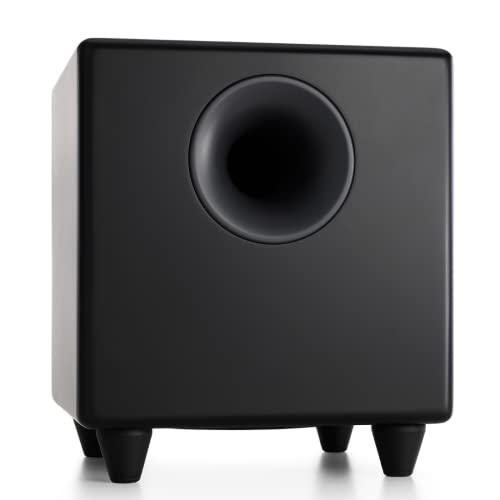
- 8-inch down-firing subwoofer
- 250W output in a compact cabinet
- Compatible with optional W3 wireless adapter
Best For: Compact desktop studios and flexible placement
Desktop-Friendly Control

- Made for Mackie CR Series monitors
- TRS, RCA, and Bluetooth connectivity
- Includes desktop volume and bypass remote
Best For: CR Series monitor owners and desktop studios
Powerful Sealed Bass

- 12-inch driver with 20Hz listed response
- 325W RMS and 820-plus watts peak power
- DSP tuning through smartphone app
Best For: Larger studios needing deep, adjustable bass
Powerful Room-Filling Pick
Klipsch R-12SW 12-inch Subwoofer

- 12-inch copper-spun woofer
- 400 watts of dynamic power
- Crossover, phase, line, and LFE controls
Best For: Large home studios and hybrid listening spaces
Studio-Focused Choice
KRK S8.4 8-inch Powered Studio Subwoofer

- Built for music production and recording studios
- Bass extension to 30Hz
- Front-firing port with XLR connectivity
Best For: Home producers with compatible XLR studio systems
Compact Everyday Option
Yamaha NS-SW050BL 8-inch Subwoofer

- Compact 8-inch design
- 100 watts of dynamic power
- 28Hz stated frequency response
Best For: Smaller home studios and desktop systems
Best with Extra Features

- 8-inch driver reaches down to 30 Hz
- Adjustable crossover and room-tuning controls
- Bluetooth 5.0, TRS, RCA, and headphone connectivity
Best For: Home-studio producers needing flexible, monitor-friendly bass
Best High-Output Option

- 10-inch woofer with 300W RMS output
- Adjustable volume, crossover, and phase
- RCA and high-level wired connections
Best For: Hybrid studio and home-theater setups prioritizing powerful bass
Best Simple Budget Setup
Monoprice 60-Watt Powered Subwoofer

- 8-inch driver with 60W RMS output
- Adjustable crossover and gain controls
- High-level and line-level connections
Best For: Modest wired stereo, desktop, and surround systems
Studio-Grade Low End – Yamaha HS8S
The Yamaha HS8S is a strong option for producers looking for subwoofers for home studios, particularly when accurate low-frequency extension and monitor integration matter. Its 8-inch driver, 150-watt amplifier, and 22Hz–150Hz response provide substantial bass coverage, while the adjustable crossover and phase controls help you blend it with a monitoring setup.
Best For: Home-studio recording and live-music monitoring setups that use balanced XLR connectivity.
Pros:
- 22Hz–150Hz frequency response reaches deep into the low end.
- 150-watt amplifier provides ample output for studio monitoring.
- Adjustable low- and high-cut controls support system matching.
- Phase switch helps with subwoofer integration and placement.
Cons:
- Its 33.6-pound, floor-standing cabinet requires dedicated space.
- Connectivity is wired rather than wireless for the subwoofer connection.
The HS8S is a practical choice when you want a dedicated studio subwoofer with useful crossover and phase adjustments. Its size and corded design make it better suited to a permanent monitoring position than a highly portable setup.
Compact Bass Upgrade – Audioengine S8
The Audioengine S8 offers a compact way to add substantial low end to a home setup. For shoppers comparing subwoofers for home studios, its 8-inch down-firing design, 250-watt output, and small footprint make it easy to position near a desk or compact monitoring system.
Best For: Compact home studios, desktop systems, and listeners who want flexible placement with optional wireless-adapter compatibility.
Pros:
- 250 watts of stated output delivers robust bass performance.
- Down-firing design supports flexible placement.
- Compact 11.26-inch-square enclosure is relatively easy to position.
- Compatible with the Audioengine W3 wireless subwoofer adapter kit.
Cons:
- Its listed 27Hz frequency response does not extend as low as some larger models.
- Wireless operation requires the separately referenced adapter kit.
- RCA connectivity may be less convenient for setups centered on balanced outputs.
The S8 is well suited to space-conscious users who want a capable powered subwoofer without a large cabinet. Its compact design and positioning flexibility are appealing, though studio owners should confirm that its RCA-based connection fits their equipment.
Desktop-Friendly Control – Mackie CR8SBT
The Mackie CR8SBT is designed specifically to complement CR Series monitors, making it a focused choice among subwoofers for home studios. It connects through TRS or RCA, includes Bluetooth input, and adds convenient desktop controls for volume and subwoofer bypass.
Best For: CR Series monitor owners who want convenient desktop control and straightforward wired or Bluetooth connectivity.
Pros:
- Designed to pair with Mackie CR Series monitors.
- TRS and RCA inputs support common studio and desktop connections.
- Included desktop remote controls volume and subwoofer bypass.
- Adjustable crossover helps blend the subwoofer with monitors.
Cons:
- Its 40Hz listed frequency response is less extended than several competing models.
- It is a relatively large 32.4-pound floor-standing unit.
- Bluetooth input may be less appropriate for critical wired monitoring.
The CR8SBT makes the most sense for a Mackie CR-based desk setup where quick access to level and bypass controls is valuable. Its crossover and multiple connection options add flexibility, but its stated low-frequency reach is more moderate than deep-bass-focused alternatives.
Powerful Sealed Bass – SVS SB-1000 Pro
SVS SB-1000 Pro Subwoofer (Black Ash) | 12-in Driver, 325 Watt RMS, Sealed Cabinet
Check Price On AmazonThe SVS SB-1000 Pro brings a larger 12-inch driver and sealed cabinet to the search for subwoofers for home studios. Its 325-watt RMS amplifier, 20Hz listed response, onboard DSP, and smartphone control app offer extensive tools for tuning powerful low end in a room.
Best For: Larger home studios and hybrid music or home-theater systems that need deep, powerful bass with app-based adjustment.
Pros:
- 12-inch high-excursion driver delivers substantial output.
- 325 watts RMS and 820-plus watts peak power provide considerable headroom.
- DSP and smartphone app support detailed tuning and custom presets.
- Sealed, braced MDF cabinet is designed to reduce cabinet resonance.
Cons:
- The larger driver and powerful output may be more than a small desktop studio needs.
- Its 12.13-kilogram cabinet is less portable than compact 8-inch options.
- Wireless subwoofer connectivity is listed with Bluetooth, so system compatibility should be checked.
The SB-1000 Pro is the performance-oriented choice in this group, especially when deep extension and room tuning are priorities. Its DSP controls can help manage a demanding room, but smaller spaces may not require its level of output or physical scale.
Powerful Room-Filling Pick – Klipsch R-12SW 12-inch Subwoofer
For home studios that also handle music listening or movie playback, the Klipsch R-12SW brings substantial low-end output from its 12-inch copper-spun woofer. Its 400-watt dynamic amplifier, adjustable crossover, phase control, and line/LFE inputs make it a flexible option, though its home-theater-oriented design may be more than a compact mixing setup needs.
Best For: Larger home studios and hybrid music-and-home-theater spaces that need powerful bass.
Pros:
- 12-inch front-firing woofer provides strong low-frequency output.
- 400 watts of dynamic power suits larger listening spaces.
- Low-pass crossover, phase control, and line/LFE inputs support system matching.
Cons:
- The 20-by-20-by-17.75-inch cabinet requires significant floor space.
- Its stated use is home theater, so it may be less studio-focused than a purpose-built monitor subwoofer.
The R-12SW is a compelling choice when you want generous bass extension and output rather than a small, nearfield-focused subwoofer. Plan its placement carefully and use the crossover and phase controls to integrate it with your main speakers.
Studio-Focused Choice – KRK S8.4 8-inch Powered Studio Subwoofer
The KRK S8.4 is purpose-built for music production and recording studios, making it one of the more directly relevant subwoofers for home studios in this group. Its 8-inch glass aramid composite woofer reaches down to 30Hz, while the front-firing port and Class D amplification offer practical placement flexibility.
Best For: Home producers and recording setups using compatible XLR-connected studio monitors.
Pros:
- Designed specifically for music production and recording studios.
- 8-inch glass aramid composite woofer extends bass to 30Hz.
- Front-firing port and curved cabinet support flexible placement.
- Footswitch control can bypass the subwoofer and crossover filter.
Cons:
- The footswitch is not included.
- XLR connectivity may be less convenient for systems without balanced studio outputs.
- Its 109-watt output is less powerful than the larger Klipsch model.
Choose the S8.4 when accurate studio integration and production-oriented features matter more than maximum room-shaking output. Confirm that your interface or monitors support the required XLR connection before buying.
Compact Everyday Option – Yamaha NS-SW050BL 8-inch Subwoofer
The Yamaha NS-SW050BL is a compact 8-inch powered subwoofer for home studios that need a straightforward way to add low-end weight without using a large cabinet. Its 100-watt dynamic power, 28Hz stated frequency response, and twisted flare port emphasize accessible bass performance for desktop, music, and home-theater setups.
Best For: Smaller home studios and desktop systems seeking an affordable, space-conscious bass addition.
Pros:
- Compact 12-by-14-by-12-inch dimensions suit tighter rooms.
- 8-inch woofer and 28Hz stated frequency response provide substantial low-end reach.
- Twisted flare port is designed to help produce clear, tight bass.
- Includes a subwoofer cable, warranty card, and manual.
Cons:
- 100 watts of dynamic power is more modest than the Klipsch option.
- It is designed primarily for home theater and general music use rather than dedicated studio monitoring.
- The supplied details identify wired connectivity, so integration options may be less studio-specific.
The NS-SW050BL makes sense when cabinet size and simple operation are priorities. It can add useful bass to a compact production space, but users seeking dedicated monitor integration may prefer the KRK’s studio-oriented design.
Best with Extra Features – PreSonus Eris Sub 8BT
For anyone comparing subwoofers for home studios, the PreSonus Eris Sub 8BT stands out as a compact, flexible option built around accurate low-frequency monitoring. Its 8-inch driver reaches down to 30 Hz, while adjustable crossover and tuning controls help it integrate more cleanly with compatible monitors.
Best For: Home-studio producers who want Bluetooth, headphone access, and room-adjustment controls in a compact subwoofer.
Pros:
- 8-inch driver delivers low frequencies down to 30 Hz.
- Highpass and lowpass controls help blend the sub with main monitors.
- Offers balanced TRS, RCA, auxiliary, and Bluetooth 5.0 connectivity.
- Front-panel headphone output and built-in headphone amplifier are convenient for referencing.
Cons:
- Its feature set may be more than needed for a basic stereo setup.
- Designed especially to complement PreSonus Eris monitors, so system matching may matter.
The Eris Sub 8BT is a strong choice when accurate, adjustable bass matters more than maximum output. Bluetooth and multiple inputs also make it useful for both production and everyday listening.
Best High-Output Option – Rockville Rock Shaker 10
The Rockville Rock Shaker 10 is a larger, higher-output choice among subwoofers for home studios, particularly when your setup also handles movies, gaming, or general home-theater listening. Its 10-inch woofer, built-in Class-D amplifier, and adjustable controls provide a straightforward way to add substantial low end.
Best For: Home studios that also serve as entertainment spaces and need powerful bass with flexible wired connections.
Pros:
- 10-inch woofer is rated for 300 watts RMS and 600 watts peak output.
- Volume, crossover, and phase controls support setup adjustments.
- RCA and high-level inputs and outputs accommodate varied systems.
- MDF cabinet with vinyl finish and detachable foam grille offers a durable design.
Cons:
- Its home-theater-oriented design may be less focused on studio-accurate monitoring.
- It is a relatively large 20-pound enclosure, requiring more floor space.
- No wireless connectivity is listed.
The Rock Shaker 10 makes sense if impact and output are priorities. For critical mixing, take extra care with placement and calibration, but for a hybrid studio and entertainment setup, its controls and connectivity are practical.
Best Simple Budget Setup – Monoprice 60-Watt Powered Subwoofer
The Monoprice 60-Watt Powered Subwoofer is a practical, no-frills option for adding bass to a desktop, stereo, or surround setup. Its 8-inch driver, auto-on function, adjustable lowpass crossover, and multiple input types make it easy to integrate with equipment that may not have a dedicated subwoofer output.
Best For: Home-studio users who want an affordable wired subwoofer with high-level and line-level integration options.
Pros:
- 8-inch driver provides 60 watts RMS of powered output.
- Adjustable 50–150 Hz lowpass crossover and gain controls support blending.
- High-level and left/right line-level inputs and outputs suit varied systems.
- Auto-on function and compact wood cabinet simplify everyday use.
Cons:
- Its listed 50–250 Hz frequency response is less extended than the PreSonus option.
- It lacks Bluetooth and other wireless connectivity.
- At 60 watts RMS, it is better suited to modest listening levels than high-output applications.
The Monoprice is a sensible choice when compatibility and basic adjustability matter more than advanced studio features. Its high-level inputs are especially useful for systems without a dedicated subwoofer connection.
How We Picked the Best Subwoofers for Home Studios
We focused on models that can suit real home-studio setups, from compact desktop systems to larger rooms with full-size monitors. Our comparisons consider driver size, amplifier output, cabinet design, frequency extension, crossover and phase controls, connection options, auto-on behavior, and overall placement flexibility.
We also included both studio-oriented and versatile home-audio options. A professional subwoofer is not automatically the best choice for every room: a smaller, adjustable model may integrate more cleanly in a confined space, while a larger subwoofer can provide deeper output when the room and monitors can support it.
Quick Comparison
Eight-inch models are generally the easiest starting point for a bedroom or project studio, especially when paired with compact nearfield monitors. Ten- and 12-inch models can deliver greater low-end authority, but they need more space and careful placement to avoid excessive room modes. Sealed designs often offer tighter transient response and easier integration, while ported cabinets can produce more output and perceived impact.
Wireless-ready or Bluetooth features are convenient for casual playback, but wired connections are usually preferable for critical monitoring. Look for adjustable crossover, phase, and level controls whenever possible; these features help blend the subwoofer with your main speakers instead of creating a separate-sounding bass peak.
Key Buying Factors for Subwoofers for Home Studios
Room Size and Placement
Measure your room and plan placement before buying. Corners usually increase bass output but can exaggerate resonances. Start near the front wall, keep the subwoofer centered when practical, and test several positions with familiar recordings. Room treatment and calibration may matter as much as the subwoofer itself.
Monitor Compatibility
Match the subwoofer to the size and low-frequency capability of your monitors. A compact sub can complement small speakers without overwhelming them; a powerful 12-inch model may be excessive for tiny nearfields or a lightly treated room. Check input and output types, crossover range, and whether the sub supports your signal chain.
Controls and Accuracy
Prioritize adjustable crossover frequency, phase, volume, and bypass or footswitch options if available. These controls make it easier to establish a smooth handoff and temporarily check mixes without extended bass. Auto-on convenience is useful, but ensure standby behavior does not interrupt quiet monitoring.
Output Versus Control
Do not choose by wattage alone. Maximum output, distortion, cabinet tuning, driver size, and room interaction all influence performance. For mixing, clean and predictable bass is usually more valuable than the loudest possible low end.
Who Should Buy Which Subwoofers for Home Studios?
Choose an eight-inch studio subwoofer if you work in a small or medium bedroom studio and want better extension with compact monitors. Consider a Bluetooth-equipped desktop model if convenience and mixed-use listening matter as much as precise monitoring. A sealed 12-inch design is better suited to listeners who want controlled, deep bass and have enough room for careful setup.
For home-theater playback, electronic music, or larger rooms, a higher-output 10- or 12-inch subwoofer may be the stronger fit. If you mainly mix and master, favor models with flexible crossover, phase, and level controls over extra volume. Whatever you choose, calibrate at a moderate level, verify the crossover with test material, and make final mix decisions on multiple playback systems.