
A dedicated theater room deserves more than a basic pull-down screen. The right surface, aspect ratio, size, and installation style can make your projector look sharper, brighter, and more cinematic.
We selected 10 projector screens for dedicated theater rooms across fixed-frame, motorized, and manual designs, with options for standard and large home cinema installations.
Best 10 Projector Screens for Dedicated Theater Rooms Picks for 2026
Large-Screen Theater Classic
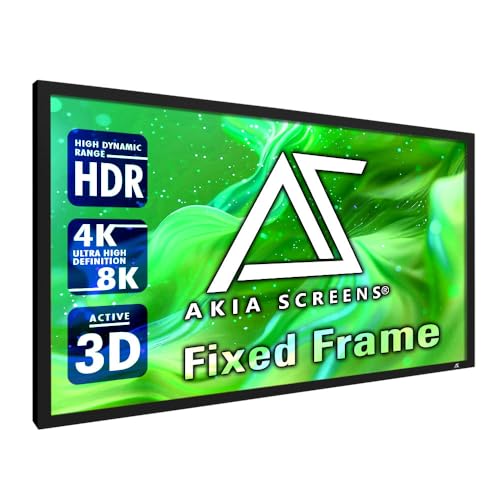
- 135-inch 16:9 image with 1.3 gain
- Black velvet frame for a theater-style finish
- Supports 4K, 8K, HDR, and active 3D
Best For: Large permanent indoor theater installations
Retractable Room Flexibility
DINAH 120-Inch Electric Screen

- Motorized 120-inch drop-down design
- Remote-controlled ceiling or wall mounting
- Supports 4K, 3D, and HD projection
Best For: Flexible rooms needing a retractable screen
Wide-Compatibility Premium Pick

- 135-inch 16:9 matte white screen
- 1.3 gain with a 170-degree half-gain angle
- Works with long-, short-, and ultra-short-throw projectors
Best For: Permanent theaters using varied projector types
Compact Motorized Option
VIVOHOME 84-Inch Motorized Screen

- 84-inch 16:9 display for compact rooms
- Remote control works up to 82 feet away
- Wall or ceiling mounting with matte surface
Best For: Smaller theaters needing retractable convenience
Premium Immersive Pick
Elite Screens ER200WH2 200-inch Fixed Frame

- 200-inch 16:9 screen with a 180-degree viewing angle
- ISF-certified 1.3-gain surface supports 4K and active 3D
- Velvet frame, black backing, and included mounting hardware
Best For: Large dedicated theaters with ample wall space
Flexible Retractable Choice
Pyle 84-inch Manual Pull-Down Screen

- 84-inch matte white screen with adjustable height
- Auto-locking roll-down design retracts after use
- Supports wall or ceiling mounting
Best For: Compact or multipurpose theater rooms
Balanced Fixed-Frame Value
KHOMO GEAR 100-inch Matte Screen

- 100-inch 16:9 fixed-frame screen for permanent installation
- 1.1-gain matte PVC supports 4K, 8K, HDR, and active 3D
- Black velvet frame and tension-rod system aid picture uniformity
Best For: Moderate-size dedicated home theaters
Best with Extra Features
Kshioe 92-Inch Electric Projector Screen

- 92-inch 16:9 format with an 80-by-45-inch viewing area
- Wireless remote and smooth motorized operation
- Wall- or ceiling-mount design with 160° viewing angle
Best For: Smaller dedicated theaters and multipurpose media rooms
Large-Room Value
Akia Screens 125-Inch Motorized Screen

- 125-inch 16:9 screen with a 109-by-61.3-inch viewing area
- 1.1-gain MaxWhite 2 material with a 180° viewing angle
- Remote, programmable drop, and optional 12V trigger support
Best For: Large dedicated theaters with standard long-throw projectors
Maximum Immersion
Elite Screens Spectrum 150-Inch Electric Screen

- 150-inch 16:9 viewing area measuring 130.7 by 73.5 inches
- 1.1-gain MaxWhite 2 surface with a 180° viewing angle
- Programmable drop, IR control, and RJ45 automation integration
Best For: Very large dedicated theaters using standard-throw projectors
Large-Screen Theater Classic – Akia 135-Inch Fixed Frame
For dedicated theater rooms, the Akia 135-inch fixed-frame screen offers a large 16:9 image, a flat tensioned surface, and a black velvet border designed for a cinema-style presentation. Its ISF-certified CINEWHITE UHD-B material is rated at 1.3 gain and supports 4K, 8K, HDR, and active 3D projection.
Best For: Large indoor dedicated theaters with multiple seating positions and a permanent wall installation.
Pros:
- Large 135-inch 16:9 viewing area for an immersive theater setup.
- Black velvet frame helps absorb projector overshoot and enhance perceived contrast.
- Supports standard, short-throw, and ultra-short-throw projectors.
- Tensioned rod-and-spring system helps maintain a flat surface.
Cons:
- Its approximately 122.4-inch-wide assembled footprint requires substantial wall space.
- Fixed installation is less flexible than a retractable screen.
This is a strong dedicated-room choice when screen size, a clean theater appearance, and broad projector compatibility matter more than storing the screen away.
Retractable Room Flexibility – DINAH 120-Inch Electric Screen
The DINAH 120-inch electric screen brings motorized convenience to projector screens for dedicated theater rooms while also fitting spaces that need a retractable setup. It lowers and retracts from a ceiling or wall mount using the included remote, with a matte surface intended for 4K, 3D, and HD projection.
Best For: Theater rooms where a large screen should retract when not in use or where ceiling mounting is preferred.
Pros:
- 120-inch screen provides an immersive viewing area.
- Remote-controlled motorized operation allows convenient raising and lowering.
- Ceiling or wall drop-down installation helps preserve room flexibility.
- Supports 4K, 3D, and HD projection.
Cons:
- The listed model uses a 4:3 aspect ratio rather than the widescreen 16:9 format common for movies.
- Its 87-by-49-inch listed dimensions should be checked against the available installation area.
The DINAH is most practical for buyers who prioritize retractability and remote operation, but movie-focused setups should consider whether its 4:3 format matches their content and projector.
Wide-Compatibility Premium Pick – Valerion 135-Inch Fixed Frame
The AWOL Valerion 135-inch fixed-frame screen is built for projector screens for dedicated theater rooms that use a large, permanent wall display. Its matte white PVC surface has 1.3 gain, a 170-degree half-gain viewing angle, and a wrinkle-free design for a smooth 16:9 presentation.
Best For: Large dedicated theaters seeking a fixed screen compatible with long-throw, short-throw, and ultra-short-throw projectors.
Pros:
- 135-inch 16:9 size creates an immersive wall-mounted display.
- 1.3 gain matte white surface is designed for vivid, clear images.
- 170-degree half-gain viewing angle supports seating across a wide room.
- Smooth PVC surface is described as wrinkle-free.
Cons:
- Fixed-frame installation requires dedicated wall space and is not retractable.
- The product notes list a one-year warranty.
With its large format, broad viewing angle, and compatibility across projector throw types, the Valerion is a versatile choice for a permanent, cinema-oriented installation.
Compact Motorized Option – VIVOHOME 84-Inch Motorized Screen
The VIVOHOME 84-inch motorized screen is a practical choice when projector screens for dedicated theater rooms need to fit a smaller viewing distance or a more compact installation. Its 16:9 matte white display offers a 73.2-by-41.1-inch image area, while the included remote controls the screen from up to 82 feet away.
Best For: Smaller dedicated theaters or rooms where an 84-inch retractable screen and flexible wall-or-ceiling mounting are appropriate.
Pros:
- 16:9 format and 84-inch display area suit movie-focused viewing.
- Remote supports control from up to 82 feet away.
- Can be mounted on a wall or ceiling.
- Matte surface supports 3D, 1080p, 4K, and Full HD images.
Cons:
- The 73.2-by-41.1-inch viewing area is smaller than the large-format options in this roundup.
- The included remote battery is not included.
- The notes mention a slight odor may be present when first opened.
This screen makes sense when room size or viewing distance favors a smaller 16:9 image, while its retractable design and flexible mounting add convenience to a compact theater.
Premium Immersive Pick – Elite Screens ER200WH2 200-inch Fixed Frame
For dedicated theater rooms that have the wall space, the Elite Screens ER200WH2 is a substantial 200-inch fixed-frame option. Its 16:9 CineWhite UHD-B surface is designed for accurate color, broad seating coverage, and compatibility with standard, short-throw, and ultra-short-throw projectors.
Best For: Large dedicated home theaters and professional-style media rooms where a permanent, cinematic installation is the priority.
Pros:
- Huge 200-inch viewing area with a 180-degree viewing angle.
- ISF-certified 1.3-gain CineWhite UHD-B material supports 4K Ultra HD and active 3D projection.
- Black-backed surface helps prevent light penetration, while the black velvet frame absorbs projector overshoot.
- Includes sliding wall brackets and installation hardware for centered mounting.
Cons:
- The nearly 179-inch-wide overall frame requires a very large, suitable wall.
- At 37.7 pounds, installation may require more planning than a retractable screen.
- Its fixed-frame design is not intended to disappear after viewing.
The ER200WH2 is the strongest fit here for a purpose-built theater with ample room dimensions. Choose it when maximum image size, a finished velvet-frame appearance, and flexible projector compatibility matter more than compact storage.
Flexible Retractable Choice – Pyle 84-inch Manual Pull-Down Screen
The Pyle 84-inch pull-down screen suits projector screens for dedicated theater rooms when you want the option to clear the wall after movie night. Its manual roll-down design offers adjustable height, neat retraction, and wall or ceiling mounting in a relatively compact format.
Best For: Smaller theater rooms or multipurpose spaces that need a screen that can be stored out of sight between uses.
Pros:
- Auto-locking mechanism lets you stop the screen at the desired height.
- Matte white surface and black border support clean alignment for movies, sports, and presentations.
- Can be mounted to a wall or ceiling using the included top-loop design.
- Retracts neatly for less visual clutter when not in use.
Cons:
- Its 84-inch size is considerably smaller than the fixed-frame alternatives.
- Manual operation requires pulling the screen down and retracting it by hand.
- The listed 160-degree viewing angle is narrower than the Elite Screens option.
This Pyle model prioritizes convenience and storage over a permanent cinema presentation. It is a practical choice when a dedicated room also serves another purpose or when the available wall width does not accommodate a very large fixed frame.
Balanced Fixed-Frame Value – KHOMO GEAR 100-inch Matte Screen
The KHOMO GEAR 100-inch fixed screen offers a middle ground for projector screens for dedicated theater rooms: a permanent wall-mounted setup without the footprint of a 200-inch model. Its 16:9 matte PVC surface is specified for HD, 4K, 8K, HDR, active 3D, and ultra-short-throw projection.
Best For: Home theater owners seeking a permanent 100-inch screen with a clean frame and broad projector compatibility.
Pros:
- 100-inch 16:9 viewing area works well for a moderate-size theater room.
- 1.1-gain surface and 150-degree viewing angle support varied seating positions.
- Black velvet frame absorbs projector overshoot and gives the installation a polished appearance.
- Tension-rod assembly and included brackets help create a uniform, secure screen surface.
Cons:
- Fixed wall mounting means it remains visible when not in use.
- Its 150-degree viewing angle is narrower than the Elite Screens model’s 180 degrees.
- The supplied one-year warranty is shorter than the Elite Screens warranty.
For many dedicated rooms, the KHOMO GEAR provides a sensible balance of size, presentation, and installation simplicity. It is a better fit than the Pyle if you want a permanently ready screen, while remaining easier to accommodate than the extra-large Elite Screens model.
Best with Extra Features – Kshioe 92-Inch Electric Projector Screen
For dedicated theater rooms that need a practical, space-conscious setup, this 92-inch motorized screen offers a 16:9 format and an 80-by-45-inch viewing area. Its remote-controlled operation, wall-or-ceiling mounting, and 1.3 gain surface make it a convenient option for movie nights, gaming, and other indoor viewing.
Best For: Smaller dedicated theater rooms, multipurpose media spaces, and buyers who want remote-controlled screen operation without a very large installation.
Pros:
- Motorized operation with a wireless remote for convenient adjustments from across the room.
- 16:9 screen format with an 80-by-45-inch viewing area.
- 1.3 gain surface and 160-degree viewing angle support broad seating arrangements.
- Can be mounted on a wall or ceiling.
Cons:
- The 92-inch diagonal size may feel modest in a larger theater room.
- Its glossy finish may not suit buyers specifically seeking a matte screen surface.
This Kshioe screen is a straightforward choice when convenient electric operation matters more than maximum image size. Confirm the available mounting space and viewing distance before choosing it for a dedicated room.
Large-Room Value – Akia Screens 125-Inch Motorized Screen
For dedicated theater rooms where a larger image is a priority, this 125-inch Akia screen provides a 16:9 viewing surface measuring 109 by 61.3 inches. It combines electric drop-down operation, a 1.1-gain MaxWhite 2 surface, and wall-or-ceiling installation for a polished indoor theater setup.
Best For: Large dedicated theater rooms using standard long-throw projectors, especially setups that benefit from programmable screen positioning and projector synchronization.
Pros:
- 125-inch diagonal size delivers a substantial 16:9 image for larger viewing spaces.
- ISF-certified MaxWhite 2 material offers a 180-degree viewing angle and black-backed construction.
- Remote control, detachable wall controller, and programmable vertical drop settings add installation flexibility.
- Supports a wired 12V trigger for synchronized operation with compatible projector power cycles.
Cons:
- The screen is intended for standard long-throw projector setups, so projector compatibility should be checked.
- Its larger housing requires more wall or ceiling clearance than a compact screen.
With its generous size and control options, the Akia is well suited to a dedicated theater designed around a conventional long-throw projector. The included mounting hardware and assembled design can also simplify installation.
Maximum Immersion – Elite Screens Spectrum 150-Inch Electric Screen
For dedicated theater rooms built around a truly large image, the Elite Screens Spectrum provides a 150-inch 16:9 screen with a 130.7-by-73.5-inch viewing area. Its 1.1-gain MaxWhite 2 surface, motorized drop-down design, and programmable controls are aimed at substantial indoor home theater installations.
Best For: Very large dedicated theater rooms using standard-throw projectors and viewers who want a wide screen with integrated control-system compatibility.
Pros:
- 150-inch diagonal size creates the largest viewing area among these options.
- ISF-certified MaxWhite 2 surface provides a 180-degree viewing angle and black-backed design.
- IR remote, wall-box controller, programmable drop positions, and RJ45 integration support flexible automation.
- Arrives fully assembled for wall or ceiling mounting and carries a two-year manufacturer warranty.
Cons:
- The large 142.6-by-84-inch overall housing requires substantial installation space.
- It is not compatible with ultra-short-throw or short-throw projectors.
- Its 30.3-pound weight may require careful mounting planning.
This Elite Screens model is the strongest fit when a dedicated room can accommodate an expansive screen and standard-throw projection. Its programmable controls and RJ45 input make it particularly appealing for theater rooms with more advanced automation plans.
How We Picked the Best Projector Screens for Dedicated Theater Rooms
We focused on screen designs suited to permanent or semi-permanent home theater installations. The lineup includes fixed-frame models for a clean, tensioned surface; motorized screens for convenient concealment; and manual options for buyers who want straightforward installation at a lower cost.
We also considered screen size, 16:9 compatibility, advertised 4K and 8K readiness, viewing-surface material, gain, mounting flexibility, and compatibility with common projector types. Because room dimensions and projector brightness vary, specifications should be matched to your equipment rather than treated as universal performance guarantees.
Quick Comparison
| Screen type | Best for | Main advantage | Potential drawback |
|---|---|---|---|
| Fixed frame | Permanent theater rooms | Flat, consistently tensioned surface | Requires dedicated wall space |
| Motorized | Flexible rooms and concealed installations | Convenient retractable operation | More components and installation considerations |
| Manual pull-down | Budget-conscious setups | Simple operation and lower cost | May show more waviness over time |
Key Buying Factors for Projector Screens for Dedicated Theater Rooms
Screen Size and Viewing Distance
Choose a diagonal size that fits both the wall and your seating distance. A 120- to 150-inch screen can create a highly immersive image, but it may overwhelm a smaller room or make lower-resolution content look less forgiving. Confirm the full outer dimensions, not just the advertised diagonal.
Aspect Ratio and Projector Match
A 16:9 screen is the most versatile choice for modern movies, streaming services, gaming, and HDTV. Make sure the projector’s native resolution and lens range can fill the selected screen without excessive zooming or image cropping.
Surface, Gain, and Ambient Light
Matte white surfaces are generally versatile and provide broad viewing angles. Higher-gain materials can help preserve brightness, but they may narrow viewing angles or emphasize uniformity issues. Dedicated rooms are usually dark, so prioritize accurate color and even illumination over maximum gain.
Installation and Frame Design
Fixed-frame screens are often the best fit for a dedicated theater because their tensioned surfaces stay ready for use. Motorized models are useful when the screen must disappear or share a room with another display. Check wall or ceiling-mount hardware, power access, clearance, and stud locations before purchasing.
Who Should Buy Which Projector Screens for Dedicated Theater Rooms?
Choose a fixed-frame screen if your theater has a permanent viewing wall and you want the most stable, cinema-like presentation. Select a motorized screen if concealment, remote operation, or room flexibility matters more than the simplest installation. A manual pull-down screen is a practical choice for occasional viewing, secondary rooms, or tighter budgets.
For very large screens, verify projector brightness, throw distance, image uniformity, and seating angles before committing. The best Projector Screens for Dedicated Theater Rooms are not necessarily the largest; they are the ones that properly match your room, projector, seating layout, and viewing habits.