
Low-angle shots can add scale, movement, and a more cinematic perspective—but only when the camera stays controlled close to the ground. The right stabilizer makes these shots easier to frame, walk with, and repeat without unwanted shake.
We’ve assembled 10 options spanning mirrorless-camera gimbals, smartphone stabilizers, pocket cameras, and wearable systems. Use the guide below to match payload, monitoring, control, and portability to the way you shoot.
Best 10 Camera Gimbals for Low Angle Shots Picks for 2026
Best Camera Gimbal for Low-Angle Shots

- Briefcase handle supports low-angle camera positioning
- Auto axis locks and quick balancing speed setup
- Handles compatible cameras and phones up to 2 kg
Best For: Mirrorless-camera creators shooting dynamic low-angle content
Best Pocket Camera for Flexible Low-Angle Vlogging

- 330-degree rotating lens supports unusual angles
- Pocket-sized design suits travel and daily recording
- Includes mini tripod and starter accessories
Best For: Beginners and solo vloggers prioritizing portability
Best Phone Gimbal for Low-Angle Shots

- Extension rod and tripod support low-angle framing
- Three-axis stabilization smooths moving phone footage
- Remote, fill light, and AI tracking aid solo creators
Best For: Smartphone creators filming low-angle social content
Best Pocket Gimbal Camera for Low-Angle Shots

- Integrated three-axis mechanical gimbal stabilizes footage
- Pocket-sized 179 g body is easy to position low
- 4K/120fps video and ActiveTrack support polished vlogs
Best For: Traveling vloggers wanting an all-in-one stabilized camera
Best Portable Phone Gimbal

- Extendable rod and tripod for low or overhead angles
- 3-axis stabilization for smoother smartphone footage
- Remote, tracking, fill light, and foldable design
Best For: Solo smartphone creators and travelers
Best Wearable Camera for Hands-Free Angles

- Hands-free head-mounted recording
- 2-axis gimbal stabilization with 4K video
- Wide 130-degree view and Wi-Fi app control
Best For: First-person vlogging and hands-on demonstrations
Best Camera Gimbal for Dynamic Low Angles

- 3-axis stabilization for mirrorless and vlog cameras
- Supports camera and phone payloads up to 2 kg
- Fast setup, vertical switching, and responsive follow mode
Best For: Dynamic camera movement and professional-style shoots
Heavy-Duty Tracking Pick

- 7.72-lb payload for compatible DSLR and mirrorless setups
- Integrated underslung handle for low-angle control
- Built-in AI tracking with native vertical shooting
Best For: Heavy camera kits and solo creators
Lightweight Travel Pick
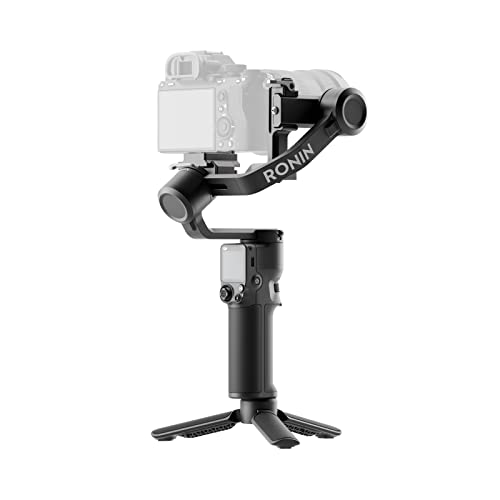
- 795-g lightweight body for portable shooting
- 2-kg tested payload for compatible setups
- Stabilization supports low-angle and flashlight modes
Best For: Travel creators with lighter camera kits
Ergonomic Value Pick

- 5.5-lb payload for many listed camera combinations
- Integrated handle supports underslung filming
- Folding bracket and multiple creative shooting modes
Best For: Flexible DSLR and mirrorless filming
Best Camera Gimbal for Low-Angle Shots – DJI RS 4 Mini Combo
For creators using a mirrorless, vlog, or compatible smartphone setup, the DJI RS 4 Mini Combo is a capable choice among camera gimbals for low angle shots. Its included briefcase handle provides a more practical grip for lowering the camera, while auto axis locks, fast balancing, and intelligent tracking help keep fast-moving shoots manageable.
Best For: Mirrorless-camera and smartphone users who want a feature-rich stabilizer for dynamic low-angle, orbit, and vertical content.
Pros:
- Included briefcase handle supports more comfortable low-angle shooting.
- Auto axis locks enable setup in about one second.
- Supports cameras and smartphones up to a 2 kg payload.
- Intelligent tracking helps keep subjects framed during movement.
Cons:
- At about 1.03 kg, it is heavier than a phone-only gimbal.
- It is not water resistant.
- The DJI Ronin app must be downloaded from DJI rather than Google Play.
The RS 4 Mini is the strongest fit here when low-angle work involves a dedicated camera and you want tracking, quick setup, and a supplied briefcase handle. Its payload limit also leaves room for a broader range of compatible camera configurations.
Best Pocket Camera for Flexible Low-Angle Vlogging – 4K Vlogging Camera
This compact 4K vlogging camera is not a mechanical gimbal, but its 330-degree rotating lens makes it useful for creators exploring low angle shots without carrying a larger rig. The pocket-sized design, wide-angle lens, and included mini tripod suit casual travel, floor-level perspectives, and solo recording.
Best For: Beginners and solo vloggers who want a lightweight camera with flexible lens positioning rather than a traditional three-axis gimbal.
Pros:
- 330-degree rotating lens allows flexible shooting angles.
- Compact body fits easily into a pocket or travel bag.
- Records 4K video and captures listed 75MP still images.
- Includes a mini tripod, 16GB TF card, and carrying bag.
Cons:
- Uses digital image stabilization rather than a three-axis mechanical gimbal.
- Battery life is listed at about 1.5 hours.
- It is not water resistant.
Choose this camera when portability and unusual framing matter more than the walking-smoothness of dedicated camera gimbals for low angle shots. The rotating lens can simplify solo filming, though it will not provide the same mechanical stabilization as the other gimbal-based options.
Best Phone Gimbal for Low-Angle Shots – hohem iSteady X3
The hohem iSteady X3 is a practical phone-first pick among camera gimbals for low angle shots. Its extension rod and tripod let you reach closer to the ground or set up a lower stationary perspective, while three-axis stabilization, remote control, and AI tracking support solo filming with compatible iPhone and Android devices.
Best For: Smartphone creators filming pets, travel clips, social videos, and solo content from low or extended angles.
Pros:
- Extension rod and tripod support low-angle and overhead filming.
- Three-axis stabilization helps smooth walking and moving footage.
- Detachable remote works from up to 32.8 feet away.
- Magnetic fill light and AI tracking add flexibility for solo shoots.
Cons:
- Designed for smartphones rather than interchangeable-lens cameras.
- Some features rely on the Hohem Joy app.
- It is not water resistant.
For phone users, the iSteady X3 offers the most direct low-angle workflow in this group: extend the rod, lower the phone, and control recording remotely. Its compact 0.93-pound design also makes it easier to carry than a camera-focused stabilizer.
Best Pocket Gimbal Camera for Low-Angle Shots – DJI Osmo Pocket 3
The DJI Osmo Pocket 3 combines a pocket-sized camera with an integrated three-axis mechanical gimbal, making it a strong option for handheld camera gimbals for low angle shots. Its compact body is easy to position near the ground, while the rotating touchscreen, ActiveTrack 6.0, and 1-inch sensor support polished solo video.
Best For: Vloggers and travelers who want stabilized 4K footage from a compact all-in-one camera.
Pros:
- Integrated three-axis mechanical stabilization supports smooth handheld footage.
- Compact 179 g design is easy to carry and position for low perspectives.
- Records 4K video at up to 120fps.
- Rotating 2-inch touchscreen supports horizontal and vertical shooting.
Cons:
- It is an integrated camera rather than a gimbal for interchangeable-lens cameras.
- It is not water resistant.
- Advanced color features may require post-production work to use fully.
The Osmo Pocket 3 is a convenient middle ground: more stabilized than a typical pocket camera and far smaller than a full camera rig. It is especially appealing when low-angle shots need to be captured quickly while traveling or filming alone.
Best Portable Phone Gimbal – hohem iSteady X3
For creators seeking camera gimbals for low angle shots with a phone, the hohem iSteady X3 combines 3-axis stabilization, an extendable design, and a built-in tripod. Its detachable remote and tracking features are especially useful when filming solo.
Best For: Smartphone vloggers, travelers, and solo creators shooting low-angle pet clips, overhead footage, or social videos.
Pros:
- Extendable rod and tripod support creative low and overhead angles.
- 3-axis iSteady 8.0 stabilization helps smooth footage while walking or moving.
- Detachable remote, AI tracking, gesture control, and magnetic fill light add shooting flexibility.
- Foldable 0.93-pound design is convenient for travel.
Cons:
- Designed for smartphones rather than dedicated cameras.
- AI tracking and gesture features require the Hohem Joy app.
The iSteady X3 is a practical choice when portability and fast setup matter. Its extension rod makes low-angle framing easier without requiring a separate stand, while the remote helps solo shooters stay out of arm’s reach.
Best Wearable Camera for Hands-Free Angles – ORDRO EP8 4K Head-Mounted Cam
The ORDRO EP8 takes a different approach to camera gimbals for low angle shots: it is a head-mounted 4K camera with a 2-axis gimbal. The hands-free format suits first-person recording when carrying or operating a conventional stabilizer is inconvenient.
Best For: Hands-free vloggers, cooks, instructors, and creators who want a wearable first-person perspective.
Pros:
- Head-mounted design leaves both hands available while recording.
- 2-axis gimbal stabilization helps produce smoother moving footage.
- 4K video, a 20MP still resolution, and a 130-degree adjustable viewing angle support detailed scenes.
- Wi-Fi app connectivity, remote control, night vision, and water resistance add versatility.
Cons:
- Two-axis stabilization offers less axis control than a three-axis gimbal.
- App-connected operation disables the physical buttons and remote while connected.
- Its head-mounted format provides less framing control than a handheld gimbal.
The EP8 is best viewed as a wearable action-vlogging camera rather than a traditional phone or camera stabilizer. It can capture unusual low viewpoints naturally, but its fixed head-mounted perspective may not suit creators who need precise manual framing.
Best Camera Gimbal for Dynamic Low Angles – DJI RS 4 Mini Camera Gimbal
For interchangeable-camera setups, the DJI RS 4 Mini is a strong option among camera gimbals for low angle shots. Its 3-axis stabilization, responsive follow mode, and support for up to 2 kg make it suitable for controlled, moving camera work.
Best For: Mirrorless-camera and vlog-camera users shooting dynamic low-angle moves, orbit shots, and vertical social content.
Pros:
- 3-axis stabilization supports smooth movement with compatible cameras and phones.
- Supports payloads up to 2 kg, accommodating mirrorless and vlog cameras.
- Automated axis locks and Teflon-enhanced balancing speed setup and adjustments.
- Responsive Follow mode and optional Intelligent Tracking help maintain subject framing.
Cons:
- At 1,030 grams, it is substantially heavier than a compact phone gimbal.
- It is not water resistant.
- The DJI Ronin app must be downloaded from DJI’s website because it is unavailable on Google Play.
The RS 4 Mini is the most capable choice here for users working with a dedicated camera and needing precise, stabilized movement. It demands more setup and carrying capacity than a phone gimbal, but the higher payload and tracking options give it greater production flexibility.
Heavy-Duty Tracking Pick – FeiyuTech SCORP-C2
For creators seeking camera gimbals for low angle shots, the FeiyuTech SCORP-C2 combines a 7.72-pound payload with an integrated underslung handle. Its high-torque motors, native vertical shooting, and built-in AI tracking make it suited to heavier DSLR and mirrorless setups and solo filming.
Best For: DSLR and mirrorless users who need high payload capacity, hands-free tracking, and flexible low-angle handling.
Pros:
- Supports up to 7.72 pounds under specified compatibility conditions.
- Integrated underslung handle provides multiple grip angles for low-angle movements.
- Built-in AI Tracking 4.0 works without an app or Bluetooth pairing.
- Native vertical shooting and up to 14 hours of stated runtime.
Cons:
- Camera, lens, and total payload compatibility should be checked before use.
- Its heavier-duty design may be more than needed for lightweight camera kits.
The SCORP-C2 is the strongest fit here for demanding camera-and-lens combinations and independent content production. Its payload headroom and underslung design are particularly useful when low-angle control is a priority.
Lightweight Travel Pick – DJI RS 3 Mini
The DJI RS 3 Mini is a practical option for camera gimbals for low angle shots when portability matters. At 795 grams, it remains easy to carry while its third-generation stabilization algorithm supports low-angle and flashlight-mode filming with compatible camera setups.
Best For: Travel filmmakers and creators using smaller camera-and-lens combinations up to the stated 2-kilogram payload.
Pros:
- Compact 795-gram design is convenient for travel and extended handheld use.
- Supports up to 2 kilograms with compatible camera and lens combinations.
- Native vertical shooting simplifies social media filming.
- Bluetooth shutter control and a 1.4-inch full-color touchscreen add convenience.
Cons:
- The 2-kilogram payload is lower than the heavier-duty options in this roundup.
- Activation and full functionality require the DJI Ronin app.
- The product is not water resistant according to the supplied specifications.
The RS 3 Mini favors low weight and straightforward controls over maximum payload capacity. It is a sensible choice for creators who want stabilized low-angle footage without carrying a larger gimbal.
Ergonomic Value Pick – FeiyuTech SCORP-C
The FeiyuTech SCORP-C is among the more adaptable camera gimbals for low angle shots, thanks to its integrated hanging handle and tilted, rounded grip. Its 5.5-pound payload, folding support bracket, and multiple shooting modes give DSLR and mirrorless users room to experiment with underslung and upright movements.
Best For: DSLR and mirrorless filmmakers who want ergonomic low-angle handling, broad stated camera compatibility, and creative movement modes.
Pros:
- Integrated handle supports upright or underslung operation.
- 5.5-pound payload accommodates many listed DSLR and mirrorless combinations.
- Built-in folding bracket allows the gimbal to stand without a separate tripod.
- Includes vertical shooting, flash mode, panorama, time-lapse, and trajectory memory features.
Cons:
- Compatibility varies by camera and lens combination and should be verified.
- Its stated 10–13-hour runtime is lower than the SCORP-C2’s maximum claim.
The SCORP-C offers a useful balance of handling flexibility and payload capacity. Its integrated grip and standing support are especially appealing for operators who regularly switch between conventional and low-angle camera positions.
How We Picked the Best Camera Gimbals for Low Angle Shots
We focused on stabilization design, camera or phone compatibility, payload capacity, controls, monitoring options, and practical low-position handling. A useful gimbal should remain balanced when held below waist height, respond smoothly to direction changes, and provide enough battery life for a real shooting session.
The selection also includes integrated-camera models because a compact stabilized camera can be easier to place near the ground than a larger interchangeable-lens setup. Product specifications and capabilities vary by configuration, so confirm current compatibility before buying.
Quick Comparison
| Type | Best for | Main advantage |
|---|---|---|
| Mirrorless or DSLR gimbal | Professional video and heavier lenses | Higher payload and physical control |
| Smartphone gimbal | Travel, social content, and quick setups | Lightweight operation with phone-based monitoring |
| Pocket stabilized camera | Fast, discreet low-angle filming | Small footprint and integrated stabilization |
| Wearable or head-mounted camera | Hands-free point-of-view footage | Maximum mobility while moving |
Key Buying Factors for Camera Gimbals for Low Angle Shots
Payload and Balance
For interchangeable-lens cameras, check the complete payload rather than the camera body alone. Include the lens, battery, memory card, cage, microphone, and any filter. A gimbal rated well above your setup will generally offer more dependable motor performance and easier balancing.
Low-Mode Access and Control
Look for a handle shape, trigger, joystick, or mode button that remains usable when the gimbal is inverted or held close to the floor. Underslung or low-angle modes can help keep the camera upright while you follow subjects or reveal foreground details.
Framing and Monitoring
A flip screen, remote control, smartphone preview, or built-in display can make low shots far easier to compose. Without a monitor, you may need to rely on fixed framing and repeated takes, especially when the camera is below eye level.
Size, Battery, and Setup
Compact systems are easier to carry and position in tight spaces, while larger gimbals provide more capacity and control. Consider startup time, charging, tripod support, and whether the stabilizer can be folded or stored with the camera attached.
Who Should Buy Which Camera Gimbals for Low Angle Shots?
- Mirrorless and DSLR shooters: Choose a DJI RS or FeiyuTech SCORP model that comfortably supports your full camera-and-lens combination.
- Creators using a phone: A hohem iSteady X3-style smartphone gimbal is a practical choice for walking footage, quick low angles, and easy sharing.
- Travel and everyday vloggers: A pocket camera such as the DJI Osmo Pocket 3 offers a compact all-in-one setup with fewer balancing steps.
- Hands-free creators: An ORDRO-style head-mounted camera suits first-person footage where keeping both hands available matters more than traditional composition.
- Buyers seeking maximum portability: Favor the smallest system that meets your image-quality needs; a lighter rig is more likely to be used for spontaneous low-angle shots.