
Heavy cameras demand more than a tall set of legs. The right tripod must provide dependable load support, controlled movement, secure locks, and a head that matches how you shoot.
We compare 10 strong options for photographers, videographers, studio users, and travelers, covering carbon fiber, aluminum, ball heads, fluid heads, overhead positioning, and monopod flexibility.
Best 10 Camera Tripods for Heavy Cameras Picks for 2026
Best All-Around DSLR Pick
Manfrotto 290XTRA with 496 Ball Head

- 10 kg load capacity for substantial camera setups
- Four leg angles and 41 cm minimum height
- Arca-Swiss-compatible plate and carry bag
Best For: Versatile DSLR and mirrorless photography
Best Heavy-Duty Video Choice
SIRUI AVT-12 Carbon Fiber Tripod
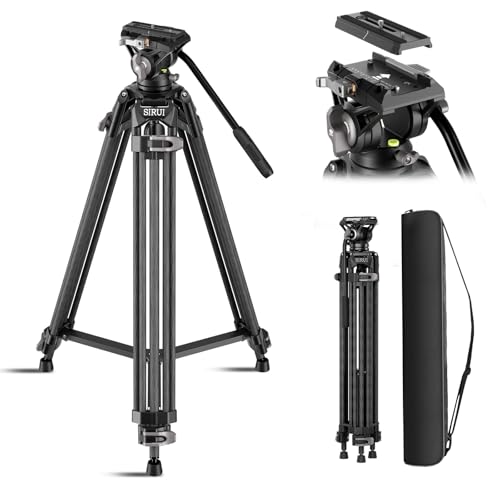
- 15 kg capacity with carbon fiber legs
- 360-degree pan and -60 to +90-degree tilt
- One-step QR system and adjustable flip locks
Best For: Heavy video rigs and fast-paced production
Best Overhead Versatility
K&F CONCEPT 90-Inch Camera Tripod

- 90-inch maximum height for elevated compositions
- 10 kg head capacity with 360-degree rotation
- Detachable monopod and flexible leg angles
Best For: Overhead, panoramic, and confined-space shooting
Best Smooth-Motion Hybrid Setup
SIRUI SQ75 with S5X Fluid Head
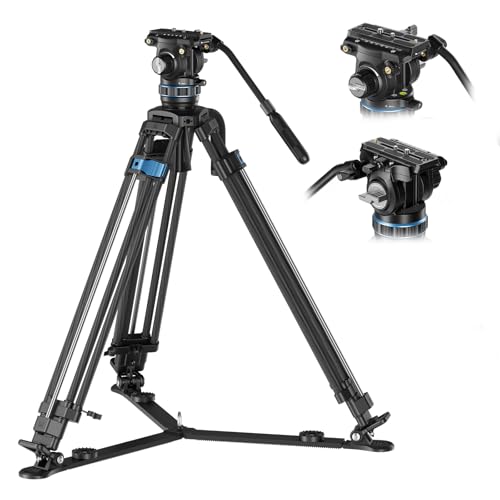
- 5 kg capacity with stepless fluid damping
- Carbon fiber legs and one-step height adjustment
- Quick-release plates support tripod-to-gimbal transitions
Best For: Hybrid video workflows with mirrorless or full-frame rigs
Best for Video

- Fluid head for smooth movement
- Supports up to 17.6 pounds
- Dual QR modes for tripod or gimbal
Best For: Video cameras and controlled panning
Best Lightweight Option
K&F Concept 64-Inch Travel Tripod

- Weighs just 2.53 pounds
- 17.6-pound ball-head capacity
- Folds to 15.5 inches
Best For: Travel photography and compact camera kits
Best with Extra Features
K&F CONCEPT 80" Fluid-Head Tripod
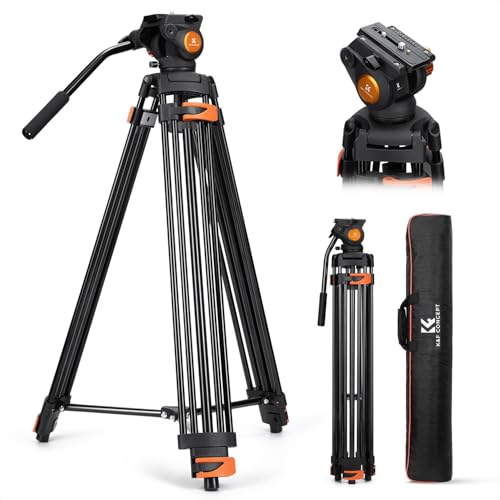
- 17.6-pound maximum load
- 360° pan and -70°/+90° tilt
- 79.5-inch height with carrying bag
Best For: Tall video setups using DSLR, mirrorless, or camcorder equipment
Balanced Outdoor Option
NEEWER 79" Heavy-Duty Video Tripod

- 17.6-pound maximum load
- 70mm bowl base and bubble level
- 78.7-inch height with fluid head
Best For: Tall outdoor video setups requiring leveling and surface stability
Travel-Friendly Heavy-Camera Pick
SmallRig CT-10 Tripod & Monopod

- 33-pound vertical load rating
- Converts to a monopod
- Folds to 16.9 inches
Best For: Travel and outdoor photography with cameras, phones, or compatible accessories
Best All-Around DSLR Pick – Manfrotto 290XTRA with 496 Ball Head
For camera tripods for heavy cameras, the Manfrotto 290XTRA offers a strong aluminum platform with a 10 kg load capacity, flexible leg positioning, and a precise ball head. Its Arca-Swiss-compatible plate also makes it practical for DSLR and mirrorless setups.
Best For: Photographers who want a durable, versatile tripod for DSLR or mirrorless cameras, including landscape, macro, and low-angle work.
Pros:
- Supports up to 10 kg and includes a 496 ball head with independent pan, ball, and friction controls.
- Four independent leg-angle positions and a 41 cm minimum height support varied shooting perspectives.
- Arca-Swiss compatibility, adjustable leg-locking tension, and an included carry bag improve everyday usability.
Cons:
- At 2.7 kg, it is heavier than many travel-focused tripods.
- Its aluminum construction is not as light as carbon fiber alternatives.
- It is not water resistant.
The 290XTRA is a balanced choice when stability and flexible composition matter more than minimum carry weight. It is especially well suited to photographers who need a dependable tripod for heavier camera kits without moving to a specialized video system.
Best Heavy-Duty Video Choice – SIRUI AVT-12 Carbon Fiber Tripod
Among camera tripods for heavy cameras, the SIRUI AVT-12 stands out for its 15 kg capacity, carbon fiber legs, and fluid head. One-step quick release operation and flip-lock legs make it a practical option for fast-moving video productions.
Best For: Videographers, documentary crews, wedding shooters, commercial productions, and livestreaming setups that need smooth movement and substantial support.
Pros:
- Supports up to 15 kg while weighing 3.3 kg, combining high capacity with manageable portability.
- Fluid head provides 360-degree panning and -60 to +90-degree tilting.
- One-step quick release, adjustable flip locks, and compatibility with several DJI RS and MFT plates speed up setup.
Cons:
- Its 85 cm minimum height is less suitable for low-angle photography.
- At 90 cm folded, it is relatively long to transport.
- The video-oriented fluid head may be less convenient for still photographers who prefer a ball head.
With the highest stated load rating in this roundup, the AVT-12 is the strongest fit for heavier video rigs. Its carbon fiber construction and quick-action controls help offset the size required for professional stability.
Best Overhead Versatility – K&F CONCEPT 90-Inch Camera Tripod
The K&F CONCEPT is a flexible option among camera tripods for heavy cameras, combining a 10 kg load capacity with a 90-inch maximum height and horizontal overhead positioning. Its adjustable legs, gimbal-style head, and detachable monopod support creative compositions.
Best For: Photographers who need elevated, overhead, panoramic, or confined-space shooting options while still supporting substantial camera equipment.
Pros:
- Reaches 2.3 m and supports up to 10 kg through its 28 mm ball head.
- Offers 0-180-degree leg adjustment, 360-degree rotation, and smooth oil-free damping.
- Detachable monopod and 2 kg weight add flexibility without excessive carrying bulk.
Cons:
- The aluminum design is heavier than carbon fiber options with similar uses.
- Its 21.4-inch minimum height may limit very low-angle compositions.
- It is not water resistant.
This tripod makes the most sense when height and unusual camera placement are priorities. The overhead column and detachable monopod provide capabilities that conventional tripod designs may not offer, while the 10 kg rating accommodates many heavy DSLR and mirrorless kits.
Best Smooth-Motion Hybrid Setup – SIRUI SQ75 with S5X Fluid Head
The SIRUI SQ75 is a compact carbon fiber video tripod for camera tripods for heavy cameras, supporting up to 5 kg while adding stepless damping and hybrid gimbal compatibility. Its side-loading plate and one-step height adjustment are useful for efficient filming workflows.
Best For: Videographers using mirrorless or full-frame camera rigs who switch between tripod and gimbal shooting for weddings, documentaries, events, or studio work.
Pros:
- S5X fluid head provides adjustable 360-degree pan damping and +90/-70-degree tilt damping.
- Carbon fiber legs weigh 2.5 kg, while the complete head and tripod system is designed for portable use.
- Dual quick-release plates, a side-loading mount, and an ARRI-compatible 3/8-inch locating hole support hybrid rigs.
Cons:
- Its 5 kg capacity is lower than the other heavy-duty options in this roundup.
- The 26.2-inch minimum height is less suitable for ground-level shots.
- The system is primarily video-oriented rather than a general-purpose stills tripod.
The SQ75 is a strong fit for filmmakers who value controlled motion and quick transitions over maximum payload. Its 5 kg limit covers many mirrorless and full-frame setups, while the included plate system simplifies movement between a gimbal and tripod.
Best High-Capacity Pick – Victiv 85-Inch Heavy-Duty Tripod
For photographers comparing camera tripods for heavy cameras, the Victiv stands out with a stated 35-pound load capacity, thick aluminum leg tubes, and a tall 85-inch maximum height. Its ball head and convertible monopod design add flexibility for varied shooting setups.
Best For: Heavy DSLR, spotting-scope, telescope, or overhead shooting setups that need extra height and capacity.
Pros:
- Stated 35-pound load capacity with 28mm aluminum leg tubes.
- Reaches 80 inches as a tripod or 85 inches with the added tube.
- Converts to a 31-to-85-inch monopod and supports low-angle macro photography.
- 360-degree panning and +90/-70-degree tilt range support varied compositions.
Cons:
- At about 3.8 pounds, it is heavier than an ultralight travel tripod.
- The tall maximum height may be more than needed for compact shooting kits.
This is the strongest capacity-focused option in the group, while still remaining reasonably portable with its included carry case. Verify your camera and lens combination against the stated load limit before buying.
Best for Video – NEEWER TP74 Fluid-Head Tripod
Among camera tripods for heavy cameras, the NEEWER TP74 is the video-oriented choice. Its fluid drag head, tandem aluminum legs, mid-level spreader, and 17.6-pound capacity are designed for controlled camera and camcorder work rather than maximum portability.
Best For: Sports, wedding, landscape, and product video where smooth panning and tilting matter.
Pros:
- Fluid drag head supports 360-degree rotation and -75/+90-degree tilt.
- Double tandem aluminum legs and a mid-level spreader improve stability.
- Supports up to 17.6 pounds and includes a 75mm bowl base.
- Dual QR modes accommodate DJI RS2/RS3/RS3 Pro gimbals and Manfrotto-style plates.
Cons:
- At 10.9 pounds, it is substantially heavier than the travel-oriented alternatives.
- Its 36-inch folded length is less convenient for compact transport.
- The 74-inch maximum height is lower than the tallest tripod in this roundup.
The TP74 makes the most sense when video movement and head control take priority. Its heavier build and fluid head are useful for production work, but less appealing if you frequently hike with your tripod.
Best Lightweight Option – K&F Concept 64-Inch Travel Tripod
If portability matters when choosing camera tripods for heavy cameras, the K&F Concept offers a useful balance: its 36mm ball head is rated for up to 17.6 pounds, while the complete tripod weighs only 2.53 pounds. It also folds to 15.5 inches for easier travel.
Best For: Travel photographers and creators who need a compact tripod for cameras, smartphones, or lightweight heavy-duty setups.
Pros:
- Lightweight 2.53-pound design folds to 15.5 inches.
- 36mm ball head is rated for up to 17.6 pounds.
- Adjusts from 20.4 to 64.1 inches with four-section legs.
- Inverted or short center-column configurations support low-angle photography.
Cons:
- Its 64.1-inch maximum height is lower than the other options here.
- The 17.6-pound rating is half the stated capacity of the Victiv model.
- Ball-head control may be less suited to smooth video movement than a fluid head.
This is the most travel-friendly selection, especially for users who want a high stated load rating without carrying a large tripod. For heavier cameras with long lenses, assess the full setup carefully and use the tripod on stable ground.
Best with Extra Features – K&F CONCEPT 80" Fluid-Head Tripod
For camera tripods for heavy cameras, the K&F CONCEPT combines a 17.6-pound load capacity with a fluid head designed for controlled video movement. Its tall working range and quick-release plate make it a practical option for DSLR, mirrorless, and camcorder setups.
Best For: Video creators who need a tall, stable tripod with smooth pan-and-tilt control.
Pros:
- Fluid head supports 360° panning and -70° to +90° tilting.
- Supports up to 17.6 pounds with sturdy aluminum construction and a mid spreader.
- Adjusts from 34.6 to 79.5 inches and folds to 36.2 inches for transport.
- Large quick-release plate includes 1/4-inch and 3/8-inch-16 screws.
Cons:
- At 5.6 kg, it is relatively heavy to carry.
- It is not water resistant.
This is a strong fit when stability and fluid video movement matter more than minimizing carry weight. The included bag and fast-lock setup add convenience for changing shooting locations.
Balanced Outdoor Option – NEEWER 79" Heavy-Duty Video Tripod
The NEEWER TP-M200 is among the camera tripods for heavy cameras suited to tall video work and outdoor shooting. Its double-tube aluminum design, 70mm bowl base, and 17.6-pound capacity are built for a stable setup on varied surfaces.
Best For: Shooters who want a tall fluid-head tripod with leveling and stability features for travel or outdoor use.
Pros:
- Supports up to 17.6 pounds and uses a sturdy double-tube aluminum design.
- 70mm bowl base helps adjust the head for stability on most surfaces.
- Fluid head provides 360° horizontal panning and -70° to 90° vertical tilting.
- Extends from 34.6 to 78.7 inches and folds to 35.8 inches with the included bag.
Cons:
- Its 5.58 kg weight may be substantial for extended carrying.
- It is not water resistant.
Choose this model when a built-in bubble level, rubber feet, and bowl-base adjustment are useful alongside fluid video control. It offers similar load capacity to the K&F option while emphasizing setup stability.
Travel-Friendly Heavy-Camera Pick – SmallRig CT-10 Tripod & Monopod
The SmallRig CT-10 stands out among camera tripods for heavy cameras by combining a 33-pound vertical load rating with a compact, convertible design. Its ball head supports flexible framing, while the tripod can convert to a monopod for hiking and travel.
Best For: Mobile photographers and content creators who need high vertical capacity, compact storage, and monopod flexibility.
Pros:
- Rated for up to 33 pounds vertically and 11 pounds when tilted.
- Converts from a tripod to a monopod for travel or hiking.
- 36mm ball head rotates 360° for horizontal and vertical shooting.
- Adjusts from 16 to 71 inches and folds to 16.9 inches.
Cons:
- Telephoto lenses may require an additional tripod mount ring or lens mount for balance.
- Its tilt load rating is substantially lower than its vertical rating.
- The ball head may be less suited to smooth video movement than a fluid head.
This is the most portable and versatile choice of the three, especially for stills, content creation, and changing locations. Check the tilt rating and lens-support requirements before pairing it with a large telephoto setup.
How We Picked the Best Camera Tripods for Heavy Cameras
We focused on practical stability rather than maximum height alone. The selection covers stated load capacity, construction material, leg and center-column design, head type, quick-release compatibility, operating height, folded portability, and versatility for stills or video. We also included both specialized heavy-duty systems and more portable models so you can match the tripod to your camera, lens, and shooting environment.
Always compare the manufacturer’s load rating with the complete setup—not just the camera body. A large telephoto lens, cage, monitor, microphone, or follow-focus system can substantially increase the working weight.
Quick Comparison
| Best for | Look for | Typical advantage |
|---|---|---|
| Large photo setups | High load rating and rigid legs | Greater stability for long lenses |
| Video cameras | Fluid head and adjustable damping | Smoother pans and tilts |
| Travel and outdoor work | Carbon fiber or compact folded size | Lower carrying weight |
| Overhead or elevated shots | Extra height and horizontal positioning | Flexible camera placement |
| Mixed photo and video use | Ball head, QR plate, or interchangeable head | Faster setup across shooting styles |
Key Buying Factors for Camera Tripods for Heavy Cameras
Load Capacity and Rigidity
Choose a tripod with meaningful capacity beyond your equipment’s total weight. Wider leg tubes, reliable braces, and a firm center column help reduce vibration, especially at full height.
Head Design
Ball heads are generally faster for photography and allow quick reframing. Fluid heads are better for video because they provide controlled pan and tilt resistance. Check whether the included plate fits your camera cage or Arca-Swiss-style accessories.
Material and Portability
Aluminum models usually offer strong value and can absorb some vibration, but they are heavier to carry. Carbon fiber is often preferable for frequent travel or outdoor work where every pound matters.
Height, Locks, and Setup
Extra height can help with standing shots and overhead perspectives, but an extended tripod is less stable than a lower one. Prefer secure leg locks, a wide stance, and a quick-release system that does not compromise safety.
Who Should Buy Which Camera Tripods for Heavy Cameras?
Choose a heavy aluminum tripod if maximum value, durability, and studio or location stability matter most. Choose carbon fiber if you regularly carry the tripod over distance or work outdoors. Choose a fluid-head video tripod for camcorders, cinema rigs, and planned pans or tilts. Choose a ball-head model for still photography, landscape work, and fast composition changes. Choose an extra-tall or overhead model for product photography, demonstrations, and elevated viewpoints.
Before buying, verify the folded length, working height, included plate, head payload, and compatibility with your camera’s mounting system. A stable tripod that fits your real workflow is more useful than the tallest or highest-rated option on paper.