
The best camera monopods give you more stability than handheld shooting without the bulk of a full tripod. They are especially useful for sports, wildlife, events, travel, and video work where you need to reposition quickly.
This roundup compares 10 camera monopods across aluminum and carbon-fiber designs, compact travel models, video-focused options, and monopods with supporting feet or detachable bases.
Best 10 Camera Monopods Picks for 2026
Budget-Friendly Essential
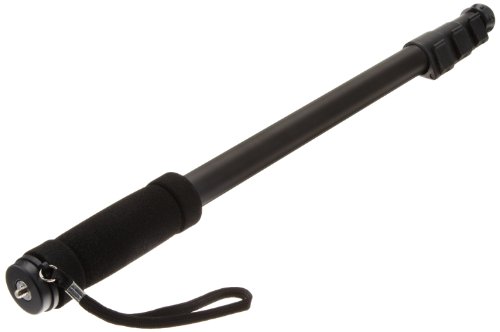
- 67-inch maximum height with four sections
- Supports cameras and scopes up to 6.6 pounds
- Lightweight aluminum design with bag and wrist strap
Best For: Beginners and casual photographers seeking portable basic support
Versatile Heavy-Duty Pick
SmallRig CT-10 Tripod & Monopod

- Converts from tripod to monopod
- 71-inch height with 360-degree ball head
- Supports up to 33 pounds vertically
Best For: Content creators needing adaptable, high-capacity support
Stable Base Option
NEEWER Extendable Camera Monopod
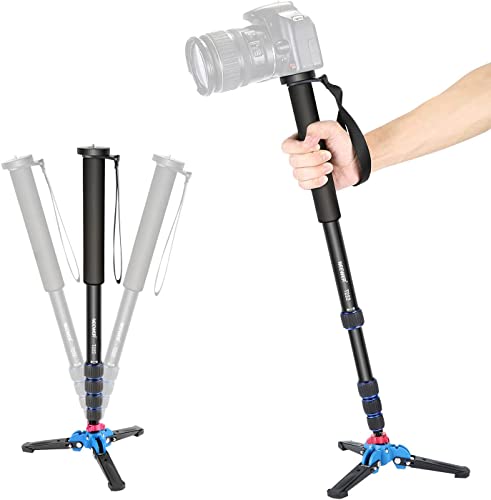
- Includes detachable three-leg support base
- 66-inch maximum height and 11-pound load rating
- Five sections with 15-degree tilting base
Best For: Photographers wanting occasional hands-free stability
Ultralight Travel Companion

- Weighs about 0.83 pounds and folds to 16.9 inches
- Supports up to 11 pounds
- Works as a monopod, selfie stick, and walking stick
Best For: Travelers and hikers prioritizing lightweight multifunctional gear
Best Lightweight Travel Pick
SIRUI P-326 Carbon Fiber Monopod
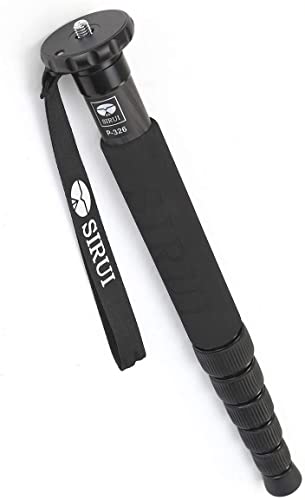
- 400 g carbon-fiber construction
- Folds to 15 inches
- Supports up to 22 pounds
Best For: Travel photographers seeking compact, lightweight support
Best Versatile Outdoor Value

- 61-inch maximum height
- Rubber and spike feet included
- Supports up to 17.6 pounds
Best For: Outdoor creators needing adaptable footing and portability
Best Lightweight Pick

- Weighs just 9.44 ounces
- Folds to 16.75 inches
- Supports cameras up to 5 pounds
Best For: Travelers seeking an especially light, compact monopod
Best Travel Versatility

- Supports up to 15.4 pounds
- Folds to 15.7 inches
- Converts for walking-stick use
Best For: Outdoor photographers wanting portability and adaptable feet
Best Professional Design
SIRUI AM-404FL Monopod with Feet

- Supports up to 26.4 pounds
- Includes detachable tripod feet
- Features quick-release mounting
Best For: Video and still photographers using heavier equipment
Budget-Friendly Essential – Amazon Basics 67-Inch Monopod
For photographers seeking straightforward camera monopods, this Amazon Basics model offers adjustable height, a lightweight aluminum build, and support for cameras, video cameras, and scopes up to 6.6 pounds. Its rubber foot and retractable spikes make it adaptable to different surfaces.
Best For: Beginners, casual photographers, and travelers who want an affordable, lightweight monopod with useful height range.
Pros:
- Extends from 54.5 to 67 inches with four leg sections.
- Supports equipment weighing up to 6.6 pounds.
- Includes a non-skid rubber foot, retractable spikes, wrist strap, and carrying bag.
- Weighs less than 1 pound for easy transport.
Cons:
- It is not water resistant.
- The 1/4-inch universal thread may be less suitable for setups requiring other mounting sizes.
This is a practical entry-level choice when portability and basic support matter more than advanced tripod-style features. The included bag and comfortable grip add convenience for everyday shooting.
Versatile Heavy-Duty Pick – SmallRig CT-10 Tripod & Monopod
Among camera monopods, the SmallRig CT-10 stands out for its convertible tripod-and-monopod design, broad thread compatibility, and high stated load capacity. Its ball head rotates 360 degrees, while the four-section column adjusts quickly for different shooting positions.
Best For: Content creators and photographers who want one adaptable support system for cameras, phones, projectors, and low-angle work.
Pros:
- Converts between a tripod and monopod.
- Adjusts from 16 to 71 inches with quick-release flip locks.
- Features a 360-degree metal ball head and an invertible central pole.
- Supports up to 33 pounds vertically and includes extra 1/4-inch threaded holes.
Cons:
- At 3.4 pounds, it is heavier than simple monopods.
- Its 16.9-inch folded size is less compact than some lighter options.
- Telephoto lenses may require an additional tripod or lens mount ring for balance.
The CT-10 is a feature-rich option for users who value flexibility and load capacity. Its heavier build makes it better suited to deliberate setups than ultralight travel.
Stable Base Option – NEEWER Extendable Camera Monopod
This NEEWER model gives camera monopods added stability through a detachable three-leg base. It extends to 66 inches, supports up to 11 pounds, and offers a 15-degree tilting base for panoramic movement while retaining a portable folded length.
Best For: Photographers who want a monopod that can stand with its included base for supported shooting, while still allowing handheld use.
Pros:
- Includes a detachable, foldable tripod support base.
- Extends from 52 to 66 inches with five-section adjustment.
- Supports up to 11 pounds and offers a 1/4-inch camera mounting screw.
- Has a foam handle and 3/8-inch bottom screw hole for a mini tripod.
Cons:
- The monopod must be held when a camera is mounted without relying on the base.
- The 20.5-inch folded length is longer than some compact alternatives.
- It is not water resistant.
Its detachable base makes this a useful middle ground between a conventional monopod and a small standing support. Buyers should pay close attention to the safety note when using it without the base.
Ultralight Travel Companion – ULANZI TB12 61-Inch Monopod
For photographers prioritizing portability, the ULANZI TB12 is one of the lighter camera monopods in this group. It weighs about 0.83 pounds, folds to 16.9 inches, and supports up to 11 pounds while offering several height settings and alternate outdoor modes.
Best For: Travel, hiking, wildlife, and outdoor photographers who want compact support that can also function as a selfie stick or walking stick.
Pros:
- Weighs approximately 0.83 pounds and folds to about 16.9 inches.
- Extends to 61 inches with five height positions.
- Supports cameras up to 11 pounds.
- Offers monopod, selfie-stick, walking-stick, hiking-stick, and trekking-pole modes.
Cons:
- Its 61-inch maximum height is shorter than some competing models.
- It is not water resistant.
- The supplied notes identify camera compatibility but do not specify included accessories such as a carrying bag.
The TB12 is a strong fit when low carry weight and multifunctional outdoor use take priority. Its compact folded size makes it particularly convenient for travel and hiking kits.
Best Lightweight Travel Pick – SIRUI P-326 Carbon Fiber Monopod
SIRUI Camera Monopod P-326 6 Section Carbon Fiber Compact Lightweight Travel Monopod
Check Price On AmazonThe SIRUI P-326 is a compact choice among camera monopods for photographers who prioritize low weight and easy packing. Its six-section carbon-fiber design folds to 15 inches, weighs 400 g, and supports up to 22 pounds.
Best For: Travel photographers and DSLR users who want a lightweight, high-capacity monopod.
Pros:
- Lightweight 8X carbon-fiber construction
- Six-section design folds to a compact 15 inches
- Supports up to 22 pounds
- Reversible 1/4-inch-20 and 3/8-inch-16 mounting screw
Cons:
- Does not include interchangeable feet or built-in tripod feet in the supplied specifications
- Twist locks may be less immediate to adjust than flip locks
The P-326 stands out for its unusually low weight and strong load rating. It is a practical option when portability matters more than fast, freestanding setup.
Best Versatile Outdoor Value – NEEWER TP41 Camera Monopod
The NEEWER TP41 is one of the more adaptable camera monopods for travel, outdoor shooting, and content creation. It extends to 61 inches, folds to 17.3 inches, and combines flip-lock height adjustment with interchangeable rubber and spike feet.
Best For: Outdoor photographers, vloggers, and creators who need flexible footing across indoor and soft outdoor surfaces.
Pros:
- Lightweight aluminum-alloy build weighs about 0.88 pound
- Supports cameras and equipment up to 17.6 pounds
- Interchangeable rubber and steel spike feet
- Includes dual 1/4-inch and 3/8-inch screw compatibility
Cons:
- Maximum height is shorter than the SmallRig option in this roundup
- It is not water resistant according to the supplied specifications
With portable dimensions, straightforward flip locks, and convertible feet, the TP41 is a strong all-purpose pick. Its versatility is especially useful for creators moving between floors, rocks, grass, sand, and dirt.
Best Video-Ready Support – SmallRig 68.9-Inch Carbon Fiber Monopod
The SmallRig S5565 is designed for videographers who want camera monopods with quick operation and substantial support. Its one-button lift-and-lock system, quick-release feet, and 68.9-inch maximum height suit fast-moving shooting setups.
Best For: Videographers using DSLRs, mirrorless cameras, cages, fluid heads, or gimbals.
Pros:
- One-button lift-and-lock adjustment for one-handed operation
- Extends to 68.9 inches and folds to 29.9 inches
- Quick-release monopod feet speed up setup
- Supports up to 33.07 pounds at the monopod legs
Cons:
- At 5.51 pounds, it is substantially heavier than the other listed models
- Its 29.9-inch folded length is less compact for travel
- The supplied details list a 5 kg weight limit for the head
The S5565 is the most video-oriented option here, particularly for users who value rapid adjustments and compatibility with heads or gimbals. Its added size and weight make it better suited to demanding production work than ultralight travel.
Best Lightweight Pick – Altura Photo 62-Inch Monopod
If you want a simple, travel-friendly solution for steadier shots, this lightweight option is an appealing choice among camera monopods. It extends to 62 inches, collapses to 16.75 inches, and weighs just 9.44 ounces, making it easy to carry for hikes, events, or everyday photography.
Best For: Travelers and photographers who prioritize a compact, lightweight monopod for cameras or scopes weighing up to 5 pounds.
Pros:
- Very light aluminum design with a compact 16.75-inch folded size.
- Universal 1/4-inch mount with included 3/8-inch screw adapter.
- Foam grip, wrist strap, rubber foot, and retractable leg spike support indoor and outdoor use.
Cons:
- Supports up to 5 pounds, which is less than the heavier-duty options in this roundup.
- Its four-section design may appeal less to users seeking maximum rigidity.
The Altura Photo focuses on portability and basic stabilization rather than a feature-heavy setup. Its carry pouch and dual-foot design add practical value for photographers who want an uncomplicated monopod that packs easily.
Best Travel Versatility – Manbily A-555L Camera Monopod
The Manbily A-555L is one of the more versatile camera monopods for photographers who want travel convenience without giving up substantial load capacity. It weighs 1.1 pounds, folds to 15.7 inches, and includes features for camera support, walking-stick use, and varied terrain.
Best For: Travel, sports, wildlife, and outdoor photographers who want a compact monopod with a high 15.4-pound load rating and walking-stick functionality.
Pros:
- Aerospace-grade aluminum construction supports up to 15.4 pounds.
- Quarter-turn twist locks extend the monopod from 15.7 to 61 inches quickly.
- Includes rubber and metal feet, a walking-stick handle, phone holder, and carry case.
- Reversible 1/4-inch and 3/8-inch mounting screw accommodates cameras, camcorders, and ball heads.
Cons:
- At 1.1 pounds, it is heavier than the Altura Photo option.
- It is not water resistant according to the supplied specifications.
With its six-section design and broad accessory bundle, the Manbily is well suited to photographers who move between locations and shooting conditions. The walking-stick handle and interchangeable feet make it particularly adaptable for outdoor use.
Best Professional Design – SIRUI AM-404FL Monopod with Feet
For demanding camera setups, the SIRUI AM-404FL stands out among camera monopods with its quick-release system, detachable tripod base, and 26.4-pound load capacity. It reaches 75.8 inches and can also function as an extension rod or a low-angle tripod with its included base.
Best For: Video and still photographers who need a high-capacity monopod with quick camera changes and multiple support configurations.
Pros:
- Supports up to 26.4 pounds for heavier camera and video equipment.
- Quick-release system works with both the monopod and tripod base.
- Detachable feet provide fixed monopod, extension-rod, and low-angle tripod options.
- Built-in 360-degree panning and reversible 1/4-inch and 3/8-inch mounting screw add flexibility.
Cons:
- At 2.1 kilograms, it is considerably heavier than the travel-focused models.
- Its 580 mm folded size is less compact for carry-on-style packing.
- The advanced configuration may be more equipment than casual photographers need.
The SIRUI is the most feature-rich and load-capable choice here. Its detachable base and rapid mounting system make it especially compelling for users who regularly switch between mobile support and more stable shooting positions.
How We Picked the Best Camera Monopods
We evaluated these Camera Monopods by looking at the features that matter most in real shooting situations: maximum height, folded size, construction material, stated load capacity, locking design, foot or base configuration, head compatibility, portability, and included accessories. We also considered how each model suits different users, from casual photographers to travelers and video creators.
Because a monopod is not a tripod replacement, stability and mobility were weighed together. A lightweight model may be easier to carry all day, while a heavier or carbon-fiber design can provide better rigidity with larger lenses. Always compare the manufacturer’s load rating with the combined weight of your camera, lens, and any accessories.
Quick Comparison
| Best For | What to Look For |
|---|---|
| Travel and everyday photography | Lightweight aluminum construction, compact folded length, and a carrying bag |
| Wildlife and sports | High load capacity, secure locks, comfortable grip, and fast height adjustment |
| Video shooting | Stable base or feet, smooth movement, a video-compatible head, and strong rigidity |
| Large lenses | Carbon fiber or thick aluminum tubes, dependable locks, and a generous load rating |
| Low-angle or flexible shooting | Adjustable feet, a detachable base, or a ball-head connection |
Key Buying Factors for Camera Monopods
Height and Folded Size
Choose a maximum height that lets you use the camera comfortably without constantly bending over. A shorter folded length is more convenient for luggage, while a taller monopod can be useful for eye-level shooting and overhead perspectives.
Material and Weight
Aluminum monopods generally offer good value and durability. Carbon fiber is often lighter and better at dampening vibration, but it typically costs more. For long hikes or frequent air travel, a few ounces can make a meaningful difference.
Base, Feet, and Head Compatibility
A traditional rubber foot is compact and quick to use. Fold-out feet or a detachable stand base can add support for video and stationary shots, but they also increase weight and complexity. Check whether the monopod includes a ball head or uses a standard mounting thread so it works with your existing equipment.
Locks, Grip, and Capacity
Twist locks can be streamlined, while flip locks are often quick to inspect and operate. Look for a comfortable foam or rubber grip, a wrist strap, and a load rating that leaves some safety margin above your setup’s weight.
Who Should Buy Which Camera Monopods?
Travelers and casual photographers should prioritize compact aluminum models with a useful carrying bag. Sports and wildlife photographers should favor fast adjustments, sturdy sections, and enough capacity for a telephoto lens. Video shooters will benefit most from a model with a supporting base or feet and a compatible head. Choose carbon fiber when minimizing carry weight and vibration matters more than keeping the price low.
Before buying, confirm the mounting thread, maximum height, folded length, and support rating. The right monopod should complement your shooting style rather than simply offer the tallest specifications.