
Choosing the best DJ mixer for scratching means looking beyond channel count. Crossfader feel, curve adjustment, layout, connectivity, and compatibility with your preferred setup can make a bigger difference than extra features.
This roundup compares 10 options for turntablists, controller users, mobile DJs, and beginners, including dedicated scratch mixers, DJ controllers, and portable gear.
Best 10 Dj Mixer for Scratching Picks for 2026
Best Pro Scratch Mixer
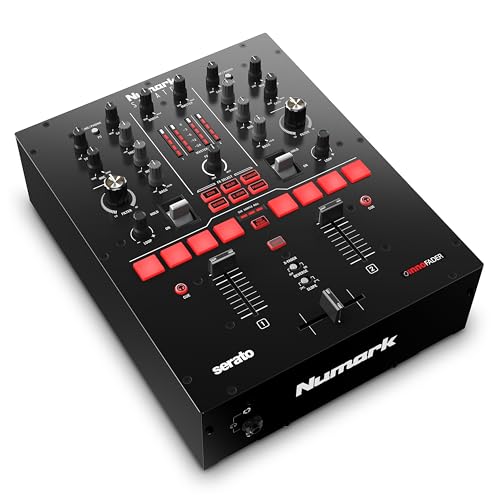
- InnoFader crossfader with reverse and slope controls
- Serato DJ Pro and DVS license included
- FX paddles, pads, looping, and balanced outputs
Best For: Serato DJs building a dedicated DVS scratch setup
Best Beginner Battle Controller

- Battle-style layout for scratch practice
- Serato DJ Lite support included
- Tall pitch faders and quick effect controls
Best For: New DJs learning scratch and hip-hop techniques
Best Budget Standalone Mixer

- Phono/line inputs for turntables and media players
- Replaceable crossfader with reverse and slope controls
- Three-band EQ and rack-mountable design
Best For: Affordable analog scratch and practice setups
Best Portable Smart Controller

- USB-C bus power and lightweight design
- Smart Fader assists with beatmatching
- Works with rekordbox, djay, and Serato DJ Lite
Best For: Beginners mixing on phones, tablets, or laptops
Portable Scratch Pick

- Portable AC or battery-powered turntable
- Adjustable left- or right-handed scratch switch
- Built-in speaker and USB recording interface
Best For: Portable scratch practice and beginner turntablists
Club-Style Scratch Choice

- Two-channel professional-style workflow
- Magvel Fader for smooth cuts and light scratching
- Free rekordbox DVS upgrade included
Best For: Beginner club-style mixing and DVS-ready setups
Value VCA Mixer
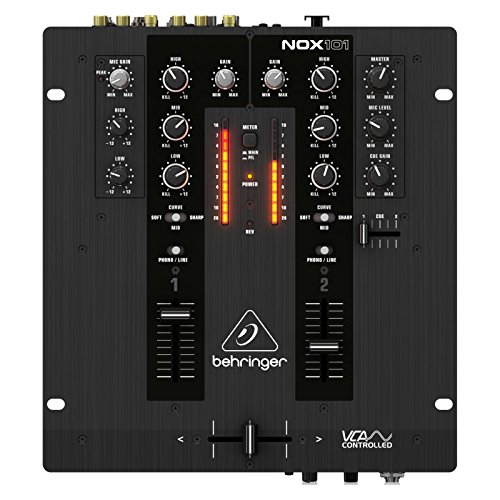
- Two channels with three-band EQs
- Full-kill filters and Ultraglide crossfader
- RCA, TRS, and XLR connections
Best For: Home DJs wanting flexible connections and basic scratch controls
Versatile 4-Channel Pick

- Four channels with three-band EQs and dedicated cue controls.
- Replaceable, slope-adjustable crossfader.
- USB connectivity for computer playback and recording.
Best For: DJs who want flexible four-channel control and room to expand.
Budget Portable Pick

- Compact 1.2-pound all-metal design.
- Full-size crossfader with gain and two-band EQ.
- RCA, microphone, and headphone connections.
Best For: Beginners and mobile DJs building a simple two-channel setup.
Scratch-Focused Bluetooth Pick

- Adjustable crossfader curve with reverse switch.
- Bluetooth playback from smartphones and tablets.
- Dedicated mic, headphone, and balanced output controls.
Best For: Scratch-focused DJs wanting wireless playback in a compact mixer.
Best Pro Scratch Mixer – Numark Scratch
The Numark Scratch is a purpose-built DJ mixer for scratching, pairing an InnoFader crossfader with Serato DJ Pro and a DVS license. Its effects, performance pads, looping controls, and flexible outputs make it suited to scratch-focused setups that use turntables or media players.
Best For: DJs who want a feature-rich, Serato-ready scratch mixer for battle-style performance and DVS setups.
Pros:
- InnoFader crossfader includes reverse and slope controls.
- Serato DJ Pro and a DVS license are included.
- Six effect selectors, paddle triggers, performance pads, and instant looping controls support live routines.
- Offers balanced XLR master output, booth/zone output, and dual headphone cueing.
Cons:
- NoiseMap control vinyl or CDs are available separately.
- Its specialized feature set may be more than beginners need.
- It requires corded power and is less portable than a compact controller.
Choose the Numark Scratch if crossfader feel, DVS compatibility, and hands-on effects matter more than an all-in-one controller design. It is a strong option for building a dedicated scratch performance system.
Best Beginner Battle Controller – Pioneer DJ DDJ-REV1
The Pioneer DJ DDJ-REV1 is a compact controller designed around a battle-style layout, making it an approachable DJ mixer for scratching for new performers. Tall pitch faders, quick effect controls, and Serato DJ Lite support help beginners practice scratch and battle techniques without assembling a separate mixer-and-turntable system.
Best For: Beginners learning hip-hop, scratching, and open-format DJ techniques on a PC or Mac.
Pros:
- Open battle-style layout mirrors a turntable and battle mixer setup.
- Serato DJ Lite unlocks when connected, allowing a free starting point.
- Tall pitch faders and accessible effect controls support battle moves.
- Compact 5-pound design is convenient for practice and transport.
Cons:
- It is a controller rather than a standalone mixer for external turntables.
- Only one USB port is listed.
- Its beginner-focused feature set may be limiting for advanced scratch setups.
The DDJ-REV1 makes sense when you want a low-cost, computer-based path into scratching. Its layout prioritizes learning and quick access to battle controls rather than extensive standalone connectivity.
Best Budget Standalone Mixer – Numark M2
The Numark M2 is a straightforward two-channel DJ mixer for scratching with phono/line inputs, a replaceable crossfader, and essential tone controls. Its rack-mountable, portable design works with turntables, CD players, and other media sources for practice, parties, or basic club-style setups.
Best For: Beginners and working DJs who need an affordable, traditional mixer with flexible analog inputs.
Pros:
- Two phono/line switchable inputs accommodate turntables and media players.
- Replaceable crossfader has reverse and slope controls for scratch techniques.
- Three-band EQ is provided on both channels.
- Includes microphone, record, master, and headphone connections.
Cons:
- It lacks the built-in DVS, effects, and performance pads found on more advanced models.
- Outputs are RCA rather than balanced XLR.
- The supplied notes do not indicate included DJ software.
The M2 is a practical choice when you want core scratch controls and broad analog connectivity without paying for software-driven performance features. It is especially suitable for simple turntable or media-player rigs.
Best Portable Smart Controller – AlphaTheta DDJ-FLX2
The AlphaTheta DDJ-FLX2 is a lightweight, USB-C-powered controller for beginners who want an easy entry into mixing and basic scratching. Its Smart Fader can automatically match volume, BPM, and bass as you move the crossfader, while compatibility with rekordbox, djay, and Serato DJ Lite keeps the setup flexible.
Best For: New DJs who prioritize portability, app-based mixing, streaming access, and simple automatic assistance.
Pros:
- Compact 2.7-pound design can run from a phone, tablet, or computer via USB-C.
- Smart Fader assists with volume, BPM, and bass matching.
- Works with rekordbox, djay, and Serato DJ Lite.
- Supports headphone cueing and external speakers through the 3.5 mm output.
Cons:
- It is a beginner controller, not a traditional standalone mixer for external decks.
- Its compact design may provide less hands-on space for advanced scratching.
- Some streaming features depend on compatible apps and services.
The DDJ-FLX2 is a convenient starting point if portability and guided mixing are more important than advanced scratch hardware. It suits casual practice, travel, and first-time users building skills with a phone, tablet, or laptop.
Portable Scratch Pick – Numark PT01 Scratch
If you want a dj mixer for scratching that you can take beyond the home setup, the Numark PT01 Scratch is a compact portable turntable built around hands-on scratching. Its adjustable Scratch Slide Switch supports right- and left-handed use, while battery or AC power adds flexibility.
Best For: Portable scratch practice, beginner turntablists, and DJs who want a self-contained turntable with built-in sound.
Pros:
- Portable design with AC or six D-battery power
- Adjustable, user-replaceable Scratch Slide Switch
- Built-in speaker, headphone output, RCA outputs, and USB recording interface
- Includes cartridge, slip-mat, dust cover, and carrying handle
Cons:
- Six D batteries are not included
- It is a turntable rather than a traditional multi-channel DJ mixer
The PT01 Scratch is a practical choice for learning scratch techniques anywhere. Choose it when portability and an integrated setup matter more than club-style mixer controls.
Club-Style Scratch Choice – Pioneer DJ DJM-250MK2
For a dj mixer for scratching that follows a familiar club workflow, the Pioneer DJ DJM-250MK2 provides two channels and a dedicated Magvel Fader crossfader. Its filter controls and rekordbox DVS upgrade also make it suitable for a separates-based home setup.
Best For: Beginners learning club-style mixing, turntable or media-player setups, and DJs wanting a straightforward two-channel mixer.
Pros:
- Two-channel layout mirrors professional booth workflows
- Magvel Fader supports smooth cuts and light scratching
- Dedicated Sound Color FX Filter on each channel
- Includes a free rekordbox DVS unlock for digital-file control
Cons:
- Two channels may limit larger or more complex setups
- Designed as a focused, no-fuss mixer rather than a feature-heavy model
The DJM-250MK2 is the strongest fit here for DJs who want traditional mixer operation and a crossfader suited to introductory scratching. Its DVS support adds a useful path from physical controls to digital files.
Value VCA Mixer – Behringer PRO MIXER NOX101
The Behringer PRO MIXER NOX101 is a practical dj mixer for scratching when you want a simple two-channel layout with dedicated equalization and a performance-oriented crossfader. Its full VCA control and Ultraglide crossfader are paired with RCA, TRS, and XLR connectivity.
Best For: Home DJs seeking an affordable two-channel mixer with flexible input and output connections.
Pros:
- Two-channel design with three-band EQs
- Full-kill filters for more pronounced tonal shaping
- Full VCA control and Ultraglide crossfader
- RCA, TRS, and XLR connectivity
Cons:
- No supplied DVS or software feature is listed
- Its two-channel layout may be limiting for expanded setups
The NOX101 keeps the core controls focused on hands-on mixing and crossfader work. It makes sense for a home setup that values flexible connections and straightforward scratch-oriented controls without needing integrated DVS features.
Versatile 4-Channel Pick – Numark M6 USB
The Numark M6 USB is a practical dj mixer for scratching when you need four channels, flexible connections, and more control over your setup. Its replaceable, slope-adjustable crossfader, dedicated cue controls, and three-band EQs make it suitable for practice, parties, and larger DJ settings.
Best For: DJs who need four-channel flexibility, USB computer connectivity, and extensive input and output options.
Pros:
- Four channels with dedicated level faders, cue controls, and three-band EQs.
- Replaceable crossfader with adjustable slope for mixing and scratching techniques.
- USB connectivity supports computer playback and recording to compatible audio applications.
- Multiple phono, line, mic, master, record, booth, and headphone connections.
Cons:
- Larger and heavier than the compact two-channel options in this roundup.
- Its extensive controls may be more than a beginner needs for a basic setup.
The M6 USB is the strongest choice here for DJs who expect to expand beyond two channels. It combines scratch-friendly crossfader control with the connectivity and channel count needed for more involved performances.
Budget Portable Pick – Gemini MM1
The Gemini MM1 is a compact dj mixer for scratching that focuses on essential control at a low carrying weight. It provides a full-size crossfader, gain controls, two-band EQ on each channel, and straightforward RCA connectivity for small or mobile setups.
Best For: Beginners, bedroom DJs, buskers, and anyone who needs a small, affordable two-channel mixer.
Pros:
- Ultra-compact 1.2-pound design fits easily in a backpack or tight workspace.
- Full-size crossfader with gain and two-band EQ controls on both channels.
- All-metal body with RCA master and booth outputs.
- Includes microphone and headphone connections for basic performance monitoring.
Cons:
- Only two channels are available for mixing.
- Two-band EQ offers less tonal control than the Numark M6 USB.
- No USB or Bluetooth connectivity is listed.
The MM1 keeps the setup simple and portable. It is a sensible starting point for scratch practice and basic transitions, especially when size and cost matter more than advanced connectivity.
Scratch-Focused Bluetooth Pick – Gemini MXR-01BT
The Gemini MXR-01BT is a dj mixer for scratching with a dedicated adjustable crossfader curve and reverse switch. Its two-channel layout adds Bluetooth streaming, mic controls, and balanced outputs, making it a versatile option for practice, compact gigs, and live sets.
Best For: DJs who want scratch-oriented fader controls, wireless playback, and a compact stage-ready mixer.
Pros:
- 40mm crossfader includes adjustable curve control and a reverse switch.
- Bluetooth supports playback from compatible smartphones and tablets.
- Dedicated microphone volume and EQ controls plus a separate headphone level.
- Rugged all-metal chassis with RCA and balanced outputs.
Cons:
- Two-channel design provides less expansion than a four-channel mixer.
- It is heavier than the smaller Gemini MM1 at 2.46 kg.
- Bluetooth is convenient, but the supplied notes do not identify it as a USB audio interface.
The MXR-01BT is the most specifically equipped option here for scratch routines. Its fader curve and reverse controls directly support scratch technique, while Bluetooth and dedicated mic controls broaden its usefulness for casual and live performance.
How We Picked the Best Dj Mixer for Scratching
We focused on the features that directly affect scratch performance and everyday usability: crossfader response, adjustable curve controls, channel layout, input and output options, software compatibility, portability, and overall value. The selection includes traditional two-channel mixers, four-channel models, DJ controllers, and compact portable units so different types of DJs can find a suitable match.
We also considered whether each product is best suited to turntables, media players, a laptop-based setup, or casual practice. A mixer with advanced controls is not automatically the right choice if your setup only needs a simple crossfader and basic EQ.
Quick Comparison
| Best For | Recommended Type | What to Prioritize |
|---|---|---|
| Battle and serious scratching | Dedicated two-channel scratch mixer | Fast crossfader, adjustable curve, reliable outputs |
| Scratch practice with a laptop | DJ controller | Serato compatibility, performance pads, compact layout |
| Traditional turntable setups | Phono-equipped DJ mixer | Phono inputs, grounding, fader adjustment |
| Mobile or casual use | Portable mixer or turntable | Battery flexibility, Bluetooth, simple controls |
| Multiple sources or small events | Four-channel mixer | Channel capacity, USB connectivity, flexible routing |
Key Buying Factors for a Dj Mixer for Scratching
Crossfader Feel and Adjustment
The crossfader is the most important control for scratch techniques. Look for a smooth, low-resistance fader with a sharp cut-in and a curve control that lets you choose between gradual blends and instant cuts. Replaceable or upgradeable faders are useful for DJs who practice heavily.
Inputs, Outputs, and Setup Compatibility
Check whether you need phono inputs for turntables, line inputs for media players, a microphone input, or USB audio for computer-based mixing. A controller may include built-in software control but will not replace a standalone mixer in every turntable setup. Confirm output types and monitor connectivity before buying.
Channel Count and Layout
Two channels are usually enough for battle-style scratching and a straightforward home setup. Choose four channels if you expect to add more decks, external players, instruments, or microphones. Controls should be spaced clearly enough for fast hand movements.
Software, Portability, and Durability
Controller users should verify included software and operating-system support. For portable setups, consider size, power requirements, wireless features, and whether the controls remain usable in a small space. Metal construction and sturdy faders are valuable for frequent transport.
Who Should Buy Which Dj Mixer for Scratching?
Turntablists and battle DJs: Choose a dedicated two-channel scratch mixer with an adjustable crossfader and phono connectivity.
Beginners using a laptop: A compact DJ controller can provide the fastest route to learning scratching, especially when it includes performance pads and integrated software support.
Budget-conscious practice DJs: A basic two-channel mixer offers the essential controls without adding features you may not use.
Mobile DJs and casual users: Portable mixers and compact turntable-focused products are convenient when space and setup time matter most.
DJs planning to expand: A four-channel USB mixer gives you more routing flexibility for additional decks, microphones, and recording workflows.