
The best drawing tablet for photo editing can make masking, retouching, selections, and brushwork feel faster and more controlled than using a mouse. The right choice depends on your workspace, editing software, preferred screen size, and budget.
We’ve selected 10 options ranging from compact Wacom tablets to large-format Huion and XPPen models, including both traditional pen tablets and displays you draw on directly.
Best 10 Drawing Tablet for Photo Editing Picks for 2026
Editor's Choice

- Battery-free 4,096-level pressure-sensitive pen
- Bluetooth or USB-A connectivity
- Four customizable ExpressKeys and included software
Best For: Wireless photo editing with a traditional tablet surface
Best Display Experience
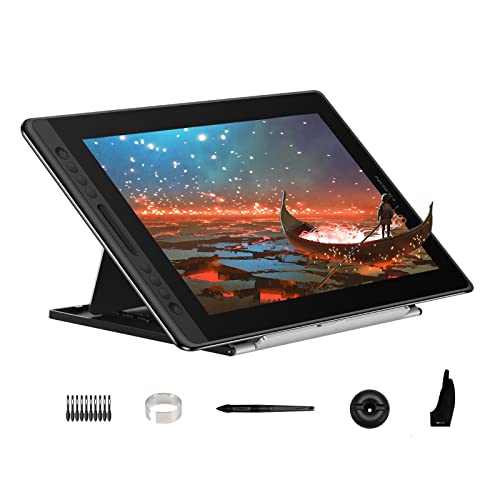
- 15.6-inch full-laminated 1080p display
- 120% sRGB and 92% AdobeRGB color gamut volume
- Six shortcut keys, touch bar, and adjustable stand
Best For: Large, color-focused on-screen photo editing
Best Compact Pen Display

- 11.6-inch 1920x1080 display with 100% sRGB
- Six shortcut keys and programmable touch bar
- Battery-free pen with eraser and 8,192 pressure levels
Best For: Compact on-screen editing and beginner pen-display setups
Best Shortcut Control

- Scroll wheel plus eight programmable press keys
- Battery-free PenTech 3.0 stylus with tilt support
- Compatible with computers, Android, and ChromeOS
Best For: Shortcut-heavy editing on a separate monitor
Beginner-Friendly Pick

- Large 10 x 6.25-inch work area
- 16K pressure-sensitive battery-free stylus
- Eight customizable shortcut keys
Best For: Beginners and photo editors wanting a spacious, portable tablet
Established Brand Pick

- Battery-free EMR pen technology
- Compact 6 x 3.7-inch active area
- Includes software access and training
Best For: Students, teachers, and creators seeking a compact Wacom tablet
Shortcut-Heavy Pick

- 10 x 6.25-inch workspace
- 12 press keys plus 16 soft keys
- Battery-free pen with 60-degree tilt support
Best For: Editors who want extensive customizable shortcut controls
Best Screened Pick

- 11.9-inch Full HD laminated display with 99% sRGB
- 16K pressure sensitivity with tilt support
- Dual dials and eight customizable shortcut keys
Best For: Photo editors wanting a portable pen display with color-focused specifications
Best Large Drawing Surface

- 10.5-by-6.56-inch screen-free work area
- Three groups of eight programmable shortcut keys
- Battery-free stylus with scroll wheel and multi-OS support
Best For: Photo editors using a separate monitor who want space and shortcut control
Best Wireless Compact Pick

- Bluetooth and USB-A connectivity
- Battery-free pen with 4,096 pressure levels
- Four ExpressKeys plus included software and training
Best For: Students and casual photo editors seeking a compact wireless tablet
Editor's Choice – Wacom Intuos Medium
The Wacom Intuos Medium is a versatile drawing tablet for photo editing when you want precise pen control without a built-in display. Its battery-free pen, wireless Bluetooth connection, and customizable ExpressKeys make it practical for Photoshop-style editing, retouching, and other creative software.
Best For: Photo editors who prefer a traditional tablet surface and want wireless flexibility.
Pros:
- Battery-free pen with 4,096 levels of pressure sensitivity for controlled edits.
- Bluetooth or USB-A connectivity supports flexible desk and mobile work setups.
- Four ExpressKeys provide convenient shortcuts, and included software adds extra value.
Cons:
- No built-in display, so you edit while looking at a separate monitor.
- Requires a compatible computer and software for use.
The Intuos Medium is a strong all-purpose choice for photographers who value dependable pen control, shortcut access, and a relatively compact wireless setup over an on-tablet screen.
Best Display Experience – HUION Kamvas Pro 16
The HUION Kamvas Pro 16 is a drawing tablet for photo editing with a 15.6-inch full-laminated display, making it easier to work directly over your image. Its broad color gamut, anti-glare glass, shortcut keys, and adjustable stand suit detailed editing and color-focused creative work.
Best For: Editors who want a large pen display with vibrant color coverage and an adjustable viewing angle.
Pros:
- 15.6-inch 1920×1080 display with 120% sRGB and 92% AdobeRGB color gamut volume.
- Full lamination and anti-glare glass provide a clear, textured drawing surface.
- Six shortcut keys, a touch bar, tilt support, and an included adjustable stand streamline workflow.
Cons:
- It is not standalone and must connect to a computer or laptop.
- USB connectivity and the included cables require a suitable computer setup.
- At 3 pounds, it is less portable than a compact pen tablet.
For photo editors who prefer seeing edits directly beneath the stylus, the Kamvas Pro 16 offers the most immersive workspace in this group, provided you have room for its larger wired setup.
Best Compact Pen Display – XP-PEN Artist12
The XP-PEN Artist12 is a compact drawing tablet for photo editing that puts an 11.6-inch Full HD image beneath the pen. Its customizable shortcut keys, touch bar, battery-free stylus, and broad software compatibility make it a practical option for editing, sketching, and retouching at a smaller workstation.
Best For: Beginners and editors who want an on-screen tablet in a compact format.
Pros:
- 11.6-inch 1920×1080 display with 100% sRGB color gamut coverage.
- Six customizable shortcut keys and a programmable touch bar help reduce repeated mouse actions.
- Battery-free pen includes a digital eraser and supports 8,192 levels of pressure sensitivity.
Cons:
- Must connect to a computer and needs available HDMI and USB-A ports or suitable adapters.
- The smaller screen provides less workspace than a 15.6-inch pen display.
- It lacks the wireless convenience of a Bluetooth tablet.
The Artist12 balances direct-on-screen control with a smaller footprint. It is especially appealing if you are starting with pen displays or need a more compact photo-editing workspace.
Best Shortcut Control – HUION Inspiroy 2 Medium
The HUION Inspiroy 2 Medium is a drawing tablet for photo editing built around efficient shortcut access rather than a built-in screen. Its scroll wheel, programmable keys, pressure-sensitive battery-free stylus, and support for computers, Android devices, and ChromeOS make it adaptable for editing workflows.
Best For: Editors who prioritize customizable controls, portability, and broad device compatibility.
Pros:
- Scroll wheel, eight press keys, and three group keys support customized editing shortcuts.
- PenTech 3.0 stylus offers 8,192 levels of pressure sensitivity and 60-degree tilt support.
- Works with Windows, macOS, Linux, ChromeOS, and compatible Android devices.
Cons:
- No built-in display; you must view edits on the connected device.
- It has no internal power source and must remain connected while in use.
- USB connectivity may be less convenient than wireless operation.
The Inspiroy 2 Medium is a practical choice for photographers who already work from a monitor and want extensive physical controls for zooming, brush adjustments, and other repetitive editing commands.
Beginner-Friendly Pick – XP-Pen Deco 01 V3
The XP-Pen Deco 01 V3 is a practical drawing tablet for photo editing when you want a spacious work area, responsive pen control, and customizable shortcuts. Its 10 x 6.25-inch surface, battery-free stylus, and broad software compatibility make it easy to use with Photoshop and other creative programs.
Best For: Beginners and photo editors who want a large, portable tablet with extensive shortcut customization.
Pros:
- 16,384 pressure levels and up to 60 degrees of tilt support smooth editing and shading.
- Eight customizable keys support right- and left-handed workflows.
- Works with Windows, macOS, Android, ChromeOS, Linux, and major creative software.
- Includes USB-C connectivity options, replacement nibs, a glove, and protective film.
Cons:
- It is a pen tablet without a built-in display, so you edit while viewing your computer or compatible device.
- Android support requires version 10.0 or later and the XPPen Tools application for recommended mapping.
The Deco 01 V3 offers an especially generous surface and modern stylus specifications for its beginner-oriented design. It is a strong choice if shortcut access and portability matter more than having an integrated screen.
Established Brand Pick – Wacom Intuos Small
The Wacom Intuos Small is a compact drawing tablet for photo editing that emphasizes precise, pen-on-paper control. Its battery-free EMR pen, four ExpressKeys, and compatibility with Mac, Windows, and Chromebook systems make it a straightforward option for editing and creative work.
Best For: Students, teachers, and creators who prefer a compact tablet from an established graphics-tablet brand.
Pros:
- Battery-free EMR pen provides a natural pen-on-paper feel.
- Supports photo and video editing, design, digital art, and document markup.
- Four ExpressKeys provide convenient access to shortcuts.
- Registration includes access to creative software and Wacom online training.
Cons:
- The 6 x 3.7-inch active area is smaller than the workspaces on the other listed tablets.
- Its pen offers 4,096 pressure levels, fewer than the XP-Pen and HUION options here.
- Connectivity is via USB-A rather than USB-C.
The Intuos Small is best when compact dimensions, familiar controls, and included software resources are priorities. Its smaller active area may be less appealing for users who want broad hand movement while retouching.
Shortcut-Heavy Pick – HUION Inspiroy H1060P
The HUION Inspiroy H1060P is a drawing tablet for photo editing designed for users who rely on many customizable controls. Its 10 x 6.25-inch work area, battery-free tilt-supporting stylus, and combination of physical and soft keys can help speed up repetitive editing commands.
Best For: Photo editors and digital artists who want a large surface with extensive shortcut control.
Pros:
- Provides a spacious 10 x 6.25-inch working area in a slim 10mm design.
- Includes 12 programmable press keys and 16 programmable soft keys.
- Battery-free PW100 stylus supports up to 60 degrees of tilt.
- Supports Windows, macOS, Android, Linux Ubuntu, and common creative software.
Cons:
- Mac connection requires an adapter, according to the supplied compatibility notes.
- It does not support iPhone or iPad, and some Samsung Galaxy cursor behavior may be limited.
- Ubuntu use requires the Xorg display server rather than Wayland.
The H1060P stands out for its unusually large number of programmable controls, which can be useful for workflows involving frequent zooming, scrolling, and tool changes. Check the platform limitations carefully if you plan to use it with mobile devices or Linux.
Best Screened Pick – XP-Pen Artist 12 3rd
If you want a drawing tablet for photo editing that lets you work directly on the image, the XP-Pen Artist 12 3rd combines an 11.9-inch Full HD display with strong color coverage and a low-parallax laminated surface. Its dial wheels and shortcut keys can also speed up common editing adjustments.
Best For: Photo editors and digital artists who prefer a compact pen display with color-focused specifications.
Pros:
- 99% sRGB coverage and factory calibration with ΔE<1.5 support color-conscious retouching.
- 16,384 pressure levels, 60-degree tilt support, and a 2g initial pressure help with controlled pen work.
- Dual X-Dial wheels and eight customizable keys provide quick access to editing and canvas controls.
- AG etched glass, full lamination, and the included 20-degree stand support extended sessions.
Cons:
- Its 11.9-inch working display is less spacious than a larger monitor-based setup.
- It must connect to a compatible computer or device; it is not presented as a standalone tablet.
Choose this model when direct-on-screen editing, portability, and color accuracy matter more than maximizing workspace. Its included cables and broad operating-system support add flexibility for different setups.
Best Large Drawing Surface – HUION Inspiroy 2 Large
The HUION Inspiroy 2 Large is a practical drawing tablet for photo editing if you already use a monitor and want a broad, screen-free surface for precise cursor control. Its programmable controls and scroll wheel can keep frequently used commands close at hand.
Best For: Editors who want a large computer-connected tablet with extensive shortcut customization.
Pros:
- The 10.5-by-6.56-inch tablet provides a spacious work area for image editing.
- Three groups of eight customizable press keys can be configured for different applications.
- The programmable scroll wheel offers another way to manage editing or navigation controls.
- Its battery-free stylus, USB-C setup, left-handed support, and multi-OS compatibility add convenience.
Cons:
- It has no built-in screen, so you must look at a separate connected display while editing.
- The tablet requires a computer, laptop, or compatible smartphone and has no internal power source.
This is a strong fit for users who value surface area and configurable workflow controls over a pen display. Its PenTech 3.0 stylus is designed for precise lines without noticeable lag or wobble, according to the supplied specifications.
Best Wireless Compact Pick – Wacom Intuos Small
The Wacom Intuos Small is a compact drawing tablet for photo editing that offers wireless Bluetooth connectivity alongside USB. Its battery-free pen and familiar pressure-sensitive surface make it a convenient option for basic retouching, markup, and creative work across supported software.
Best For: Students, casual editors, and mobile users who want a small tablet with wireless connectivity.
Pros:
- Bluetooth lets you work away from the desk, while USB-A provides a wired option.
- The battery-free EMR pen is designed to feel like pen on paper and offers 4,096 pressure levels.
- Four ExpressKeys provide quick access to commonly used shortcuts.
- Registration includes access to creative software and Wacom online training.
Cons:
- The small 6-by-3.7-inch active area may feel limiting for detailed, extended editing.
- It has fewer pressure levels and shortcut keys than the other supplied options.
- It does not include an integrated display, so editing requires a separate compatible screen.
The Intuos Small makes the most sense when portability and wireless use are priorities. It is a straightforward choice for photo editing, online education, and everyday creative tasks, though professionals may prefer a larger surface or screen tablet.
How We Picked the Best Drawing Tablet for Photo Editing
We focused on the features that matter most in Photoshop, Lightroom, Affinity Photo, Capture One, and similar applications: pressure sensitivity, pen responsiveness, active area, shortcut controls, connectivity, compatibility, and overall value. We also considered whether each tablet suits detailed retouching, general photo adjustments, or extended professional sessions.
The selection includes screen-free tablets, which generally offer better value and portability, and pen displays, which provide a more direct drawing experience but require more desk space and cables.
Quick Comparison
| Tablet type | Best for | Main advantage |
|---|---|---|
| Small screen-free tablet | Beginners and compact desks | Low cost and portability |
| Medium screen-free tablet | Most photo editors | Balanced control and workspace |
| Large screen-free tablet | Detailed editing and large monitors | More room for broad strokes |
| Pen display | Illustrators and hands-on retouchers | Draw directly on the image |
Key Buying Factors for a Drawing Tablet for Photo Editing
Tablet Size and Active Area
A medium tablet is usually the safest choice for photo editing because it offers enough space for precise masks without taking over your desk. Small models work well with laptops or limited workspaces, while large tablets can feel more natural with high-resolution monitors and extensive retouching workflows.
Screen or Screen-Free Design
A traditional tablet requires hand-eye coordination: you draw on the surface while viewing the monitor. This can take a short adjustment period but is often more affordable. A pen display lets you work directly on the image, which many users prefer for detailed retouching, though it may involve additional cables, calibration, heat, and desk-space requirements.
Pen Performance and Controls
Look for a battery-free pen, dependable pressure response, tilt support where available, and a comfortable grip. ExpressKeys, dials, touch bars, and shortcut buttons can speed up zooming, undoing, changing brush size, and switching tools, but they are not essential if you already rely on a keyboard.
Compatibility and Connectivity
Confirm support for your operating system and preferred editing software before buying. Bluetooth can reduce cable clutter, while wired models are often simpler and more consistent. Check the included accessories and whether the tablet needs a separate adapter for your computer.
Who Should Buy Which Drawing Tablet for Photo Editing?
- Choose a small Wacom Intuos if you want a dependable, compact starter tablet for a laptop or occasional editing.
- Choose a medium screen-free model such as the Wacom Intuos Medium, Huion Inspiroy 2 Medium, or XPPen Deco 01 V3 for the best balance of precision, workspace, and price.
- Choose a large tablet such as the Huion Inspiroy 2 Large or Inspiroy H1060P if you make long, detailed edits or use a large monitor.
- Choose a pen display such as the Huion Kamvas Pro 16 or an XPPen Artist model if drawing directly on the photo is your priority.
For most photographers, a medium screen-free Drawing Tablet for Photo Editing offers the strongest value. Move to a pen display when direct-on-screen control outweighs the added cost and workspace demands.