
The right remote shutter can reduce camera shake, simplify self-portraits, and make long exposures, wildlife photography, and time-lapse work easier. This roundup compares 10 options across Canon, Nikon, Sony, and multi-brand systems.
Before buying, confirm your camera’s exact compatibility, then choose between a dependable wired release, a wireless controller, or an intervalometer with programmable timing features.
Best 10 Camera Remote Shutters for Dslr Cameras Picks for 2026
Best Simple Nikon Remote

- Infrared shutter release reaches up to 16 feet
- Helps reduce vibration during shooting
- Battery included with one-year replacement warranty
Best For: Nikon users wanting a compact basic remote
Best for Time-Lapse
JJC Intervalometer Remote for Canon
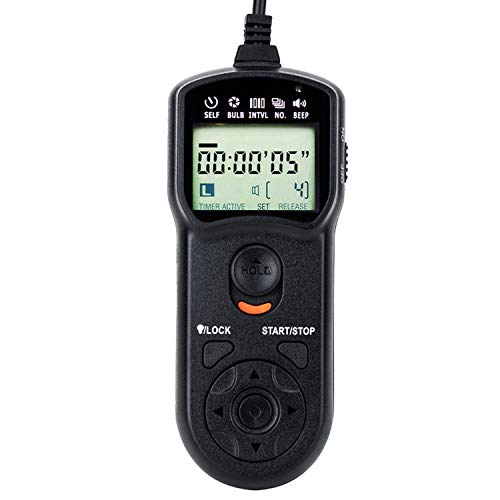
- Includes interval and long-exposure timers
- Supports settings up to nearly 100 hours
- Backlit LCD and 90-centimeter wired cable
Best For: Canon users shooting time-lapses and long exposures
Best Sony Infrared Option
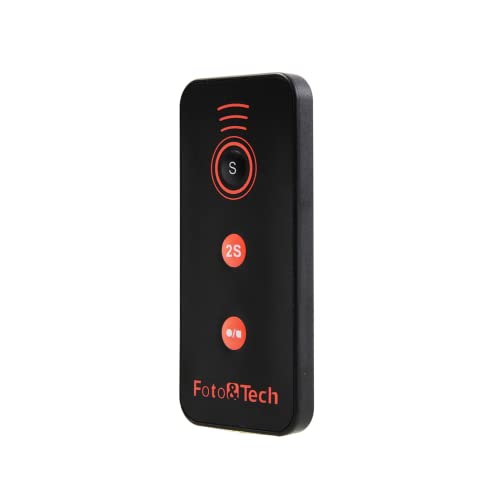
- Infrared range reaches up to 32 feet
- Designed to reduce shutter-press vibration
- Compatible with many Sony Alpha and NEX models
Best For: Sony users needing straightforward wireless still shooting
Compact Canon Control

- Wired shutter control for select Canon EOS cameras
- Compact and lightweight design
- Replicates shutter-release button functions
Best For: Canon EOS users seeking a compact wired remote
Extended Canon Compatibility
Kiwifotos RS-80N3 Remote Release

- Supports autofocus and shutter triggering
- Includes connection and extension cables
- Designed for select Canon 3-pin cameras
Best For: Canon users shooting macro, bulb, or telephoto work
Classic Canon Stability Tool

- Reduces shake for macro and telephoto shooting
- Provides half-press and full-press control
- Includes shutter-release lock and 2.6-foot cable
Best For: Compatible Canon EOS owners needing precise wired control
Best Wired Extension Pick

- Half-press focus and bulb mode support
- Includes 11.4-foot extension cable
- Plug-and-play wired operation
Best For: Compatible Canon E3 socket cameras needing extra cable reach
Best Feature-Rich Wireless Pick

- Wireless range up to 32.8 feet
- Controls shutter, focus, zoom, and recording
- Rechargeable battery lasts up to 40 hours
Best For: Supported Sony, Canon, and Nikon cameras plus gimbal setups
Best Wireless Range – JJC Wireless Remote for Canon
For Canon owners comparing camera remote shutters for DSLR cameras, the JJC JM-C(II) stands out for its radio connection, which can work from behind or in front of the camera without direct line of sight. It supports wireless or wired triggering at distances up to 100 feet.
Best For: Canon photographers who need flexible long-range remote shooting for still images.
Pros:
- Radio range reaches up to 30 meters (100 feet) and does not require line of sight.
- Offers single shot, continuous, bulb, three-shot, and five-second delay modes.
- Supports 16 radio channels and can trigger one or more receivers.
- Can operate wirelessly or through a wired connection.
Cons:
- It is not designed to control video start and stop.
- Compatibility is limited to supported Canon cameras with the appropriate sub-mini connection.
This is a versatile choice when range and positioning flexibility matter more than video control. Confirm your Canon model and connector before buying.
Best Simple Nikon Remote – Foto&Tech FTML-L3
The Foto&Tech FTML-L3 is a compact infrared option for Nikon users shopping for camera remote shutters for DSLR cameras. Its straightforward button control lets you trigger the shutter from up to 16 feet away, helping reduce vibration from pressing the camera directly.
Best For: Nikon photographers who want a basic, lightweight remote for compatible cameras.
Pros:
- Wireless infrared operation provides up to a 16-foot range.
- Helps eliminate camera shake caused by physically pressing the shutter.
- Includes a CR2025 battery and a one-year replacement warranty.
- Compatible with a broad selection of listed Nikon DSLRs and COOLPIX models.
Cons:
- Infrared operation generally requires suitable positioning toward the camera.
- The 16-foot range is shorter than that of many radio remotes.
- It is limited to basic shutter triggering rather than advanced timing functions.
Choose this model for uncomplicated remote shutter release at a modest distance. Check the compatibility list carefully, since it is intended for specific Nikon cameras.
Best for Time-Lapse – JJC Intervalometer Remote for Canon
The JJC TM-C is a wired intervalometer for Canon photographers who need more than a simple shutter button. Among camera remote shutters for DSLR cameras, it adds programmable self-timer, interval, long-exposure, and exposure-count functions for timed shooting and time-lapse work.
Best For: Canon users creating time-lapse sequences or long exposures from a stable setup.
Pros:
- Supports self-timer, interval timer, long-exposure timer, and exposure-count settings.
- Timer settings range from one second to 99 hours, 59 minutes, and 59 seconds.
- Its 90-centimeter wired connection helps avoid direct camera contact.
- Backlit LCD is designed for viewing settings in the dark.
Cons:
- The wired cable limits working distance to approximately 0.9 meters.
- It requires two AAA alkaline batteries.
- Compatibility is limited to supported Canon cameras and the correct connection.
This remote is a stronger fit than a basic release when repeatable timing is important. Its cable is less convenient for distant or moving subjects, but useful for controlled tripod-based photography.
Best Sony Infrared Option – Foto&Tech RMT-DSLR2
The Foto&Tech RMT-DSLR2 is an infrared remote for a wide range of Sony cameras. It gives photographers shopping for camera remote shutters for DSLR cameras a simple way to trigger still photos from up to 32 feet away while reducing vibration from pressing the shutter manually.
Best For: Sony DSLR, SLT, mirrorless, and NEX users seeking a basic wireless still-photo remote.
Pros:
- Provides infrared wireless triggering from up to 32 feet.
- Helps reduce camera shake during remote shooting.
- Uses a CR2025 battery, which is included.
- Works with many listed Sony Alpha, SLT, and NEX models.
Cons:
- Infrared operation may require a clear path between the remote and camera.
- It is intended for taking pictures rather than broader camera control.
- Compatibility should be verified against the specific Sony model.
This is a practical pick for Sony owners who want simple remote still-photo triggering without an intervalometer. Its broad listed compatibility is useful, but model verification remains important.
Compact Canon Control – RS-60E3 Remote Switch
The Canon RS-60E3 is a compact wired option for shoppers comparing camera remote shutters for DSLR cameras. It plugs directly into compatible Canon EOS cameras and replicates the camera’s shutter-release button functions for straightforward remote operation.
Best For: Canon EOS users who want a small, simple wired shutter control.
Pros:
- Replicates all shutter-release button functions.
- Compact, lightweight design at about 22.68 g.
- Simple plug-in wired connection.
- Offers a listed maximum range of 60 meters.
Cons:
- Compatible only with some Canon EOS cameras.
- Requires checking camera compatibility before purchase.
- Uses a wired connection rather than wireless control.
The RS-60E3 emphasizes portability and uncomplicated operation. Its main buying consideration is compatibility with the specific Canon EOS camera, so verify the supported connection before ordering.
Extended Canon Compatibility – Kiwifotos RS-80N3 Remote Release
The Kiwifotos RS-80N3 is a practical choice among camera remote shutters for DSLR cameras, especially for Canon owners with a compatible 3-pin connection. It supports autofocus and shutter triggering while helping reduce camera movement during bulb exposures, macro work, and super-telephoto photography.
Best For: Canon photographers needing a longer cable setup for stable, hands-off shooting.
Pros:
- Controls autofocus and shutter triggering.
- Helps capture images without shaking the camera.
- Useful for bulb exposures, super-telephoto shots, and macro photography.
- Includes a 2.3-foot connection cable plus a 4.3-foot extension cable.
Cons:
- Designed for select Canon cameras with a 3-pin connection.
- Listed maximum range is 2 meters.
- Requires a wired connection and has no battery requirement.
Its included extension cable gives this model more placement flexibility than a short single-cable release. Confirm that your Canon camera appears in the compatibility list and uses the required 3-pin connection.
Classic Canon Stability Tool – Canon RS-80N3 Remote Switch
The Canon RS-80N3 is a dependable wired option for camera remote shutters for DSLR cameras, with broad compatibility across numerous Canon EOS models. Its 2.6-foot cable and shutter-release lock are suited to situations where pressing the camera directly could introduce movement, including macro, super-telephoto, and bulb photography.
Best For: Owners of compatible Canon EOS cameras who want a dedicated cable release with lock functionality.
Pros:
- Helps prevent camera shake during precision photography.
- Supports halfway and complete shutter-button presses.
- Includes a shutter-release lock for bulb exposures.
- Compatible with many listed Canon EOS models.
Cons:
- Limited to a 2.6-foot (80-centimeter) cable.
- Compatibility is restricted to listed Canon models.
- Uses a wired connection with a listed 0.8-meter range.
This model is a focused choice for photographers who value traditional wired control and a shutter lock. Its broad listed compatibility is useful, but checking the exact EOS model remains essential before buying.
Best Wired Extension Pick – AFUNTA E3 Shutter Release
For photographers looking for camera remote shutters for dslr cameras, the AFUNTA wired release is a practical choice for compatible Canon E3 socket cameras and selected Samsung models. Its half-press focus, full-press shutter, and bulb-mode support help reduce camera shake, while the included extension cable enables operation from farther away.
Best For: Long-distance wired shooting with compatible Canon E3 socket cameras.
Pros:
- Supports half-press focusing, full-press shooting, and bulb mode.
- Includes an 11.4-foot 2.5mm extension cable.
- Plug-and-play design is convenient for outdoor shooting.
Cons:
- Compatibility is limited to Canon E3 socket cameras and selected Samsung models.
- Wired operation is less convenient than a wireless remote.
The AFUNTA stands out when a dependable cable connection and extra reach matter more than wireless convenience. Confirm your camera’s socket before ordering.
Best Feature-Rich Wireless Pick – SMALLRIG 5207 Remote
The SMALLRIG 5207 is a versatile option among camera remote shutters for dslr cameras, offering wireless control for select Sony, Canon, and Nikon cameras. Beyond triggering the shutter, it can control focus, zoom, recording, and custom functions from up to 32.8 feet away.
Best For: Select Sony, Canon, and Nikon users who want wireless camera and gimbal control.
Pros:
- Offers up to 32.8 feet of wireless range.
- Controls shutter, focus, zoom, recording, and custom functions on supported cameras.
- Built-in rechargeable battery provides up to 40 hours of continuous operation.
- Includes a silicone case, wrist strap, and gimbal-compatible Velcro strap.
Cons:
- Works only with the listed wireless-enabled camera models.
- Requires USB-C charging and has a stated input limit of 8V.
With rechargeable power, automatic reconnection, and mounting options for gimbal handles, the SMALLRIG is the most flexible choice here—but compatibility should be checked carefully before purchase.
Best Simple IR Pick – CamKix Wireless Shutter Remote
The CamKix Wireless IR Shutter Remote is a straightforward option for camera remote shutters for dslr cameras equipped with an infrared sensor. It supports quick-response, delayed, and bulb remote modes, with operation from up to 16 feet when the camera sensor has a clear line of sight.
Best For: Simple wireless shutter triggering on compatible Nikon and Canon cameras.
Pros:
- Supports quick-response, delayed, and bulb modes.
- Provides wireless operation from up to 16 feet away.
- Simple single-button operation.
Cons:
- Requires an unobstructed line of sight to the camera’s infrared sensor.
- Compatible only with Nikon and Canon cameras equipped with an IR sensor.
- Requires one CR2025 lithium battery.
The CamKix is a compact, uncomplicated solution for photographers who need basic remote triggering rather than advanced camera controls. Check for an infrared sensor and verify your model’s compatibility first.
How We Picked These Camera Remote Shutters for Dslr Cameras
We focused on compatibility, connection type, essential shooting controls, cable reach, wireless convenience, and overall usefulness for common DSLR and interchangeable-lens camera tasks. The selection includes manufacturer-branded accessories, replacement-style wired switches, infrared remotes, and more versatile wireless controllers.
Compatibility comes first. A remote may look similar across camera systems but use a different connector, infrared protocol, or control layout. Always match the product listing with your exact camera model before ordering, especially when using older DSLRs or newer mirrorless bodies.
Quick Comparison
| Remote type | Best for | Main advantage | Potential limitation |
|---|---|---|---|
| Wired shutter release | Long exposures and studio work | Reliable, battery-free operation | Requires a cable connection |
| Wireless or infrared remote | Self-portraits and casual shooting | Freedom from the camera | Range and line-of-sight may vary |
| Intervalometer | Time-lapse and scheduled exposures | Programmable timing controls | More settings to configure |
| Multi-brand wireless remote | Photographers with several systems | Broader compatibility | Exact camera support still must be checked |
Key Buying Factors
Camera and Connector Compatibility
Check the complete model list and connector type, not just the camera brand. Canon remotes using an E3-style connection are not interchangeable with N3-style models, while Nikon and Sony systems use their own requirements. A correct fit should support shutter activation and autofocus as advertised.
Wired Versus Wireless Operation
Wired releases are generally the safest choice for astrophotography, macro work, and long exposures because they avoid wireless pairing and line-of-sight concerns. Wireless and infrared options are more convenient when you need to stand away from the camera, but they may require batteries and a clear signal path.
Timer Features and Shooting Controls
If you plan to create time-lapses, look for an intervalometer with delay, exposure interval, number-of-shot, and long-exposure controls. For simple shake-free shutter activation, these features may add cost and complexity without much benefit.
Cable Length and Build Quality
A longer cable helps when the camera is mounted on a tripod or positioned away from the operator. Examine strain relief, button feel, locking or hold functionality, and the quality of the connector. Replacement cables can be useful, but verify the advertised reach and plug size.
Who Should Buy Which Camera Remote Shutters for Dslr Cameras?
Choose a wired Canon, Nikon, or Sony-compatible release if reliability and simplicity matter most. These are well suited to landscapes, tripod photography, studio setups, and long exposures.
Choose a wireless or infrared model for self-portraits, family photos, event work, or situations where you want to trigger the camera from several feet away. A multi-brand option makes sense for photographers who regularly use compatible Canon, Nikon, and Sony bodies.
Choose an intervalometer when you need repeatable time-lapse sequences, timed exposures, or hands-off shooting sessions. For occasional remote shutter activation, a basic wired switch is usually the more practical and affordable choice.