
Astrophotography demands steady, repeatable exposures, and the right remote shutter can help you capture sharp stars without touching the camera. The products in this roundup cover programmable intervalometers, simple wired releases, and wireless rechargeable controls.
Use the guide below to match the remote’s connection type, timer features, and camera compatibility with your night-sky setup.
Best 10 Camera Remote Shutters for Astrophotography Picks for 2026
Best Rechargeable Intervalometer

- Programmable delay, bulb, interval, and shot count
- USB-C rechargeable with LCD display
- Broad multi-brand camera compatibility
Best For: Long-exposure astrophotography and time-lapse sequences
Best Compact Canon Timer
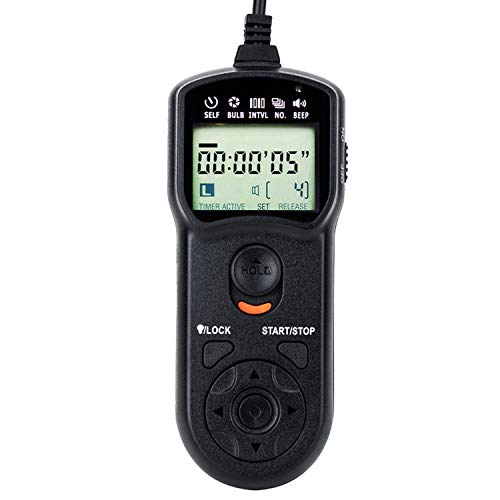
- Self-timer, interval, bulb, and shot-count controls
- Backlit LCD for dark shooting conditions
- Compact wired design for Canon cameras
Best For: Canon users shooting long exposures and time-lapses
Best Simple Nikon Release
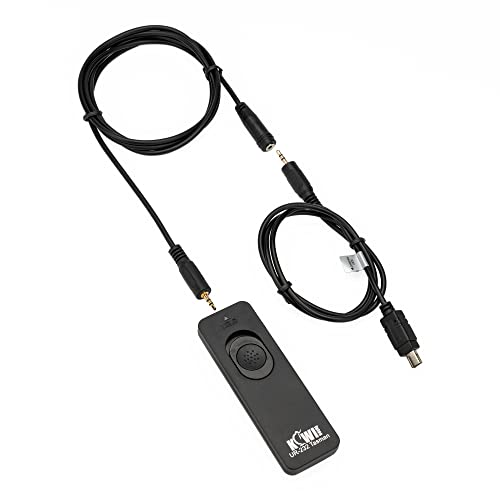
- Reduces camera shake during shutter release
- Supports autofocus and bulb exposures
- Includes connection and extension cables
Best For: Nikon users needing a basic wired release
Best Wireless Canon Remote
AODELAN WTR-2 II Wireless Timer

- Wireless control up to 60 meters
- Rechargeable transmitter and receiver
- Supports timed bulb and interval shooting
Best For: Canon astrophotography with wireless shooting flexibility
Best Sony Cable Pick

- Half-press autofocus and lockable shutter button
- Supports Sony Alpha, RX, HX, NEX, QX, and ZV-1 models
- Useful for reducing vibration during long exposures
Best For: Sony users wanting a simple wired release for night photography
Best Timer Control
- Interval, self-timer, long-exposure, and count settings
- Timer range from 1 second to nearly 100 hours
- Backlit LCD and lock function suit dark shooting conditions
Best For: Sony users shooting timed sequences and astrophotography time-lapses
Best Wireless Range
AODELAN Rechargeable Shutter Remote
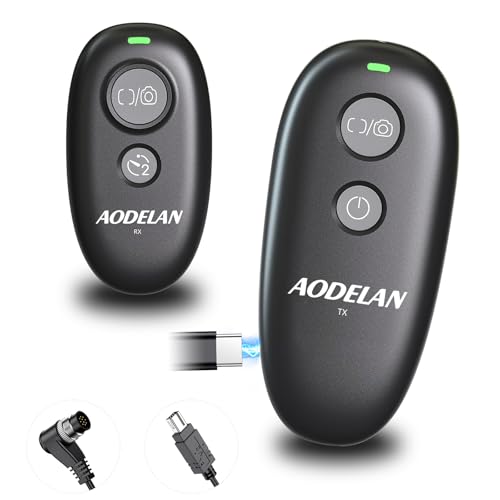
- Wireless triggering up to 60 meters
- Supports Bulb, time-lapse, continuous, and single-shot modes
- Rechargeable transmitter and receiver with wired fallback
Best For: Nikon users needing long-range control for remote astrophotography setups
Best Wired Canon Pick

- Wired shutter and autofocus control
- No battery required
- Includes extension cable for steadier shooting
Best For: Compatible Canon cameras and simple bulb exposures
Best Sony Interval Timer
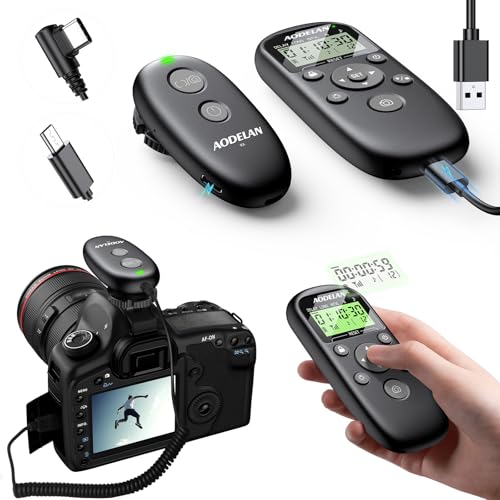
- 60-meter wireless control range
- 1-second interval timing
- Rechargeable LCD remote with wired mode
Best For: Sony star trails, bulb exposures, and time-lapses
Best Multi-Brand Timer

- 60-meter wireless shutter control
- Bulb and interval timer modes
- Supports several listed camera brands
Best For: Multi-camera setups and precise astrophotography timing
Best Rechargeable Intervalometer – AODELAN LCD Timer Remote
For photographers seeking camera remote shutters for astrophotography, the AODELAN Rechargeable Intervalometer combines long-exposure control with programmable interval shooting. Its LCD screen, USB-C charging, and broad camera compatibility make it a practical choice for night-sky sequences and star trails.
Best For: Astrophotographers and time-lapse shooters who want a rechargeable wired intervalometer with detailed timing controls.
Pros:
- Supports delay, bulb, interval, and exposure-count settings.
- Programs delays and intervals from 1 second to 99 hours, 59 minutes, 59 seconds.
- Rechargeable USB-C battery with LCD battery and setting display.
- Compatible with many Canon models plus select Fujifilm, Hasselblad, Olympus, Pentax, and Samsung cameras.
Cons:
- Compatibility depends on the correct included connection cable and camera model.
- It is a wired remote, so the controller remains connected during operation.
This is a strong all-around option when precise, extended timing matters more than wireless convenience. Its programmable shot count and long standby time are particularly useful for unattended astrophotography sessions.
Best Compact Canon Timer – JJC Intervalometer Remote
The JJC Intervalometer is a straightforward option among camera remote shutters for astrophotography, providing Canon users with self-timer, interval, long-exposure, and exposure-count controls. Its backlit LCD helps with adjustments when shooting in dark conditions.
Best For: Canon photographers who want a compact wired timer remote for long exposures and time-lapse work.
Pros:
- Supports self-timer, interval timer, long-exposure timer, and exposure-count settings.
- Timer settings range from 1 second to 99 hours, 59 minutes, 59 seconds.
- Backlit LCD is designed for viewing settings in the dark.
- Compact 90cm wired controller helps reduce camera shake.
Cons:
- Requires two AAA alkaline batteries.
- Its 0.9-meter cable limits placement flexibility.
- Designed for Canon cameras rather than broad multi-brand use.
Choose this model if you prefer a simple, battery-powered Canon intervalometer and do not need wireless operation. The illuminated display and extensive timer range suit long night exposures without adding unnecessary complexity.
Best Simple Nikon Release – Kiwifotos MC-DC2 Shutter Cord
For Nikon owners comparing camera remote shutters for astrophotography, the Kiwifotos MC-DC2 offers a simple wired way to trigger the shutter without touching the camera. It supports autofocus and shutter release functions and is suited to bulb exposures.
Best For: Nikon photographers who need a basic wired shutter release for bulb exposures, telephoto work, or macro photography.
Pros:
- Helps capture images without camera shake.
- Supports autofocus and shutter triggering.
- Useful for bulb exposures and subjects that are difficult to approach.
- Includes a 70cm connection cable and 130cm extension cable.
Cons:
- Does not provide intervalometer or programmable timer functions.
- Wired operation offers less freedom than a wireless remote.
- Compatibility is limited to select Nikon cameras with a DC2 connection.
This is a sensible low-complexity choice for Nikon users who mainly need vibration-free shutter activation. Verify that your camera uses the listed DC2 connection before buying, especially for astrophotography setups requiring bulb control.
Best Wireless Canon Remote – AODELAN WTR-2 II Wireless Timer
The AODELAN WTR-2 II stands out among camera remote shutters for astrophotography by combining wireless range with intervalometer controls. Its rechargeable transmitter and receiver can operate wirelessly up to 60 meters, while the included cables also allow wired use.
Best For: Canon photographers who want wireless freedom for star trails, long exposures, and time-lapse shooting.
Pros:
- 2.4GHz wireless control reaches up to 60 meters.
- Supports single shot, continuous shooting, bulb, and 2-second delay modes.
- Allows customization of delay, exposure, interval, and shot count.
- Rechargeable design with USB-C charging and wired backup operation.
Cons:
- Requires a separate receiver connected to the camera.
- Standby time differs between the transmitter and receiver.
- Compatibility is centered on Canon models and requires the correct connection cable.
This is the most flexible choice in the group for photographers who want to move away from the camera while maintaining timed control. Wireless range, rechargeable power, and wired fallback make it well suited to demanding night and long-exposure setups.
Best Sony Cable Pick – PHOLSY S8 Shutter Remote
For Sony users seeking camera remote shutters for astrophotography, the PHOLSY S8 is a straightforward wired option for triggering the camera without touching it. Its half-press autofocus control and lockable button are useful for reducing vibration during night-sky and other long-exposure shots.
Best For: Sony photographers who want a simple cable release for long exposures, night views, fireworks, or unattended continuous shooting.
Pros:
- Two-stage button supports autofocus on a half press.
- Lock function supports BULB exposures and continuous shooting.
- Broad compatibility with Sony Alpha, RX, HX, NEX, QX, and ZV-1 models.
- Compact 0.9-meter wired design weighs 55 g.
Cons:
- Wired range is limited to 0.9 meters.
- Designed for one compatible Sony camera at a time.
- Does not provide intervalometer or programmable timer functions.
The PHOLSY S8 is a practical choice when dependable, low-complexity shutter control matters more than wireless operation or interval scheduling. Confirm your exact Sony model before buying.
Best Timer Control – JJC Intervalometer Remote
The JJC Intervalometer is a strong option among camera remote shutters for astrophotography when timed sequences matter. In addition to remote triggering, it offers interval, self-timer, long-exposure, and exposure-count settings for repeatable night-sky sessions.
Best For: Sony photographers planning interval shooting, time-lapses, timed long exposures, or unattended sequences.
Pros:
- Supports interval, self-timer, long-exposure, and exposure-count settings.
- Timer range runs from 1 second to 99 hours, 59 minutes, and 59 seconds.
- Backlit LCD helps with operation in dark conditions.
- Two-stage release and lock functions help prevent camera shake.
Cons:
- Requires two AAA alkaline batteries.
- Its wired connection limits range to 0.9 meters.
- Compatibility is focused on listed Sony camera models.
Choose the JJC over a basic cable release if you need scheduling and repeatable exposures. Its 90-centimeter cable is best suited to setups where the photographer remains close to the camera.
Best Wireless Range – AODELAN Rechargeable Shutter Remote
For photographers who need distance from the camera, this AODELAN remote offers a wireless alternative for camera remote shutters for astrophotography. Its 2.4GHz connection reaches up to 60 meters, while the receiver can also function as a wired shutter remote.
Best For: Nikon photographers who need long-range triggering, rechargeable power, and support for bulb, continuous, or time-lapse shooting.
Pros:
- Wireless range reaches up to 60 meters with 2.4GHz digital radio.
- Supports autofocus, single shot, time-lapse, continuous shooting, and Bulb modes.
- Rechargeable transmitter and receiver support extended shooting sessions.
- Can operate wirelessly or as a wired shutter remote.
Cons:
- Supplied compatibility is primarily for Nikon models, plus select Fujifilm and Kodak cameras.
- Requires the correct connecting cable for the camera.
- More components are involved than with a basic wired release.
The AODELAN is the most flexible choice here for remote or unattended setups, especially when a 60-meter range is useful. Verify the camera model and included cable arrangement before purchase.
Best Wired Canon Pick – Kiwifotos RS-80N3
If you want a straightforward option among camera remote shutters for astrophotography, the Kiwifotos RS-80N3 provides wired shutter control for compatible Canon cameras. Its cable connection helps reduce camera shake during bulb exposures, telephoto work, and macro photography.
Best For: Canon users who prefer a simple wired release for steady long exposures and bulb shooting.
Pros:
- Supports autofocus and shutter triggering without touching the camera.
- Useful for bulb exposures and reducing shake during astrophotography.
- Includes a 2.3-foot camera cable and 4.3-foot extension cable.
- Requires no battery.
Cons:
- Wired operation limits placement flexibility compared with wireless remotes.
- Compatibility is limited to Canon cameras with a 3-pin connection.
This is a practical, low-complexity choice for compatible Canon setups. It lacks interval timing and wireless range, but its battery-free design and extended cable length make it dependable for basic long-exposure control.
Best Sony Interval Timer – AODELAN WTR-2 II
For Sony photographers comparing camera remote shutters for astrophotography, the AODELAN WTR-2 II combines wireless control with interval timing. It supports bulb exposure, star trails, time-lapse work, and other long-exposure scenarios while offering a wired mode when needed.
Best For: Sony users who need wireless range, precise interval programming, and bulb or star-trail control.
Pros:
- Offers up to 60 meters of 2.4GHz wireless range.
- Supports single, continuous, bulb, and 2-second-delay shooting.
- Interval timer settings can be adjusted down to 1-second increments.
- Rechargeable design includes USB-C charging and an LCD display.
Cons:
- Requires checking the extensive camera compatibility list before purchase.
- More complex than a basic wired shutter release.
The WTR-2 II is the most versatile option here for programmed night shooting. Its LCD, rechargeable battery, wireless range, and wired backup make it well suited to astrophotographers who regularly shoot star trails or time-lapses.
Best Multi-Brand Timer – AODELAN WTR-2-CA2
The AODELAN WTR-2-CA2 is a flexible choice among camera remote shutters for astrophotography, especially for photographers using compatible Canon, Fujifilm, Olympus, Pentax, or other listed cameras. Its wireless timer supports bulb exposure, interval shooting, and exposure-count settings.
Best For: Multi-camera users who want wireless timer functions and broad listed compatibility.
Pros:
- Provides up to 60 meters of wireless control.
- Supports bulb, continuous, single-shot, and 2-second-delay modes.
- Offers delay, long-exposure, interval, and exposure-count settings.
- Timing can be set with 0.1-second precision.
Cons:
- Requires four AAA batteries.
- Different cameras may require the appropriate connecting cable.
- Compatibility should be confirmed against the detailed model list.
This remote is a strong fit when flexibility matters more than rechargeable convenience. The broad camera support and detailed timer controls benefit astrophotographers managing bulb exposures or interval sequences across multiple compatible systems.
How We Picked These Camera Remote Shutters for Astrophotography
We focused on remote releases that can reduce camera shake during long exposures and support practical astrophotography workflows. The selection includes wired cable releases for dependable low-latency operation, wireless models for greater flexibility, and intervalometers for timed sequences, bulb exposures, and time-lapse work.
Compatibility was a primary consideration. The list covers remote options for Canon, Nikon, and Sony cameras, but connector type and camera model support can vary even within the same brand. Timer controls, rechargeable power, LCD readability, operating range, and ease of use were also considered.
Quick Comparison
| Remote type | Best for | Main advantage | Potential limitation |
|---|---|---|---|
| Wired intervalometer | Long exposures and repeatable sequences | Precise timing without wireless pairing | Cable length and camera-port compatibility matter |
| Wireless intervalometer | Reducing contact with the camera | Convenient remote operation and flexible positioning | Requires batteries or recharging |
| Simple wired shutter release | Single exposures and bulb activation | Simple, reliable, and often affordable | Usually lacks programmable timing |
| Rechargeable remote | Travel and field shooting | Less dependence on disposable batteries | Must be charged before a session |
Key Buying Factors for Camera Remote Shutters for Astrophotography
Camera and Connector Compatibility
Check the exact camera model and remote socket before buying. Canon, Nikon, and Sony use different connections, and some cameras require a USB-C or brand-specific cable. A remote that fits the brand may still be incompatible with a particular generation or body.
Intervalometer Functions
For star trails, deep-sky imaging, or repeated exposures, look for adjustable delay, exposure time, interval, and shot count. A programmable timer can automate a sequence and help maintain consistent framing without repeated handling.
Bulb and Long-Exposure Control
Astrophotography often involves exposures longer than the camera’s standard timed range. Confirm that the remote supports bulb mode and offers a lock or timer function when needed. A simple release may be enough for occasional long exposures, while an intervalometer is more useful for multi-frame sessions.
Wireless Range and Power
Wireless models are useful when the camera is mounted in a difficult-to-reach position, but advertised range can vary with obstacles and interference. Rechargeable units are convenient in the field; check charging time, battery life, and whether manual use remains possible if the battery runs low.
Nighttime Usability
An illuminated or readable LCD can make timer setup easier in darkness, while oversized buttons and a straightforward interface reduce fumbling. Avoid bright displays that could interfere with dark adaptation unless the brightness can be controlled.
Who Should Buy Which Camera Remote Shutters for Astrophotography?
Choose a wired intervalometer if reliable timing and long unattended sequences matter most. It is a strong choice for star trails, repeated deep-sky exposures, and users who prefer a direct connection.
Choose a wireless intervalometer if you need distance from the tripod or want to minimize movement around the camera. Verify range and keep the remote charged before heading outside.
Choose a simple wired release for occasional bulb exposures, single shots, and maximum simplicity. It can be the best value when programmable timing is unnecessary.
Choose a rechargeable model for travel, remote locations, or frequent use where replacing batteries is inconvenient. Regardless of type, confirm compatibility with your exact camera before ordering and test the setup indoors before an overnight session.