
Long exposures demand stability, consistency, and hands-off control. The right remote shutter can help reduce camera shake while giving you precise control over timed exposures, intervals, and bulb-mode shooting.
This roundup compares 10 wired, wireless, and timer-based options for popular Canon, Nikon, Sony, Olympus, and Fujifilm cameras. Check connector compatibility carefully before buying, since remote ports vary by camera body and model.
Best 10 Camera Remote Shutters for Long Exposures Picks for 2026
Best Programmable Pick
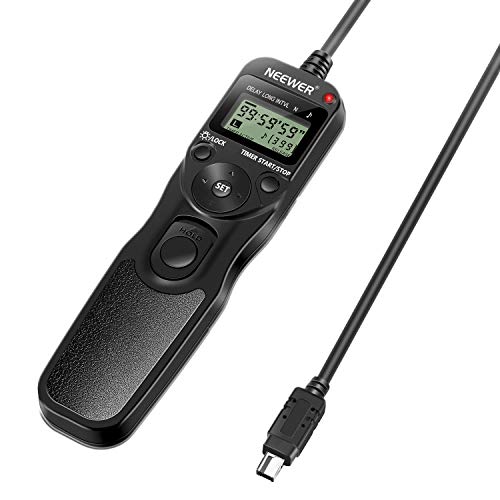
- Programmable bulb and interval timing
- Up to 12.8 m wireless range
- LCD with backlight and lock
Best For: Nikon photographers planning long exposures and interval sequences
Best Simple Wireless Option
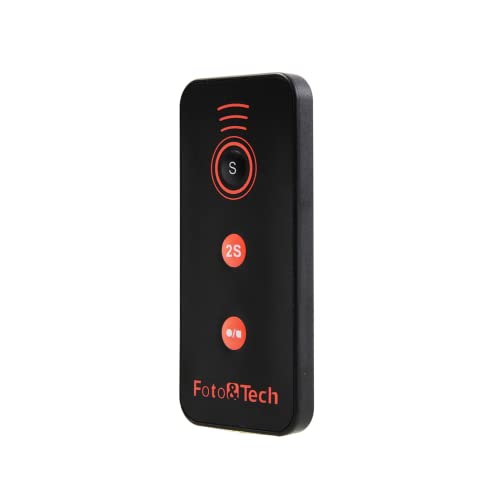
- Wireless shutter triggering up to 32 ft
- Compatible with many Sony cameras
- Includes CR2025 battery
Best For: Sony users needing a compact vibration-reducing remote
Best Basic Wired Pick
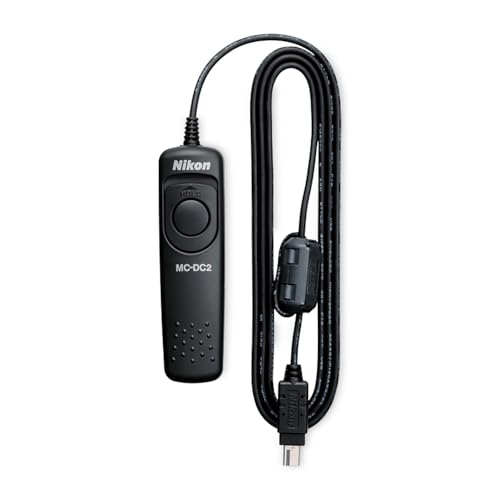
- Immediate shutter release and lock
- One-meter wired connection
- Simple option for bulb exposures
Best For: Nikon D90 and D5000 owners wanting a straightforward wired release
Best Long-Range Intervalometer
Pixel TW283-N3 Wireless Remote
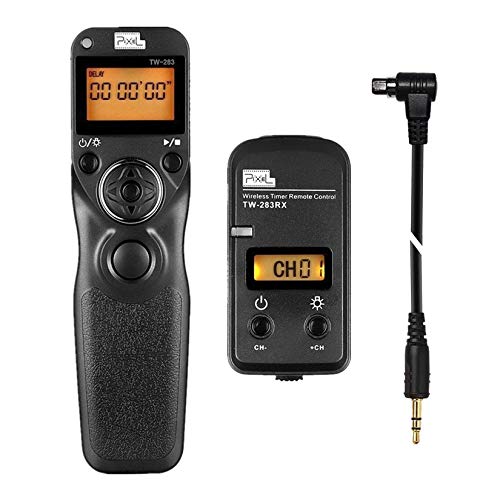
- 80 m+ wireless range with 30 channels
- Advanced bulb and interval scheduling
- Supports Canon cameras listed
Best For: Canon users planning long exposures, time-lapse, and repeat sequences
Sony Long-Exposure Control
JJC Intervalometer Timer Remote
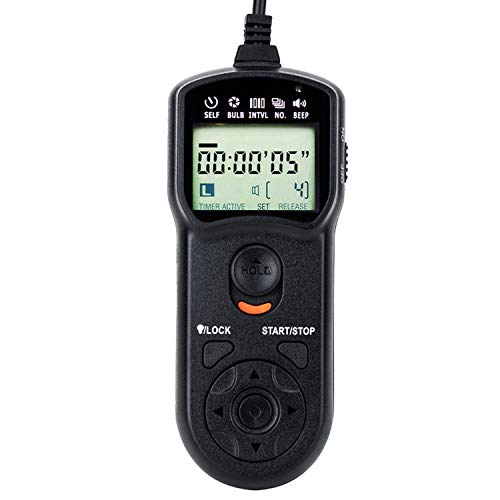
- Long-exposure and interval-timer modes
- Backlit LCD with lock function
- Compact 90 cm wired Sony remote
Best For: Sony photographers shooting long exposures and time-lapses
Wireless Long-Exposure Freedom
AODELAN Rechargeable Shutter Remote
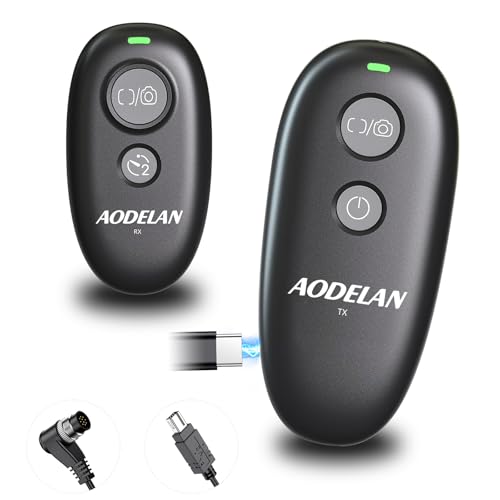
- Wireless control up to 60 meters
- Bulb, time-lapse, and continuous modes
- Rechargeable transmitter and receiver
Best For: Nikon users needing long-range remote shooting
Multi-Brand Timer Control
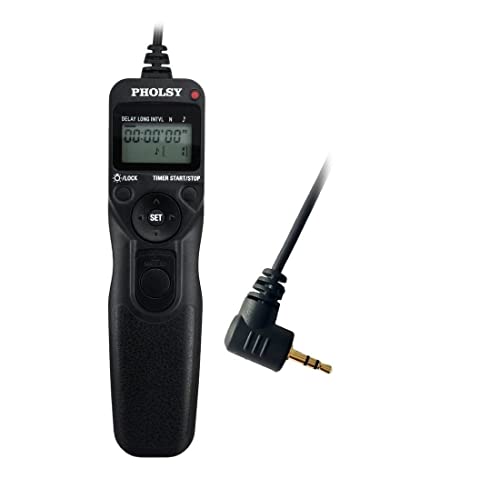
- Supports several major camera brands
- Long exposure and interval timer can combine
- Backlit display with up to 399 shots
Best For: Multi-brand users planning long exposures and time-lapses
Best Wired Pick
Foto&Tech RS-60E3 Remote Shutter Release

- 110-cm cable and no battery required
- Two-stage button with bulb-lock function
- Designed for many Canon sub-mini cameras
Best For: Canon long exposures, macro, and telephoto work
Best Programmable Wireless
Pixel TW-283 Nikon Timer Remote

- Up to 100-meter 2.4G wireless range
- Long-exposure and interval timer modes
- Broad Nikon compatibility with LCD controls
Best For: Nikon timed exposures and scheduled shooting
Best Budget Timer
Neewer TC-2 LCD Shutter Remote
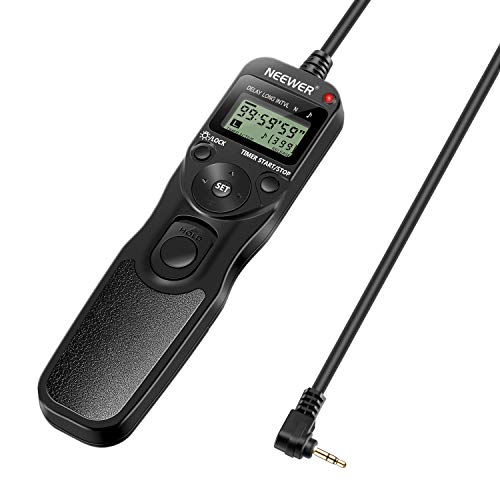
- Timer delay adjustable to nearly 100 hours
- 10-meter radio-frequency range
- Supports selected Canon and Pentax cameras
Best For: Scheduled and delayed exposures on compatible cameras
Best Programmable Pick – Neewer TC-2 Timer Remote
For photographers seeking camera remote shutters for long exposures, the Neewer TC-2 offers programmable control for compatible Nikon cameras. Its timer supports bulb exposures, intervals, shooting counts, and a remote switch function, with settings adjustable in one-second increments.
Best For: Nikon users who want detailed long-exposure, interval, and repeat-shooting control.
Pros:
- Supports bulb shooting and long-exposure timing up to 99 hours, 59 minutes, and 59 seconds.
- Offers interval timing, exposure-count control, and unlimited shooting.
- LCD screen includes backlight and a lock function.
- Wireless radio-frequency operation reaches up to 12.8 meters.
Cons:
- Compatibility is limited to the listed Nikon camera models.
- Requires two AAA batteries.
This is the most feature-rich option in the group for planned sequences and extended exposures, provided your Nikon model is supported.
Best Simple Wireless Option – Foto&Tech Sony IR Remote
The Foto&Tech IR remote is a straightforward choice among camera remote shutters for long exposures when you need to trigger a compatible Sony camera without touching it. Its infrared connection operates from up to 32 feet and is powered by the included CR2025 battery.
Best For: Sony photographers who want a compact wireless shutter trigger for reducing camera shake.
Pros:
- Triggers the shutter remotely to help eliminate vibration from pressing the camera button.
- Offers an operating range of up to 32 feet.
- Compatible with a broad list of Sony Alpha, SLT, and NEX models.
- Includes a CR2025 battery and a one-year replacement warranty.
Cons:
- Infrared operation may require suitable positioning toward the camera.
- Designed for shutter triggering rather than programmable interval timing.
Choose this model for uncomplicated remote triggering; it is better suited to basic exposure control than automated bulb or interval sequences.
Best Basic Wired Pick – Nikon MC-DC2 Release Cord
The Nikon MC-DC2 is a basic wired option for camera remote shutters for long exposures. It replicates the camera’s shutter button and provides immediate release plus shutter lock, making it useful for compatible Nikon cameras in bulb mode.
Best For: Nikon D90 and D5000 users who prefer a simple wired release for long exposures.
Pros:
- Provides immediate shutter release without pressing the camera body.
- Includes a shutter-lock function for long exposures.
- Simple wired design requires no wireless pairing.
- Compact one-meter cable reaches away from the camera.
Cons:
- Compatibility is limited to select Nikon cameras, so model verification is important.
- Its one-meter wired range is shorter than wireless alternatives.
- Does not provide programmable interval or exposure-count functions.
This is a sensible choice when reliability and simplicity matter more than interval scheduling or wireless range, especially for supported Nikon bodies.
Best Long-Range Intervalometer – Pixel TW283-N3 Wireless Remote
The Pixel TW283-N3 is built for photographers who need extensive scheduling from camera remote shutters for long exposures. It supports bulb mode, interval timing, delayed shooting, repeat schedules, and exposure sequences, with a wireless range listed at more than 80 meters.
Best For: Canon photographers creating long exposures, time-lapse sequences, or repeated sunrise and sunset shoots.
Pros:
- Supports long exposure and interval timing simultaneously.
- Programs timing up to 99 hours, 59 minutes, and 59 seconds.
- Offers up to 80 meters of wireless range, 30 channels, and anti-interference features.
- LCD screens on the transmitter and receiver simplify operation.
Cons:
- Requires four AAA batteries.
- Compatibility depends on the supplied Canon connection and listed camera models.
- Its many controls may be more than needed for simple shutter release.
For Canon users who need advanced scheduling and distance, this is the strongest match here, particularly for unattended long exposures and repeat shooting.
Sony Long-Exposure Control – JJC Intervalometer Timer Remote
For Sony users comparing camera remote shutters for long exposures, the JJC Intervalometer offers dedicated long-exposure, self-timer, and interval-timer controls in a compact wired design. Its backlit LCD and settings up to 99 hours, 59 minutes, and 59 seconds make it practical for night photography and time-lapse work.
Best For: Sony photographers who want precise wired control for long exposures, time-lapses, and shake-free shutter release.
Pros:
- Supports self-timer, interval timer, long-exposure timer, and exposure-count settings.
- Timer settings range from 1 second to 99 hours, 59 minutes, and 59 seconds.
- Backlit LCD, lock function, and two-stage release button improve usability in the dark.
- Compact 90 cm wired design powered by two AAA batteries.
Cons:
- Wired range is limited to approximately 0.9 meters.
- Designed for compatible Sony cameras rather than universal camera support.
The JJC is a straightforward choice when reliability and detailed timing matter more than wireless freedom. Confirm your Sony model and connector compatibility before buying.
Wireless Long-Exposure Freedom – AODELAN Rechargeable Shutter Remote
For Nikon photographers seeking camera remote shutters for long exposures, this AODELAN system combines a wireless transmitter and receiver with a wired-use option. Its 2.4GHz connection reaches up to 60 meters, while Bulb, time-lapse, continuous-shooting, and autofocus modes cover a range of remote shooting needs.
Best For: Nikon users who need long-range wireless shutter control and rechargeable power for extended shooting sessions.
Pros:
- Wireless range is rated up to 60 meters with 2.4GHz digital radio technology.
- Supports Bulb function, time-lapse photography, continuous shooting, and autofocus.
- Built-in rechargeable batteries offer up to 72 hours for the transmitter and 200 hours for the receiver.
- Receiver can also function as a wired shutter remote.
Cons:
- Compatibility is centered on listed Nikon and select Fujifilm and Kodak cameras.
- Requires charging rather than standard disposable batteries.
This is the most flexible option of the three for photographers who want to stand away from the camera during long exposures. Check the included cable and camera compatibility carefully, since the connection is model-specific.
Multi-Brand Timer Control – PHOLSY C6 Intervalometer
The PHOLSY C6 is a versatile wired option for photographers comparing camera remote shutters for long exposures across Canon, Fujifilm, Olympus, Pentax, and Samsung systems. It combines long-exposure and interval timing with self-timer, TIME exposure, shot-count, and release-hold functions.
Best For: Multi-brand camera owners who want a feature-rich wired intervalometer for long exposures and time-lapse projects.
Pros:
- Supports Canon, Fujifilm, Olympus, Pentax, and Samsung cameras listed by the manufacturer.
- Long-exposure and interval-timer functions can be used simultaneously.
- Timer settings reach 99 hours, 59 minutes, and 59 seconds in one-second increments.
- Shot count ranges from 1 to 399, with an unlimited setting, plus a backlit LCD and alarm.
Cons:
- Wired range is limited to approximately 0.9 meters.
- Requires two AAA batteries.
- Large compatibility list means the exact camera connection should be verified before purchase.
The C6 stands out for broad system compatibility and extensive intervalometer controls. It is a strong practical pick for planned long exposures and repeatable time-lapse sequences when wireless operation is not required.
Best Wired Pick – Foto&Tech RS-60E3 Remote Shutter Release
For Canon owners seeking camera remote shutters for long exposures, the Foto&Tech RS-60E3 is a straightforward wired option. Its two-stage button supports autofocus and shutter triggering, while the lock function helps maintain bulb exposures without requiring the camera’s shutter button to be held down.
Best For: Canon photographers shooting long exposures, macro subjects, super-telephoto images, or hard-to-approach subjects.
Pros:
- 110-cm wired connection requires no battery.
- Two-stage release supports half-press focusing and full-press triggering.
- Locking slider is useful for bulb and long-exposure photography.
- Compatible with numerous Canon cameras using a sub-mini connection.
Cons:
- Wired design limits working distance to the 1.1-meter cable length.
- Compatibility is primarily centered on supported Canon models.
This remote is a practical choice when reliability and simple operation matter more than wireless range or programmable timing features.
Best Programmable Wireless – Pixel TW-283 Nikon Timer Remote
The Pixel TW-283 is a strong choice for photographers who want camera remote shutters for long exposures with wireless flexibility. Its 2.4G transmitter and receiver provide a stated range of up to 100 meters, while the LCD timer supports long-exposure, interval, delay, repeat, and scheduled shooting functions.
Best For: Nikon photographers who need wireless control, timed bulb exposures, interval shooting, or repeat schedules.
Pros:
- Wireless range is listed at up to 100 meters.
- Supports long-exposure, interval, delay, and repeat timer functions.
- Timer settings can be configured in one-second increments up to 99:59:59.
- Compatible with a broad selection of Nikon cameras and some Fujifilm models.
Cons:
- Requires four AAA batteries.
- More complex than a basic single-button release.
- Camera compatibility depends on using the correct connecting cable.
With its extensive scheduling controls and long wireless range, the TW-283 is better suited to advanced setups than quick, uncomplicated shutter triggering.
Best Budget Timer – Neewer TC-2 LCD Shutter Remote
The Neewer TC-2 offers radio-frequency remote control and timer functionality for compatible Canon and Pentax cameras. For camera remote shutters for long exposures, its delay timer can be set from zero seconds to 99 hours, 59 minutes, and 59 seconds in one-second increments, making it useful for planned shots beyond simple remote triggering.
Best For: Canon and Pentax users who want a basic wireless timer remote for delayed or long-duration shooting.
Pros:
- Timer delay supports settings up to 99 hours, 59 minutes, and 59 seconds.
- One-second adjustment increments allow detailed scheduling.
- Radio-frequency connection provides a stated range of up to 10 meters.
- Works with a range of listed Canon, Pentax, Samsung, and compatible models.
Cons:
- Requires two AAA batteries.
- Its 10-meter range is shorter than the Pixel TW-283’s listed range.
- Compatibility should be checked carefully against the camera model list.
The TC-2 is a useful middle ground for photographers who want timer-based remote shooting without the more extensive feature set of a long-range wireless interval controller.
How We Picked the Best Camera Remote Shutters for Long Exposures
We focused on remotes that support the functions long-exposure photographers use most: shutter release without touching the camera, locking the shutter open, timed exposure control, and interval shooting. We also considered compatibility coverage, connection type, power source, display clarity, portability, and the practical value of wired versus wireless operation.
Compatibility is the first filter. A remote may be well built but useless if its plug or wireless receiver does not match your camera. Always compare the exact camera model and connector listed by the manufacturer with your camera’s manual or port specifications.
Quick Comparison
| Remote type | Best for | Main advantage |
|---|---|---|
| Basic wired release | Simple long exposures | Reliable, low-maintenance operation |
| Wireless release | Night, wildlife, and landscape work | Operate away from the camera |
| Timer intervalometer | Bulb exposures and time-lapse | Programmable timing and intervals |
| IR remote | Compatible cameras with line of sight | Compact and cable-free |
Key Buying Factors for Camera Remote Shutters for Long Exposures
Camera and Connector Compatibility
Match the remote to the exact camera model, not just the brand. Canon, Nikon, and Sony bodies can use different sockets, while some third-party products have separate versions for similar cameras. Pay attention to connector codes such as Nikon DC0 or DC2 and Canon E3-style connections.
Timer Functions
For astrophotography, light trails, architecture, and time-lapse work, choose an intervalometer with delay, exposure, interval, and shot-count controls. A simple release is sufficient if you only need to trigger the shutter and lock it open.
Wired Versus Wireless Control
Wired remotes typically offer dependable performance without batteries or pairing, making them strong choices for static tripod work. Wireless models provide more freedom and help avoid bumping the camera, but they may require batteries, charging, pairing, or unobstructed range.
Power and Usability
Look for a clear LCD, tactile controls, a lock switch, backlighting when useful, and a cable long enough for your setup. Rechargeable USB-C models can reduce disposable-battery use, while basic wired releases are often the simplest option for travel.
Who Should Buy Which Camera Remote Shutters for Long Exposures?
Choose a basic wired remote if you want dependable control for landscapes, city scenes, and tripod-mounted exposures. Pick a timer intervalometer if you plan to shoot star trails, time-lapse sequences, or repeated exposures. A wireless timer is better when you need to stand away from the camera or work in a position where a cable could be disturbed.
IR remotes suit photographers whose cameras support infrared triggering and who can maintain line of sight. For mixed camera systems, prioritize the exact connector version and verified model list over extra features. Regardless of the type, pair the remote with a stable tripod, disable unnecessary camera vibration, and test the timing settings before beginning an important long-exposure sequence.