
Choosing a channel strip with parametric equalizer can speed up tracking, simplify signal cleanup, and give you more precise control over tone before it hits your DAW or mixer.
In this roundup, we focus on practical options for recording, streaming, live vocals, and system tuning, with an eye on sound quality, flexibility, and value.
Best 10 Channel Strip with Parametric Equalizer Picks for 2026
Tube Channel Strip With Parametric EQ
PreSonus STUDIOCHANNEL Vacuum-Tube Channel Strip

- Class A 12AX7 tube preamp
- Three-band EQ with parametric mid
- Built-in VCA compressor and routing tools
Best For: Project and professional studios needing an all-in-one tube strip
Classic 500-Series Parametric EQ
E-EQ 500 Series Parametric Equalizer

- 500-series rack module
- Classic SSL sound design
- Dedicated parametric EQ section
Best For: 500-series racks needing a dedicated SSL-style EQ
Digital-Output Voice Channel Strip
ART VoiceChannel Tube Channel Strip
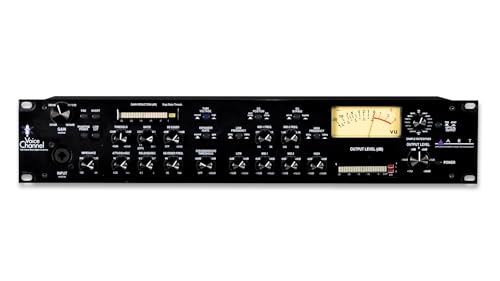
- Tube preamp with warmth and definition
- Dynamics tools include compressor, de-esser, and gate
- Digital outputs plus USB direct-connect
Best For: Recording setups needing analog front end and digital routing
Four-Band 500-Series Parametric EQ

- Four-band fully parametric 500-series module
- Heritage 3000-inspired warm response
- Dual concentric controls with variable bandwidth
Best For: 500-series racks needing fast, precise EQ control
Feedback-Focused Graphic EQ
Behringer ULTRAGRAPH PRO FBQ3102HD

- 31-band stereo graphic EQ
- FBQ feedback detection system
- Low/high-cut filters and sub output
Best For: Live sound tuning and feedback control
Desktop Parametric EQ Control

- 12-band fully parametric stereo EQ
- M/S and L/R modes for flexible mixing
- Analog-feel desktop controller
Best For: DAW users who want hands-on parametric EQ
Dual-Channel System EQ
Rockville REQ231 Dual 31 Band EQ
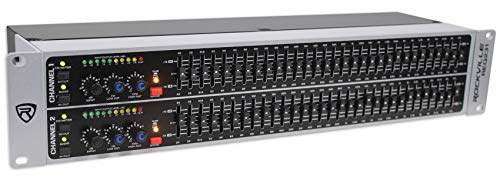
- Dual 31-band stereo graphic EQ
- Low/high cut filters and sub out
- Balanced XLR I/O with selectable boost range
Best For: Stereo PA tuning and installation work
Rack-Ready Graphic EQ
dbx 231s Dual Channel 31-Band Equalizer

- Dual 31-band, 1/3-octave constant Q control
- Switchable 6 dB or 12 dB boost/cut ranges
- Front-panel bypass with 4-segment LED ladders
Best For: Front-of-house and install users who want a dependable dual-channel graphic EQ
Dual-Channel Studio EQ
Graphic Equalizer 31-Band Stereo EQ (EQ-231)

- 31 bands per channel with up to +/-12 dB adjustment
- Low-cut switch helps remove rumble and hum
- Bypass switch plus 4-segment LED monitoring
Best For: DJs, home audio, and live users who want broad dual-channel EQ control
Budget Rack EQ
Pyle-Pro PPEQ86 Dual Channel 12 Band Graphic Equalizer

- Dual-channel 12-band graphic EQ with constant Q circuitry
- Variable input controls and dual blue LED level meters
- Post/pre switch and RCA I/O for simple integration
Best For: Budget-conscious users needing a rackmount EQ with basic controls
Tube Channel Strip With Parametric EQ – PreSonus STUDIOCHANNEL Vacuum-Tube Channel Strip
If you want a channel strip with parametric equalizer control in a single rack unit, the PreSonus STUDIOCHANNEL is built around a Class A 12AX7 tube preamp, a three-band EQ with a parametric mid band, and a VCA compressor. It also adds practical front-end tools like a high-pass filter, pad, phantom power, and polarity reverse, making it a flexible recording chain for mics, instruments, keyboards, and synths.
Best For: Project and professional studios that want an all-in-one tube channel strip with EQ and compression.
Pros:
- Class A 12AX7 vacuum-tube preamp for mic and instrument sources
- Three-band EQ with variable-Q parametric mid band and semi-parametric high/low bands
- Built-in VCA compressor with auto attack/release and soft/hard knee
- Includes HP filter, -20 dB pad, phantom power, and polarity reverse
Cons:
- Rack-mount format may be more than some small setups need
- Tube-driven design may be more feature-rich than a basic clean preamp
The STUDIOCHANNEL stands out if you want one unit to cover gain, EQ, and dynamics without piecing together separate processors. Its tube front end and flexible EQ make it a strong all-purpose tracking strip.
Classic 500-Series Parametric EQ – E-EQ 500 Series Parametric Equalizer
For a channel strip with parametric equalizer duties in a 500-series rack, the E-EQ module is designed to bring classic SSL sound into a compact format. This is a focused EQ choice rather than a full channel strip, so it suits engineers who already have a preamp and dynamics in place and want a dedicated parametric equalizer module.
Best For: 500-series racks that need a dedicated SSL-style parametric EQ module.
Pros:
- 500-series module format for compact rack integration
- Designed to bring classic SSL sound to the rack
- Dedicated parametric EQ function for targeted shaping
Cons:
- EQ-only module, so it does not provide preamp or compressor sections
- Requires a compatible 500-series rack
This module makes sense when you already have core gain staging covered and want the EQ section to do the heavy lifting. It is a straightforward choice for users prioritizing classic SSL character in a focused parametric design.
Digital-Output Voice Channel Strip – ART VoiceChannel Tube Channel Strip
The ART VoiceChannel is a practical channel strip with parametric equalizer workflow for recordists who want analog front-end control plus digital output options. Its tube preamp, compressor/expander, de-esser, and gate give you a complete vocal or input chain, while the digital connectivity options make it easy to route audio to a computer or other digital system.
Best For: Recording setups that want a tube channel strip with flexible digital output connectivity.
Pros:
- Tube preamp adds warmth and definition
- Includes compressor, expander, de-esser, and gate for dynamics control
- Flexible digital outputs including ADAT Lite-pipe, AES/EBU, S/PDIF, and TOSLink
- USB direct-connect support for computer or laptop use
Cons:
- Supplied notes do not specify a parametric EQ section
- Feature set may be more than needed if you only want a basic preamp
This is a strong fit if your priority is a complete vocal front end with straightforward digital integration. The channel strip focuses on signal shaping and routing flexibility rather than being a simple analog-only processor.
Four-Band 500-Series Parametric EQ – Midas 512 V2 Equaliser
If you need a channel strip with parametric equalizer control in the 500-series world, the Midas 512 V2 is a compact four-band fully parametric equaliser based on the Heritage 3000. It offers precision dual concentric controls for quick gain and frequency adjustment, plus bell or shelving options on the bass and treble bands and variable bandwidth on all four bands in bell mode.
Best For: 500-series users who want a fully parametric four-band EQ with fast hands-on control.
Pros:
- Four-band fully parametric equaliser in a compact 500-series module
- Based on the Midas Heritage 3000 with a warm, responsive character
- Dual concentric controls make gain and frequency settings easy to reach
- Bass and treble bands can switch between bell and shelving responses
Cons:
- EQ-only module, so it is not a full channel strip by itself
- Requires a compatible 500-series rack
The 512 V2 is a focused EQ tool for users who value fast setup and full control over frequency shaping. Its fully variable bandwidth and flexible band behavior make it a strong fit for detailed rack-based workflow.
Feedback-Focused Graphic EQ – Behringer ULTRAGRAPH PRO FBQ3102HD
If you need a channel strip with parametric equalizer-style control for live sound shaping, the Behringer ULTRAGRAPH PRO FBQ3102HD gives you a practical 31-band stereo graphic EQ with extra filtering tools. Its FBQ feedback detection system helps identify critical frequencies quickly, while the sweepable high- and low-cut filters make it easier to clean up rumble, hiss, and other unwanted noise.
Best For: Live sound users who want fast feedback detection and flexible stereo EQ control.
Pros:
- 31-band stereo graphic equalizer for detailed tone shaping
- FBQ feedback detection system instantly reveals critical frequencies
- Sweepable high- and low-cut filters help remove rumble and hiss
- Dedicated mono subwoofer output with adjustable crossover frequency
Cons:
- Graphic EQ design is less surgical than a true parametric equalizer
- Not a channel-strip processor with built-in dynamics or preamp features
Overall, this is a strong choice if your priority is practical system tuning and feedback management rather than studio channel-strip flexibility. The stereo layout, sub output, and analyzer-style feedback detection make it especially useful in PA and live playback setups.
Desktop Parametric EQ Control – TC Electronic PEQ 3000-DT
The TC Electronic PEQ 3000-DT is a channel strip with parametric equalizer functionality aimed at DAW-based workflows. It combines a 12-band fully parametric stereo EQ with M/S and L/R modes, and its desktop interface is designed to feel like analog hardware for quicker, more intuitive filter adjustments.
Best For: Producers and engineers who want hands-on parametric EQ control inside the DAW.
Pros:
- 12-band fully parametric stereo EQ
- Supports M/S and L/R equalizer modes
- Desktop interface uses true analog-feel potentiometers
- Based on the Midas HERITAGE 3000 EQ
Cons:
- Requires a DAW/plugin workflow rather than standalone rack use
- Focused on EQ, so it is not a full channel-strip processor
This is a smart pick if you want precise spectral shaping with a tactile workflow. The combination of fully parametric control and an optional desktop interface should appeal to users who like fast, repeatable adjustments while mixing.
Dual-Channel System EQ – Rockville REQ231 Dual 31 Band EQ
Rockville REQ231 Dual 31 Band 1/3 Octave Graphic Equalizer with Sub-Output, Grey
Check Price On AmazonIf you want a channel strip with parametric equalizer-like system shaping in a rack-friendly format, the Rockville REQ231 offers dual 31-band 1/3 octave graphic EQ control with useful filtering and output tools. Its balanced XLR connections, selectable cut or boost range, and sub output make it a practical option for stereo PA tuning and general sound reinforcement.
Best For: Stereo PA systems and installers who need detailed graphic EQ with subwoofer support.
Pros:
- Dual 31-band 1/3 octave graphic equalizer for stereo control
- Variable low and high cut filters plus constant Q filters
- Selectable +/-6 dB or +/-12 dB cut/boost range
- Balanced XLR inputs/outputs with subwoofer out
Cons:
- Graphic EQ layout is not a true parametric equalizer
- Rack-style system tool, so it is not a studio channel strip
For users focused on live system correction, this model provides a lot of control without getting overly complicated. The output LEDs, bypass switch, and wide frequency coverage round out a solid feature set for practical room and system tuning.
Rack-Ready Graphic EQ – dbx 231s Dual Channel 31-Band Equalizer
If you need a channel strip with parametric equalizer-style control for live rigs or installs, the dbx 231s gives you dual-channel, 31-band 1/3-octave constant Q adjustment with straightforward front-panel operation. It is built for practical system tuning, with switchable boost/cut ranges, bypass, and level monitoring.
Best For: Front-of-house, monitor, and install users who want a dependable dual-channel graphic EQ with clear level feedback.
Pros:
- Dual 31-band, 1/3-octave constant Q design for detailed shaping
- Switchable 6 dB or 12 dB boost/cut ranges
- Front panel bypass switch for quick comparison
- 4-segment LED ladders help monitor output levels
Cons:
- Uses graphic EQ bands rather than a true parametric section
- Focused on system tuning rather than creative tonal shaping
Overall, the dbx 231s is a solid choice when you want predictable dual-channel EQ control, visible metering, and standard balanced connectivity in a rack-friendly format.
Dual-Channel Studio EQ – Graphic Equalizer 31-Band Stereo EQ (EQ-231)
For buyers comparing a channel strip with parametric equalizer features, this EQ-231 is a dual-channel stereo graphic equalizer built around 31 bands per channel and a selectable adjustment range of up to +/-12 dB. It also adds a low-cut switch, bypass, and level monitoring, making it a practical fit for tuning systems and cleaning up problem frequencies.
Best For: DJs, home audio setups, live use, and studio users who want flexible dual-channel EQ with easy control.
Pros:
- Dual-channel 31-band design with +/-12 dB per band
- Low-cut switch helps reduce wind noise, rumble, and hum
- Bypass switch for simple A/B checking
- 4-segment LED ladders for gain reduction and output monitoring
Cons:
- Graphic EQ format, not a true parametric equalizer
- Best suited to system correction rather than surgical frequency edits
In practice, this model is aimed at users who want broad, hands-on EQ control and straightforward connectivity rather than a more advanced parametric channel strip layout.
Budget Rack EQ – Pyle-Pro PPEQ86 Dual Channel 12 Band Graphic Equalizer
If you’re shopping for a channel strip with parametric equalizer-style flexibility on a budget, the Pyle-Pro PPEQ86 is a dual-channel 12-band graphic EQ with constant Q circuitry and basic routing controls. It focuses on simple rackmount operation, metering, and source switching for everyday audio setups.
Best For: Budget-conscious users who need a rackmount dual-channel EQ with straightforward controls and RCA connectivity.
Pros:
- Dual-channel 12-band graphic EQ with constant Q circuitry
- Variable input level controls and dual blue LED level meters
- Post/pre switch and source selector add routing flexibility
- RCA inputs and outputs make it easy to integrate with basic systems
Cons:
- 12 bands per channel offers less control than 31-band models
- Uses RCA connections rather than balanced XLR or TRS
This is a practical pick if you want a rack-mountable EQ with essential controls, but it is better viewed as a simple graphic equalizer than a full parametric channel strip.
How We Picked the Best Channel Strip with Parametric Equalizer
We prioritized units that make real-world tone shaping easier, whether you need a hardware channel strip for vocals and instruments or an outboard EQ for system control. The best picks balance adjustability, usable features, build quality, and value for the intended application.
For a Channel Strip with Parametric Equalizer, we also looked at how intuitive the controls are, how cleanly the EQ responds, and whether the unit fits studio recording, live reinforcement, or post-processing workflows.
Quick Comparison
Channel strips are best when you want preamp, dynamics, and EQ in one path. Parametric EQ options are better when you need precision at specific frequencies. Graphic EQ models, by contrast, are easier for broad room correction and live system shaping but offer less surgical control.
If you are comparing models, focus first on the role you need the device to play: vocal tracking, stereo program EQ, feedback control, or detailed corrective shaping.
Key Buying Factors for a Channel Strip with Parametric Equalizer
EQ Type and Control
Parametric EQ gives you control over frequency, gain, and often Q/bandwidth, which is ideal for removing muddiness, nasal tone, harshness, or resonances. If precision matters more than speed, this is the most important feature set to prioritize.
Preamp and Dynamics Quality
If the unit includes a preamp or compressor, check whether those sections are quiet, musical, and suitable for your source. A great EQ is less useful if the front end adds noise or color you do not want.
Connectivity and Form Factor
Make sure the model matches your rig: rackmount for studios and live racks, 500-series for modular setups, desktop for hybrid workflows, and plugin-plus-controller solutions for DAW-based users.
Channel Count and Stereo Needs
Single-channel units suit vocals and instruments, while dual-channel or stereo models are better for buses, playback systems, and installed sound. Don’t overbuy channels you won’t use.
Who Should Buy Which Channel Strip with Parametric Equalizer?
Choose a studio-focused channel strip if you want an all-in-one front end for recording vocals, guitar, bass, or voiceover. Choose a parametric or graphic EQ if your main job is system tuning, feedback control, or room correction.
Live engineers often benefit from rack EQs with fast, familiar controls, while producers and hybrid creators may prefer software-based or desktop-controlled options for recall and workflow speed. If you need both flexibility and precision, a Channel Strip with Parametric Equalizer is the most versatile place to start.