
Choosing the right channel strip for voiceover can make a basic mic setup sound more controlled, more polished, and easier to mix. The best models combine clean gain, useful dynamics, and simple workflow.
Below, we focus on options that help voice talent, podcasters, and streamers capture consistent, broadcast-ready audio without adding unnecessary complexity.
Best 10 Channel Strip for Voiceover Picks for 2026
Classic Rack Channel Strip

- Compression, de-essing, enhancer, and gate in one unit
- XLR mic input plus 1/4" line input
- Rackmount 1U with status LEDs
Best For: Voiceover users who want a rackmount analog strip with built-in vocal processing
Tube Studio Strip
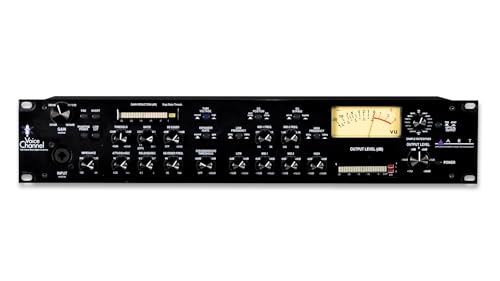
- Tube preamp with warmth and definition
- Compressor, expander, de-esser, and gate
- Digital outs plus USB direct-connect
Best For: Voiceover recordists who want a tube channel strip with digital output options
Compact USB Recording Mixer

- XLR mic input with 48V phantom power
- Direct monitoring and gain control
- USB plug-and-play for Mac or PC
Best For: Voiceover beginners or creators who want a compact USB mixer with monitoring
Tube Rack Channel Strip
PreSonus StudioChannel Rack Strip

- Tube preamp with gain and tube drive
- 3-band EQ plus VCA compressor
- Mic, line, and instrument inputs
Best For: Voiceover users who want a tube channel strip with EQ and compressor control
Premium 500-Series Channel Strip
SSL SiX Channel Strip 500 Series
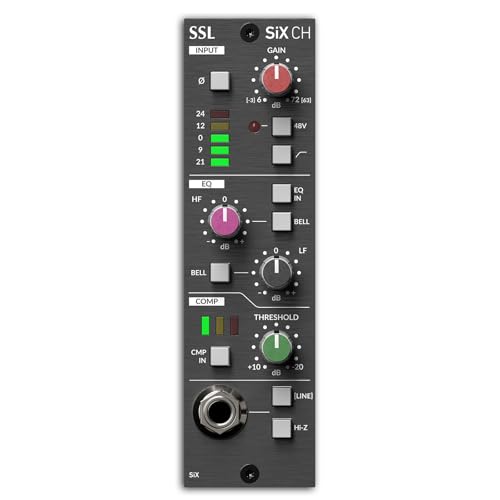
- Mic pre, EQ, and single-knob compressor
- +48V phantom power with 75 Hz HPF
- Front-panel TRS line input with 1MΩ Hi-Z
Best For: Voiceover users who want a compact 500 Series strip with simple hands-on control
Tube Voice Chain Strip
ART Pro Channel III Channel Strip

- Mono tube channel strip
- Switchable mic impedance and opto/FET compression
- 4-band semi-parametric EQ
Best For: Voiceover recording setups that want tube tone and flexible dynamics control
All-in-One Tracking Strip
SPL Track One MK3 Mono Channel Strip

- Mic/instrument preamp with compressor/limiter
- Built-in de-esser and output metering
- 3-band EQ for basic shaping
Best For: Voiceover chains that need de-essing and level control in one unit
Premium USB Channel Strip

- Class A preamp/EQ channel strip with USB audio interface
- 24-bit/192kHz AD/DA, insert send/return, and headphone amp
- ADAT I/O for expanded studio routing
Best For: Voiceover creators who want a premium analog-style front end with USB and digital expansion
Classic Analogue Strip

- All-analogue mic channel strip
- Signature SSL 4000 Series-inspired sound
- Compact 1U rack format
Best For: Voiceover users who want a compact all-analogue channel strip with classic SSL character
Transformer Channel Strip

- Mono channel strip with Class A mic/line preamp
- Custom transformer outputs and Silk harmonic enhancement
- Built-in compressor with 8-segment LED meters
Best For: Voiceover recording setups that want a mono channel strip with preamp, transformer output, and compressor control
Classic Rack Channel Strip – dbx 286s Voice Chain
If you want a straightforward channel strip for voiceover, the dbx 286s gives you the core tools most spoken-word setups need in one rack unit. It combines mic preamp duties with compression, de-essing, enhancement, and expander/gate processing, so you can shape narration, reduce sibilance, and keep the signal controlled before it reaches your recorder.
Best For: Voiceover users who want a rackmount analog strip with built-in compression, de-essing, and noise control.
Pros:
- Includes compression, de-esser, enhancer, and expander/gate in one unit.
- Supports XLR mic input plus 1/4" line input for additional sources.
- Classic dbx compression is designed to keep vocals clear and present.
- Status LEDs make level and processor monitoring easy at a glance.
Cons:
- Single-channel design only handles one source at a time.
- Rackmount format is less convenient than desktop gear for portable use.
The dbx 286s is a practical choice if you want familiar analog control and a feature set centered on vocal cleanup and presence. It is especially appealing when you need a simple, dedicated front end for spoken word rather than a broader studio interface.
Tube Studio Strip – ART VoiceChannel Tube Strip
The ART VoiceChannel is a strong channel strip for voiceover if you want tube warmth plus onboard dynamics control in a single hardware path. Its tube preamp design is paired with compressor, expander, de-esser, and gate functions, and it also adds flexible digital outputs for integrating with a modern recording setup.
Best For: Voiceover recordists who want a tube channel strip with flexible digital connectivity.
Pros:
- Tube preamp design adds warmth and definition.
- Built-in compressor, expander, de-esser, and gate support vocal shaping.
- Digital outputs include ADAT Lite-pipe, AES/EBU, S/PDIF, and TOSLink.
- USB direct-connect makes computer hookup straightforward.
Cons:
- Heavier rack unit than compact desktop interfaces.
- Feature set is broad, so setup may take more time than a basic preamp.
For voiceover work, the VoiceChannel stands out when you want more than a plain preamp and need digital routing options built in. It is a good fit for users who value tube character and want a single strip to handle both tone and control.
Compact USB Recording Mixer – FIFINE SC1 Vocal Interface
If you’re shopping for a channel strip for voiceover in a simpler USB-friendly form, the FIFINE SC1 focuses on getting a mic and instrument signal into your computer with minimal fuss. It offers an XLR microphone input with 48V phantom power, a dedicated instrument input, direct monitoring, and a gain knob for quick level adjustment.
Best For: Voiceover beginners or creators who want a compact USB mixer with mic gain, phantom power, and monitoring.
Pros:
- XLR mic input with 48V phantom power supports condenser microphones.
- Dedicated gain knob and direct monitor control help with live level management.
- Separate instrument input adds flexibility for mixed recording needs.
- USB connectivity keeps setup simple on Mac or PC.
Cons:
- Does not include the dedicated compression or de-essing found on full channel strips.
- More of a basic audio interface/mixer than a traditional rack channel strip.
The SC1 is best viewed as an easy entry point for voice recording rather than a full dynamics processor. It suits users who need clean mic connectivity, monitoring, and plug-and-play operation more than deep vocal shaping tools.
Tube Rack Channel Strip – PreSonus StudioChannel Rack Strip
The PreSonus STUDIOCHANNEL is a full-featured channel strip for voiceover that combines a high-voltage tube preamp, EQ, and compression in one rackmount unit. It includes mic, line, and instrument inputs, plus practical tools like phantom power, polarity reverse, pad, and a high-pass filter for managing spoken-word recordings.
Best For: Voiceover users who want a tube channel strip with EQ and compressor control in a rugged rack format.
Pros:
- High-voltage Class A 12AX7 tube preamp provides gain and tube drive.
- Built-in 3-band EQ and VCA compressor offer detailed vocal shaping.
- High-pass filter, pad, phantom power, and polarity reverse add useful control.
- Mic, line, and instrument inputs make it versatile in the studio.
Cons:
- Rackmount design is less portable than compact desktop gear.
- As a full strip, it may be more than a basic voiceover-only setup needs.
For a voiceover chain that needs more shaping than a simple preamp, the StudioChannel delivers a classic all-in-one layout. Its tube front end, EQ section, and compressor make it a solid fit when you want to polish narration before it hits the DAW.
Premium 500-Series Channel Strip – SSL SiX Channel Strip 500 Series
Solid State Logic SiX Channel Strip 500 Series | Mic-Pre, EQ, and Single Knob Compressor
Check Price On AmazonIf you want a channel strip for voiceover that keeps the signal path compact while still giving you key front-end tools, the SSL SiX Channel Strip 500 Series is built around a mic pre, EQ, and single-knob compressor in a 500 Series format. It also adds +48V phantom power, a switched 12 dB/oct 75 Hz high-pass filter, and a front-panel TRS line input with a 1MΩ Hi-Z switch, which makes it flexible for recording and playback chain setups.
Best For: Voiceover users who want a compact 500 Series strip with preamp, EQ, and simple compression control.
Pros:
- Combines mic pre, EQ, and a single-knob compressor in one unit
- Includes +48V phantom power and a 75 Hz high-pass filter
- Front-panel TRS line input with 1MΩ Hi-Z switch adds flexibility
- Switchable shelf-to-bell EQ curve expands shaping options
Cons:
- Single-channel design means it only handles one source at a time
- 500 Series format requires compatible rack/power setup
This is a straightforward choice if you want essential voiceover control without a lot of menu diving. Its strengths are the integrated processing tools and practical input options, rather than a long feature list.
Tube Voice Chain Strip – ART Pro Channel III Channel Strip
The ART Pro Channel III is a mono tube channel strip for voiceover users who want more shaping and compression options in one box. According to the supplied details, it includes switchable microphone impedance, selectable opto/FET compression voicings, and a 4-band semi-parametric EQ, giving you a flexible front end for tracking spoken-word sources.
Best For: Voiceover recording setups that need tube-based processing with flexible compression and EQ.
Pros:
- Mono tube channel strip with switchable microphone impedance
- Selects between opto and FET compression voicings
- 4-band semi-parametric EQ offers detailed tone control
Cons:
- Larger hardware footprint than a compact rack-style strip
- Single-channel design limits it to one source
This model stands out if you want multiple processing flavors available at the source. For voiceover, its main appeal is the combination of tube character, compression choice, and a fuller EQ section.
All-in-One Tracking Strip – SPL Track One MK3 Mono Channel Strip
The SPL Track One MK3 is a mono channel strip for voiceover users who want a built-in preamp, dynamics, EQ, and de-essing in a single unit. Based on the supplied features, it includes a mic/instrument preamp, compressor/limiter, output metering, a 3-band EQ, and a de-esser, which makes it a practical tracking tool for spoken word.
Best For: Voiceover recording chains that benefit from integrated de-essing and level control.
Pros:
- Includes mic/instrument preamp and compressor/limiter
- Built-in de-esser is useful for spoken-word cleanup
- 3-band EQ and output metering add practical control
Cons:
- Mono design only supports one channel
- Large rack unit may be more than a simple home setup needs
If your priority is a voiceover channel strip that covers the usual problem areas in one place, this is a strong all-in-one option. The de-esser and metering make it especially practical for keeping vocal takes controlled and consistent.
Premium USB Channel Strip – Neve 1073SPX-D
If you want a channel strip for voiceover that also doubles as a high-end recording front end, the Neve 1073SPX-D brings classic preamp and EQ character with modern USB convenience. Its 24-bit/192kHz AD/DA, insert send/return, headphone amp, and ADAT I/O make it a flexible choice for a PC- or Mac-based studio.
Best For: Voiceover creators who want a premium analog-style front end with USB interface features and digital expansion.
Pros:
- Class A preamp/EQ channel strip with a 2-channel USB interface
- 24-bit/192kHz conversion for detailed recording and playback
- Insert send/return plus headphone amp for practical studio routing
- ADAT I/O adds room for expansion in a larger setup
Cons:
- More elaborate than a simple voiceover-only preamp
- At 16.3 pounds, it is a heavy desktop unit
Overall, this is a strong pick if you want a voiceover channel strip with serious studio credentials and flexible connectivity. It suits users who plan to integrate the unit into a more complete production chain.
Classic Analogue Strip – SSL Revival 4000
For a channel strip for voiceover that focuses on straightforward analog tone, the Solid State Logic Revival 4000 delivers a signature SSL-inspired 4000 Series sound in a compact 1U format. It is built as an all-analogue mic channel strip, which makes it appealing if you want a simple, dedicated front end without USB or extra digital features.
Best For: Voiceover users who want a compact all-analogue channel strip with classic SSL character.
Pros:
- All-analogue mic channel strip design
- Legendary SSL sound inspired by the 4000 Series
- Compact 1U format saves rack space
Cons:
- No USB interface or digital I/O listed
- Limited supplied details on extra controls and routing
This is a good fit if your priority is the SSL sound and a rack-friendly footprint. It is best suited to users who already have an audio interface and simply want an analogue voiceover front end.
Transformer Channel Strip – Rupert Neve Newton
If you need a channel strip for voiceover with a flexible analog signal path, the Rupert Neve Designs Newton Channel Strip combines a Class A mic/line preamp, custom transformer outputs, Silk harmonic enhancement, 8-segment LED meters, and a compressor. That mix makes it a practical option for users who want both tonal shaping and built-in dynamics in one mono strip.
Best For: Voiceover recording setups that want a mono channel strip with preamp, transformer output, and compressor control.
Pros:
- Mono channel strip with Class A mic/line preamp
- Custom transformer outputs and Silk harmonic enhancement
- Built-in compressor for added control
- 8-segment LED meters help with level monitoring
Cons:
- Mono design only, so it is not built for stereo use
- Heavier than a small desktop processor at 9.2 pounds
As a voiceover-focused analog front end, this model stands out for its combination of preamp character and processing tools. It is a solid choice when you want a single-channel strip that can shape tone and dynamics before conversion.
How We Picked the Best Channel Strip for Voiceover
We prioritized tools that suit a Channel Strip for Voiceover workflow: transparent or musical preamps, dependable compression, effective de-essing, noise management, and controls that are practical for spoken-word recording. We also considered connectivity, build quality, and whether each unit fits home studios, project studios, or pro voice booths.
Quick Comparison: What Matters Most
For voice work, the most important differences are usually not headline specs but the way the unit handles gain staging, sibilance, plosives, and room noise. Some channel strips are best for a clean, neutral sound, while others intentionally add warmth, thickness, or analog character. If you need fast results, simpler units with straightforward controls can be easier to live with than feature-heavy designs.
Key Buying Factors for a Channel Strip for Voiceover
Preamp Character
Choose a cleaner preamp if you want natural speech and easier post-production. Pick a colored design if your voice sounds thin or you want a more finished sound at the source.
Compression and De-Essing
Voiceover benefits from gentle compression that smooths level spikes without sounding squashed. A good de-esser helps tame sharp “s” sounds before they hit your interface or DAW.
Noise Control and Expander/Gate
If your room is not fully treated, an expander or gate can reduce fan noise, hum, and room tone between phrases. Use it carefully so words do not sound cut off.
Connectivity and Workflow
Check whether you need USB, digital outs, analog line outputs, or insert options. A feature-rich unit can replace several pieces of gear, but a simpler strip may be better if you only need clean recording and basic control.
Channel Strip for Voiceover Use Case
The best Channel Strip for Voiceover depends on where and how you record. Streaming and podcasting setups often benefit from convenience and fast setup, while dedicated studio narrators may prefer more refined analog tone shaping and higher-end dynamics.
Who Should Buy Which Channel Strip for Voiceover?
Beginners and creators who want an all-in-one solution should look for straightforward controls and easy integration with a USB interface or mixer-style workflow. Voice actors who want maximum control and a more professional front end should favor premium analog or hybrid channel strips with stronger sonic character and more precise dynamics. If your priority is speed and consistency, choose the simplest unit that gives you clean gain, light compression, and reliable de-essing.
Ultimately, the right choice is the one that matches your voice, room, and recording process. A well-matched strip can save time in editing and help your recordings sound more confident from the start.