
Choosing the right storage can make or break a video editing workflow. The best options balance speed, capacity, redundancy, and easy expansion so your footage stays accessible when deadlines get tight.
Below, we focus on practical picks for editors who need smooth scrubbing, fast transfers, and dependable project storage across solo and team setups.
Best 10 Nas Enclosure for Video Editing Picks for 2026
Creator NAS

- Dual 10GbE with SMB Multichannel
- TB4 Bridge for direct editing transfers
- Three M.2 NVMe slots with Hyper Cache
Best For: Content creators and editors who want high-speed shared storage
USB-C Editing Dock
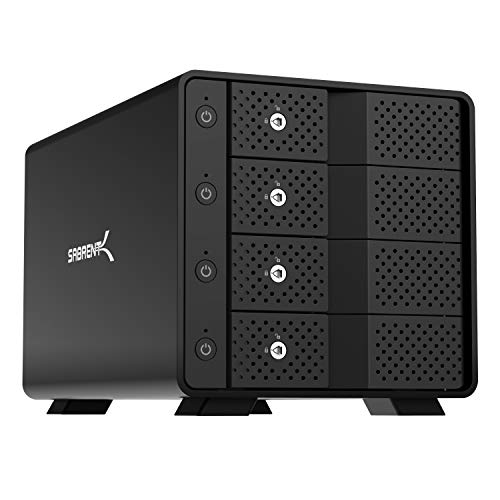
- 4-bay direct-attached storage
- Independent controller per drive
- 10Gbps USB-C with hot-swap bays
Best For: Solo editors wanting local multi-drive storage
Pro-Scale NAS

- Core i7 with 16GB DDR5
- Dual 10GbE and up to 2090MB/s
- 12 bays with TRAID/TRAID+ expansion
Best For: Studios needing high-capacity shared editing storage
RAID DAS

- 8 RAID and storage modes
- Up to 160TB over USB-C
- Smart cooling with drive sleep
Best For: Local editors who want flexible RAID-capable storage
Enterprise-Grade NAS
TERRAMASTER U8-500 Plus for High-Speed Editing Workflows

- Dual 10GbE with SMB multichannel
- Up to 2090MB/s sequential write speeds
- Two NVMe slots plus flexible RAID support
Best For: Small teams needing fast shared storage for video editing and backups
All-in-One DAS Dock
WAVLINK 4-Bay USB-C Enclosure with HDMI

- Up to 10Gbps USB-C 3.2 transfers
- Four bays with up to 128TB capacity
- Built-in cooling plus 4K HDMI output
Best For: Editors needing fast local storage with extra display and peripheral connectivity
Compact RAID DAS
QNAP TR-004 for Expandable Editing Storage
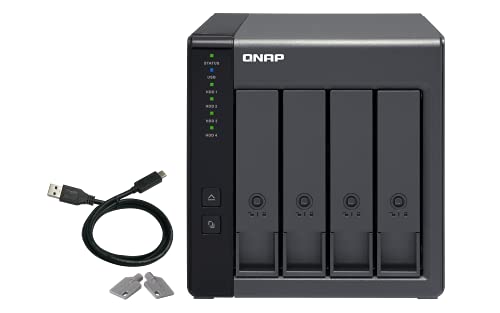
- USB-C direct-attached storage for Windows, macOS, and Linux
- Hardware RAID with RAID 0, 1, 5, JBOD, and individual disks
- Lockable bays and support for NAS backup/expansion
Best For: Editors who want compact RAID storage for backups and local project files
Ultra-Fast 4-Bay NVMe Pick
TERRAMASTER D4 SSD NVMe Enclosure

- 40Gbps USB-C connection
- Up to 32TB with 4 NVMe SSDs
- Quiet active cooling and tool-free setup
Best For: Editors who want very fast compact local storage
High-Capacity 4-Bay DAS
TERRAMASTER D4-320 External Enclosure

- USB 3.2 Gen2 up to 10Gbps
- Up to 120TB across four drives
- Hot-swap trays with quieter cooling
Best For: Editors who need big, simple local storage
Compact RAID Storage Choice
TERRAMASTER D2-320 USB RAID Enclosure

- Hardware RAID 0/1, JBOD, and SINGLE
- Up to 10Gbps USB 3.2 Gen2 speed
- RAID 1 mirror backup support
Best For: Editors who want compact mirrored or fast RAID storage
Creator NAS – TERRAMASTER F6-425 Pro
If you want a NAS enclosure for video editing that can keep up with large 4K or 8K projects, the TERRAMASTER F6-425 Pro is built for creator workflows. Its Intel Core i3-1315U CPU, 8GB DDR5 memory, dual 10GbE ports, three M.2 NVMe slots, and TB4 Bridge support are aimed at fast file access and smooth direct-to-NAS editing.
Best For: Editors, content creators, and small media teams that need fast shared storage and direct PC/Mac-to-NAS transfers.
Pros:
- Dual 10GbE ports with SMB Multichannel for up to 2090 MB/s performance.
- TB4 Bridge support enables roughly 10-20Gbps point-to-point transfers.
- Three M.2 NVMe slots with Hyper Cache help keep the array responsive.
- TOS 7 adds global search, online office editing, and AI-native workflow tools.
Cons:
- Diskless model, so storage drives must be purchased separately.
- Best speed benefits depend on compatible networking or TB4-connected systems.
- Advanced features may be more than casual home users need.
For editing-heavy setups, this model stands out because it combines creator-focused connectivity with caching and modern OS tools. It is a strong fit when your priority is moving large media files quickly and keeping collaborative projects accessible.
USB-C Editing Dock – SABRENT 4-Bay USB-C Enclosure
For a straightforward NAS enclosure for video editing alternative, this SABRENT 4-bay dock works as direct-attached storage over USB-C instead of networked NAS sharing. Each bay has its own ASM1351 controller, which is useful when you want stable, independent access to multiple drives for active project or scratch storage.
Best For: Editors who want a simple multi-drive USB-C enclosure for local workstations rather than a shared NAS.
Pros:
- Independent controller per bay for more stable drive connections.
- 10Gbps USB-C connection supports direct-attached workflow.
- Tool-free hot-swap bays with per-drive power switches and activity LEDs.
- Metal build and 92mm fan support 24/7 operation.
Cons:
- It is not RAID; drives mount individually in JBOD-style access.
- Drives are not included.
- Best suited to one computer at a time, not shared network editing.
This is a practical choice if your editing setup needs fast local access to multiple SATA drives without the complexity of a full NAS. The dock design keeps setup simple, but it is not intended to replace network storage for teams.
Pro-Scale NAS – TERRAMASTER U12-500 Plus
The TERRAMASTER U12-500 Plus is a larger NAS enclosure for video editing when you need serious throughput and room to grow. With a Core i7-1255U, 16GB DDR5, dual 10GbE, two M.2 NVMe slots, and support for up to 12 drives, it is aimed at demanding post-production and backup workflows.
Best For: Small studios and post-production teams that need high-capacity shared storage with strong transfer performance.
Pros:
- Core i7-1255U processor and 16GB DDR5 memory for heavier workloads.
- Dual 10GbE ports with up to 2090MB/s sequential write speeds.
- Up to 12-bay capacity and support for 288TB maximum storage.
- TRAID/TRAID+ and backup tools help with expansion and data protection.
Cons:
- Diskless unit, so drives are required before use.
- 2U rack-mount design may not suit every desk setup.
- Performance gains depend on network and drive configuration.
If your editing team is handling large media libraries, this model is built to scale without giving up speed. It is especially compelling when you want both high capacity and enterprise-style backup features in one system.
RAID DAS – UGREEN 5-Bay USB-C Enclosure
This UGREEN 5-bay enclosure is a strong storage companion if you need a NAS enclosure for video editing-style media handling but prefer direct USB-C DAS over network sharing. It supports multiple RAID and storage modes, up to 160TB, and is designed for users who want to reuse SATA HDDs or SSDs in a local workstation setup.
Best For: Editors and creators who want configurable local storage with RAID options and simple USB-C connectivity.
Pros:
- 8 RAID and storage modes, including RAID 0, 1, 3, 5, 10, Large, Clone, and PM.
- 5Gbps USB-C interface works with Windows, macOS, and Linux.
- Up to 5 drives and 160TB total capacity.
- Smart cooling and drive sleep help manage heat and idle noise.
Cons:
- 5Gbps is slower than 10Gbps options for heavy media transfers.
- Drives are not managed as part of a NAS storage pool.
- Changing RAID modes requires reformatting, so backups are essential.
For editing setups that value flexibility over shared network access, this enclosure gives you a lot of configuration choices. It is best when you want a compact local storage box that can adapt to different project and backup tasks.
Enterprise-Grade NAS – TERRAMASTER U8-500 Plus for High-Speed Editing Workflows
If you need a NAS enclosure for video editing that can keep up with large project files, the TerraMaster U8-500 Plus is built around speed and expansion. Its Core i7-1255U processor, 16GB DDR5 memory, dual 10GbE ports, and NVMe cache support make it a strong fit for teams moving image and video assets across a fast network.
Best For: Small to medium teams that want high-throughput shared storage for post-production, backups, and virtualized workloads.
Pros:
- Dual 10GbE networking with SMB multichannel for up to 20Gbps bandwidth
- Up to 2090MB/s sequential write speeds for handling large media files
- Two M.2 NVMe slots with Hyper Cache for faster access efficiency
- Supports multiple RAID levels plus TRAID/TRAID+ for flexible growth
Cons:
- Diskless system, so storage drives must be purchased separately
- 2U rackmount design may not suit desktop-first editing setups
- More capability than needed for simple single-user storage tasks
The U8-500 Plus stands out when shared editing performance matters more than basic file storage. If your workflow depends on fast transfers, redundancy options, and centralized collaboration, this is the most capable option in the group.
All-in-One DAS Dock – WAVLINK 4-Bay USB-C Enclosure with HDMI
For a practical NAS enclosure for video editing setup, the WAVLINK 4-bay unit is more of a fast direct storage hub than a full network NAS. It offers USB-C 3.2 speeds up to 10Gbps, support for both 3.5-inch and 2.5-inch SATA drives, and built-in cooling, which makes it useful when you need quick local access to large media libraries.
Best For: Editors who want a high-capacity local storage enclosure with USB-C connectivity and display output.
Pros:
- Four bays support up to 128TB total capacity
- USB-C 3.2 connection rated up to 10Gbps
- Built-in temperature-controlled fans for drive cooling
- HDMI output supports up to 4K@60Hz under the stated conditions
Cons:
- Requires host USB-C video support for HDMI to work
- 2.5-inch drives need separate mounting brackets
- Not a network NAS; it is a direct-attached enclosure
This is a solid pick if you want large local storage and fast file access without building out a networked NAS. The HDMI and extra USB-C port add flexibility, but the real strength here is straightforward, high-capacity DAS performance for editing desks.
Compact RAID DAS – QNAP TR-004 for Expandable Editing Storage
QNAP TR-004 4 Bay USB Type-C Direct Attached Storage (DAS) with hardware RAID (Diskless)
Check Price On AmazonIf you want a NAS enclosure for video editing that can also serve as straightforward external RAID storage, the QNAP TR-004 is designed for direct attachment over USB-C. It works with Windows, macOS, and Linux, supports hardware RAID, and can be used to expand the capacity of a compatible QNAP NAS or as external storage for backups.
Best For: Users who need a compact, hardware-RAID DAS for backup, expansion, and local media storage.
Pros:
- USB Type-C direct-attached storage for broad OS compatibility
- Hardware RAID modes include RAID 0, 1, 5, JBOD, and individual disks
- Can expand supported QNAP NAS storage or act as external backup storage
- Lockable bays add a practical security benefit
Cons:
- Does not support several older QNAP NAS models
- NAS applications cannot be installed on the TR-004
- Drive migration is limited to another TR-004 unit
The TR-004 is a sensible choice when you need dependable RAID storage without the complexity of a full NAS. For editors, its strength is simple, lockable, expandable storage that fits neatly into a desktop or backup workflow.
Ultra-Fast 4-Bay NVMe Pick – TERRAMASTER D4 SSD NVMe Enclosure
If you want a NAS enclosure for video editing-style workflows without the overhead of a full network system, the TERRAMASTER D4 SSD focuses on raw speed and compact local storage. Its 40Gbps connection and support for four NVMe SSDs make it a strong fit for moving large media files, working with 4K footage, and keeping a fast project library close at hand.
Best For: Editors who need compact, high-speed local storage for 4K projects and large transfers.
Pros:
- 40Gbps USB-C connectivity with up to 3,224MB/s using four SSDs
- Supports up to four M.2 NVMe 2280 drives for as much as 32TB total capacity
- Quiet active cooling with temperature sensors for steadier performance under load
- Tool-free, hot-swappable design makes drive changes quick and easy
Cons:
- No built-in RAID; any soft RAID setup requires third-party tools
- Diskless design means you must supply your own NVMe SSDs
For creators who care more about speed than network sharing, this enclosure is positioned like a fast direct-attached scratch or project drive. The lack of built-in RAID is the main tradeoff, but the performance and compact design are well matched to editing workloads.
High-Capacity 4-Bay DAS – TERRAMASTER D4-320 External Enclosure
The TERRAMASTER D4-320 is a practical NAS enclosure for video editing if what you really need is a fast local DAS rather than a true NAS. With USB 3.2 Gen2 speeds, support for four drives, and room for large-capacity SATA HDDs or SSDs, it works well as a media archive, backup target, or project storage box for a desktop editing setup.
Best For: Editors needing large, quiet, plug-and-play storage for media libraries and backups.
Pros:
- 10Gbps USB 3.2 Gen2 connection for up to 1,016MB/s with four HDDs
- Supports four individual drives with up to 120TB total capacity
- Tool-free trays and hot-swap support simplify drive handling
- Temperature-controlled fan and damping measures help keep noise down
Cons:
- No RAID function, so it is not a redundancy-focused storage solution
- It is a DAS, not a NAS, so it does not provide network storage features
If you want straightforward external storage with lots of room for footage, this enclosure is easy to work with and easy to expand. Its biggest strength is capacity, while its biggest limitation is that it stays in direct-attached territory rather than becoming a networked shared system.
Compact RAID Storage Choice – TERRAMASTER D2-320 USB RAID Enclosure
For a NAS enclosure for video editing workflow where redundancy matters, the TERRAMASTER D2-320 is a compact two-bay option with hardware RAID support. It uses USB 3.2 Gen2 for up to 10Gbps throughput and gives you flexible RAID modes, making it a sensible pick for editors who want a mirrored backup or a simple high-speed array beside their workstation.
Best For: Editors who want a small RAID-capable enclosure for mirrored storage or fast two-drive arrays.
Pros:
- Hardware RAID support with RAID 0, RAID 1, JBOD, and SINGLE modes
- Up to 10Gbps transfer speed over USB 3.2 Gen2
- RAID 1 mirror backup can automatically recover data after a drive replacement
- Supports up to 44TB total with two large SATA drives
Cons:
- Only two bays, so expansion is more limited than larger enclosures
- Diskless unit requires you to add your own drives
This enclosure is best when you want a balance of speed, protection, and a smaller footprint. It does not offer the capacity of four-bay models, but the RAID options make it the most storage-resilient pick in this group.
How We Picked the Best Nas Enclosure for Video Editing
For this roundup, we prioritized enclosure and NAS options that make sense for a Nas Enclosure for Video Editing setup: strong connectivity, RAID or redundancy support, enough bays for growing media libraries, and hardware that won’t bottleneck large file transfers. We also considered whether each unit is better suited to local direct-attached workflows or shared network editing.
Quick Comparison
In simple terms, 2-bay and 4-bay units are best for smaller teams, proxy workflows, or editors who want a compact backup-and-edit station. 5-bay and 8-bay systems offer a better balance of capacity and protection for serious content libraries. 12-bay units are the best fit when you need scalable storage for multi-user production or long-term archive growth.
Key Buying Factors for Nas Enclosure for Video Editing
Speed and Connection Type
USB-C DAS models are ideal when you want low-latency local access and simple setup. For shared editing over a network, a true NAS with faster networking and a capable CPU is the better choice. Look for 10Gbps USB, 40Gbps USB4/Thunderbolt-class connectivity, or strong Ethernet support depending on your editing software and file sizes.
Bay Count and RAID Options
More bays usually mean more usable capacity and better flexibility. RAID 0 can improve speed but offers no protection, while RAID 5, RAID 6, or mirrored setups help protect project media from drive failure. For video work, choose a layout that matches your tolerance for risk and your storage growth over the next few years.
Drive Type and Project Size
HDDs offer the best cost per terabyte for raw footage, archives, and backups. SSDs are better for active projects, cache-heavy workflows, and situations where silence and low latency matter more than maximum capacity.
Cooling, Noise, and Reliability
Video editing can keep storage busy for hours at a time, so good thermals matter. A well-cooled enclosure with quiet fans and sensible drive management is especially important in a studio or desktop environment.
Who Should Buy Which Nas Enclosure for Video Editing?
If you edit solo or work on smaller projects, a 2-bay or 4-bay enclosure is usually enough. If you manage multiple active projects, a 5-bay or 8-bay model gives you more room to balance performance and redundancy. Studios, agencies, and creators building a shared media hub should look at higher-bay NAS systems for better long-term scalability.
For many buyers, the best Nas Enclosure for Video Editing is the one that matches both current footage volume and future growth. Start with the workflow you have today, then choose the enclosure that leaves room for tomorrow’s projects.