
Manual lenses can deliver a classic shooting experience, strong optical character, and excellent value—if you have the right adapter. The best manual focus camera lens adapters help you mount vintage glass or older DSLR lenses on modern cameras without giving up stability or ease of use.
Below, we’ve grouped 10 options that cover common mounts and popular camera systems, with a focus on compatibility, build quality, and real-world usability for photographers who want to adapt lenses with confidence.
Best 10 Manual Focus Camera Lens Adapters Picks for 2026
Simple Manual M42 Adapter

- No electronic contacts
- Supports infinity focus
- Copper and aluminum alloy build
Best For: Sony E-mount users adapting M42 lenses
Pentax K to Canon EOS Adapter
Haoge PK to EOS Manual Adapter

- No electrical contacts
- Manual focus and exposure
- Works with Canon EF and EF-S bodies
Best For: Pentax K lens owners using Canon EOS cameras
EF to Sony E Manual Adapter

- Full metal aluminum alloy and brass build
- Infinity focus with closer focusing capability
- Non-electronic, fully manual operation
Best For: Sony E-mount users adapting EF or EF-S lenses
Contax Yashica to Four Thirds Adapter
Fotodiox C/Y to OM 4/3 Adapter
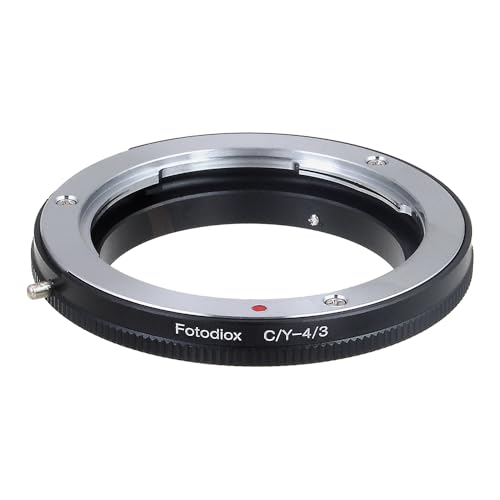
- Allows infinity focus
- Anodized aluminum construction
- 24-month manufacturer warranty
Best For: Four Thirds shooters adapting Contax Yashica lenses
Manual Adaptability for Nikon Glass

- Supports Nikon F lenses on Sony E-mount bodies
- TTL metering works, but exposure is manual
- No autofocus or electronic contacts
Best For: Sony E-mount users adapting Nikon F lenses
Brass-and-Aluminum Classic Mount Option
Canon FD to Fujifilm FX Adapter

- Brass and aluminum build with smooth mounting
- Infinity focus is allowed
- Manual diaphragm control only
Best For: Fujifilm X users adapting Canon FD lenses
Compact Mechanical Choice

- Metal adapter with matte black anodized finish
- Supports manual focus and exposure control
- Built for FD lenses on M4/3 cameras
Best For: M4/3 shooters using FD lenses manually
Nikon Z FD/FL Adapter
PHOLSY Manual Focus Lens Mount Adapter

- Fits Canon FD/FL lenses to Nikon Z bodies
- Supports infinity focus with manual operation
- Hardened aluminum and copper construction
Best For: Nikon Z users adapting FD/FL lenses manually
M42 to M43 Manual Adapter
Metal Manual Focus Lens Adapter

- M42 screw lens to M43 camera body
- Metal build with precise thread for focus
- Simple mechanical manual adapter
Best For: Users adapting M42 lenses to M43 bodies manually
Simple Manual M42 Adapter – K&F Concept M42-NEX IV
If you need manual focus camera lens adapters for using M42 glass on a Sony E-mount body, this K&F Concept option keeps things straightforward. It has no electronic contacts, supports manual control and manual exposure, and is built to focus to infinity, making it a practical pick for adapting older lenses without extra complexity.
Best For: Sony E-mount shooters adapting M42 lenses who want a simple manual-only adapter with infinity focus support.
Pros:
- No electronic contacts for a fully manual setup
- Supports manual control, manual exposure, and focus to infinity
- High-quality copper and aluminum alloy construction
- Matting varnish inside helps reduce light reflection
Cons:
- Manual diaphragm control only
- Requires verifying both lens mount and camera mount before purchase
Overall, this adapter is a solid fit if you value a basic mechanical connection and want dependable compatibility with Sony E-mount bodies. The knurled, non-slip design and CNC machining add a nicer handling feel, but the main appeal is its simple, fully manual operation.
Pentax K to Canon EOS Adapter – Haoge PK to EOS Manual Adapter
Haoge Lens Mount Adapter for Pentax K PK Mount Lens to Canon EOS EF EF-S Mount Camera
Check Price On AmazonThis is a straightforward choice among manual focus camera lens adapters if you want to mount Pentax K lenses on a Canon EOS body. The adapter has no electrical contacts, so exposure and focus must be adjusted manually, and it is designed for Canon EF and EF-S camera mounts.
Best For: Canon EOS users with Pentax K lenses who want a manual, no-contact adapter for still photography.
Pros:
- No electrical contacts for manual operation
- Compatible with Pentax K lenses and Canon EF/EF-S cameras
- Manual exposure and focus control
- Supports a wide list of Canon EOS bodies
Cons:
- Focus and exposure must be set manually
- No image stabilization
- Not water resistant
In practice, this adapter is best when you already understand manual shooting and want a simple mechanical link between Pentax K glass and Canon EOS bodies. Its silver finish and broad camera compatibility make it a utility-focused adapter rather than a feature-heavy one.
EF to Sony E Manual Adapter – K&F Concept EF-S to NEX Plus
Among manual focus camera lens adapters, this K&F Concept Plus model is aimed at photographers who want to use EF or EF-S lenses on Sony E-mount mirrorless cameras. It is a non-electronic adapter, built from aluminum alloy and brass, and it supports infinity focus while also allowing closer focusing than you would normally get.
Best For: Sony E-mount photographers adapting EF/EF-S lenses who want a full manual setup with infinity and macro-style flexibility.
Pros:
- Full metal construction with aluminum alloy and brass
- Precision fit with zero wobble or play
- Supports infinity focus and closer minimum focusing distance
- Works with a wide range of Sony Alpha E-mount cameras
Cons:
- Non-electronic adapter
- Most EF/EF-S lenses default to their smallest aperture
- Requires manual ISO and shutter-speed adjustments
This adapter is a good pick if you are comfortable working manually and want to repurpose EF/EF-S lenses on Sony mirrorless bodies. The key tradeoff is aperture behavior: the lens defaults to a small aperture, so it is best suited to users who are happy to compensate with camera settings.
Contax Yashica to Four Thirds Adapter – Fotodiox C/Y to OM 4/3 Adapter
If you are comparing manual focus camera lens adapters for older Contax Yashica lenses, this Fotodiox adapter offers a simple mechanical path to Olympus Four Thirds bodies. The supplied details emphasize smooth mounting, infinity focus allowance, and an anodized aluminum body, which makes it a practical no-frills adapter for compatible systems.
Best For: Olympus Four Thirds and Panasonic Lumix users adapting Contax Yashica lenses with a simple mechanical adapter.
Pros:
- Allows infinity focus
- Smooth surface for easier mounting
- Anodized aluminum construction
- Includes a 24-month manufacturer warranty
Cons:
- Limited to Contax Yashica to OM Four Thirds compatibility
- No electronic features listed
This is a clean, practical adapter for users who mainly need compatibility and reliable mounting rather than advanced functionality. If your goal is to keep using C/Y lenses on supported Four Thirds bodies, the simple design and infinity focus support are the main reasons to consider it.
Manual Adaptability for Nikon Glass – Nikon F to Sony E Adapter
This manual focus camera lens adapter is a straightforward way to use Nikon F-mount lenses on Sony E-mount mirrorless cameras. It keeps the setup simple: exposure and focus are handled manually, while TTL metering is supported and the camera should be set to manual exposure or aperture priority mode.
Best For: Sony E-mount shooters who want to repurpose Nikon F lenses with manual exposure and focus control.
Pros:
- Supports Nikon F lenses on Sony NEX E-mount mirrorless bodies.
- Allows TTL metering for more consistent exposure handling.
- No electrical contacts for a simple mechanical fit.
- Compatible with a wide range of Sony E-mount cameras, including newer Alpha models.
Cons:
- Auto-focusing and automatic diaphragm functions will not work.
- Exposure and focus must be adjusted manually.
- Nikon lenses without a manual aperture ring stop down to the smallest f/stop by default.
For photographers who already own Nikon F lenses, this adapter is a practical manual-use bridge to Sony E-mount bodies. It is best treated as a manual operation accessory rather than a full-function electronic adapter.
Brass-and-Aluminum Classic Mount Option – Canon FD to Fujifilm FX Adapter
K&F Concept Lens Mount Adapter Canon FD Lens to Fujifilm FX Mount Mirrorless Camera Adapter
Check Price On AmazonThis manual focus camera lens adapter is built for using Canon FD lenses on Fujifilm FX mirrorless cameras. The brass and aluminum construction, smooth mount action, and infinity focus support make it a practical pick for photographers who want a simple mechanical adapter with manual diaphragm control.
Best For: Fujifilm X-mount users who want to mount Canon FD lenses with manual lens control and infinity focus.
Pros:
- Brass and aluminum construction, not plastic.
- Supports infinity focus.
- Manual diaphragm control is retained.
- Compatible with a broad list of Fujifilm X-series mirrorless cameras.
Cons:
- Only works with Canon FD mount lenses, not Canon EF.
- Lens diaphragm control is manual only.
- Does not add electronic lens functions.
If you want a well-made FD-to-FX adapter for manual shooting, this K&F Concept option keeps the workflow traditional and predictable. It is best suited to photographers who already understand the limits of fully mechanical lens use.
Compact Mechanical Choice – FD to M4/3 Manual Adapter
This manual focus camera lens adapter is a simple metal adapter for using FD mount lenses on M4/3 cameras. Its matte black anodized finish and manual control approach make it a no-frills choice for photographers who want a basic mechanical connection for lens and exposure handling.
Best For: M4/3 camera owners who want a basic FD lens adapter with manual focus and exposure control.
Pros:
- Metal construction with a matte black anodized finish.
- Designed for FD mount lenses to M4/3 cameras.
- Manual focus and exposure control are supported.
Cons:
- No electronic contacts are mentioned.
- Focus and exposure remain fully manual.
- Limited detail is provided about camera compatibility.
This is the kind of adapter that fits a simple vintage-lens workflow: mount the lens, set exposure manually, and shoot. It makes sense if you want a clean mechanical FD-to-M4/3 solution without extra features.
Nikon Z FD/FL Adapter – PHOLSY Manual Focus Lens Mount Adapter
PHOLSY Lens Mount Adapter Manual Focus: Compatible with Canon FD/FL Lens to Nikon Z Camera Body
Check Price On AmazonIf you want to use Canon FD/FL glass on a Nikon Z body, this manual focus camera lens adapter keeps the setup simple and mechanical. It supports infinity focus, but it does not pass autofocus, aperture, exposure, or any electronic data, so it is best for photographers comfortable working fully manually.
Best For: Nikon Z shooters adapting Canon FD/FL lenses for fully manual, infinity-focus use.
Pros:
- Compatible with Canon FD/FL lenses and Nikon Z camera bodies.
- Focuses to infinity.
- Made of hardened aluminum and copper with an anti-reflective, matte-coated interior.
- Easy to mount and dismount.
Cons:
- No autofocus or electronic communication.
- Aperture and exposure must be adjusted manually.
- Some cameras may need menu changes to allow release without a lens.
Overall, this is a straightforward adapter for bringing FD/FL lenses into the Nikon Z system without extra complexity. It is best suited to users who value build quality and manual control over automation.
Canon FD to RF Adapter – Fotasy FD EOS R Manual Adapter
This manual focus camera lens adapter is designed to mount Canon FD and FDn lenses on Canon EOS RF mirrorless bodies. It is a no-electronics solution with infinity focus guaranteed, making it a practical choice if you want to use classic FD glass on EOS R-series cameras and handle focus and exposure yourself.
Best For: Canon EOS RF mirrorless users who want to adapt FD lenses with full manual control.
Pros:
- Compatible with Canon FD and FDn lenses on Canon EOS RF mirrorless cameras.
- Infinity focus guaranteed.
- Copper lens mount for a solid, durable feel.
- Works with EOS R, RP, Ra, R3, R5, R6, R7, and R10.
Cons:
- Does not fit Canon EF/EFS DSLR mounts.
- No electrical contacts.
- No autofocus or automatic diaphragm operation.
As a simple mechanical adapter, it does exactly what manual lens users need: it lets FD glass mount securely on RF bodies and keeps the workflow fully manual. If you are comfortable setting focus and exposure yourself, it is a clean, low-frills option.
M42 to M43 Manual Adapter – Metal Manual Focus Lens Adapter
For photographers looking for a basic manual focus camera lens adapter, this metal M42-to-M43 option is built around a precise thread for focus. It is meant for adapting compatible camera bodies with a simple mechanical connection, so it suits users who want a straightforward way to work with manual glass.
Best For: Shooters needing a simple metal adapter for M42 screw lenses on M43 camera bodies.
Pros:
- Metal construction.
- Precise thread designed for focus.
- Compatible with M42 screw lens to M43 camera body use.
- Simple manual adapter design.
Cons:
- No electronic or autofocus features are listed.
- Compatibility details are limited in the supplied notes.
- Best suited to manual use rather than modern automation.
This is a no-nonsense adapter for users who want a basic mechanical link between older M42 lenses and an M43 body. If you are prioritizing simplicity and manual operation, it fits the job.
How We Picked the Best Manual Focus Camera Lens Adapters
We focused on adapters that solve common compatibility needs without adding unnecessary complexity. Key factors included mount pairing, secure fit, material quality, finish, and whether the adapter is designed for dependable manual use rather than autofocus functionality. Because manual lenses and legacy mounts vary widely, precise compatibility matters more than marketing claims.
Quick Comparison
At a glance, the best Manual Focus Camera Lens Adapters fall into a few categories: vintage lens-to-mirrorless adapters for Sony E, Nikon Z, Fujifilm X, and Micro Four Thirds; legacy SLR-to-DSLR options for Canon EF and similar systems; and straightforward metal adapters for compact or budget-friendly setups. Choose the adapter that matches both your lens mount and camera mount exactly.
Key Buying Factors for Manual Focus Camera Lens Adapters
Mount Pairing and Flange Distance
The most important detail is correct mount compatibility. Manual adapters work because they preserve the right flange distance so your lens can focus properly. Double-check both the lens mount and the camera body mount before buying.
Material and Build
Metal adapters usually offer better durability and tighter tolerances than lightweight plastic alternatives. A snug, well-machined adapter reduces wobble and helps maintain consistent alignment, which is especially important with heavier vintage lenses.
Focus and Aperture Control
Most Manual Focus Camera Lens Adapters do not transmit electronic autofocus or aperture data. That means you should expect fully manual operation, including manual focus and, in many cases, manual aperture control on the lens itself.
Camera System Compatibility
Some adapters are tailored for mirrorless bodies, while others are designed for DSLR or specialty mounts. If you shoot Sony E, Canon RF, Nikon Z, Fujifilm X, or Micro Four Thirds, look for an adapter built specifically for that platform rather than assuming a universal fit.
Who Should Buy Which Manual Focus Camera Lens Adapters?
If you want to use vintage glass on a mirrorless camera, prioritize a well-machined adapter with the exact mount conversion you need. If you already own legacy Canon FD, M42, Nikon F, Pentax K, or Contax/Yashica lenses, choose the adapter that matches your existing collection and your camera body.
Travel shooters and casual hobbyists may prefer simple, lightweight options, while enthusiasts using prized old lenses should lean toward sturdier metal models for better long-term reliability. In short, the best choice is the adapter that balances fit, build, and system compatibility for the lenses you actually plan to use.