
DJI Osmo Nano is a compelling choice if you want a small, wearable 4K camera that is built around quick capture, hands-free POV angles, and simple carry-anywhere use.
This DJI Osmo Nano review focuses on the practical tradeoffs that matter most for creators, travelers, and casual shooters.
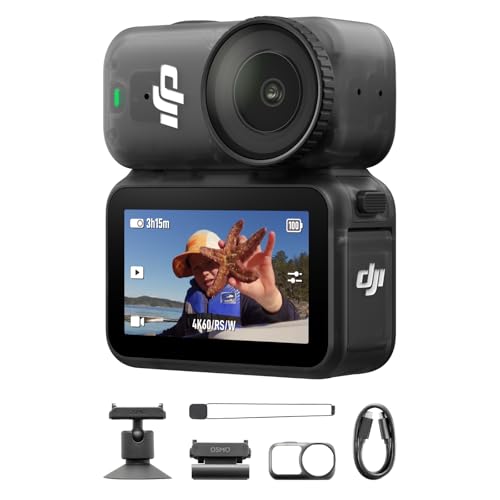
DJI Osmo Nano Review Summary
DJI Osmo Nano makes the most sense for buyers who care about portability first and want a camera that can move easily from pocket to clip-on POV recording without feeling bulky.
Its strongest selling points are the 1/1.3-inch sensor, 4K/60fps recording, 143-degree wide field of view, built-in 128GB storage, and magnetic wearable design, all of which point toward fast, flexible shooting rather than a large traditional action-camera setup.
It suits creators who want a lightweight everyday camera for vlogs, pet POV clips, travel moments, and hands-free scenes.
It is less compelling for buyers who want a more traditional camera body, a larger battery ecosystem, or a device with the broadest accessory-first action-camera workflow.
Review Scorecard
| Category | Score | Buyer-focused rationale |
|---|---|---|
| Portability | 10/10 | The magnetic wearable design and small form factor make it easy to carry and use quickly. |
| Image capture | 9/10 | The 1/1.3-inch sensor and 4K/60fps support suggest strong detail for a compact camera. |
| Video flexibility | 8/10 | A 143-degree wide view and 10-bit D-Log M support give it room for creative framing and color work. |
| Battery practicality | 8/10 | The listed 200-minute battery life is a strong fit for short-to-medium shooting sessions. |
| Storage convenience | 9/10 | 128GB built-in storage reduces immediate dependence on cards, and microSD expansion adds flexibility. |
| Audio potential | 8/10 | Direct connection to two microphones is a useful advantage for vlog-style recording. |
| Outdoor readiness | 7/10 | Waterproofing and splash resistance help, though the compact design still frames this as a use-case-specific tool. |
Key Features and Specifications of DJI Osmo Nano
DJI Osmo Nano is positioned as a wearable 4K camera built for simple, mobile-first shooting.
The listing centers on a 1/1.3-inch sensor, 4K/60fps capture, and a 143-degree ultra-wide field of view.
That combination matters because it suggests the camera is trying to solve for both image quality and framing flexibility in a very small body.
The built-in 128GB storage is one of the more practical details in the package.
It means you can start recording immediately without treating storage as an afterthought, and the option to expand with a microSD card gives the camera more long-term flexibility.
Another notable detail is the battery claim: up to 200 minutes of battery life, with fast charging mentioned in the listing.
For a compact wearable camera, that is an important part of the value proposition because the appeal of this category is speed and convenience, not a complex power setup.
The camera also emphasizes content creation rather than just casual recording.
DJI highlights 10-bit and D-Log M color performance for more flexible editing, direct connection to two microphones for higher-quality audio, and waterproofing up to 10 meters plus IPX4 splash resistance with the Vision Dock.
| Spec | What it means for buyers |
|---|---|
| Sensor | 1/1.3-inch sensor aimed at brighter, cleaner footage in a compact body |
| Video | 4K/60fps recording for smoother motion and sharper output |
| Field of view | 143-degree ultra-wide view for POV and vlogging shots |
| Storage | 128GB built-in storage plus microSD expansion |
| Battery | Up to 200 minutes of battery life |
| Color | 10-bit and D-Log M support for more post-production flexibility |
| Audio | Direct connection to two microphones |
| Durability | Waterproof up to 10m and IPX4 splash resistance with the Vision Dock |
Pros and Cons of DJI Osmo Nano
Pros
- Very portable: The magnetic wearable design is the clearest selling point and makes the camera easy to carry and deploy.
- Strong spec sheet for the size: A 1/1.3-inch sensor, 4K/60fps, and 143-degree FOV are serious specs for a compact device.
- Useful built-in storage: 128GB onboard storage reduces friction for quick use.
- Creator-friendly extras: 10-bit, D-Log M, and dual-mic support make it more than a basic point-and-shoot wearable.
- Outdoor-ready details: Waterproofing and splash resistance broaden the use cases beyond indoor vlogging.
Cons
- Niche form factor: Buyers who want a conventional action camera or larger standalone camera may prefer a different shape and workflow.
- Compact-device compromises: The listing itself notes heating during high-resolution recording can happen, which is worth factoring into longer sessions.
- Best for specific use cases: Its value is strongest when you actually want POV, wearable, or hands-free capture.
- Software dependency caveat: DJI notes the Mimo app is no longer on Google Play, so setup expectations should be checked carefully before buying.
Who Should Buy DJI Osmo Nano?
DJI Osmo Nano is a strong fit for people who want a camera they can wear, clip, or carry without thinking too much about bulk.
That includes travelers, vloggers, pet POV shooters, and anyone who wants a fast way to capture hands-free footage in a compact package.
It also makes sense for creators who care about a bit more image and color headroom than the most basic pocket camera can provide.
The 1/1.3-inch sensor, 10-bit support, and D-Log M all point toward a camera that can be edited into a more polished final result.
This is not the best buy for everyone.
If you want the broadest action-camera accessory ecosystem, a larger battery-first rig, or a more general-purpose camera body for varied production work, you should probably compare other options before deciding.
Buy it if you want a lightweight wearable camera that prioritizes portability, quick capture, and flexible POV footage.
Skip it if you need a more traditional camera shape or expect to use the device mainly as a full-size all-purpose video tool.
What DJI Osmo Nano Is Best At for Wearable Video
POV Shooting
The magnetic wearable design and wide 143-degree field of view are the main reasons this camera stands out for POV work.
It is clearly aimed at moments where you want the camera out of the way while still capturing a broad, immersive scene.
Compact Vlogging
The compact body, built-in storage, and 4K/60fps recording make it easy to see why DJI would pitch this to vloggers.
It looks like a camera for fast setups, short-form content, and shooting without much friction.
Color and Edit Flexibility
The 10-bit and D-Log M support are useful if you plan to color grade or want the footage to hold up better in editing.
That adds value beyond convenience and moves the camera closer to a creator tool than a simple casual recorder.
Travel and Outdoor Use
Waterproofing up to 10 meters and IPX4 splash resistance with the Vision Dock make the camera easier to trust outdoors.
Combined with the claimed battery life and compact build, it fits travel and active-day shooting better than a larger setup would.
Alternatives to DJI Osmo Nano
If you want to compare before buying, the most credible alternatives are other compact camera families with strong Amazon availability and clear creator use cases.
- GoPro HERO series if you want a more established action-camera ecosystem and a different accessory path.
- Insta360 GO series if you want a similarly compact camera focused on tiny, wearable shooting.
- DJI Osmo Action series if you want DJI’s action-camera approach in a more traditional body style.
- Sony compact vlog cameras if you want to compare against a more conventional creator-camera category.
Is DJI Osmo Nano Worth It?
DJI Osmo Nano is worth it if your main priority is a small, wearable 4K camera that makes hands-free POV capture easy and keeps the setup lightweight.
The combination of the sensor size, 4K/60fps, wide field of view, built-in storage, and creator-oriented color and audio features makes it a well-shaped product for its intended audience.
It is not the universal answer for every buyer, and that is the main reason to be selective.
If you want a larger, more conventional camera or a broader action-camera platform, another model may fit better.
If you specifically want a compact device for fast, portable, wearable video, DJI Osmo Nano is a strong buy.