
Choosing the right slow motion camera for sports analysis can make a huge difference in coaching, replay quality, and technique breakdown. The best options balance frame rate, tracking, clarity, and ease of use for your sport and workflow.
In this roundup, we focus on cameras that help capture cleaner motion, easier replays, and more useful detail for training sessions, game film, and skill development.
Best 10 Slow Motion Camera for Sports Analysis Picks for 2026
AI Sideline Tracker
XbotGo Falcon 4K Auto-Tracking Sports Camera

- AI tracks players and the ball automatically
- 4K dual-lens recording for game review
- Built-in live streaming with sideline-ready design
Best For: Coaches and parents who want automatic sports capture and fast review
GPS Data Slow-Mo Pick

- 720p/240fps slow motion for replay
- Built-in GPS and G-Metrix performance data
- 3-axis stabilization for steadier footage
Best For: Athletes and coaches who want slow-motion clips plus performance metrics
Classic High-Speed Option
Garmin Virb XE 240fps Action Camera

- Up to 240fps slow motion for analysis
- G-Metrix data adds performance metrics
- Waterproof to 50 meters without a case
Best For: Action-sport users who need high-frame-rate footage and rugged durability
Compact Adventure Cam
Z10 4K Action Camera for Wearable Recording

- 49g ultra-compact body for easy mounting
- One-click recording for simple sports capture
- Includes waterproof case and mount accessories
Best For: Wearable action footage, cycling, and underwater adventures
High-Speed Vision Pick
SVPRO 12MP USB 3.0 Fisheye Camera

- 230fps at 1080p for fast-motion capture
- USB 3.0 UVC plug-and-play compatibility
- 204° fisheye lens for wide fixed views
Best For: Motion analysis, slow-motion recording, and machine vision setups
Adjustable Training Camera
SVPRO 1080P High-Speed Zoom USB Camera

- Up to 260fps at 360p for motion capture
- 2.8-12mm zoom lens with manual focus control
- UVC plug-and-play for multiple operating systems
Best For: Fixed sports analysis setups that need zoom and focus control
High-Speed Industrial Pick

- 230fps at 1080p for fast-motion capture
- 12MP sensor with 4K video support
- UVC plug-and-play on major platforms
Best For: Technical sports analysis and motion review
Zoom-Focused Choice
10X Optical Zoom 260fps Camera
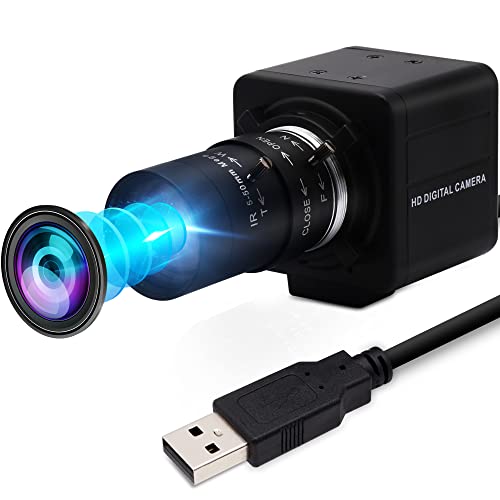
- 260fps capture at 640x360 resolution
- 5-50mm manual lens with 10X optical zoom
- USB2.0 UVC compatibility with major platforms
Best For: Golf swing review and long-distance framing
Adjustable Framing Pick

- 260fps slow-motion capture at 640x360
- 2.8-12mm manual varifocal lens
- UVC plug-and-play with common software
Best For: Sports clips that need adjustable framing
AI Sideline Tracker – XbotGo Falcon 4K Auto-Tracking Sports Camera
If you want a slow motion camera for sports analysis that also covers full-team action, the XbotGo Falcon is built around automated tracking and 4K recording. Its dual-lens system and AI tracking are aimed at keeping players and the ball in frame, which makes it more practical for coaching review, highlight capture, and recruitment clips than a basic fixed camera.
Best For: Coaches, parents, and team staff who want automatic tracking and quick 4K game review without extra gear.
Pros:
- AI auto-tracking follows players and the ball with dual-lens precision.
- Records in 4K for clearer game review and development footage.
- Built-in live streaming makes it easy to share games in real time.
- Compact all-in-one design is sideline-ready and IPX5 water resistant.
Cons:
- MicroSD card is required for recording and is sold separately.
- Best suited to team sports rather than general-purpose filming.
Overall, the Falcon is a strong choice if your priority is automated capture with minimal setup. It trades advanced manual control for convenience, which is often exactly what matters on a busy sideline.
GPS Data Slow-Mo Pick – Garmin VIRB Ultra 30
The Garmin VIRB Ultra 30 is a solid slow motion camera for sports analysis if you want frame-rate flexibility plus performance data. It offers 4K video, 720p at 240fps slow motion, and built-in GPS with G-Metrix metrics, so you can review both motion and context in the same footage.
Best For: Athletes and coaches who want slow-motion footage with GPS-based performance data.
Pros:
- 720p/240fps slow motion gives you useful slow-motion replay options.
- Built-in GPS and sensor support capture speed, elevation, heart rate, and G-force.
- 3-axis image stabilization helps keep footage steady.
- Voice control can make hands-free recording easier during activity.
Cons:
- Slow motion is limited to 720p rather than higher-resolution capture.
- Older action-camera design may feel less streamlined than newer all-in-one options.
For sports analysis, this model stands out when data matters as much as video. If you want a mix of slow motion and measurable performance metrics, it remains a practical option.
Phone-Mount Tracking Choice – XbotGo Chameleon AI Sports Camera
If you’re shopping for a slow motion camera for sports analysis and also want easy live capture, the XbotGo Chameleon focuses on automated team tracking through a phone-based setup. It records in 4K at 60fps and includes FollowMe mode, making it a flexible option for spotlighting a player or covering a full team without subscription fees.
Best For: Parents, coaches, and solo operators who want AI tracking through a phone setup with 4K/60fps recording.
Pros:
- AI-powered tracking follows the whole team in real time.
- FollowMe mode helps focus on a key player automatically.
- 4K/60fps recording captures smooth, detailed action.
- No subscription fee and includes 20GB of free cloud storage.
Cons:
- Not water resistant, so it needs more care in outdoor conditions.
- Uses a phone-mount style setup instead of a dedicated standalone camera body.
This is a good fit if you want tracking convenience, simple sharing, and smoother 60fps footage. It is less about rugged hardware and more about making sports recording easy from your phone workflow.
Classic High-Speed Option – Garmin Virb XE 240fps Action Camera
The Garmin Virb XE is a straightforward slow motion camera for sports analysis with a strong focus on frame rate and durability. It records 1080p video at 60fps and up to 240fps slow motion, while also supporting G-Metrix data so you can connect movement with measurable performance details.
Best For: Action-sport users who want high-speed slow motion plus rugged waterproof construction.
Pros:
- Up to 240fps slow motion for detailed action review.
- Built-in G-Metrix support adds speed, elevation, heart rate, and G-force data.
- Waterproof to 50 meters without a case for rugged use.
- Bluetooth audio support expands recording flexibility.
Cons:
- Maximum video resolution is 1080p, not 4K.
- Two-hour battery life is relatively short for longer sessions.
If your priority is high-frame-rate replay and tough weather-ready hardware, the Virb XE still has a clear use case. It is a practical analysis tool for users who value speed and sensor data over newer camera features.
Compact Adventure Cam – Z10 4K Action Camera for Wearable Recording
If you need a slow motion camera for sports analysis, the Z10 is better suited to compact action recording than true lab-style motion study. Its 2K video, lightweight 49g body, and one-click recording make it easy to mount on a helmet, bike, or handlebar and capture practice sessions without extra setup. The included waterproof case also makes it practical for swimming, diving, and wet-weather training.
Best For: Athletes and outdoor users who want a tiny, easy-to-mount camera for grab-and-go training footage and action clips.
Pros:
- Very lightweight 49g design for wearable use
- Quick-mount bracket works well for cycling and motorcycle setups
- One-click recording keeps operation simple during active sessions
- Waterproof case included for underwater or rainy conditions
Cons:
- Camera itself is not waterproof without the case
- No WiFi or Bluetooth connectivity
- 2K resolution is useful, but not the highest detail option here
Overall, this is a straightforward sports and adventure camera when portability matters more than advanced analysis features. It works best for recording real-world movement from a wearable angle rather than for high-frame-rate slow motion work.
High-Speed Vision Pick – SVPRO 12MP USB 3.0 Fisheye Camera
For buyers looking for a slow motion camera for sports analysis, this SVPRO USB 3.0 model is the strongest fit in the group. It offers 230fps at 1080p, plus native YUY2 high-speed output, which makes it a better choice for studying fast movement than a standard webcam. The 204° fisheye lens and metal housing also make it useful in fixed setups where you want a wide view of the action.
Best For: Coaches, researchers, and technicians who need very high frame rates for motion analysis or slow-motion production.
Pros:
- 230fps at 1080p for high-speed capture
- Native YUY2 output supports lower-latency recording
- USB 3.0 UVC plug-and-play works across major platforms
- All-metal housing with mounting threads for fixed setups
Cons:
- Fisheye lens may be too wide for some close-up sports work
- Requires a USB-connected setup rather than a portable standalone camera
- Designed more for analysis and machine vision than casual filming
This is the most analysis-focused option in the lineup thanks to its frame-rate capability and broad software compatibility. If your priority is capturing fast motion for review, it is the most capable match.
Adjustable Training Camera – SVPRO 1080P High-Speed Zoom USB Camera
If you want a slow motion camera for sports analysis with a little more framing control, this SVPRO model is a practical option. It records up to 260fps at 360p, 120fps at 720p, and 60fps at 1080p, while the 2.8-12mm varifocal lens lets you manually adjust focus, aperture, and zoom. That combination makes it better suited to fixed training setups where you need to tune the view to the athlete or drill.
Best For: Coaches and DIY users who want high-speed capture plus manual zoom control for close-range analysis.
Pros:
- Up to 260fps at 360p for very fast capture
- 2.8-12mm varifocal lens offers 4X optical zoom
- Manual focus and aperture give more control over the shot
- UVC plug-and-play support for Windows, Linux, Mac, and Android
Cons:
- 1080p is limited to 60fps, so top speed comes at lower resolutions
- Not water resistant
- Requires a tethered USB setup rather than portable field use
Compared with the fisheye model, this camera trades ultra-wide coverage for better framing flexibility. That makes it a smart pick when you want to lock in a training station and adjust the view to the sport or movement pattern.
High-Speed Industrial Pick – 12MP USB 3.0 Fisheye Camera
If you want a slow motion camera for sports analysis that prioritizes speed and low latency, this USB 3.0 model is built around high-frame-rate capture. It can reach 230fps at 1080p in MJPEG and offers native YUY2 output for lower-compression viewing, which makes it useful when you need to study fast movement in detail.
Best For: Coaches, developers, and analysts who need a fast USB camera for motion review, computer vision, or slow-motion recording.
Pros:
- 230fps at 1080p via USB 3.0 for fast-motion capture
- 12MP IMX577 sensor with 4K video and strong still-image detail
- UVC plug-and-play support for Windows, Mac, Linux, and Android
- Metal case with mounting threads for more rigid setups
Cons:
- 164° fisheye lens may be too wide for tight subject isolation
- Best performance depends on using the right mode and software support
- More of an industrial vision camera than a typical consumer webcam
Overall, this is a strong choice when frame rate matters more than convenience features. The wide lens, metal housing, and broad OS compatibility make it especially practical for technical sports-analysis workflows.
Zoom-Focused Choice – 10X Optical Zoom 260fps Camera
This slow motion camera for sports analysis is a better fit when you need reach and framing control. It records up to 260fps at 640×360, while the 5-50mm CS-mount lens gives you a 10X optical zoom range for dialing in a golfer, pitcher, or other athlete from farther away.
Best For: Golf swing review, long-distance sports filming, and users who want manual zoom control.
Pros:
- Up to 260fps at 640×360 for smooth slow-motion capture
- 5-50mm manual varifocal lens with 10X optical zoom
- USB2.0 UVC plug-and-play compatibility across major systems
- Aluminum case with tripod and holder mounting options
Cons:
- Manual focus means more setup time than fixed-focus cameras
- Best results require bright lighting
- Uses USB 2.0, so it is less advanced than USB 3.0 high-speed models
In practice, this model trades some simplicity for framing flexibility. If your sports-analysis setup benefits from optical zoom and adjustable focus, it offers a useful mix of speed and control.
Adjustable Framing Pick – 4X Zoom 260fps USB Camera
If you need a slow motion camera for sports analysis with a more manageable zoom range, this 2.8-12mm model is worth a look. It also reaches 260fps at 640×360 and uses a manual CS-mount lens, giving you enough control to frame subjects while keeping the setup relatively compact.
Best For: Coaches and creators who want adjustable framing for sports clips, live streaming, or embedded camera projects.
Pros:
- 260fps at 640×360 for slow-motion playback
- 2.8-12mm manual varifocal lens for adjustable framing
- USB2.0 UVC plug-and-play support for common devices and software
- Compact aluminum body with tripod-style mounting options
Cons:
- Manual focus and lens adjustment require hands-on setup
- Needs bright light to perform well
- Like other 260fps models, top speed is at reduced resolution
This is the most balanced option in the group if you want speed without an ultra-wide or very long zoom lens. It should suit users who want to fine-tune the view for sports analysis without moving to a more specialized machine-vision setup.
How We Picked the Best Slow Motion Camera for Sports Analysis
We looked for options that offer a practical mix of high frame rates, reliable video quality, and sports-friendly features such as auto-tracking, wide fields of view, zoom control, and simple connectivity. For a Slow Motion Camera for Sports Analysis, the goal is not just recording video, but making it easier to isolate movement, timing, and form.
We also favored models that fit different use cases, from team sports and sideline recording to close-up technique work and computer-based analysis.
Quick Comparison
Team sports coaches will usually get the most value from AI auto-tracking cameras that can follow play across a field or court. Athletes and trainers focused on mechanics may prefer high-speed USB cameras or zoom-capable models that can be aimed at a single drill, swing, kick, or stroke. Portable action cameras are a better fit when mobility, durability, and outdoor use matter more than advanced analysis features.
Key Buying Factors for a Slow Motion Camera for Sports Analysis
Frame Rate and Resolution
Higher frame rates generally produce smoother slow-motion playback and better detail during fast movement. Look for cameras that can record at least 60 fps, with higher-speed options preferred for rapid sports action. Resolution matters too, because clear footage is easier to zoom into without losing useful detail.
Tracking, Field of View, and Optics
If you need to follow dynamic play, auto-tracking and a wide field of view are valuable. For more controlled analysis, optical zoom and manual focus can be more important than wide-angle capture. Choose based on whether you are filming full-team movement or one athlete at close range.
Workflow and Connectivity
Consider how you will review footage. USB cameras can be useful for computer-based analysis, while action cameras may be better for portable recording. Features like live streaming, UVC compatibility, and easy file transfer can save time for coaches and trainers.
Durability and Mounting
Sports environments can be rough, so mounting options, housing quality, and battery life matter. Outdoor teams may need weather resistance or rugged builds, while indoor labs may prioritize stable tripod or desktop setups.
Who Should Buy Which Slow Motion Camera for Sports Analysis?
Choose an AI auto-tracking camera if you coach team sports and want less manual camera work. Pick a high-speed USB or zoom camera if you need close-up movement analysis, drill correction, or desktop review on a computer. Go with a compact action camera if you want a durable, flexible solution for travel, training, or field-side recording.
The best Slow Motion Camera for Sports Analysis is the one that matches your sport, your filming distance, and your review process. Start with how you coach or train, then choose the camera type that makes slow-motion breakdown most accurate and convenient.