
Finding a dependable recorder does not require spending hundreds of dollars. The best voice recorders under $100 can offer useful storage, voice activation, playback controls, rechargeable batteries, and compact designs for everyday recording.
This roundup compares 10 budget-friendly options across simple dictaphones, high-capacity models, touchscreen devices, and feature-rich recorders from brands including EVISTR, Vandlion, OM System, Innioasis, and EVIDA.
Best 10 Voice Recorders Under 100 Picks for 2026
Best High-Capacity Pick
EVISTR 64GB Digital Voice Recorder

- 64GB storage with up to 4,660 hours at 32Kbps
- Noise reduction and seven recording-gain levels
- Voice activation, scheduled recording, and USB-C transfer
Best For: Frequent lectures, meetings, interviews, and long-term storage
Best Simple Setup

- One-click recording with no complicated menus
- Up to 1536Kbps recording and voice activation
- Lightweight design with microphone and earphones included
Best For: Beginners and everyday note-taking
Best Budget Learning Tool
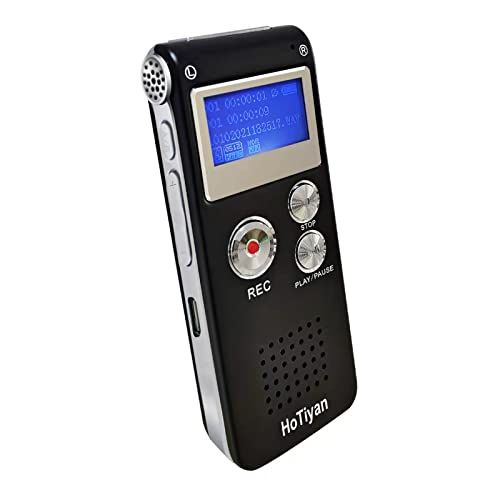
- Voice activation and noise-reduction microphone
- A-B repeat, variable playback speed, and MP3 playback
- Up to 560 hours at the listed 32Kbps setting
Best For: Students and casual recording
Best Maximum Storage

- 128GB capacity rated for up to 9,800 hours
- Built-in USB-C for file transfer and temporary storage
- Voice activation, DSP noise reduction, and 35-hour recording
Best For: Long sessions and users needing abundant storage
Best Compact Pick
Vandlion V15 Mini Metal Recorder

- Ultra-slim aluminum-alloy body weighs about 0.8 ounces
- 32GB storage with claimed 35–40-hour battery life
- One-button recording plus optional voice activation
Best For: Portable recording for classes, meetings, and interviews
Best Simple Operation
OM System WS-882 Digital Recorder
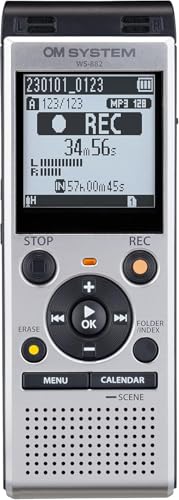
- Stereo microphones use a 90-degree pickup arrangement
- Intelligent Auto Mode adjusts recording levels
- Simple Mode and direct USB support easy operation
Best For: Straightforward classes, meetings, and everyday voice notes
Best Feature-Rich Pick
Innioasis R1 Touchscreen Recorder

- 3.69-inch touchscreen with multiple recording modes
- Offline speech-to-text and optional recording backup
- Expandable storage supports external cards up to 1TB
Best For: Recording, transcription, and file management on one device
Simple Everyday Recorder
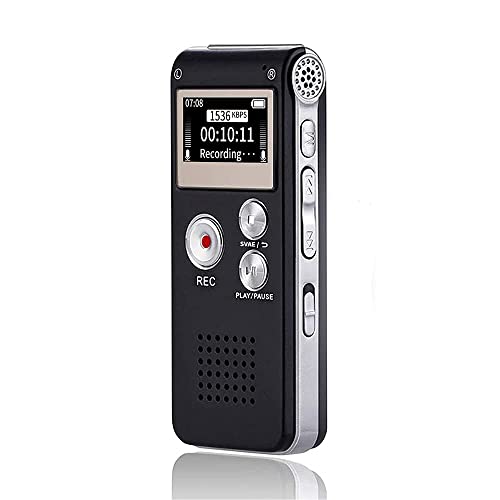
- One-button recording and A-B playback
- Up to 30 hours of recording
- Voice activation and USB storage
Best For: Students and everyday note-taking
High-Capacity Feature Pick

- 64GB storage with up to 4,600 hours
- Up to 48 hours of continuous use
- Password protection and scheduled recording
Best For: Frequent lectures, interviews, and field work
Best Simple Pick
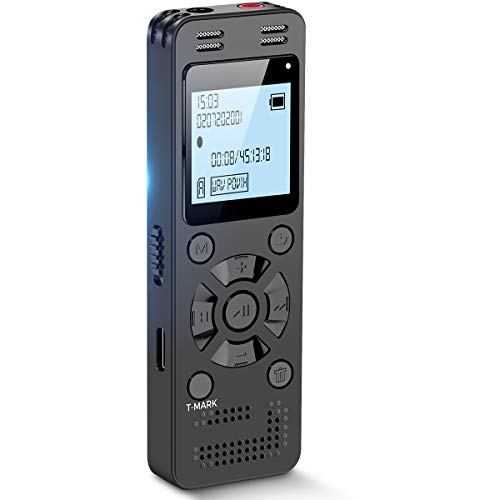
- 128GB storage for up to 9,296 hours
- Up to 54 hours of continuous recording
- Adjustable voice activation and password protection
Best For: Long-term recording archives and professional use
Best High-Capacity Pick – EVISTR 64GB Digital Voice Recorder
If you want one of the more feature-rich voice recorders under 100, the EVISTR L357 combines 64GB of storage, adjustable recording gain, voice activation, and playback controls in a compact metal body. Its USB-C connection also makes transferring files to Windows or Mac straightforward.
Best For: Students, teachers, interviewers, and anyone who needs substantial storage for frequent recordings.
Pros:
- 64GB capacity can store up to 4,660 hours at 32Kbps.
- PCM noise reduction, a 360° microphone, and seven recording-gain levels support flexible audio capture.
- Voice activation, A-B repeat, variable-speed playback, and scheduled recording add useful control.
- USB-C file transfer and up to 32 hours of continuous recording are practical for regular use.
Cons:
- The many recording and playback settings may take longer to learn than a basic recorder.
- The highest stated 1536Kbps quality will use storage more quickly than lower-bitrate modes.
The EVISTR stands out when storage and customization matter more than absolute simplicity. It is a strong all-around option for long lectures, meetings, and interviews.
Best Simple Setup – Cappsu 32GB Voice Recorder
For shoppers comparing voice recorders under 100, the Cappsu V02 focuses on quick, uncomplicated operation. Its one-click recording button, 32GB built-in memory, voice activation, and lightweight design make it easy to carry and use for everyday notes.
Best For: Beginners, students, and users who prioritize simple controls and portability.
Pros:
- One-click recording starts and stops without navigating menus.
- Records at up to 1536Kbps and includes voice-activated recording.
- Compact 1.6-ounce design fits easily in a pocket or bag.
- Includes an external microphone, earphones, USB-C cable, and two-year warranty.
Cons:
- The 20-hour continuous recording time is shorter than some higher-capacity options.
- Built-in 32GB storage is not expandable with a TF card.
The Cappsu is a practical choice when ease of use is the priority. Voice activation can extend operation to as much as 50 hours, though continuous recording is rated for up to 20 hours.
Best Budget Learning Tool – HoTiyan 8GB Digital Recorder
The HoTiyan H-10001 is a straightforward choice among voice recorders under 100, offering voice activation, stereo recording, and playback features in a small 8GB device. It also doubles as an MP3 player, making it useful for reviewing recordings or listening during downtime.
Best For: Students and casual users who want essential recording features at a modest capacity.
Pros:
- Voice activation can reduce silent sections and conserve storage.
- Supports MP3 and WAV recording, playback, A-B repeat, and variable playback speed.
- 8GB storage supports up to 560 hours at the listed 32Kbps setting.
- Password protection and timestamped filenames help with organization and privacy.
Cons:
- 8GB provides less capacity than the 32GB, 64GB, and 128GB alternatives in this roundup.
- Uses a Micro USB connection rather than USB-C.
- Continuous recording is listed at up to 20 hours per charge.
This HoTiyan model covers the basics well for classroom notes, meetings, and interviews. Its MP3-player function and repeat controls are especially helpful for reviewing study material.
Best Maximum Storage – Yegolito 128GB Voice Recorder
If maximum storage is your main concern when shopping for voice recorders under 100, the Yegolito model offers 128GB capacity and a built-in USB-C connector. It adds voice activation, timestamped files, noise reduction, and up to 35 hours of continuous recording for longer sessions.
Best For: Users recording frequent or lengthy meetings, lectures, interviews, and dictation.
Pros:
- 128GB storage is rated for up to 9,800 hours at low-bitrate settings.
- Built-in USB-C supports convenient file transfer without always carrying a separate data cable.
- Voice activation, DSP noise reduction, and a 360° microphone support practical everyday recording.
- Includes headphones, cables, replacement refills, a screwdriver, and a one-year warranty.
Cons:
- Its high-capacity storage may be unnecessary for occasional note-taking.
- The listed recording format is WAV, which may use more space than compressed formats.
- The microphone operation is listed as mono.
The Yegolito is the capacity leader in this group and is well suited to users who dislike managing files or running out of space. Its built-in connector and low-battery auto-save add convenience for extended use.
Best Compact Pick – Vandlion V15 Mini Metal Recorder
For shoppers comparing voice recorders under 100, the Vandlion V15 stands out as a slim, lightweight option with 32GB of storage, one-button operation, and a claimed 35–40 hours of continuous recording. Its aluminum-alloy body and USB-C connection make it practical for classes, meetings, interviews, and everyday notes.
Best For: Students, commuters, and anyone who wants a highly portable recorder with long battery life.
Pros:
- Compact 0.8-ounce aluminum-alloy design is easy to carry.
- 32GB storage and claimed 35–40 hours of recording support extended use.
- One-button recording and automatic date-time file naming simplify operation.
- Voice activation can reduce silent sections and conserve storage.
Cons:
- Voice activation must be enabled manually and is off by default.
- Playback and file management require a USB-C connection to a compatible device.
The V15 is a strong fit when portability, storage, and battery endurance matter more than a large display or advanced touchscreen controls.
Best Simple Operation – OM System WS-882 Digital Recorder
Among voice recorders under 100, the OM System WS-882 is a straightforward choice for users who prefer physical controls and a familiar recorder layout. Its stereo microphones, Intelligent Auto Mode, built-in USB, and Simple Mode are designed to make recording and file transfer uncomplicated.
Best For: Students, meeting attendees, and first-time recorder users who value simple menus and automatic recording-level adjustment.
Pros:
- 90-degree stereo microphones capture sound from different speaking directions.
- Intelligent Auto Mode adjusts recording levels for varying volumes.
- Simple Mode uses larger text and limits menus to frequently used functions.
- Built-in USB connects directly to a PC.
Cons:
- Includes only 4GB of memory.
- Uses two AAA batteries rather than a built-in rechargeable battery.
- Recording time and formats are more limited than some higher-capacity alternatives.
The WS-882 is a practical pick for basic voice capture, especially if ease of use and direct PC transfer are higher priorities than extensive storage or touchscreen features.
Best Feature-Rich Pick – Innioasis R1 Touchscreen Recorder
For buyers seeking voice recorders under 100 with more built-in tools, the Innioasis R1 combines dual microphones, a 3.69-inch touchscreen, multiple recording modes, Bluetooth, and offline speech-to-text. It also supports scheduled or automatic recording and expandable storage, making it suited to more involved recording workflows.
Best For: Journalists, office workers, students, and creators who want recording, transcription, and file-management features in one device.
Pros:
- Dual microphones and DSP noise-reduction technology support higher-quality recording.
- Multiple modes cover general, interview, meeting, lecture, and pocket use.
- Offline speech-to-text can create an exportable transcription document.
- Expandable storage supports external cards up to 1TB.
Cons:
- Its feature-rich touchscreen interface may be more than needed for simple voice notes.
- External SD storage is the primary expandable-storage option.
- The included charging setup does not support fast charging.
The R1 is the most versatile option here for users who want transcription, scheduling, password protection, and expandable storage rather than a minimal recorder.
Simple Everyday Recorder – Compact 16GB Voice Recorder
For shoppers comparing voice recorders under 100, this compact Sunlan model focuses on straightforward recording and playback. One-button controls, noise reduction, voice activation, and 16GB of storage make it practical for lectures, meetings, interviews, and personal notes.
Best For: Students and everyday users who want simple controls in a small rechargeable recorder.
Pros:
- One-button recording with simple playback and A-B repeat.
- 16GB storage and up to 30 hours of continuous recording.
- DSP noise reduction and voice-activated recording help conserve storage and power.
- Works as an MP3 player and USB storage device.
Cons:
- Mono microphone operation may be less suitable for stereo recording.
- Playback battery life is listed at up to 7 hours.
- The 1-inch screen is relatively small for navigating files.
This recorder is a sensible choice when ease of use and portability matter more than advanced file-management features. Its rechargeable design and voice activation add convenience for routine recording tasks.
High-Capacity Feature Pick – 64GB Digital Voice Recorder
This Tonfarb model stands out among voice recorders under 100 for its combination of large storage, long battery life, and flexible controls. It offers one-click recording, PCM WAV capture, voice activation, password protection, and multiple playback tools for lectures, interviews, meetings, and field work.
Best For: Users who need extensive storage, long recording sessions, and more control over organizing and reviewing files.
Pros:
- 64GB capacity stores up to 4,600 hours of recordings according to the supplied specifications.
- Up to 48 hours of continuous use is listed for low-bitrate MP3 recording.
- Supports 1536kbps PCM recording, voice activation, scheduled recording, and file segmentation.
- Password protection, bookmarking, A-B repeat, and a 1.44-inch screen improve file management.
Cons:
- Higher-quality PCM recording can use storage more quickly than low-bitrate MP3.
- The device uses an included AAA battery rather than a built-in rechargeable battery.
- Its larger feature set may take more time to learn than a basic recorder.
With stereo microphone operation, a 3.5mm headphone jack, and USB file transfer, this is a versatile option for frequent recording. It is especially appealing if you value capacity and feature depth in a pocket-sized device.
Best Simple Pick – EVIDA 128GB Voice Recorder
For buyers seeking voice recorders under 100 with maximum onboard capacity, the EVIDA 9296 offers 128GB of storage and up to 54 hours of continuous recording. Its 1536kbps PCM mode, adjustable voice activation, password protection, and folder organization suit lectures, meetings, interviews, and extended recording projects.
Best For: Students, professionals, and writers who need very high storage capacity and long recording sessions.
Pros:
- 128GB capacity is specified for up to 9,296 hours of recording.
- 1536kbps PCM recording and a noise-cancelling microphone target clearer voice capture.
- Voice activation includes six adjustable decibel levels to reduce silent sections.
- Password protection, four-folder organization, bookmarks, and A-B repeat support file management.
Cons:
- The supplied specifications list no headphone jack.
- Mono microphone operation may not suit stereo audio needs.
- Its extensive storage and settings may be more than casual users require.
The EVIDA is built for users who record often and want room for a large archive. Its rechargeable design, computer compatibility, and stated 18-month warranty add practical support for regular use.
How We Picked the Best Voice Recorders Under 100
We focused on the features that matter most in real recording situations: audio usability, storage capacity, battery convenience, portability, controls, playback, and connection options. The selection includes straightforward recorders for notes and dictation as well as models with voice activation, stereo microphones, USB-C, Bluetooth, recording filters, and password protection.
Because specifications can vary by seller and configuration, confirm the current listing before buying, especially advertised recording hours, included accessories, file formats, and charging connections.
Quick Comparison
| Best For | Look For | Recommended Type |
|---|---|---|
| Lectures and meetings | Voice activation, long battery life, ample storage | 64GB or 128GB recorder |
| Interviews | Clear microphones, playback, easy file transfer | Stereo or feature-rich model |
| Quick notes and dictation | Simple controls, compact body, rechargeable battery | Basic 8GB or 16GB recorder |
| Frequent computer transfers | Direct USB or USB-C connection | Recorder with built-in USB |
| Discreet carrying | Small size and durable construction | Mini metal recorder |
Key Buying Factors for Voice Recorders Under 100
Storage and Recording Time
More storage is helpful for lectures, interviews, and unattended recording, but advertised hours depend on recording quality and file settings. An 8GB or 16GB model is generally adequate for occasional notes, while 32GB to 128GB options reduce the need to transfer files frequently.
Audio Quality and Microphones
Look for a microphone suited to your environment. Stereo microphones can provide a broader sound image, while noise-reduction, low-cut, or voice-filter features may improve speech clarity in some settings. For critical recordings, placement still matters more than storage capacity.
Controls, Playback, and File Transfer
Physical buttons are often quicker during a lecture or meeting. Playback on the device is useful for checking a recording immediately. Direct USB or USB-C makes transferring files simpler, while Bluetooth can be convenient for compatible listening devices but is not essential for basic recording.
Battery and Portability
Choose a rechargeable model with enough runtime for your longest expected session. A small recorder is easier to carry, but a slightly larger design may provide more accessible controls or a stronger microphone layout.
Who Should Buy Which Voice Recorders Under 100?
Students and meeting attendees should prioritize voice activation, straightforward playback, and at least 32GB of storage. Interviewers and users recording conversations may prefer stereo microphones, recording filters, and reliable file transfer. Writers, professionals, and anyone capturing occasional reminders can save money with a compact 8GB or 16GB model. Choose a high-capacity 64GB or 128GB recorder if you record frequently or want fewer file-management tasks.
Before choosing, match the recorder to your workflow rather than selecting the largest storage number. The right model should be easy to start, easy to review, and convenient to move recordings to your computer or phone.