
Choosing the right wireless video system can simplify monitoring, directing, and distributing footage from several cameras. The best video transmitters for multi-camera setups balance dependable range, low latency, compatible inputs, and enough receivers for your workflow.
This roundup compares 10 options for production monitoring, events, classrooms, live streaming, and multi-display installations. Use the buying guide below to match transmitter capacity and signal performance to your setup.
Best 10 Video Transmitters for Multi Camera Setups Picks for 2026
Best All-in-One Hub
7-Inch Multi-Viewer HDMI System
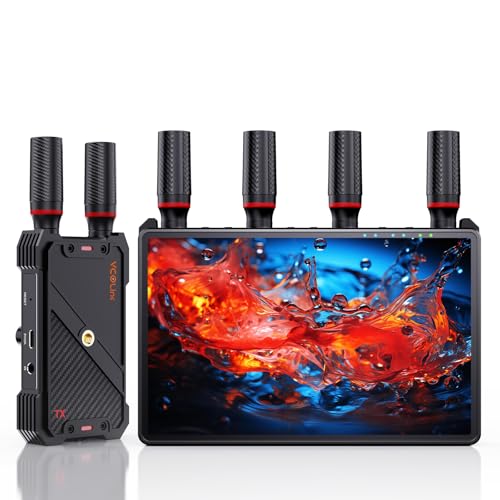
- Built-in 7-inch monitoring screen
- Supports up to five receivers
- HDMI loop-out and flexible power
Best For: Collaborative filming, studios, and live production
Best Multi-Display Value
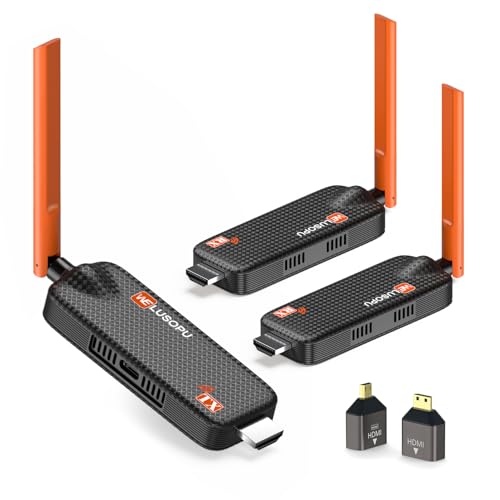
- Includes one transmitter and two receivers
- Expandable to multiple displays
- 4K input with 1080p60 output
Best For: Classrooms, venues, conferences, and multi-screen installations
Best Portable Camera Transmitter
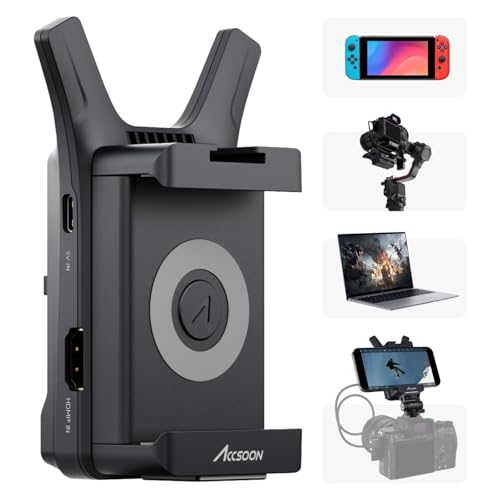
- Weighs about 72.3 grams
- Monitors on up to four mobile devices
- 1080p60 transmission up to 500 feet
Best For: DSLR, gimbal, and lightweight production rigs
Best Plug-and-Play Starter Kit

- Includes two receivers
- Supports up to six screens
- Includes several HDMI adapters
Best For: Short-range home, classroom, and venue multi-display setups
Professional Dual-Band Pick
CineView SE Wireless Video Transmitter

- Dual-band 2.4GHz/5GHz transmission
- Up to 1200ft range with 0.05s latency
- HDMI and SDI support for 1080p/60fps
Best For: Film and event crews needing long-range, low-latency monitoring
Multi-Display HDMI Pick

- One transmitter plus two receivers included
- Simultaneous 1080p/60Hz output to two screens
- Plug-and-play dual-band operation
Best For: Multi-screen HDMI distribution for events, meetings, and viewing
Mobile Monitoring Pick
Lemorele Wireless HDMI Transmitter

- 1TX+3RX supports up to four displays
- 1080p/60Hz transmission up to 656ft line of sight
- TuTuPlay app enables phone and tablet previews
Best For: Multi-screen camera monitoring and remote framing
Long-Range Production Pick

- Up to 1300ft open-field range
- 1080p60 with low claimed latency
- Loop-out and up to five receivers
Best For: Long-distance event and production monitoring
Best Heavy-Duty Pick

- 1080p60 transmission up to 656ft line of sight
- Phone and tablet preview via TuTuPlay
- One transmitter supports four receivers
Best For: Filmmakers needing convenient remote live preview
Compact Multi-Screen Value
YAOMAISI G9R Pro Wireless HDMI

- One transmitter supports up to four receivers
- 1080p60 with dual-band wireless
- Pre-paired plug-and-play setup
Best For: Short-range events and multi-display installations
Best All-in-One Hub – 7-Inch Multi-Viewer HDMI System
For teams comparing video transmitters for multi camera setups, this kit stands out by combining wireless HDMI transmission with a built-in 7-inch monitor. It sends 1080p at 60Hz up to 1,312 feet in line-of-sight conditions, supports up to five receivers, and adds HDMI loop-out for local monitoring.
Best For: Film crews, studios, and live productions that need multiple viewing points and an integrated on-set monitor.
Pros:
- Built-in 7-inch receiver display reduces the need for an extra monitor.
- Supports one transmitter broadcasting to up to five receivers.
- Offers HDMI loop-out, IR remote control, headphone monitoring, and flexible power options.
- Claims 1080p60 transmission up to 1,312 feet with latency below 0.05 seconds in line-of-sight use.
Cons:
- The advertised range depends on clear line-of-sight conditions.
- An HDMI cable is not included for connecting the receiver to an external display.
- Phone and tablet compatibility requires a Type-C-to-HDMI cable.
This is the most complete option here for collaborative production work. Its integrated screen, expandable receiver design, and local loop-out make it particularly practical when several people need to monitor a camera feed at once.
Best Multi-Display Value – 4K-Input Wireless HDMI Kit
This WELUSOPU kit is a flexible choice among video transmitters for multi camera setups when the priority is sending one source to several displays. It includes one transmitter and two receivers, supports expansion to as many as six displays, and accepts 4K input while delivering 1080p at 60Hz output.
Best For: Venues, classrooms, conference rooms, security monitoring, and other installations that need synchronized content across multiple screens.
Pros:
- Included two receivers support multi-screen distribution out of the box.
- Expandable design can support up to six to eight displays, according to the supplied details.
- Supports 4K source input and 1080p60 output.
- Plug-and-play operation requires no app, Bluetooth, or Wi-Fi password for basic setup.
Cons:
- Output is limited to 1080p at 60Hz even when the source is 4K.
- The listed 656-foot range is dependent on the installation environment.
- Mobile monitoring uses the Tutuplay app and occupies the phone’s Wi-Fi connection.
With two receivers included and expansion available, this model offers a strong fit for multi-display distribution. It is better suited to synchronized venue or presentation feeds than to a compact camera-rig workflow.
Best Portable Camera Transmitter – Accsoon CineView Nano
The Accsoon CineView Nano is a compact option for video transmitters for multi camera setups, especially when operators want to monitor a camera feed on mobile devices. It transmits 1080p60 video up to 500 feet with latency below 60ms and supports monitoring on up to four iOS or Android devices through the Accsoon SEE app.
Best For: DSLR users, gimbal operators, photographers, and small crews needing lightweight mobile monitoring or app-based live-streaming tools.
Pros:
- Very lightweight design at approximately 72.3 grams.
- Sends one camera feed to up to four iOS or Android devices.
- Supports 1080p60 transmission with latency below 0.06 seconds.
- Offers NP-F battery or 5V USB power and includes mounting accessories for cameras and gimbals.
Cons:
- It requires the Accsoon SEE app for mobile-device monitoring.
- NP-F batteries, charging cables, and HDMI cables are sold separately.
- Live streaming through the app requires using a separate 5G network because the video occupies the phone’s Wi-Fi connection.
This is the most camera-focused and portable product in the group. Its modest size and mobile monitoring support are useful for lightweight crews, though teams needing dedicated HDMI receiver displays should consider a larger system.
Best Plug-and-Play Starter Kit – Dual-Receiver Wireless HDMI
For buyers seeking straightforward video transmitters for multi camera setups, this kit provides one transmitter and two receivers with support for up to six screens. Its dual-band 5.8GHz/2.4GHz transmission, included adapters, and simple plug-and-play setup make it practical for cameras, laptops, and other HDMI sources.
Best For: Home theaters, classrooms, churches, conference rooms, restaurants, and small production environments using multiple displays within about 165 feet.
Pros:
- Includes two receivers and can expand to as many as six screens with additional receivers.
- Includes USB-C-to-HDMI, Micro HDMI, and Mini HDMI adapters.
- Supports 5.8GHz/2.4GHz dual-band transmission with a dual-antenna design.
- Can mirror to iOS and Android phones or tablets through the TutuPlay app.
Cons:
- Transmission range can drop to about 50 feet through walls.
- The system does not support TV-to-TV transmission.
- Phone or tablet monitoring does not provide control of the transmitter-connected laptop.
This kit is a sensible entry point for short-range multi-display distribution, particularly where convenient adapters matter. Its stated range is shorter than the leading long-distance options, but the included receivers and simple setup improve its everyday versatility.
Professional Dual-Band Pick – CineView SE Wireless Video Transmitter
For demanding video transmitters for multi camera setups, the ACCSOON CineView SE emphasizes range, low latency, and connection flexibility. Its dual-band 2.4GHz and 5GHz transmission combines streams to help maintain a complete audio and video signal, while HDMI and SDI inputs support a wider range of production equipment.
Best For: Filmmakers, event crews, and multi-camera productions needing long-range wireless monitoring with HDMI and SDI compatibility.
Pros:
- Dual-band transmission is designed to improve stability in areas with interference.
- Up to 1200 feet of transmission range and approximately 0.05-second latency.
- Supports 1080p video up to 60fps through HDMI and SDI connections.
- Compact aluminum construction, OLED display, silent cooling, and Accsoon GO app support.
Cons:
- This listing includes only the transmitter, so a compatible receiver is needed for a complete system.
- Maximum resolution is 1080p rather than 4K.
The CineView SE is the most production-oriented option here, particularly when SDI support, extended range, and very low delay matter more than simple home or office screen sharing.
Multi-Display HDMI Pick – G9R Pro Wireless HDMI Kit
If your multi-camera workflow centers on distributing one HDMI source to several screens, the G9R Pro offers a straightforward alternative to more specialized production links. The kit includes one transmitter and two receivers, supports simultaneous expansion to multiple displays, and operates without apps, drivers, Wi-Fi, or Bluetooth setup.
Best For: Presentations, church services, sports viewing, and simple HDMI distribution to two or more displays.
Pros:
- Includes one transmitter and two receivers for simultaneous two-screen output.
- Pre-paired plug-and-play setup with automatic pairing in about 5–10 seconds.
- Supports 1080p at 60Hz with approximately 0.1-second latency.
- Dual-band 2.4GHz/5.8GHz operation and heat-control technology support extended use.
Cons:
- The transmitter requires an HDMI output source and cannot connect directly to a TV.
- Transmission through walls or ceilings is reduced to about 50 feet.
- The transmitter supports 1080p output only, despite 4K decoding support on the receiver.
This is better suited to distributing a camera, laptop, or media source to multiple displays than linking several cameras together. Confirm your source has HDMI output and provide a stable 5V/1A power supply.
Mobile Monitoring Pick – Lemorele Wireless HDMI Transmitter
The Lemorele wireless HDMI system is a practical choice among video transmitters for multi camera setups when remote preview and multi-screen sharing are priorities. Its 1TX+3RX configuration can send one HDMI source to up to four receivers, while the TuTuPlay app lets an iOS or Android phone or tablet act as a live-view monitor.
Best For: Camera framing, security monitoring, presentations, and home theater setups that need several displays or a phone preview.
Pros:
- One transmitter can stream to up to four receivers simultaneously.
- Provides 1080p/60Hz transmission with a stated line-of-sight range of up to 656 feet.
- TuTuPlay app enables real-time viewing on compatible iOS and Android phones or tablets.
- Aluminum alloy housing provides durability and heat dissipation, with plug-and-play setup.
Cons:
- Phones and tablets function as TuTuPlay preview screens, not as signal transmitter sources.
- HDMI-only connectivity may require optional adapters for USB-C or Micro HDMI cameras.
- The phone preview depends on the TuTuPlay app rather than a direct HDMI connection.
Choose the Lemorele when flexible monitoring is more important than professional SDI connectivity. Its three included receivers and mobile-preview feature make it especially useful for viewing one source across several locations.
Long-Range Production Pick – 1300ft Wireless HDMI System
For demanding video transmitters for multi camera setups, this Vrriis system stands out with a claimed 1300-foot open-field range, 1080p at 60Hz, and support for up to five receivers. Its loop-out connection also lets you monitor the source locally while sending the feed wirelessly.
Best For: Long-distance event, sports, and production monitoring where multiple displays or receivers are useful.
Pros:
- Claims up to 1300 feet of transmission in an open field.
- Supports 1080p at 60Hz with approximately 0.05-second latency.
- Offers transmitter loop-out, dual HDMI output on the receiver, and IR remote support.
- Can use NP-F batteries, USB-C power, adapters, or portable power banks.
Cons:
- Walls, metal, brick, and glass can significantly reduce range.
- Batteries are not included.
- Transmission distance decreases as more receivers are added.
This is the most feature-rich option here for extended wireless coverage and on-site monitoring. Confirm the expected obstructions and power arrangement before relying on its maximum range.
Best Heavy-Duty Pick – Lemorele R1000 Wireless HDMI
The Lemorele R1000 is a practical choice among video transmitters for multi camera setups when remote previewing matters. Its TuTuPlay app can turn an iOS or Android phone or tablet into a live-view monitor, while the aluminum body and plug-and-play setup suit portable production and presentation workflows.
Best For: Filmmakers, streamers, and security or presentation users who want phone-based live monitoring.
Pros:
- Provides 1080p at 60Hz over a claimed 656-foot line-of-sight range.
- Supports one transmitter streaming to up to four receivers.
- TuTuPlay enables real-time preview on compatible iOS and Android phones or tablets.
- Aluminum-alloy construction is designed for durability and heat dissipation.
Cons:
- Phones can preview the feed through TuTuPlay but cannot serve as the HDMI source transmitter.
- The stated 656-foot range depends on clear line of sight.
- USB-C or Micro HDMI sources may require optional adapters.
Choose this model if a compact wireless monitor on a phone or tablet is more valuable than extensive physical outputs. Its four-receiver capability also makes it suitable for distributing one camera feed to several screens.
Compact Multi-Screen Value – YAOMAISI G9R Pro Wireless HDMI
The YAOMAISI G9R Pro offers a straightforward option for video transmitters for multi camera setups that need one source shared across several screens. Pre-paired units, dual-band wireless operation, and support for up to four receivers keep installation simple for events, classrooms, presentations, and small production environments.
Best For: Shorter-range multi-display installations where quick setup and compact hardware are priorities.
Pros:
- Supports one transmitter to up to four receivers simultaneously.
- Pre-paired plug-and-play design requires no app, drivers, software, Wi-Fi, or Bluetooth.
- Delivers 1080p at 60Hz with claimed latency as low as 0.1 second.
- Uses 2.4GHz and 5.8GHz bands and includes unfoldable antennas.
Cons:
- Its stated open-environment range is 165 feet, with a shorter 32-foot estimate through walls or ceilings.
- Insufficient USB power can cause interruptions or delays.
- The plastic enclosure may be less robust than an aluminum-bodied alternative.
This G9R Pro is appealing when the receivers are relatively close and multiple displays need the same feed. Plan for dedicated 5V/1A power and test performance through the actual walls or ceilings in your installation.
How We Picked the Best Video Transmitters for Multi Camera Setups
We focused on the specifications that matter most when several cameras and displays operate at once: supported video resolution and frame rate, wireless band, stated transmission range, latency, receiver count, loop-out functionality, and connection type. We also considered whether each system is better suited to professional camera work, home or event distribution, or straightforward multi-TV monitoring.
Claims such as “low latency” and maximum range can vary with walls, interference, line of sight, and the source device. Treat published distances as best-case figures and verify that the transmitter supports the outputs and refresh rates your cameras, switcher, monitors, or capture devices require.
Quick Comparison
| What to Compare | Why It Matters |
|---|---|
| Receiver capacity | Determines how many monitors or destinations can view one source without adding extra hardware. |
| Range and wireless band | Influences reliability across venues, rooms, and crowded RF environments. |
| Latency | Important for live switching, camera operation, directing, and audience-facing monitoring. |
| Resolution and frame rate | Ensures the system can preserve the picture quality your cameras produce. |
| Inputs, outputs, and loop out | Helps connect cameras, switchers, recorders, and local preview displays. |
Key Buying Factors for Video Transmitters for Multi-Camera Setups
Receiver Count and Expansion
Count every intended destination before buying. A one-transmitter, multiple-receiver kit is useful for sending one camera or switched program feed to several screens. If you need different camera feeds on different displays, confirm whether you need a separate transmitter per camera rather than assuming one transmitter can independently distribute multiple sources.
Latency, Range, and Interference
Low latency is especially valuable for live production and camera operators who depend on immediate feedback. For longer venues, prioritize clear line-of-sight performance and a realistic range over headline distance. Dual-band systems may offer more flexibility in congested locations, but placement and local wireless traffic still affect results.
Compatibility and Signal Path
Check HDMI versions, maximum supported resolution, frame rate, HDCP behavior, power requirements, and whether adapters are needed. A loop-out port can preserve a wired monitor or feed a recorder while the wireless link serves remote screens. Professional cameras and switchers may also require SDI support, which not every HDMI-only kit provides.
Power and Mounting
For camera-mounted use, consider battery operation, USB power, weight, cooling, and mounting options. For permanent installations, verify cable length, ventilation, and whether receivers can be placed discreetly near displays.
Who Should Buy Which Video Transmitters for Multi Camera Setups?
Choose a professional-oriented system if you are shooting events, interviews, commercials, or live productions where latency, dependable monitoring, and camera compatibility matter most.
Choose a multi-receiver HDMI kit if one camera or program feed must appear on several monitors, TVs, or confidence displays. These systems are practical for classrooms, presentations, worship spaces, and event venues.
Choose a compact plug-and-play kit for occasional home, office, or small-event use where simple setup matters more than advanced production features. For demanding multi-camera work, confirm the system’s scalability and test it at the venue before relying on it for a live broadcast.