
Wireless video transmitters can simplify camera monitoring, directing, streaming, and multi-screen setups without running long HDMI or SDI cables across your studio. The right system depends on your camera outputs, required resolution, range, latency, and receiver capacity.
We selected 10 options spanning compact HDMI kits, professional HDMI/SDI systems, UVC-compatible transmitters, and multi-receiver solutions. Use the guide below to match the features that matter most to your workflow.
Best 10 Video Transmitters for Home Studios Picks for 2026
Best All-Around Pick

- 4K30 HDMI transmission with dual-band operation
- Up to four receivers for shared monitoring
- UVC output for computer live streaming
Best For: Home studios needing flexible HDMI monitoring and streaming
Best for Long-Range Monitoring

- Up to 3 km/10,000 feet stated range
- Automatic hopping across three frequency bands
- SDI, HDMI, and USB-C monitoring
Best For: Studios prioritizing distance and stable 1080p monitoring
Best Hybrid HDMI/SDI Pick

- HDMI and SDI input/output
- 4K30 HDMI transmission with 50ms latency
- UVC, RTMP, and multi-receiver monitoring
Best For: Hybrid studios combining HDMI and SDI equipment
Best Budget Pocket 3 Setup

- Optimized for DJI Osmo Pocket 3
- 1080p60 UVC output for computer streaming
- Up to five receivers with HDMI loopout
Best For: Pocket 3 users wanting compact 1080p monitoring and streaming
Professional Crew Pick

- Dual-band 2.4GHz and 5GHz transmission
- HDMI and SDI support at up to 1080p/60fps
- Connects to up to four receivers or devices
Best For: Professional home studios and multi-person monitoring
All-in-One Monitoring Pick
Wireless HDMI System with 7-Inch Monitor
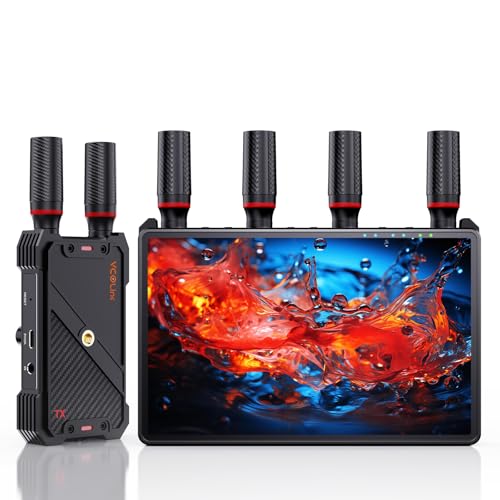
- Built-in 7-inch HD monitoring screen
- Supports up to five receivers
- HDMI loop-out and flexible power options
Best For: Compact studios and collaborative shoots
4K Home Theater Pick
Vrriis WL095P Wireless HDMI Kit

- Supports UHD 4K at 30Hz
- Pre-paired plug-and-play operation
- Dual HDMI output and 3.5mm audio output
Best For: Simple 4K studio, TV, and multiroom setups
Best Flexible Streaming Pick
20-Channel UVC Wireless Video System
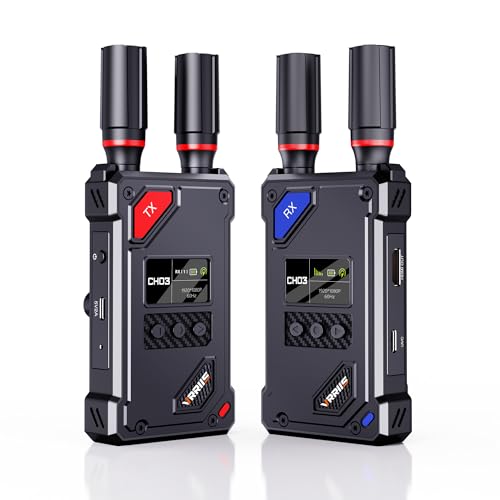
- UVC output supports computer streaming without a separate capture device.
- 20 adjustable channels help manage interference.
- 1080p/60Hz transmission with HDMI loop out and multiple power options.
Best For: Home-studio livestreaming and flexible monitoring
Best 4K Production Upgrade
Hollyland Mars 4K Wireless System

- Transmits up to 4K/30 through HDMI.
- Includes HDMI and 3G-SDI input/output.
- Supports app monitoring and multiple display views.
Best For: 4K production and HDMI/SDI studio workflows
Best Simple HDMI Monitoring Pick

- 1080p/60Hz transmission with a claimed 0.05-second delay.
- Loop out and dual HDMI receiver outputs support multiple screens.
- IR control and multiple power options add installation flexibility.
Best For: Straightforward Full HD studio monitoring
Best All-Around Pick – Hollyland Pyro H
For home studios that need flexible monitoring and occasional live streaming, the Hollyland Pyro H is a well-rounded choice among video transmitters for home studios. It supports HDMI video up to 4K30, dual-band operation, UVC output, and connections to as many as four receivers.
Best For: Home studios needing 4K monitoring, multi-person viewing, and straightforward computer streaming.
Pros:
- Supports HDMI transmission up to 4K30 and 1080p60.
- Offers up to 1,300 feet of range with stated 60ms latency.
- Supports up to four receivers, plus Hollyview app monitoring.
- UVC support enables plug-and-play streaming to a computer.
Cons:
- Provides HDMI connectivity rather than the HDMI and SDI combination found on the Pyro S.
- The kit’s long-range performance depends on the shooting environment and wireless conditions.
The Pyro H balances resolution, range, collaboration, and streaming features without requiring a more specialized studio setup. It is a practical fit when your cameras and monitors use HDMI.
Best for Long-Range Monitoring – DJI SDR Transmission Combo
The DJI SDR Transmission Combo is aimed at studios and production spaces where signal stability and distance matter. As one of the more capable video transmitters for home studios, it supports 1080p60 monitoring, multiple frequency bands, USB-C monitoring, and broadcast mode for an unlimited number of receivers.
Best For: Larger studios or production environments that prioritize long-range, interference-resistant 1080p monitoring.
Pros:
- Offers transmission distances up to 3 km or 10,000 feet under stated conditions.
- Uses automatic frequency hopping across 2.4GHz, 5.8GHz, and DFS bands.
- Supports 1080p60 video at up to 20 Mbps with stated 35ms latency.
- Provides SDI, HDMI, and USB-C monitoring options.
Cons:
- Its listed video transmission specification is 1080p60 rather than 4K.
- The extended range may be more capability than a compact home studio requires.
Choose this combo when reliable coverage and flexible monitoring connections matter more than 4K transmission. Broadcast mode is especially useful for directing feeds to many viewers or workstations.
Best Hybrid HDMI/SDI Pick – Hollyland Pyro S
With both HDMI and SDI connections, the Hollyland Pyro S is a strong option for home studios combining consumer and professional video equipment. It joins 4K30 HDMI support with automatic dual-band hopping, multi-receiver monitoring, UVC streaming, and RTMP capability.
Best For: Hybrid studios using cameras, monitors, or switchers with both HDMI and SDI connections.
Pros:
- Supports HDMI and SDI input/output for broad equipment compatibility.
- Transmits up to 4K30 over HDMI with stated 50ms latency.
- Supports up to four receivers and app-based scopes and monitoring tools.
- Offers UVC and RTMP options for computer and platform streaming.
Cons:
- Its 4K support is specified through HDMI, while SDI support covers listed frame rates up to 59.94 fps.
- The broader feature set may be unnecessary for an HDMI-only home studio.
The Pyro S is the most adaptable choice here for mixed studio infrastructure. Its SDI support and monitoring tools add value for more advanced workflows, while UVC and RTMP keep streaming options accessible.
Best Budget Pocket 3 Setup – Vrriis Wireless Video System
Designed around the DJI Osmo Pocket 3, this Vrriis system offers a simpler way to send a 1080p feed to monitors or a computer. It is a useful entry in video transmitters for home studios because it includes UVC output, 20 selectable channels, HDMI loopout, and support for up to five receivers.
Best For: Pocket 3 users building a compact 1080p streaming or multi-monitor setup.
Pros:
- Built-in Type-C transmitter connection is optimized for the Osmo Pocket 3.
- Receiver UVC output supports up to 1080p60 streaming to a computer.
- Offers 20 adjustable channels and a display showing connection information.
- Supports one transmitter with up to five receivers and HDMI loopout.
Cons:
- It is limited to 1080p transmission rather than 4K.
- Walls, glass, bricks, and metal obstacles can reduce range or cause signal loss.
- NP-F batteries are not included.
This is a focused solution rather than a general-purpose professional transmitter. It makes the most sense when the Osmo Pocket 3 is central to your setup and you want direct computer streaming without a separate capture device.
Professional Crew Pick – Accsoon CineView SE
For home studios that need dependable monitoring across multiple devices, the Accsoon CineView SE is one of the more capable video transmitters for home studios. Its HDMI and SDI support, dual-band transmission, and near-real-time 1080p video make it suited to more advanced camera and production setups.
Best For: Home studios with professional cameras, SDI equipment, and multi-person monitoring needs.
Pros:
- Uses simultaneous 2.4GHz and 5GHz transmission to improve stability in interference-heavy environments.
- Supports HDMI and SDI inputs with 1080p video up to 60fps.
- Can connect one transmitter to up to four receivers or mobile devices.
- Offers approximately 0.05-second latency and monitoring tools through the Accsoon SEE app.
Cons:
- The advertised 1200-foot range is measured in a clear, obstacle-free environment.
- NP-F batteries, DC cable, and USB cables are sold separately.
- Its professional feature set may be more than a basic home setup requires.
The CineView SE stands out when compatibility and crew collaboration matter more than simplicity. It is a strong choice for studios built around HDMI and SDI equipment, though the extra accessories and advanced workflow add to the overall setup.
All-in-One Monitoring Pick – Wireless HDMI System with 7-Inch Monitor
This wireless HDMI system is a practical option among video transmitters for home studios because the receiver includes its own 7-inch monitor. It also supports HDMI output, multiple receivers, and flexible power options, reducing the need for separate monitoring equipment during filming or streaming.
Best For: Home studios and small crews that want built-in monitoring plus expandable viewing.
Pros:
- Built-in 7-inch HD receiver screen provides immediate monitoring without an extra display.
- Transmits 1080p at 60Hz with claimed latency below 0.05 seconds and a 1312-foot line-of-sight range.
- One transmitter can broadcast to up to five receivers for shared viewing.
- Includes HDMI loop-out, IR remote control, and NP-F battery, power bank, or USB-C power support.
Cons:
- The advertised range depends on line-of-sight conditions.
- An HDMI cable for external display output is not included.
- Smartphone and tablet use requires a Type-C-to-HDMI cable.
The built-in screen makes this system especially convenient for compact studios where space and setup time are limited. Its multi-receiver support is useful for collaboration, while the HDMI-only design is less suitable for workflows that require SDI.
4K Home Theater Pick – Vrriis WL095P Wireless HDMI Kit
The Vrriis WL095P is a straightforward choice for home studios that prioritize 4K playback and simple HDMI connectivity. As video transmitters for home studios go, its pre-paired plug-and-play setup makes it easy to send video from a DSLR, computer, or laptop to a TV or monitor without installing apps or drivers.
Best For: Home studios that need simple point-to-point 4K HDMI transmission and audio output.
Pros:
- Supports UHD 4K at 30Hz with H.265 encoding and synchronized audio.
- Pre-paired transmitter and receiver require no apps or drivers.
- Uses dual antennas and 2.4GHz/5GHz wireless transmission.
- Provides dual HDMI outputs on the receiver and 3.5mm audio output for compatible speakers or soundbars.
Cons:
- The claimed 1150-foot range is for an open field without interference.
- Walls, metal, brick, and glass can substantially reduce coverage.
- Latency is listed as less than 0.1 seconds, which may be less ideal for highly timing-sensitive monitoring.
The WL095P is best when ease of use and 4K support are more important than professional SDI features. Its expandable receiver capability and audio output also make it useful for studio-to-display or multiroom viewing setups.
Best Flexible Streaming Pick – 20-Channel UVC Wireless Video System
For home studios that need to send camera video to a monitor and a computer, this Vrriis system is a versatile choice among video transmitters for home studios. It supports 1080p at 60Hz, offers manual channel selection, and provides UVC output for streaming through software such as OBS without a separate capture device.
Best For: Home-studio livestreaming, multi-device monitoring, and setups that benefit from flexible power options.
Pros:
- UVC output lets you send received footage to a computer for live streaming without an additional capture device.
- 20 selectable channels with an LCD showing signal strength and interference levels.
- 1080p at 60Hz, 0.05-second claimed latency, and up to 1,500 feet of line-of-sight range in open conditions.
- HDMI loop out supports a local monitor, while NP-F batteries, USB-C, and adapters provide multiple power options.
Cons:
- Walls, metal, brick, and glass can substantially reduce range or cause signal loss.
- Batteries are not included.
- Adding more receivers can reduce the transmission distance.
Its UVC connection makes this especially practical for a home studio that streams to a computer, while the channel controls help manage interference. The system is limited to Full HD rather than 4K, but it offers a useful combination of studio monitoring and streaming features.
Best 4K Production Upgrade – Hollyland Mars 4K Wireless System
For creators using higher-end cameras or professional monitors, the Hollyland Mars 4K is a production-focused option among video transmitters for home studios. It combines 4K HDMI transmission with HDMI and SDI connectivity, plus app monitoring for viewing a shoot on compatible mobile devices.
Best For: 4K home-studio production, camera crews, and setups requiring both HDMI and SDI workflows.
Pros:
- Supports up to 3840×2160 at 24, 25, or 30fps through HDMI.
- Provides HDMI and 3G-SDI input/output, including support for 23.98, 29.97, and 59.94fps SDI output.
- Supports up to 450 feet of line-of-sight range and 66ms latency in interference-free laboratory conditions.
- Can provide monitoring through up to four app-connected devices, with additional display options through the receiver.
Cons:
- The listed range and latency are laboratory, line-of-sight specifications and may vary in a home studio.
- QC/PD protocol and 5V/2A charging are not supported.
- Its 4K production features may be more than needed for a basic 1080p streaming setup.
The Mars 4K is the strongest fit here for studios built around 4K cameras, SDI equipment, or multi-person monitoring. Its shorter stated range and higher complexity make it less straightforward than a basic HDMI extender, but the interface flexibility is valuable for more demanding production workflows.
Best Simple HDMI Monitoring Pick – 1080p Wireless System with IR
This Vrriis kit is a practical choice for home studios that primarily need to send a Full HD HDMI feed to one or more screens. As video transmitters for home studios go, it emphasizes straightforward plug-and-play setup, local monitoring, IR source control, and flexible display connections rather than 4K production features.
Best For: DSLR, laptop, set-top-box, TV, and projector connections where simple 1080p wireless monitoring is the priority.
Pros:
- Supports 1080p at 60Hz with a claimed 0.05-second delay.
- HDMI loop out on the transmitter supports local monitoring, while the receiver provides dual HDMI outputs for two screens.
- IR support allows remote control of the HDMI source from another location.
- Offers up to 1,300 feet of line-of-sight range in open, interference-free conditions and multiple power options.
Cons:
- Walls, metal, brick, and glass can shorten coverage or cause severe signal loss.
- Batteries are not included.
- It is limited to 1080p rather than 4K.
Choose this model when your studio workflow is centered on Full HD devices and convenient screen distribution. The loop-through and dual receiver outputs are useful for monitoring, while IR control adds flexibility when the source device is positioned away from the display.
How We Picked These Video Transmitters for Home Studios
We compared these systems by looking at the specifications that have the biggest effect on everyday studio use: supported video formats, HDMI or SDI compatibility, claimed transmission range, latency, connection stability, receiver capacity, monitoring outputs, and setup flexibility. We also considered whether a transmitter can feed a computer through UVC, support multiple viewing devices, or provide loop-out for a local monitor.
Published range figures are best treated as maximum line-of-sight estimates. Walls, wireless congestion, antenna position, and nearby equipment can reduce usable distance. Likewise, advertised latency may vary with resolution, frame rate, and the connected display.
Quick Comparison
- Best for professional camera rigs: Hollyland Mars 4K, DJI SDR Transmission, and Hollyland Pyro S offer stronger format flexibility or longer-range performance.
- Best for flexible 4K HDMI workflows: Hollyland Pyro H and Pyro S support 4K30 input with 1080p60 options.
- Best for computer-based streaming: UVC-equipped systems can connect directly to compatible computers or streaming devices.
- Best for multiple viewers: Kits supporting several receivers are useful for directors, talent, clients, or separate monitoring stations.
- Best for budget-conscious 1080p setups: Basic HDMI transmitter-and-receiver kits can cover simple camera-to-monitor links at lower cost.
Key Buying Factors for Video Transmitters for Home Studios
Inputs, Outputs, and Video Format
Check your camera and monitor ports before buying. HDMI systems suit many mirrorless cameras, camcorders, and consumer devices, while SDI support is more common on professional cameras and production monitors. A 4K-capable transmitter may still transmit at 1080p depending on the receiver, output, or wireless mode.
Latency and Reliability
Low latency matters for live directing, focus pulling, and performance monitoring. For casual preview, a small delay may be acceptable; for interactive work, prioritize a system with a clearly stated low-latency figure. Dual-band or interference-resistant systems may be preferable in crowded homes, offices, or event spaces.
Range, Receivers, and Power
Choose more range than your minimum requirement if walls or people will obstruct the signal. Confirm how many receivers can pair simultaneously and whether phones, tablets, or computers require a separate app or adapter. Also check battery, USB, or DC power requirements, especially for long shoots.
Loop-Out and UVC Support
Loop-out lets you monitor locally while sending the same feed elsewhere. UVC output can make a transmitter useful as a capture source for video calls, recording, or live streaming, but verify operating-system and resolution compatibility before purchase.
Who Should Buy Which Video Transmitters for Home Studios?
Choose a professional HDMI/SDI model if your studio uses cinema cameras, SDI monitors, or multiple crew displays. A 4K HDMI kit is a better fit for mirrorless-camera creators who want detailed preview and room to expand. Pick a UVC model when the computer is central to your workflow. For a single camera and nearby display, a straightforward 1080p HDMI kit may provide the best value without unnecessary features.