
The right subwoofer can add weight, detail, and realism to music without overwhelming vocals, instruments, or your listening room. This roundup compares 10 powered models for desktop studios, stereo systems, and home theaters used for music.
We focus on bass extension, power, connectivity, cabinet size, and placement flexibility so you can choose a subwoofer that fits both your system and your preferred listening style.
Best 10 Subwoofers for Music Picks for 2026
Best for Big, Room-Filling Bass

- 12-inch front-firing woofer
- 400 watts of dynamic power
- Line and LFE inputs
Best For: Large music and home-theater rooms
Best for Studio Monitoring

- 8-inch bass-reflex design
- 22Hz–150Hz response
- Adjustable filter and phase controls
Best For: Recording and live-music monitoring
Best Compact Klipsch Value

- 10-inch front-firing woofer
- 300 watts of peak power
- Compact 14.5-inch-deep cabinet
Best For: Music and multipurpose systems in smaller rooms
Best for Desktop Music Systems

- 8-inch driver with 30Hz extension
- Bluetooth 5.0 connectivity
- TRS, RCA, and headphone connections
Best For: Desktop production and compact music setups
Best Compact Pick
Edifier T5s 8-Inch Powered Subwoofer
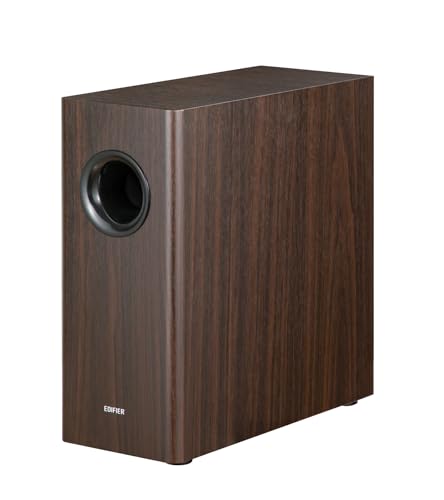
- 70W RMS Class-D amplifier with 35Hz response
- Adjustable crossover and phase controls
- Compact cabinet with RCA and 3.5mm-to-RCA cables
Best For: Small- to medium-sized wired music systems
Best Immersive Bass Pick

- 8-inch spun copper woofer
- Down-firing driver for immersive bass
- RCA/LFE connectivity and 150W peak power
Best For: Music and home theater surround systems
Best Full-Range Upgrade

- 12-inch woofer with 200W Class-D amplification
- 26Hz response and braced cabinet
- RCA, LFE, and speaker-level inputs
Best For: Larger music and home theater systems
Balanced Room-Filling Bass

- 10-inch woofer with Advanced YST II technology
- Twisted flare port for clear, tight bass
- 100-watt wired floor-standing design
Best For: Simple home theater and music setups seeking controlled bass
Dynamic Front-Firing Impact
Klipsch Synergy Black Label Sub-100

- 150 watts continuous, 300 watts dynamic power
- 10-inch front-firing Cerametallic woofer
- Five-year parts-and-labor warranty
Best For: High-impact music and home theater systems with an AV receiver
Clean, Flexible Low End

- 180-watt Class-D amplifier
- RCA, LFE, and speaker-level inputs
- Braced cabinet and five-year warranty
Best For: Music and home theater systems needing flexible connections
Best for Big, Room-Filling Bass – Klipsch R-12SW
If you want subwoofers for music that can also handle movie soundtracks, the Klipsch R-12SW combines a large 12-inch front-firing woofer with 400 watts of dynamic power. Its adjustable crossover and phase control make it easier to integrate into a compatible home audio system.
Best For: Music listeners and home-theater users who want powerful, deep bass from a floor-standing subwoofer.
Pros:
- 12-inch copper-spun front-firing woofer
- 400 watts of dynamic amplifier power
- Line and LFE inputs support broad receiver compatibility
- Low-pass crossover and phase controls help with setup
Cons:
- Large 20-by-20-by-17.75-inch cabinet needs substantial floor space
- Wired connectivity only
The R-12SW is a strong choice when output and scale matter most. Its size and wired design make it better suited to a dedicated listening or home-theater setup than a compact desktop system.
Best for Studio Monitoring – Yamaha HS8S
For subwoofers for music production, the Yamaha HS8S focuses on controlled studio integration rather than sheer home-theater impact. Its 8-inch bass-reflex design, 150-watt amplifier, and adjustable filter controls support a more tailored monitoring setup.
Best For: Recording, live-music, and studio-monitoring systems that need adjustable low-frequency extension.
Pros:
- 8-inch bass-reflex powered subwoofer
- 22Hz–150Hz frequency response
- Low-cut switch and adjustable 80–120Hz controls
- Phase switch supports system matching
Cons:
- 150-watt output is lower than the Klipsch options here
- Its studio-focused controls may be more than casual listeners need
- Wired connectivity uses XLR
The HS8S is best when accuracy and system control are priorities. Its filter and phase adjustments give producers more flexibility when pairing it with studio monitors.
Best Compact Klipsch Value – Klipsch R-100SW
The Klipsch R-100SW is a practical pick among subwoofers for music when you want strong bass in a smaller enclosure. Its 10-inch spun-copper woofer, 300-watt peak amplifier, and RCA line-level and LFE inputs suit music, television, and gaming systems.
Best For: Home listeners who want a capable, space-conscious subwoofer for music and multipurpose entertainment.
Pros:
- 10-inch front-firing spun-copper IMG woofer
- 300 watts of peak amplifier power
- Adjustable volume, low-pass crossover, and phase
- RCA line-level and LFE inputs
Cons:
- 32Hz–120Hz response does not extend as low as the R-12SW’s listed 29Hz response
- Wired RCA connectivity only
With a 14.5-by-12.5-by-16.4-inch footprint, the R-100SW is easier to place than the larger R-12SW while still offering substantial low-end output. It is a sensible middle ground for smaller rooms and mixed-use systems.
Best for Desktop Music Systems – PreSonus Eris Sub 8BT
The PreSonus Eris Sub 8BT is designed for listeners and creators who need subwoofers for music in a desktop or compact studio setup. It combines an 8-inch driver, 100 watts of power, Bluetooth 5.0, balanced and unbalanced inputs, and crossover controls for easier monitor integration.
Best For: Desktop music production, hi-fi listening, multimedia use, and compact Eris monitor systems.
Pros:
- Compact 8-inch front-firing studio subwoofer
- 100 watts of power with response down to 30Hz
- Bluetooth 5.0 plus TRS and RCA connections
- High-pass, low-pass, and room-tuning controls
Cons:
- Smaller driver and lower power than the Klipsch R-12SW
- Bluetooth range is listed at 10 meters
- Its control set is more studio-oriented than plug-and-play home audio
The Eris Sub 8BT stands out for flexible connections and desktop-friendly monitoring features. It is particularly useful when you want to switch between wireless listening, professional audio gear, and headphones.
Best Compact Pick – Edifier T5s 8-Inch Powered Subwoofer
If you want a compact addition to a desktop, bookshelf, or home audio system, the Edifier T5s is a practical option among subwoofers for music. Its 8-inch long-throw woofer, 70W RMS Class-D amplifier, and 35Hz frequency response are designed to add deeper bass without requiring a separate receiver.
Best For: Small- to medium-sized rooms, bookshelf speakers, and listeners who want flexible wired integration in a space-saving cabinet.
Pros:
- 8-inch woofer and 70W RMS output provide a stronger low-end foundation.
- Adjustable 30Hz–160Hz low-pass filter and 0°/180° phase selector help match the subwoofer to different systems.
- Compact MDF cabinet, front-firing driver, and auto-standby suit everyday indoor listening.
- Includes 3.5mm-to-RCA and RCA cables for straightforward setup.
Cons:
- Uses wired RCA connectivity and has no wireless communication technology.
- The series-connection setup requires main speakers with a wired line input.
The T5s is a sensible choice when easy setup and a discreet footprint matter more than maximum output. Its tuning controls make it adaptable for music systems that include a subwoofer output or RCA connections.
Best Immersive Bass Pick – Klipsch Reference R-8SW
Klipsch Reference R-8SW Surround Subwoofer, 150 Watts Peak Power (Brushed Black Vinyl, 8-Inch)
Check Price On AmazonThe Klipsch Reference R-8SW adds low-end weight to music, television, and surround systems in a relatively compact enclosure. Its 8-inch spun copper woofer, down-firing driver, and all-digital amplifier make it a focused option for shoppers comparing subwoofers for music and home theater.
Best For: Home theater and music setups that need an 8-inch wired subwoofer with RCA/LFE connectivity and a compact floor-standing design.
Pros:
- Spun copper 8-inch woofer is designed to deliver rich, immersive bass.
- Down-firing driver supports a broad, room-filling presentation.
- All-digital amplifier and 150W peak power provide added impact for music and movies.
- RCA and LFE connectivity works with a range of compatible wired systems.
Cons:
- It is a wired subwoofer with no wireless connectivity listed.
- The supplied details do not specify an adjustable crossover or phase control.
Choose the R-8SW if you want Klipsch’s distinctive spun copper driver and a down-firing design for an immersive presentation. It is particularly well suited to systems used for both music and surround sound.
Best Full-Range Upgrade – Dayton Audio Classic CS1200
The Dayton Audio Classic CS1200 is built for listeners who want a larger bass foundation from their music system. Its 12-inch driver, 200W Class-D amplifier, and 26Hz frequency response give it the specifications for deeper, more substantial low end while stereo RCA, LFE, and speaker-level inputs simplify system matching.
Best For: Medium-sized rooms, larger home audio systems, and listeners seeking powerful, controlled bass for both music and home theater.
Pros:
- 12-inch woofer and 200W Class-D amplifier offer substantial bass output.
- Rigid, braced cabinet is designed for tight bass with reduced boominess and distortion.
- Stereo RCA, LFE, and speaker-level inputs provide flexible wired integration.
- Auto-on operation, a swappable grille option, and a five-year manufacturer warranty add convenience and reassurance.
Cons:
- Its larger 18-inch-deep cabinet requires more floor space than compact 8-inch models.
- Wireless connectivity is not listed; setup is wired.
The CS1200 is the strongest fit here for buyers prioritizing scale and deeper extension. Its combination of a 12-inch driver, multiple input options, and room-friendly tuning controls makes it a versatile upgrade for serious music and home theater systems.
Balanced Room-Filling Bass – Yamaha NS-SW100BL
The Yamaha NS-SW100BL is a practical choice when you want smoother low-end support from subwoofers for music without an overly complicated setup. Its 10-inch woofer, 100-watt output, Advanced YST II technology, and twisted flare port are designed to produce clear, tight bass for a home theater or stereo system.
Best For: Listeners who want a straightforward, floor-standing 10-inch subwoofer with a compact design and wired home theater connectivity.
Pros:
- Advanced YST II technology and a twisted flare port aim to improve bass clarity.
- 10-inch cone woofer and 100-watt maximum output add substantial low-end support.
- Includes a subwoofer cable and carries a two-year warranty.
Cons:
- Its 100-watt output is lower than the other options in this roundup.
- The listed 180 Hz frequency response may be less suitable for buyers seeking very deep bass extension.
- It is a wired, floor-standing unit rather than a wireless subwoofer.
The NS-SW100BL is a sensible fit for music and movie systems where clean, controlled bass and simple operation matter more than maximum output. Its black finish also makes it easy to integrate into many rooms.
Dynamic Front-Firing Impact – Klipsch Synergy Black Label Sub-100
The Klipsch Synergy Black Label Sub-100 is built for listeners who want energetic low-end impact from subwoofers for music and home theater. Its front-firing 10-inch spun copper Cerametallic woofer, 150 watts of continuous power, and 300 watts of dynamic power provide plenty of headroom, though connection to an AV receiver, processor, or preamp is required.
Best For: Home theater and music systems that need a powerful front-firing subwoofer with a contemporary black finish.
Pros:
- Offers 150 watts of continuous power and 300 watts of dynamic power.
- Front-firing spun copper Cerametallic driver is designed for forceful bass.
- Includes a removable grille and a five-year parts-and-labor warranty.
- All-digital amplification supports efficient operation and sound accuracy.
Cons:
- Requires an AV receiver, processor, or preamp to operate.
- Connection wires are not included.
- It has no wireless communication technology.
The Sub-100 is a strong choice when output and cinematic impact take priority. Place it near a corner as recommended by the manufacturer, and plan for a wired connection to compatible equipment.
Clean, Flexible Low End – Dayton Audio Classic CS1000
The Dayton Audio Classic CS1000 is a versatile option for shoppers comparing subwoofers for music because it combines a 180-watt Class-D amplifier with multiple connection options. Stereo RCA, LFE, and speaker-level inputs make it easier to integrate with different systems, while the braced cabinet is designed to deliver tight bass without excessive boominess.
Best For: Music and home theater systems that need flexible connectivity, simple tuning, and a clean-looking 10-inch powered subwoofer.
Pros:
- 180-watt Class-D amplifier provides strong low-end output.
- Supports stereo RCA, LFE, and speaker-level inputs.
- Rigid, braced cabinet is designed for tight, accurate bass.
- Includes auto-on functionality, rubber feet, and a five-year manufacturer warranty.
Cons:
- The gray replacement grille is sold separately; only the black grille is included.
- It is a wired subwoofer with no wireless connectivity listed.
- The 10-inch design may not suit buyers seeking the largest possible bass output.
The CS1000 stands out for system flexibility and practical setup features. Its combination of varied inputs, auto-on operation, and music-specific positioning makes it one of the more adaptable choices in this group.
How We Picked These Subwoofers for Music
We selected models across several common use cases, including desktop listening, studio monitoring, compact stereo systems, and larger home-audio setups. Our comparison considers woofer size, amplifier power, stated frequency response, controls, connectivity, cabinet footprint, and overall versatility. Because room acoustics and speaker matching strongly affect bass, specifications are treated as a starting point rather than a guarantee of identical performance in every space.
All of these are powered subwoofers, so they include built-in amplification. That simplifies installation and prevents the main amplifier from having to supply as much low-frequency power.
Quick Comparison
- Best for larger rooms: The 12-inch Klipsch and Dayton Audio models offer greater potential output and deeper room-filling bass.
- Best for studio monitoring: Yamaha HS8 and PreSonus Eris options are designed to integrate with nearfield monitor setups.
- Best for compact systems: The Edifier T5s, Klipsch R-8SW, and Dayton CS1000 are easier to place in smaller rooms.
- Best for flexible home audio: The Klipsch R-100SW, Sub-100, and Yamaha NS-SW100 provide practical options for stereo or entertainment systems.
Key Buying Factors for Subwoofers for Music
Woofer Size and Output
Eight-inch models generally suit desks, bedrooms, and smaller listening rooms, while 10- and 12-inch designs can produce more authority at higher volume. Bigger is not automatically better: excessive output can make a small room boomy if placement and level are not carefully adjusted.
Frequency Response and Musical Detail
Look for a low-end extension that complements your main speakers rather than simply chasing the lowest published number. Music benefits from controlled, tuneful bass, especially with acoustic bass, kick drums, electronic music, and orchestral recordings.
Inputs, Controls, and Integration
Check whether the subwoofer accepts the outputs available on your receiver, integrated amplifier, audio interface, or desktop system. Adjustable crossover and volume controls make blending easier. Studio users should also confirm that the subwoofer can fit cleanly into their monitor signal chain.
Placement and Room Tuning
Keep the subwoofer near the front of the room when possible, and avoid placing it tightly in a corner unless you specifically need more boundary reinforcement. Experiment with position and crossover settings; small changes can greatly improve smoothness.
Who Should Buy Which Subwoofers for Music?
Choose a compact 8-inch model if you listen nearfield or have limited floor space. Pick a 10-inch subwoofer for a balanced upgrade in a typical living room or medium-sized music system. A 12-inch model makes more sense for larger rooms, higher listening levels, or music that demands substantial low-frequency impact. Studio monitor owners should prioritize predictable integration and adjustable controls, while casual stereo listeners may value simple connections and a compact cabinet most. Whichever model you choose, match its output and crossover range to your main speakers, then spend time calibrating the level so the bass supports the music instead of dominating it.