
Adding a subwoofer can extend the low end of a compact monitoring system, but the right setup depends on connection options, crossover control, room size, and listening goals.
We compare 10 studio-monitor and subwoofer-ready options, from compact desktop pairs to dedicated 8- and 10-inch studio subs, so you can choose a balanced system without overloading your room.
Best 10 Studio Monitors with Subwoofer Output Picks for 2026
Deep-Bass Studio Anchor
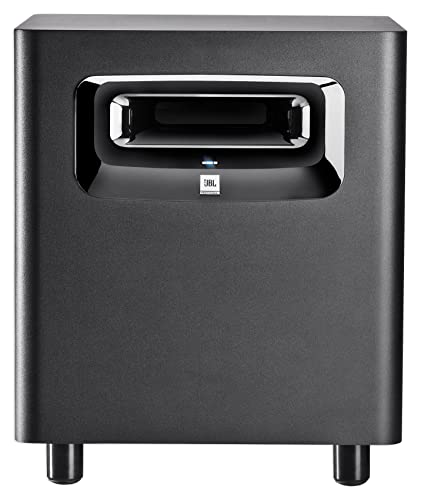
- 10-inch driver reaches into the 20 Hz region
- Balanced XLR and 1/4-inch connectivity
- Selectable XLF club-style bass tuning
Best For: High-output studio systems needing deep, flexible bass
Flexible Room-Matching Sub

- 10-inch active design reaches 28 Hz
- Adjustable crossover, phase, and volume
- Footswitchable subwoofer bypass
Best For: ADAM T-Series setups needing flexible calibration
Compact Desk Pair

- Complete stereo pair with 50 watts of amplification
- Balanced TRS, RCA, aux, and headphone connections
- High- and low-frequency tuning controls
Best For: Compact desktop production and everyday audio
Controlled Low-End Monitor

- 8-inch bass-reflex subwoofer with 22 Hz–150 Hz response
- 150-watt amplifier for substantial low-end output
- Adjustable low-cut, high-cut, and phase controls
Best For: Recording and live-music monitoring systems
Best Bluetooth Subwoofer

- 8-inch driver reaches down to 30 Hz
- Bluetooth 5.0 plus wired inputs
- Adjustable crossover and room tuning
Best For: Compact studios, multimedia, and flexible listening setups
Best Compact Monitor Pair
Yamaha HS3 Powered Studio Monitor

- Compact 3.5-inch 2-way monitor pair
- XLR/TRS, RCA, and stereo mini inputs
- Room-control and high-trim adjustments
Best For: Desktop production and small studio spaces
Best Professional Bass Extension

- 10-inch driver with 20–200 Hz response
- 170-watt RMS Class AB amplifier
- Balanced pass-through and dedicated sub output
Best For: Serious home studios and professional production rooms
Deep-Bass Foundation
KRK S8.4 Powered Studio Subwoofer

- 8-inch woofer extends bass to 30Hz
- 112dB maximum SPL with 109 watts
- Front port and footswitch sub bypass
Best For: Recording studios needing powerful low-end extension
Desktop Bass Upgrade

- 8-inch woofer with up to 200 watts
- TRS, RCA, and Bluetooth inputs
- Remote volume and sub bypass controls
Best For: CR Series monitor and flexible desktop setups
Complete 2.1 Bundle
Mackie CR3.5 Monitors with CR8SBT

- Includes monitors, subwoofer, and RCA cable
- 3.5-inch monitors with tone control
- 40Hz–180Hz adjustable subwoofer crossover
Best For: Compact all-in-one desktop audio systems
Deep-Bass Studio Anchor – JBL LSR310S
If you need studio monitors with subwoofer output, the JBL LSR310S is a powerful 10-inch option for extending low-frequency response. Its balanced XLR and 1/4-inch inputs and XLR outputs make it suitable for adding bass extension to a studio monitor system or using as an LFE channel.
Best For: Producers and recording setups that need deep bass, high output, and flexible balanced connections.
Pros:
- 10-inch driver reaches into the 20 Hz region with up to 113 dB peak output.
- Balanced XLR and 1/4-inch inputs plus XLR output support studio integration.
- XLF setting adds a club-style low-frequency tuning option.
Cons:
- Its floor-standing design and 10-inch driver require more room than compact subwoofers.
- The XLF mode may not suit accuracy-focused monitoring for every mix.
The LSR310S stands out when strong, extended bass and professional connectivity matter more than a small footprint. Its sensitivity switch also helps accommodate different signal sources.
Flexible Room-Matching Sub – ADAM Audio T10S
For studio monitors with subwoofer output, the ADAM Audio T10S adds low-end extension while giving you useful placement and calibration controls. It is designed to complement ADAM T5V and T7V monitors, but its adjustable crossover, phase rotation, and volume controls make it practical for varied studio setups.
Best For: ADAM T-Series users and producers who want adjustable bass integration with easy bypass control.
Pros:
- 10-inch active subwoofer extends bass response down to 28 Hz.
- Adjustable crossover, phase rotation, and dedicated volume support room matching.
- Footswitch bypass makes comparing mixes with and without bass extension convenient.
Cons:
- It is specifically engineered to complement ADAM T5V and T7V monitors.
- RCA is listed as the connectivity technology, so users should confirm their interface or monitor cabling.
The T10S is a sensible choice when calibration flexibility and workflow convenience are priorities. Its downward-facing woofer also offers more placement freedom than some conventional designs.
Compact Desk Pair – PreSonus Eris 3.5
The PreSonus Eris 3.5 is a compact stereo pair for listeners who want studio-style sound in a desktop setup. While it is not a dedicated subwoofer, its rear inputs and balanced TRS connectivity make it a useful starting point for systems built around studio monitors with subwoofer output.
Best For: Desktop music production, gaming, streaming, and everyday listening where space and convenience matter.
Pros:
- Sold as a complete stereo pair with 50 watts of built-in amplification.
- 3.5-inch woven-composite woofers and 1-inch silk-dome tweeters deliver balanced near-field sound.
- Offers balanced TRS, RCA, front-panel auxiliary, and headphone connections.
Cons:
- The compact 3.5-inch woofers provide less low-end output than a dedicated subwoofer.
- Its listed frequency range is 80 Hz–20 kHz, so deep bass extension may require additional equipment.
The Eris 3.5 makes the most sense for a small desk or secondary workstation. Built-in high- and low-frequency controls help tailor its response, while the broad input selection suits mixed computer and studio use.
Controlled Low-End Monitor – Yamaha HS8S
The Yamaha HS8S is an 8-inch powered subwoofer for extending the bottom end of a recording or live-music monitoring system. Its 150-watt amplifier, 22 Hz–150 Hz response, and adjustable low- and high-cut controls make it a practical option for studio monitors with subwoofer output.
Best For: Recording and live-music setups that need adjustable crossover control and substantial low-frequency headroom.
Pros:
- 8-inch bass-reflex design provides a 22 Hz–150 Hz frequency response.
- 150-watt amplifier supports powerful low-end reproduction.
- Low-cut, high-cut, and phase controls help integrate the sub with a monitor system.
Cons:
- Its floor-standing cabinet is relatively large and heavy at 33.6 pounds.
- Only XLR connectivity is listed, which may require compatible cables or additional interface hardware.
The HS8S is a strong fit when you want more controlled bass integration than a basic full-range speaker can provide. Its filter and phase controls give you useful tools for adapting the subwoofer to the rest of the monitoring chain.
Best Bluetooth Subwoofer – PreSonus Eris Sub 8BT
If you want studio monitors with subwoofer output in a compact setup, the PreSonus Eris Sub 8BT adds controlled low end without requiring a large studio footprint. Its 8-inch driver reaches down to 30 Hz, while adjustable crossover and tuning controls help integrate it with your main monitors.
Best For: Home studios, music listening, gaming, and multimedia setups that need flexible wired or Bluetooth connectivity.
Pros:
- 8-inch front-firing driver delivers bass down to 30 Hz.
- Bluetooth 5.0 supports convenient wireless playback.
- Balanced TRS, RCA, and front-panel auxiliary inputs accommodate varied sources.
- Highpass, lowpass, and room-tuning controls help blend the subwoofer with main monitors.
Cons:
- Its compact design is less substantial than a 10-inch professional subwoofer.
- Bluetooth may be unnecessary for strictly wired monitoring workflows.
The Eris Sub 8BT is a versatile choice when you want stronger bass and easy connectivity in a smaller room. Its crossover controls make it especially practical for pairing with compact full-range monitors.
Best Compact Monitor Pair – Yamaha HS3 Powered Studio Monitor
The Yamaha HS3 is a compact powered monitor pair for buyers building a small desktop system around studio monitors with subwoofer output. Its 3.5-inch woofers provide a practical nearfield starting point, and the included inputs support common studio and consumer sources.
Best For: Desktop music production, studio recording, and small workspaces where compact monitors and future subwoofer expansion are priorities.
Pros:
- Pair includes two 2-way powered monitors with 3.5-inch woofers.
- Offers XLR/TRS combo, RCA, and stereo mini inputs.
- Room-control and high-trim response controls support basic placement adjustment.
- Includes speaker cable, stereo mini-to-RCA cable, and anti-slip pads.
Cons:
- 70 Hz low-frequency response leaves the deepest bass to a separate subwoofer.
- 26 watts of output is suited to nearfield listening rather than large rooms.
- No wireless connectivity is included.
The HS3 makes sense as a compact monitor foundation, particularly if you plan to add a compatible subwoofer later. Its small drivers prioritize desk-friendly placement, while the wired inputs fit common audio interfaces and playback devices.
Best Professional Bass Extension – PreSonus Eris Pro Sub 10
For a more powerful studio system with subwoofer output, the PreSonus Eris Pro Sub 10 provides substantial low-frequency extension and flexible monitor routing. Its 10-inch front-firing driver, 170-watt RMS amplifier, and balanced pass-through connections are designed for serious home-studio and production environments.
Best For: Larger home studios and professional music-production setups that need powerful, adjustable bass integration.
Pros:
- 10-inch glass-composite driver delivers a broad 20–200 Hz response.
- 170-watt RMS Class AB amplification supports up to 113 dB SPL.
- Balanced XLR/TRS inputs and pass-through outputs simplify monitor connection.
- Variable lowpass filter, switchable highpass filter, polarity inversion, and footswitch bypass provide detailed system control.
Cons:
- At 37 pounds, it is considerably less portable than compact subwoofers.
- Its 10-inch cabinet requires more floor space and careful placement.
- Designed primarily for wired studio integration rather than wireless convenience.
The Eris Pro Sub 10 is the strongest fit here for demanding monitoring systems that need headroom, routing flexibility, and precise crossover management. It is best matched with full-range monitors in a room that can accommodate its larger cabinet.
Deep-Bass Foundation – KRK S8.4 Powered Studio Subwoofer
The KRK S8.4 is a dedicated 8-inch subwoofer for producers who want to extend a studio-monitor setup with controlled low end. Its glass aramid composite woofer reaches down to 30Hz, while the front-firing port and curved enclosure offer flexible placement options.
Best For: Music production and recording studios seeking powerful, extended bass.
Pros:
- 8-inch woofer with bass extension to 30Hz
- 112dB maximum SPL and 109 watts of output power
- Footswitch control can disable the subwoofer and crossover filter
- Front-firing port supports more flexible placement
Cons:
- Footswitch is not included
- Its 26.5-pound cabinet requires a sturdy surface
- Wired XLR connectivity may require compatible studio equipment
The S8.4 is a strong choice when low-frequency extension and high output matter more than compact size. It is especially suited to a dedicated studio system with compatible XLR connections.
Desktop Bass Upgrade – Mackie CR8SBT Subwoofer
The Mackie CR8SBT is designed to add bass to CR Series monitors and desktop audio systems. It connects through TRS or RCA, includes Bluetooth input, and provides an adjustable crossover so you can blend its 8-inch woofer with your monitors.
Best For: Desktop listeners and CR Series monitor users who want flexible wired or Bluetooth connectivity.
Pros:
- 8-inch subwoofer rated at up to 200 watts
- TRS, RCA, and Bluetooth connectivity
- Adjustable crossover helps integrate the sub with monitors
- Desktop remote controls volume and subwoofer bypass
Cons:
- Designed specifically for CR Series monitors
- At 32.4 pounds, it is not especially lightweight
- Its listed frequency response begins at 40Hz
With a remote, Bluetooth input, and multiple connection options, the CR8SBT is convenient for desktop setups. It makes the most sense for users who value simple controls and compatibility with Mackie CR monitors.
Complete 2.1 Bundle – Mackie CR3.5 Monitors with CR8SBT
This Audiosavings bundle pairs Mackie CR3.5 powered monitors with the CR8SBT 8-inch subwoofer and a 10-foot dual RCA cable. For shoppers looking for studio monitors with subwoofer output, it provides a ready-made 2.1-style system with RCA, TRS, 3.5mm, and Bluetooth connectivity.
Best For: Buyers who want compact powered monitors and a matching subwoofer in one package.
Pros:
- Includes CR3.5 monitor pair, CR8SBT subwoofer, and RCA cable
- CR3.5 monitors offer tone control and desktop or bookshelf modes
- Front headphone output automatically mutes speaker audio
- Subwoofer crossover adjusts from 40Hz to 180Hz
Cons:
- The 3.5-inch monitors provide less cabinet scale than larger monitors
- The bundle is a larger, heavier system at the supplied 45-pound listed weight
- RCA cable is included, but the setup also uses TRS and Bluetooth options depending on the source
This bundle is convenient when you need the monitors, subwoofer, and basic cabling together. The compact CR3.5 pair, tone controls, headphone output, and wide crossover range make it adaptable for desktop listening, gaming, and music production.
How We Picked the Best Studio Monitors with Subwoofer Output
We focused on systems that make it practical to add or use a subwoofer with studio monitors, including dedicated subs, monitor pairs with suitable outputs, and bundles designed to work together. We considered driver size, power, connectivity, crossover and level controls, front- or rear-firing designs, wireless features, and the likely needs of bedroom producers, content creators, DJs, and small project studios.
Because a larger subwoofer is not automatically better, we also weighed room compatibility and setup flexibility. A compact sub can be easier to integrate in a nearfield workspace, while a 10-inch model may provide more headroom for larger rooms and demanding low-frequency work.
Quick Comparison
| Best for | Recommended type | Why it stands out |
|---|---|---|
| Compact desktops | 3.5-inch monitor pair with compact sub | Small footprint and accessible price |
| Balanced home studios | 8-inch powered subwoofer | Useful low-end extension without excessive size |
| Larger rooms | 10-inch studio subwoofer | More output and headroom below the monitors |
| Brand-matched systems | Monitor and sub from the same series | More predictable voicing and integration |
| Flexible entertainment setups | Bluetooth-enabled subwoofer | Convenient wireless playback and remote control |
Key Buying Factors for Studio Monitors with Subwoofer Output
Connections and Signal Routing
Check whether the monitors provide a dedicated subwoofer output or whether the subwoofer accepts a pass-through signal. Balanced XLR or TRS connections are preferable for longer cable runs and quieter studio systems. RCA and Bluetooth can be convenient, but they may be less suitable for critical monitoring.
Crossover, Phase, and Level Controls
A useful subwoofer should let you adjust volume and crossover frequency, while a phase control or polarity switch helps align the sub with the monitors. These controls make it easier to avoid a muddy upper-bass region or a noticeable gap between the sub and satellites.
Room Size and Driver Size
Choose the smallest subwoofer that provides the output you need. Compact rooms often benefit from an 8-inch or smaller model, while a 10-inch sub may be more appropriate for a larger space. Excessive bass can excite room modes and make mixes less reliable.
Placement and Acoustic Treatment
Place the sub on a stable surface, away from corners when possible, and use a crawl test or measurement microphone to find a smoother position. Basic absorption and careful monitor placement can improve accuracy more than simply upgrading to a larger driver.
Who Should Buy Which Studio Monitors with Subwoofer Output?
Choose a compact monitor-and-sub bundle if you produce at a desk, have limited space, or want an easy all-in-one upgrade. Choose an 8-inch subwoofer for a versatile home studio where extended bass matters but room size is moderate. Choose a 10-inch model when you need greater headroom, work on bass-heavy material, or monitor from a larger listening distance.
Choose a matching-brand system when predictable integration and familiar voicing matter most. Bluetooth and remote features are useful for casual listening and multimedia work, but producers should prioritize balanced connections, adjustable crossover settings, and accurate placement. Before buying, confirm that your monitors and interface provide the required outputs and that your room can support the subwoofer’s low-frequency energy.