
Studio monitors with front bass port can make nearfield monitoring easier when rear-wall clearance is limited. This roundup compares compact and larger options for home studios, editing desks, and music production setups.
We focus on useful differences such as driver size, connectivity, listening accuracy, output, and placement flexibility so you can choose a pair—or single monitor setup—that fits your room and workflow.
Best 10 Studio Monitors with Front Bass Port Picks for 2026
Compact Desk Pick
Yamaha HS3 Powered Studio Monitor Pair

- Compact 3.5-inch two-way powered pair
- XLR/TRS, RCA, and stereo mini inputs
- Includes cables and anti-slip pads
Best For: Small desktop studios and entry-level monitoring
Detailed Reference Choice
Focal Alpha 50 Evo Studio Monitor

- 5-inch Slatefiber woofer and 1-inch tweeter
- 60 W RMS bi-amped Class D design
- TRS, XLR, RCA, and room-tuning controls
Best For: Neutral nearfield reference monitoring
Flexible Desktop Pair

- 4.5-inch woofers sold as a pair
- Front tone knob and location switch
- Isolation pads and cables included
Best For: Desktop studios and versatile multimedia setups
Room-Tuning Powerhouse
KRK RP7G5 7-Inch Powered Studio Monitor
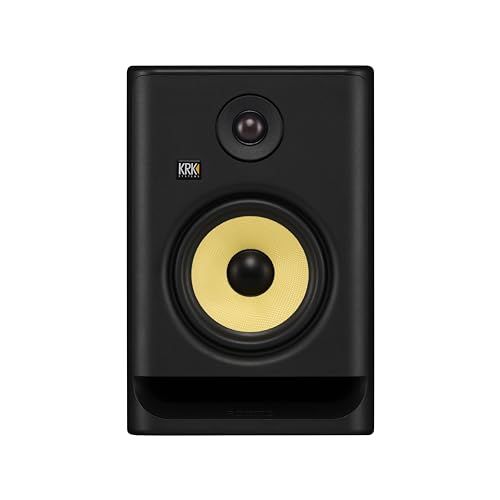
- 7-inch woven Kevlar woofer
- 25 boundary and tuning EQ combinations
- Low-diffraction baffle and isolation pad included
Best For: Larger home studios and adjustable monitoring environments
Wide-Sweet-Spot Choice

- 6.55-inch woofer for deep lows
- Wide EBM waveguide for broad imaging
- Multiple acoustic tuning controls
Best For: Home studios needing flexible room adjustment and a wide listening sweet spot
Balanced Reference Pair

- Pair of bi-amplified monitors
- 5-inch woofer with 1-inch tweeter
- Balanced and unbalanced XLR/TRS inputs
Best For: Stereo music production and near-field studio monitoring
Versatile Connectivity Pick

- 3-way active design with 110W RMS
- Bluetooth LDAC plus XLR/TRS inputs
- App-based room compensation and headphone output
Best For: Hybrid studio, desktop, and home-audio setups
Balanced Mixing Pick

- 5-inch woofer with 1-inch silk-dome tweeter
- 65W bi-amplified Class A/B power
- Wide dispersion and XLR/TRS inputs
Best For: Compact, accuracy-focused studio monitoring
Compact Pair Pick

- Pair of compact 4.5-inch studio monitors
- 50W Class AB amplification
- TRS, RCA, auxiliary, and headphone connections
Best For: Desktop production and multimedia listening
Full-Range Power Pick

- 3-way coaxial design with 8-inch woofer
- 140W tri-amplified output
- XLR, TRS, and RCA connectivity
Best For: Full-range professional monitoring and deeper bass
Compact Desk Pick – Yamaha HS3 Powered Studio Monitor Pair
The Yamaha HS3 is a compact, practical option for shoppers seeking studio monitors with front bass port. This powered pair uses 3.5-inch woofers, 0.75-inch dome tweeters, and a 70 Hz–22 kHz frequency response, making it well suited to smaller desktop monitoring setups.
Best For: Compact home studios, desktop music production, and buyers who want a complete pair with useful cables and pads included.
Pros:
- Sold as a matched pair with 26 W or more output power.
- Offers XLR/TRS combo, RCA, and stereo mini inputs.
- Includes speaker cable, stereo mini-to-RCA cable, and anti-slip pads.
Cons:
- The 3.5-inch woofer has less low-end reach than larger monitors.
- It is corded and has no wireless connectivity.
Choose the HS3 when desk space and convenience matter most. Its compact cabinet and flexible inputs make it an approachable starting point for nearfield work, though bass-focused production may call for a larger monitor or subwoofer.
Detailed Reference Choice – Focal Alpha 50 Evo Studio Monitor
The Focal Alpha 50 Evo is a strong candidate for shoppers comparing studio monitors with front bass port and looking for a more substantial nearfield reference speaker. Its 5-inch Slatefiber woofer, 1-inch aluminum tweeter, and 45 Hz–22 kHz range are designed for detailed, balanced monitoring.
Best For: Home and professional studios that need neutral monitoring, flexible connections, and room-adjustable tuning from an individual monitor.
Pros:
- Bi-amped 60 W RMS design with 35 W LF and 25 W HF amplification.
- Provides TRS, XLR, and RCA inputs for up to three sources.
- Includes LF and HF shelving plus sensitivity adjustment for room adaptation.
- Reaches up to 101 dB SPL peak at 1 meter with low distortion.
Cons:
- Sold individually, so a stereo setup requires two units.
- Larger and heavier than compact desktop monitors.
The Alpha 50 Evo makes sense when accurate, adaptable monitoring takes priority over a low-cost pair. Its 5-inch driver and tuning controls offer more flexibility for serious nearfield work, while the individual-speaker packaging should be factored into the budget.
Flexible Desktop Pair – Mackie CR4.5 Studio Monitors
The Mackie CR4.5 is a practical step-up pair for buyers seeking studio monitors with front bass port and a fuller low end than compact 3.5-inch models. Its 4.5-inch woofers, front-panel tone knob, and location switch make it adaptable to desks or wall-adjacent placement.
Best For: Desktop studios, multimedia workspaces, and listeners who want a pair with simple voicing controls and broad device compatibility.
Pros:
- Sold as a pair with 4.5-inch woofers for fuller low-end performance.
- Front-panel tone knob provides quick voicing adjustment.
- Location switch supports wall or free-standing bass correction.
- Includes isolation pads and multiple connection cables.
Cons:
- Its tone-focused feature set may be less suited to strictly neutral monitoring.
- It has a 50 W maximum output and no wireless connectivity.
The CR4.5 is a sensible choice for buyers who value easy controls and a complete desktop package. It offers more cabinet and woofer size than entry-level compact monitors, while the location switch helps accommodate different placements.
Room-Tuning Powerhouse – KRK RP7G5 7-Inch Powered Studio Monitor
The KRK RP7G5 is aimed at buyers who want studio monitors with front bass port and enough output for larger home or project studios. Its 7-inch woven Kevlar woofer, low-diffraction baffle, and 25 boundary and tuning EQ combinations support flexible placement and room correction.
Best For: Music production, audio editing, sound design, and larger studio spaces where output and acoustic adjustment are important.
Pros:
- 7-inch woven Kevlar woofer supports tight low and low-mid performance.
- Offers 25 boundary and tuning EQ combinations for room correction.
- Low-diffraction baffle is designed to reduce distortion and improve stereo imaging.
- Includes acoustic foam wedge isolation pads and an XLR/1/4-inch TRS combo input.
Cons:
- The larger 7-inch format needs more desk or stand space.
- Only one monitor is supplied, so stereo monitoring requires a second unit.
- It is a corded monitor without wireless connectivity.
The RP7G5 stands out when room-tuning flexibility and higher output are more important than compact size. It is a capable single monitor for a carefully positioned studio, but remember to budget for a matching second unit for stereo work.
Wide-Sweet-Spot Choice – PreSonus Eris E7 XT
PreSonus Eris E7 XT 2-Way Active Studio Monitor with EBM Waveguide (Pack of 1)
Check Price On AmazonThe PreSonus Eris E7 XT is a strong option for shoppers seeking studio monitors with front bass port, especially when accurate mixing and broad listening coverage matter. Its 6.55-inch woven-composite woofer, silk-dome tweeter, and EBM waveguide are designed for detailed sound and a wide sweet spot.
Best For: Home studios and producers who want flexible acoustic tuning and a wide monitoring sweet spot.
Pros:
- 6.55-inch woofer supports deep low-frequency response.
- 100° horizontal by 60° vertical EBM waveguide provides broad coverage and solid imaging.
- Level, high-pass, low-frequency, high-frequency, and acoustic-space controls help tailor the monitor to the room.
- Includes Studio One Prime and Studio Magic plug-in software.
Cons:
- Sold as a single monitor rather than a pair.
- The larger 6.5-inch design may be more monitor than compact desk setups need.
Choose the Eris E7 XT when room adjustment and a generous listening area are priorities. Its single-monitor packaging means you will need two units for stereo monitoring.
Balanced Reference Pair – Yamaha HS5
The Yamaha HS5 pair is a practical pick for buyers comparing studio monitors with front bass port who want a matched stereo setup. These bi-amplified near-field monitors use a 5-inch woofer and 1-inch dome tweeter to emphasize sonic purity without coloring the original sound.
Best For: Music production and studio monitoring where a straightforward, balanced stereo reference is useful.
Pros:
- Includes two HS5 studio monitors for stereo monitoring.
- Bi-amplified design delivers 45 watts of low-frequency and 25 watts of high-frequency amplification per system specification.
- 5-inch woofer and 1-inch dome tweeter cover a stated 54 Hz to 30 kHz range.
- XLR and TRS inputs accept balanced or unbalanced signals.
Cons:
- Smaller 5-inch woofers may provide less low-end reach than larger monitors.
- The supplied notes do not specify acoustic tuning controls for room compensation.
The HS5 pair makes sense if you want two consistent monitors and an unembellished presentation for production work. Its 5-inch format is suited to near-field use, while the available XLR and TRS inputs support common studio connections.
Versatile Connectivity Pick – Edifier MR5
The Edifier MR5 suits buyers looking beyond traditional studio monitors with front bass port who also want wireless playback and everyday flexibility. Its 3-way active system combines a 5-inch woofer, 3.75-inch midrange driver, and 1-inch silk-dome tweeter, with room controls and multiple wired inputs.
Best For: Near-field studio use, desktop setups, and listeners who need both pro connections and Bluetooth convenience.
Pros:
- 3-way active crossover supports detailed reproduction across a stated 46 Hz to 40 kHz range.
- 110W RMS amplification and 101dB peak SPL suit near-field use or mid-sized rooms.
- Offers XLR, TRS, RCA, AUX, Bluetooth 6.0 with LDAC, and a front-panel headphone output.
- Rear controls and the EDIFIER ConneX app provide frequency and room-compensation adjustments.
Cons:
- Bookshelf-style design may be less focused on strict studio-only use than dedicated reference monitors.
- Wireless and app features may be unnecessary for a simple wired monitoring chain.
The MR5 is the most versatile choice in this group for users who want studio functionality without giving up home-audio conveniences. Its connectivity, headphone output, and room-tuning options make it adaptable to changing desktop or room setups.
Balanced Mixing Pick – Mackie MR524
The Mackie MR524 is a practical choice for listeners seeking studio monitors with front bass port functionality in a compact, single-speaker format. Its 5-inch polypropylene woofer, silk-dome tweeter, and 65-watt bi-amplified Class A/B design are aimed at clear, accurate monitoring for home or professional studio work.
Best For: Mixers who want a compact monitor focused on stereo imaging, vocal clarity, and translation accuracy.
Pros:
- 5-inch woofer and 1-inch silk-dome tweeter provide responsive lows and detailed highs.
- Ultra-wide dispersion creates a generous listening sweet spot.
- 65 watts of bi-amplified Class A/B power supports dynamic monitoring.
- XLR and 1/4-inch TRS connectivity suits desktop and studio setups.
Cons:
- Sold as a single monitor rather than a pair.
- Its 5-inch woofer may offer less low-end extension than larger monitors.
- No wireless communication technology is included.
The MR524 emphasizes dependable, translation-oriented monitoring and broad stereo coverage. It is a sensible option when you already have, or plan to add, a matching second speaker.
Compact Pair Pick – PreSonus Eris E4.5
The PreSonus Eris E4.5 is a convenient pair for shoppers comparing studio monitors with front bass port designs for desks, bookshelves, or small production spaces. The 4.5-inch woven-composite woofers, 1-inch silk-dome tweeters, and 50 watts of Class AB amplification deliver clear reference sound in a compact setup.
Best For: Home producers, multimedia listeners, and desktop users who want a complete stereo pair with flexible connections.
Pros:
- Includes one active and one passive monitor for immediate stereo listening.
- 25 watts per side of Class AB amplification provides useful desktop volume.
- Balanced TRS, RCA, and front-panel 1/8-inch auxiliary inputs support varied sources.
- High- and low-frequency controls allow basic room and placement adjustment.
Cons:
- The smaller 4.5-inch woofers provide less low-end capability than larger monitors.
- The pair uses one active and one passive speaker, rather than two independently powered units.
- Bluetooth is listed in the specifications, but the supplied features primarily describe wired inputs.
With its compact footprint, headphone output, and built-in tuning controls, the Eris E4.5 is particularly adaptable for everyday desktop work. Its optional Eris Sub 8BT compatibility also gives users a path to more low-end later.
Full-Range Power Pick – Kali Audio IN-8 V2
The Kali Audio IN-8 V2 is a powerful single monitor for buyers considering studio monitors with front bass port designs and extended low-frequency performance. Its 3-way coaxial layout combines an 8-inch woofer, 4-inch midrange, and 1-inch tweeter with 140 watts of tri-amplified power for detailed, high-headroom monitoring.
Best For: Professional audio production, larger home studios, and listeners needing deep bass with precise imaging.
Pros:
- 3-way coaxial design supports point-source accuracy, phase coherence, and precise imaging.
- 8-inch woofer and low-noise port tube provide extended low-frequency response.
- 140-watt tri-amplified system offers high headroom and low distortion.
- XLR, 1/4-inch TRS, and RCA inputs accommodate professional and consumer equipment.
Cons:
- Sold as a single monitor.
- Its 25.9-pound weight and larger cabinet require more space than compact monitors.
- The higher-output design may be more than needed for a small desktop setup.
The IN-8 V2 stands out when accurate full-range monitoring and output headroom matter more than minimal size. Boundary-compensation EQ and wall or ceiling mounting support give it additional placement flexibility.
How We Picked the Best Studio Monitors with Front Bass Port
We evaluated these monitors by looking at the features that matter most in real studio use: cabinet and driver design, frequency range, amplification, inputs, adjustment controls, and suitability for nearfield listening. We also considered the needs of different users, from beginners building a compact desk setup to producers who need higher output and deeper bass.
Because monitor performance depends heavily on room acoustics and positioning, a higher price or larger woofer does not automatically mean a better choice. The right model should provide a useful balance of clarity, headroom, low-frequency extension, and manageable size.
Quick Comparison
- Compact desks: Yamaha HS3, PreSonus Eris E4.5, and Mackie CR4.5 are easier to fit in smaller workspaces.
- Balanced nearfield monitoring: Yamaha HS5, Focal Alpha 50 Evo, and Mackie MR524 offer a practical middle ground for production and mixing.
- More output and low end: KRK RP7G5 and PreSonus Eris E7 XT suit larger rooms or listeners who need greater headroom.
- Wide, detailed imaging: Kali Audio IN-8 V2 uses a three-way coaxial design for more controlled midrange and stereo presentation.
- Flexible general listening: Edifier MR5 can work well for creators who also want a more versatile desktop speaker system.
Key Buying Factors for Studio Monitors with Front Bass Port
Room Size and Listening Distance
Choose the woofer size according to your room and monitoring distance. Smaller 3.5- to 4.5-inch models are often appropriate for compact desks, while 5- to 8-inch monitors can provide more bass and volume but may overwhelm a small untreated room.
Frequency Response and Bass Expectations
Front-porting helps reduce the need for rear clearance, but it does not eliminate room interactions. Check the published low-frequency response, then consider acoustic treatment, monitor stands, and a subwoofer only if your room can support extended bass accurately.
Inputs and Controls
XLR and TRS inputs are useful with an audio interface, while RCA or auxiliary connectivity may suit multimedia setups. Rear-panel EQ switches or level controls can help compensate for placement near walls, corners, or a desktop.
Pair Versus Single Monitor
Some listings are sold as pairs, while others contain one monitor. Confirm the package before ordering, especially when building a stereo system or replacing one speaker. You may also need balanced cables, isolation pads, or stands.
Who Should Buy Which Studio Monitors with Front Bass Port?
Choose Yamaha HS3 or PreSonus Eris E4.5 if desk space and budget are your main constraints. Choose Yamaha HS5, Focal Alpha 50 Evo, or Mackie MR524 for a dependable all-purpose nearfield setup. Choose KRK RP7G5 or PreSonus Eris E7 XT when you need more output and low-frequency authority. Choose Kali Audio IN-8 V2 for advanced monitoring and detailed three-way imaging. Choose Edifier MR5 or Mackie CR4.5 if you want studio-oriented sound with broader everyday usability.