
Multi-camera streaming depends on more than resolution. The right encoder must handle your camera inputs, switching workflow, audio sources, network connection, and preferred streaming protocols without creating unnecessary complexity.
This roundup compares 10 options, from portable all-in-one production systems to dedicated HDMI, SDI, and multi-channel IP encoders. Use the guide below to match features and connectivity with your production style.
Best 10 Streaming Encoders for Multi Camera Setups Picks for 2026
Best Professional Hybrid Encoder

- HDMI and SDI inputs with mixed layouts
- 4K encoding and up to six destinations
- Simultaneous recording and streaming
Best For: Professional HDMI/SDI production workflows
Best for ISO Recording

- Four HDMI and four SDI inputs
- Records eight ISO feeds plus program
- Built-in XLR audio and triple streaming
Best For: Events and productions needing full-angle recording
Best All-Around HDMI Option
Magewell Ultra Encode HDMI Plus

- 4K30 HDMI encoding with loop-through
- Streams across RTMP, SRT, NDI|HX, and more
- Simultaneous recording and streaming
Best For: HDMI-based multi-camera production with recording and IP workflow flexibility
Best for SDI Production
Blackmagic Design Streaming Encoder 4K
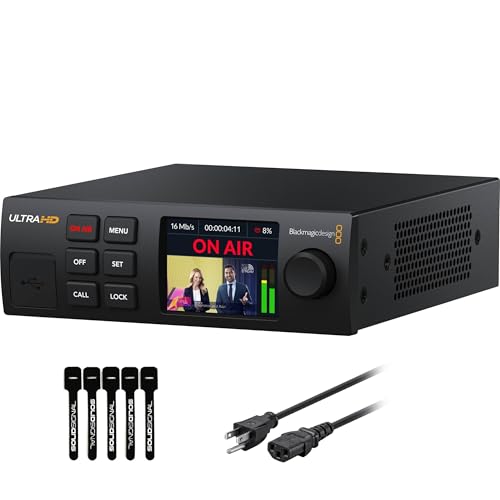
- 12G-SDI input supports DCI 4K60
- H.264/H.265 streaming up to 2160p60
- Ethernet and mobile auto-failover
Best For: SDI broadcast and live-event workflows requiring redundancy and production control
Best Multi-Stream Value
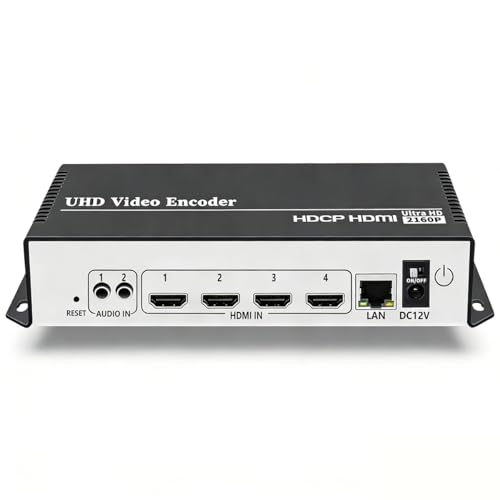
- 4K30 HDMI encoding with H.264/H.265
- Outputs up to four streams simultaneously
- Includes overlays and extensive protocol support
Best For: Multi-platform HDMI distribution with customizable branding and stream settings
Compact 1080p Workhorse

- 1080p60 H.265/H.264 hardware encoding
- Broad RTMP, RTSP, SRT, HLS, and WebRTC support
- Compact single-HDMI design with browser setup
Best For: Individual camera feeds, monitoring, and digital signage
4K Multi-Platform Specialist

- 4K input and output at up to 30 fps
- Up to four simultaneous protocol outputs
- Flexible audio, overlay, and video controls
Best For: 4K sources and multi-platform live distribution
Best All-in-One Hub – YoloBox Extreme
For creators comparing streaming encoders for multi camera setups, the YoloBox Extreme combines switching, recording, monitoring, and streaming in one battery-powered unit. It accepts up to eight HDMI sources, supports NDI HX inputs, and includes a large OLED touchscreen for on-site control.
Best For: Mobile productions, sports, events, and crews that want extensive HDMI connectivity with integrated ISO recording.
Pros:
- Connects up to eight HDMI sources with built-in 4K60 scaling.
- Records individual inputs in up to 4K30 or 1080p60, depending on channel count.
- Supports up to six NDI inputs and instant replay for six 1080p60 cameras.
- Offers a 2.5K, 120Hz OLED touchscreen and up to 10 hours of battery life.
Cons:
- Its feature-rich design may be more than simple streaming workflows require.
- ISO recording resolution varies with the number of active inputs.
The YoloBox Extreme is a strong choice when portability and a broad input count matter more than a compact, single-purpose encoder. Its touchscreen control, NDI support, replay tools, and battery operation make it particularly adaptable for field production.
Best for High-Channel Distribution – ORIVISION 4-Channel 4K Encoder
The ORIVISION 4-channel encoder is built for operators who need to encode several HDMI feeds and distribute them across multiple platforms. It supports up to four HDMI inputs and outputs, multiple codecs, and simultaneous delivery to as many as 16 feeds.
Best For: IPTV, broadcast, and multi-platform streaming workflows that prioritize channel density and protocol flexibility.
Pros:
- Handles four HDMI channels and up to 16 simultaneous platform feeds.
- Supports H.265, H.264, and MJPEG encoding.
- Accepts up to two 4K30 inputs plus two 1080p60 inputs.
- Includes RTMP, RTMPS, SRT, RTSP, HLS, UDP, RTP, and other protocol options.
Cons:
- The unit has no built-in plug listed and requires an external power arrangement.
- The maximum 16-feed output depends on configuring each channel for multiple destinations.
This encoder makes sense for installations where one device must serve several HDMI sources and destinations. Its LCD status screen, OSD tools, and 24/7 operation support are useful for managed broadcast or IPTV environments.
Best Professional Hybrid Encoder – Magewell Ultra Encode AIO
The Magewell Ultra Encode AIO is a flexible option for streaming encoders for multi camera setups that mix HDMI and SDI equipment. It can combine both inputs in picture-in-picture or side-by-side layouts, stream to multiple destinations, and record simultaneously to local or network storage.
Best For: Professional live productions using a mix of consumer, computer, and broadcast camera sources.
Pros:
- Combines HDMI and SDI connectivity in one device.
- Supports 4K encoding with H.264 or HEVC compression.
- Streams to up to six destinations using protocols such as RTMP, SRT, and NDI|HX.
- Provides recording, overlays, scaling, and web/API control options.
Cons:
- It is less portable than battery-powered all-in-one systems.
- The SDI input supports up to 4K30, while HDMI supports up to 4K60.
With its hybrid input design and simultaneous stream-and-record capability, the Ultra Encode AIO is well suited to established production systems. PoE, Wi-Fi, optional 4G modem support, and rack-mount hardware add installation flexibility.
Best for ISO Recording – Osee GoStream Duet 8 ISO
The Osee GoStream Duet 8 ISO is designed for larger productions that need both flexible switching and a complete record of every camera angle. It combines four HDMI 2.0 inputs, four 3G-SDI inputs, professional XLR audio, and direct multi-destination streaming.
Best For: Churches, events, podcasts, interviews, and productions that need extensive ISO recording and mixed HDMI/SDI connectivity.
Pros:
- Provides eight camera inputs: four HDMI and four SDI.
- Records eight ISO feeds plus the program output at up to 50Mbps per channel.
- Includes XLR and 3.5mm audio connections with phantom power and processing tools.
- Supports NDI|HX, SRT, RTMP, UVC output, and streaming to three RTMP destinations.
Cons:
- It outputs at 1080p even though HDMI inputs support up to 4K60.
- Its extensive switching, audio, and recording features may require a learning period.
The GoStream Duet 8 ISO stands out when post-production flexibility and production safety are priorities. Eight isolated recordings preserve alternate angles, while built-in audio processing, layers, web overlays, and VFA switching support more polished live shows.
Best All-Around HDMI Option – Magewell Ultra Encode HDMI Plus
For creators and production teams comparing streaming encoders for multi camera setups, the Magewell Ultra Encode HDMI Plus is a flexible choice for HDMI-based workflows. It supports up to 4K30 input, loop-through monitoring, multiple streaming protocols, and simultaneous recording.
Best For: HDMI cameras, switchers, education, corporate AV, and event production needing flexible streaming and recording.
Pros:
- Encodes HDMI video up to 4096×2160p30 with loop-through output.
- Supports RTMP, RTMPS, SRT, NDI|HX, HLS, and TS over UDP/RTP.
- Can stream and record simultaneously to internal, USB, or network storage.
- Includes Gigabit Ethernet with PoE, Wi-Fi, overlays, and video processing tools.
Cons:
- Its HDMI input may be less suitable for installations built around SDI cameras.
- 4K encoding is limited to 30 frames per second.
- 4G/5G modem support requires a separately supplied USB modem.
The combination of NDI|HX, recording, overlays, and broad network connectivity makes this a strong general-purpose encoder for multi-camera HDMI systems, particularly when local monitoring and flexible IP delivery are priorities.
Best for SDI Production – Blackmagic Design Streaming Encoder 4K
For professional streaming encoders for multi camera setups using SDI infrastructure, the Blackmagic Design Streaming Encoder 4K combines 12G-SDI input, up to 2160p60 encoding, standards conversion, and network redundancy in a compact unit.
Best For: Broadcast, live events, and Blackmagic camera workflows that require SDI connectivity, high-frame-rate 4K, and connection failover.
Pros:
- Supports H.264 and H.265 streaming up to Ultra HD 2160p60.
- 12G-SDI input and loop output handle sources up to DCI 4K60.
- Ethernet and USB-C mobile connectivity support automatic failover.
- Provides SDI and HDMI monitor outputs, REST API control, captions, tally, and talkback.
Cons:
- Designed for SDI devices rather than HDMI camera inputs.
- The one-year manufacturer warranty is shorter than some alternatives.
- Advanced camera control and talkback features are aimed at compatible Blackmagic equipment.
With 12G-SDI, standards conversion, mobile backup, and production-control features, this is the most broadcast-oriented option in the group for teams building a dependable SDI-based multi-camera system.
Best Multi-Stream Value – URayCoder UHE265-4-4K Encoder
The URayCoder UHE265-4-4K is a practical option when streaming encoders for multi camera setups need broad protocol support and simultaneous distribution. Its HDMI-based design accepts 4K video, provides configurable overlays, and can output up to four streams using different protocols.
Best For: HDMI streaming systems that need multi-platform delivery, custom overlays, and flexible protocol support without an additional streaming appliance.
Pros:
- Supports 4K input and output at up to 30fps, plus up to 120fps at 2K and lower resolutions.
- Can output four video streams simultaneously using different protocols.
- Supports RTMP(S), SRT, HLS, WebRTC, RTSP, multicast, and other formats.
- Offers text, scrolling captions, logos, timestamps, cropping, and audio-input options.
Cons:
- Uses a single HDMI port and is not designed for SDI inputs.
- 4K operation is limited to 30fps.
- Its broad configuration options may require more setup than a basic single-destination encoder.
This encoder stands out for protocol breadth and four-stream output, making it appealing for operators distributing one HDMI source to several platforms or destinations while retaining control over branding and encoding settings.
Compact 1080p Workhorse – Browser-Managed H.265 Encoder
For streaming encoders for multi camera setups, the UNISHEEN JM1000 is a compact option for converting one HDMI camera or source into network streams. It supports 1080p at 60 frames per second, hardware H.265/H.264 encoding, and browser-based configuration without PC software.
Best For: Single-camera feeds within a multi-camera system, remote monitoring, digital signage, and installations that need broad protocol compatibility in a small enclosure.
Pros:
- Supports 1080p60 hardware H.265/H.264 encoding.
- Works with RTMP(S), RTSP, SRT, HLS, WebRTC, UDP, and additional protocols.
- Browser-based setup requires no drivers or dedicated software.
- Includes HDMI or external 3.5mm audio and built-in text, logo, and timestamp overlays.
Cons:
- Provides one HDMI input, so each camera requires its own encoder.
- Advanced configurations require basic networking knowledge.
- Power adapter is not included according to the listed specifications.
The JM1000 is a practical building block when you want to place compact encoders at individual camera positions and route their streams over IP. Its 1080p60 limit and single input make it less suitable for a centralized multi-input production workflow, but the protocol range and simple browser management add flexibility.
Multi-Stream Hub – Compact Multi-Channel 1080p Encoder
The URayCoder UHE265-8 is aimed at streaming encoders for multi camera setups that need a more centralized, multi-channel approach. Its listed eight-port design and dual-stream output per HDMI input can help distribute multiple feeds to different servers or platforms.
Best For: Broadcast, IPTV, NVR, and live-streaming installations that need multiple HDMI sources, simultaneous stream destinations, and configurable overlays.
Pros:
- Listed with eight ports for multi-channel HDMI-to-IP encoding.
- Can output two video streams per HDMI input, with different protocols for each stream.
- Supports RTMPS, RTSP, SRT, HLS, UDP, RTP, MP4, FLV, and other protocols.
- Offers adjustable resolution, frame rate, bitrate, audio, cropping, rotation, and overlays.
Cons:
- The supplied notes do not specify the maximum resolution or frame rate for every channel.
- A multi-channel unit may be more equipment than needed for a single-camera installation.
- Its configuration flexibility may require more setup than a basic single-stream encoder.
Choose this model when the priority is channel density and routing flexibility rather than the smallest possible encoder at each camera. Dual outputs and extensive protocol support are particularly useful when one source must feed separate streaming servers, platforms, or internal distribution systems.
4K Multi-Platform Specialist – HEVC HDMI Streaming Encoder
For streaming encoders for multi camera setups where higher-resolution sources and simultaneous destinations matter, the URayCoder UHE265-1L-4K provides 4K HDMI input and output with H.265/H.264 encoding. It can output up to four streams using different protocols, making it suited to demanding distribution workflows.
Best For: 4K camera and HDMI-source workflows, multi-platform live streaming, and productions needing configurable video, audio, and branding controls.
Pros:
- Supports 4K input and output at up to 30 frames per second.
- Supports up to 120 frames per second at 2K and lower resolutions.
- Can output four streams using different protocols simultaneously.
- Includes HDMI embedded or line-in audio, overlays, cropping, rotation, and mirroring controls.
Cons:
- It has one HDMI input, so multi-camera systems may require multiple units.
- 4K operation is limited to 30 frames per second.
- Higher-resolution streaming can demand more network bandwidth and platform capacity.
This encoder stands out when a multi-camera installation includes 4K sources or needs one feed distributed to several services at once. Its single-input design favors a distributed encoder-per-camera architecture, while the four-output capability and detailed controls support more complex streaming and branding requirements.
How We Picked the Best Streaming Encoders for Multi Camera Setups
We focused on the capabilities that matter when several cameras feed one live production: input count and type, maximum resolution and frame rate, codec support, streaming protocols, recording, switching, audio connectivity, monitoring, and network flexibility. Models were also considered for distinct use cases, including portable productions, studio systems, SDI workflows, and budget-oriented IP encoding.
Because these products vary substantially, a simple channel-count comparison is not enough. An all-in-one switcher may be better for a solo operator, while a dedicated encoder can fit more effectively into an existing switcher, router, or broadcast network.
Quick Comparison
- Best all-in-one production: YoloLiv YoloBox Extreme combines switching, encoding, monitoring, and portable operation.
- Best for mixed professional inputs: Magewell Ultra Encode AIO supports HDMI and SDI workflows with advanced streaming and recording features.
- Best for larger hybrid setups: Osee GoStream Duet 8 offers multiple HDMI and SDI inputs plus balanced audio connectivity.
- Best dedicated HDMI options: Magewell Ultra Encode HDMI Plus and the Blackmagic Design Streaming Encoder 4K suit established production systems.
- Best for protocol-heavy installations: The multi-channel IP encoders support combinations of RTSP, RTMP, SRT, HLS, UDP, WebRTC, and related formats.
Key Buying Factors for Streaming Encoders for Multi-Camera Setups
Inputs, Switching, and Expansion
Count your cameras first, then identify their outputs. HDMI is common in compact and consumer-oriented rigs, while SDI is more practical for long cable runs and professional environments. If the encoder does not switch sources internally, you may also need a separate switcher or production system.
Resolution, Codecs, and Frame Rates
4K support is useful for high-detail production and future-proofing, but it can increase bandwidth and storage requirements. H.265 can reduce bitrate compared with H.264, although platform compatibility and hardware decoding still matter. Confirm the exact resolution and frame-rate combinations available for every input and output.
Protocols and Delivery
RTMP remains widely supported by streaming platforms, while SRT is valuable for more reliable contribution over unpredictable networks. RTSP, HLS, UDP, WebRTC, NDI, and multicast support become important in IPTV, internal distribution, remote production, and managed broadcast networks.
Audio, Recording, and Monitoring
Check whether audio is embedded through HDMI or SDI, supplied through analog or XLR inputs, or mixed internally. Recording, loop-through outputs, multiview monitoring, and ISO recording can simplify production and provide useful backups.
Who Should Buy Which Streaming Encoders for Multi Camera Setups?
Choose an all-in-one unit if you need portable switching, monitoring, and streaming with minimal additional hardware. Choose a dedicated HDMI encoder if your cameras already feed a switcher or you want a simpler point-to-point system. Choose an HDMI/SDI hybrid model for productions combining compact cameras with professional infrastructure.
Choose a multi-channel IP encoder when centralized distribution, multiple simultaneous outputs, or protocol flexibility matters more than an integrated operator interface. Before buying, verify platform requirements, available network bandwidth, connector types, power needs, and whether the device supports the number of simultaneous feeds your production actually requires.