
Portable streaming encoders make it easier to send camera video live from events, houses of worship, classrooms, studios, and remote locations. The right model can combine encoding, switching, recording, monitoring, and network connectivity in a compact setup.
This roundup compares 10 options across HDMI, SDI, wireless, 4K, H.264, H.265, and cloud-based workflows so you can match features to your cameras, platform, and production style.
Best 10 Portable Streaming Encoders Picks for 2026
Best All-in-One Pick

- Standalone switching, encoding, recording, and streaming
- HDMI, USB, IP, media, and mobile source support
- Touchscreen control with NP-F battery operation
Best For: Mobile multi-source productions and field broadcasts
Best Simple HDMI Encoder

- Streams and records simultaneously
- HDMI input with monitor output
- One-touch stream and record controls
Best For: Single-camera HDMI streaming and recording
Best Multi-Camera 4K Option

- Four HDMI inputs and 10+ source switching
- H.265 streaming up to UHD 4K
- 8-inch touchscreen with Ethernet, Wi-Fi 6, and 4G
Best For: Portable multi-camera and vertical-video productions
Best Network-Flexible Budget Pick

- 1080p60 H.264/H.265 HDMI encoding
- 4G LTE, Ethernet, and Wi-Fi connectivity
- One-key controls and dual-platform streaming
Best For: Mobile HDMI broadcasts with changing network conditions
Best for Simple HDMI Streaming

- Includes one year of LiveU LRT cloud service
- Built-in two-hour battery
- Compact 1.35-pound HDMI encoder
Best For: Portable HDMI streaming with bundled cloud connectivity
Best Ultra-Compact Value

- Weighs only 1.13 ounces
- Supports SRT, RTMP, HLS, RTSP, and UDP
- Low-power design with dual-stream output
Best For: Compact mobile, surveillance, and multi-site streaming
Best for 4K and SDI Workflows
LiveU Solo Pro SDI/HDMI Encoder

- Supports video up to 4K60
- Provides SDI and HDMI inputs
- Built-in three-hour battery
Best For: Professional camera setups needing SDI and 4K support
Best Ultra-Portable Encoder
DDMALL CEV-2K HDMI Streaming Encoder
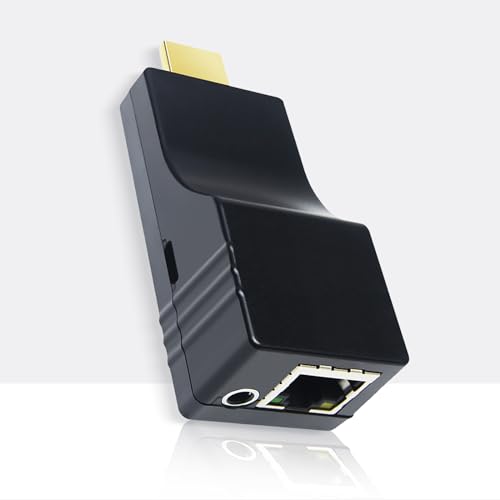
- 32g mini design for mobile setups
- 1080p60 encoding with broad protocol support
- USB or HDMI-port powered
Best For: Compact livestreaming kits and mobile production
Best Wireless Decoder
DDMALL DD-2KW Full HD HDMI Decoder
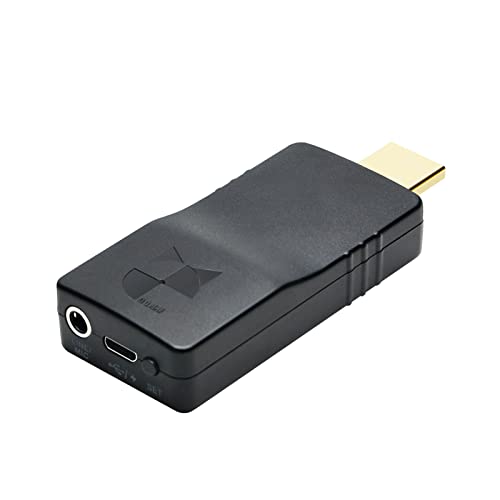
- 25g plug-in design for tidy installations
- 1080p60 HEVC/AVC decoding
- Dual-band Wi-Fi with SRT and RTSP support
Best For: Wireless display output from IP video sources
Best Low-Latency Decoder
DDMALL HDD-10 HDMI SRT Decoder

- 35g USB-powered compact enclosure
- 1080p60 H.264/H.265 decoding
- Under-80ms pairing claim with DDMALL encoders
Best For: Low-delay camera monitoring and HDMI playback
Best All-in-One Pick – Magewell Director Mini
The Magewell Director Mini is a strong choice for portable streaming encoders when you need switching, recording, monitoring, and streaming in one standalone unit. Its touchscreen, multiple input options, and battery support make it practical for mobile productions without an external computer.
Best For: Field producers and creators who need a complete portable production system with built-in control.
Pros:
- Combines switching, encoding, recording, monitoring, and streaming without an external PC.
- Accepts HDMI, USB, IP, media, and mobile camera sources.
- Supports H.264/H.265 encoding up to 1080p60 and simultaneous streaming and recording.
- Dual hot-swappable NP-F battery slots support mobile operation.
Cons:
- Its extensive production features may be more than needed for simple single-camera streaming.
- Cellular connectivity requires a separate USB modem.
- At 2.1 pounds, it is less pocket-friendly than a basic encoder.
Choose the Director Mini if flexibility and on-device production control matter more than the smallest possible setup. It is particularly well suited to broadcasts involving multiple sources, graphics, overlays, or field recording.
Best Simple HDMI Encoder – Matrox Monarch HD
The Matrox Monarch HD is a straightforward option among portable streaming encoders for HDMI-based camera workflows. It records and streams H.264/MP4 video, includes an HDMI monitor output, and uses dedicated buttons for quick operation.
Best For: Camera operators who want a compact HDMI encoder for basic streaming and recording.
Pros:
- Records master-quality video while streaming.
- Provides HDMI input and monitor output.
- One-touch buttons simplify starting streams and recordings.
- Remote command and control is supported.
Cons:
- Offers one HDMI port and a more limited input setup than newer multi-source systems.
- The supplied notes identify H.264/MP4 rather than H.265 encoding.
- Its power plug is listed as not included.
The Monarch HD is best when your setup centers on one HDMI camera and you value uncomplicated controls. Buyers needing multiple inputs, touchscreen switching, or broader network workflows should consider a more feature-rich encoder.
Best Multi-Camera 4K Option – YoloLiv YoloBox Ultra
The YoloLiv YoloBox Ultra is a versatile choice for portable streaming encoders, combining encoding, switching, monitoring, and recording in one touchscreen unit. With four HDMI inputs, support for more than ten sources, and Ethernet, Wi-Fi 6, and 4G connectivity, it is designed for complex mobile productions.
Best For: Multi-camera creators who need touchscreen switching, vertical or horizontal streaming, and UHD 4K support.
Pros:
- Combines encoder, monitor, switcher, and recorder functions.
- Four HDMI inputs plus USB-C and USB-A connectivity support varied setups.
- Supports H.265 streams up to UHD 4K.
- Offers Ethernet, Wi-Fi 6, and 4G network connectivity.
Cons:
- Its broad feature set may be unnecessary for simple single-source broadcasts.
- Recording uses one SD card slot.
- The supplied bundle includes accessories, but the notes do not specify included 4G service.
The YoloBox Ultra stands out when you need a larger touchscreen and several camera sources in a portable package. It is a strong fit for event, field, and social productions that switch between landscape and portrait formats.
Best Network-Flexible Budget Pick – UNISHEEN 4G Video Encoder
This UNISHEEN unit is a practical portable streaming encoder for HDMI sources when network flexibility is a priority. It supports 4G LTE, Ethernet, and Wi-Fi, encodes 1080p60 video in H.264 or H.265, and can stream to two platforms simultaneously after initial setup.
Best For: Churches, educators, gamers, and mobile broadcasters needing a compact encoder with multiple connection options.
Pros:
- Supports 1080p60 HDMI video with H.264 and H.265 encoding.
- Offers 4G, Ethernet, and Wi-Fi networking, including Wi-Fi 6.
- One-button controls manage network priority and streaming start/stop.
- Can push simultaneous streams to two platforms.
Cons:
- It is designed around HDMI input rather than multi-source switching.
- Initial push-address configuration requires a computer or mobile phone.
- It does not support capturing DRM-protected video.
The UNISHEEN encoder makes sense for users who need a small, no-computer broadcasting device and may have to change between cellular, wired, and Wi-Fi connections. It is less suitable for productions requiring integrated scene composition or extensive source switching.
Best for Simple HDMI Streaming – LiveU Solo HDMI Bundle
The LiveU Solo HDMI bundle is a straightforward option for shoppers comparing portable streaming encoders for HDMI-based live production. It combines the Solo HDMI encoder with one year of the LiveU LRT cloud server, a two-hour internal battery, and a first-year warranty.
Best For: Creators and production teams seeking an HDMI streaming encoder with bundled cloud connectivity and battery-powered portability.
Pros:
- Includes one year of the LiveU LRT virtual cloud server.
- Built-in two-hour LiveU internal battery supports mobile setups.
- Compact 1.35-pound design with a first-year warranty.
Cons:
- Designed for HDMI rather than SDI input.
- The included cloud service is specified for the first year.
This bundle is appealing when you want a ready-to-start HDMI workflow rather than an encoder alone. Its included battery and cloud service add practical value for portable live streaming, though buyers should account for the service arrangement after the first year.
Best Ultra-Compact Value – DDMALL AVC-2K H.265 Encoder
The DDMALL AVC-2K is a particularly compact choice among portable streaming encoders, measuring about 2.95 x 1.26 x 0.87 inches and weighing 1.13 ounces. It supports HDMI input up to 1080P60, 1080P30 encoding, H.265/H.264 compression, and several streaming protocols.
Best For: Mobile broadcasters, surveillance deployments, and multi-site teams that need a low-power encoder with broad protocol support.
Pros:
- Extremely small, lightweight 1.13-ounce design.
- Supports RTMP, RTMPS, HLS, RTSP, UDP, and 2K SRT.
- Offers dual-stream output, OSD overlays, and remote LinkCloud management.
- Uses about 2.4W and can be powered via USB or the HDMI source.
Cons:
- Encoding output is specified up to 1080P30, despite support for 1080P60 input.
- It has no included power plug.
The AVC-2K stands out for installations where size, power draw, and network flexibility matter. Its extensive protocol list and centralized management features suit more technical workflows, while the lack of a supplied power plug may require planning for accessories.
Best for 4K and SDI Workflows – LiveU Solo Pro SDI/HDMI Encoder
The LiveU Solo Pro is a higher-capability option for buyers comparing portable streaming encoders for professional camera workflows. It accepts both SDI and HDMI sources, supports resolutions up to 4K60, and includes a built-in three-hour battery.
Best For: Camera operators and production teams that need 4K60 support plus flexible SDI and HDMI connectivity in a portable unit.
Pros:
- Supports video resolutions up to 4K60.
- Accepts both SDI and HDMI inputs.
- Compatible with 12G, 3G, HD, and SD-SDI standards.
- Includes a built-in three-hour battery.
Cons:
- At 2.01 pounds, it is heavier than the smaller HDMI-only options listed here.
- The supplied details identify camera compatibility but do not specify streaming protocols.
For productions that require SDI connectivity or 4K60 capture, the Solo Pro offers a more capable connection set than basic HDMI encoders. Its larger, heavier body is a reasonable tradeoff for professional input flexibility and the extended built-in battery.
Best Ultra-Portable Encoder – DDMALL CEV-2K HDMI Streaming Encoder
For creators who need portable streaming encoders for mobile production setups, the DDMALL CEV-2K combines a tiny footprint with HDMI input, 1080p60 encoding, and broad network protocol support. Its USB-powered design is especially useful where space and access to power are limited.
Best For: Mobile livestreaming, compact production kits, and users who need RTMP, RTMPS, SRT, RTSP, TCP, or UDP support.
Pros:
- Very compact 75 x 32 x 22mm design and 32g weight.
- Supports HDMI input and encoding up to 1080p60 with bit rates up to 16Mbps.
- Can draw power from compatible HDMI ports, USB sources, or a power bank.
- Offers real-time OSD customization and remote control through the DDMALL Cloud System.
Cons:
- Provides one HDMI port, so it is focused on a single-source workflow.
- Requires network configuration and streaming-service setup for broadcasting.
The CEV-2K is a strong choice when portability, flexible protocol support, and low power use matter more than a larger collection of physical inputs. Its cloud control and customizable overlays add useful convenience for unattended or frequently relocated streams.
Best Wireless Decoder – DDMALL DD-2KW Full HD HDMI Decoder
The DDMALL DD-2KW is a compact companion for portable streaming encoders, converting network streams to HDMI for display. Its built-in dual-band Wi-Fi and USB-powered, plug-in form factor simplify temporary monitoring or presentation setups.
Best For: Wireless HDMI playback from IP cameras, NVRs, or compatible streaming encoders.
Pros:
- Ultra-small 75 x 32 x 15mm body weighs 25g.
- Decodes and outputs up to 1080p60 using HEVC or AVC.
- Supports SRT, RTSP, UDP, and TCP streams.
- Dual-band 2.4GHz and 5GHz Wi-Fi supports flexible network connections.
Cons:
- This is a decoder, not an HDMI video encoder.
- Its Type-A male HDMI design may not suit every display or port arrangement.
Choose the DD-2KW when your portable streaming system needs a small wireless endpoint rather than another capture device. It is well suited to sending network video directly to an HDMI display without adding a separate HDMI cable or power adapter.
Best Low-Latency Decoder – DDMALL HDD-10 HDMI SRT Decoder
The DDMALL HDD-10 is a compact decoder for portable streaming encoders and IP cameras, with HDMI output for displays. It supports 1080p60 decoding and is designed for low-delay transmission when paired with a compatible DDMALL encoder.
Best For: Monitoring, camera feeds, and encoder-to-display links where low latency is a priority.
Pros:
- Small 75 x 32 x 22mm body weighs 35g and uses USB power.
- Decodes SRT streams up to 1080p60 with H.264 or H.265/HEVC.
- Supports RTSP, UDP, and TCP streams from IP cameras or NVRs.
- Offers under-80ms transmission delay when paired with a DDMALL encoder using its low-latency technology.
Cons:
- The stated under-80ms result depends on pairing with a DDMALL encoder.
- This product decodes network video rather than encoding HDMI input.
The HDD-10 makes sense for setups that need a portable HDMI output and prioritize responsive monitoring. Its low-latency claim is most relevant within a DDMALL encoder-and-decoder pairing, while support for common IP protocols broadens its camera and network-stream compatibility.
How We Picked the Best Portable Streaming Encoders
We focused on the capabilities that matter most in real-world mobile production: input compatibility, supported resolution and frame rates, codec options, streaming protocols, network connectivity, monitoring, recording, portability, and setup complexity. The selection includes dedicated encoders as well as integrated switcher-and-encoder systems for buyers who want more production control in one device.
We also considered whether each encoder fits common workflows such as YouTube Live, Facebook Live, Twitch, IPTV, SRT delivery, RTMP streaming, and local recording. Because network conditions vary widely, models with multiple connectivity options or low-latency support can be especially valuable for field use.
Quick Comparison
| Best For | Look For |
|---|---|
| Simple HDMI streaming | Dedicated HDMI input, RTMP support, and straightforward controls |
| Multi-camera production | Multiple inputs, built-in switching, preview monitoring, and recording |
| Professional SDI systems | SDI connectivity, reliable protocol support, and robust signal handling |
| Remote or unstable locations | Wi-Fi, 4G, SRT, or other backup connectivity options |
| Higher-resolution workflows | 4K input or output support and adequate processing headroom |
Key Buying Factors for Portable Streaming Encoders
Inputs and Signal Compatibility
Start with your camera outputs. HDMI is common on consumer and mirrorless cameras, while SDI is preferred for longer cable runs and professional installations. If you plan to connect multiple cameras, choose a switcher-encoder rather than a single-input model.
Resolution, Frame Rate, and Codecs
1080p is still practical for most live platforms and uses less bandwidth than 4K. H.264 offers broad compatibility, while H.265 can reduce bitrate requirements when your platform and receiving equipment support it. Confirm the exact frame rates and maximum resolution before buying.
Network and Streaming Support
Check for Ethernet, Wi-Fi, cellular connectivity, and supported protocols such as RTMP, RTMPS, SRT, or RTP. Ethernet is generally the most dependable, while 4G and Wi-Fi can improve mobility. Cloud-managed models may simplify platform setup but can involve subscriptions or service limitations.
Monitoring, Recording, and Control
A built-in display or preview screen is useful for framing, audio checks, and stream status. Local recording provides a backup copy and may support editing later. Touchscreens and integrated switching reduce the need for extra hardware, but dedicated encoders can be smaller and simpler.
Who Should Buy Which Portable Streaming Encoders?
Choose a compact HDMI encoder if you stream from one camera and want the simplest portable setup. A multi-input switcher-encoder is better for interviews, events, worship services, and classrooms where you need to change camera angles without a separate switcher.
Professional crews should prioritize SDI support, dependable wired networking, and SRT or other low-latency protocols. Remote creators may benefit from wireless or 4G connectivity, especially when venue internet is unreliable. If you need a higher-resolution workflow, verify that every part of the chain—from camera and encoder to platform and display—supports 4K.
Finally, consider the complete operating cost. Include cables, capture accessories, memory cards, data plans, cloud services, and any required adapters. The best Portable Streaming Encoders are not necessarily the ones with the longest feature list; they are the ones that match your inputs, network, production needs, and tolerance for setup complexity.