
The best headphone amplifier can make quiet sources easier to hear, drive demanding headphones more effectively, or let several listeners monitor the same audio feed. The right choice depends on whether you need a portable listening upgrade, a guitar practice unit, or a multi-channel studio splitter.
We compared these 10 headphone amplifiers by connectivity, output capacity, portability, controls, and intended use so you can narrow the list quickly.
Best 10 Headphone Amplifier Picks for 2026
Best Modeling Pick

- 25 amp models, 25 effects models, and 100 presets
- Bluetooth play-along and USB recording
- Rechargeable, compact design for silent practice
Best For: Guitarists seeking modeled tones and portable practice
Best for Shared Sessions

- Powers four headphones from one source
- Independent volume control for every listener
- Compact metal build with plug-and-play setup
Best For: Tracking sessions and rehearsals with multiple listeners
Best Portable Hi-Fi Option
Neoteck 16-300 Ohm Portable Amp
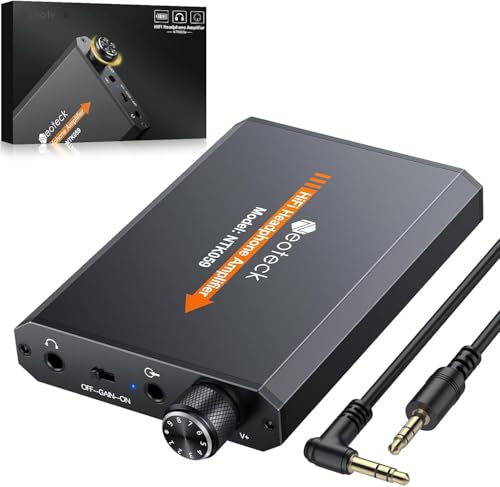
- Supports 16-300 ohm headphones
- Two-stage gain switch with volume control
- 12-plus hours of battery life in an aluminum body
Best For: Mobile listeners using varied headphone impedances
Best Four-Output Studio Amp
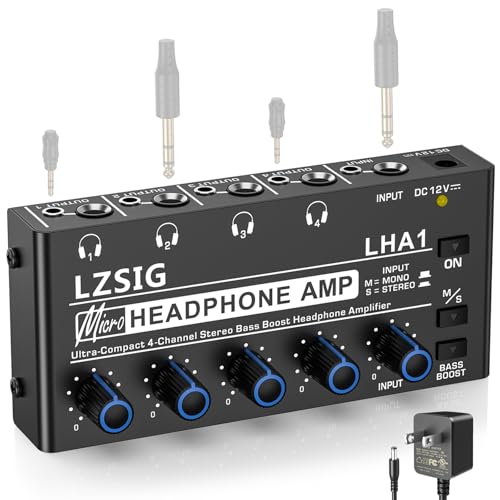
- Four outputs with independent volume controls
- Supports 3.5mm and 6.35mm headphones
- Stereo/mono switching, bass boost, and metal chassis
Best For: Shared studio and stage monitoring
Portable Listening Upgrade
TNP Portable 3.5mm Headphone Amplifier

- 3.5mm or RCA input support
- 3.5mm and 6.3mm headphone outputs
- Analog volume control with portable power options
Best For: Flexible home and portable wired listening
Multi-Listener Monitoring
FIFINE N6 Four-Channel Headphone Amplifier
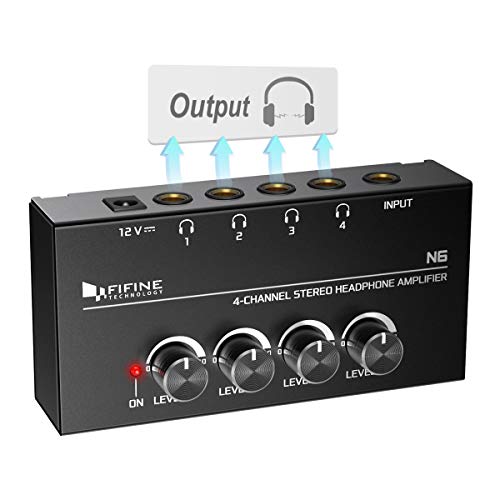
- One stereo input feeds four outputs
- Individual volume knobs for each output
- Compact metal body with power adapter
Best For: Recording, stage monitoring, and shared listening
Rechargeable Hi-Fi Control
eSynic 16-600Ω Headphone Amplifier

- Supports 16–600Ω headphone loads
- Low/high gain switch for load matching
- Rechargeable battery with 12+ hours of playback
Best For: Portable listening across varied headphone impedances
Studio Rack Powerhouse
8-Channel Headphone Mixing Amplifier

- Eight high-power channels with 16 headphone outputs
- Independent volume, mono/stereo, and input-routing controls
- 1U rack design with LED meters and overload protection
Best For: Multi-person studio and live-sound monitoring
Portable HiFi Companion
LVY Rechargeable Headphone Amplifier
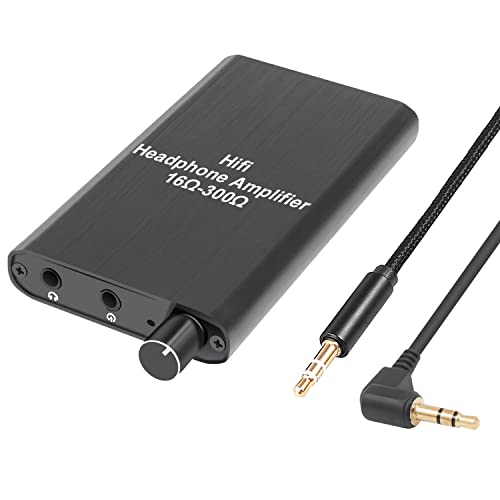
- Compact rechargeable design for mobile listening
- Two-stage gain switch for flexible headphone drive
- 3.5mm input and output with 16–300Ω load support
Best For: Portable phone, computer, and MP3/MP4 listening
Four-Listener Monitor Hub
Pyle PHA40 4-Channel Headphone Amplifier

- Drives four headphones from one stereo source
- Independent volume controls for every output
- Compact corded design with 1/4-inch TRS connections
Best For: Small recording, rehearsal, and stage-monitoring setups
Best Modeling Pick – Fender Mustang Micro Plus
The Fender Mustang Micro Plus is a versatile headphone amplifier for guitarists who want a compact practice and recording setup. Its amp and effects models, editable presets, Bluetooth streaming, and USB recording make it more than a simple headphone volume booster.
Best For: Guitarists who want portable silent practice, modeled tones, and mobile recording features.
Pros:
- Includes 25 amp models, 25 effects models, and 100 editable preset slots.
- Bluetooth audio supports video-synced play-along practice.
- Bi-directional USB recording can capture performances to a computer or mobile device.
- Rechargeable battery provides more than four hours of play time.
Cons:
- Designed for guitar and bass practice rather than general headphone amplification.
- Battery life is shorter than the claimed runtime of some larger portable audio devices.
Choose this model if tone shaping and practice features matter more than powering multiple listeners. Its rotating input plug and compact build make it especially convenient for bedroom practice and travel.
Best for Shared Sessions – Mackie HM-4 Four-Channel Amp
The Mackie HM-4 is a straightforward four-channel headphone amplifier for rehearsals, tracking sessions, and shared listening. It takes one source and drives four headphones, with independent volume controls for each listener.
Best For: Small recording sessions where several people need separate headphone level control.
Pros:
- Drives four headphones from a 1/4-inch or 1/8-inch source output.
- Each of the four outputs has its own level control.
- Compact metal housing can be secured to a desk, rack, or stand.
- Plug-and-play operation avoids complicated setup.
Cons:
- Requires corded power.
- It is a headphone distributor and amplifier, not a tone-modeling unit.
The HM-4 is a practical choice when multiple listeners need the same source without sharing one headphone output. Its simple controls and compact construction suit basic studio and rehearsal setups.
Best Portable Hi-Fi Option – Neoteck 16-300 Ohm Portable Amp
The Neoteck 16-300 Ohm is a portable headphone amplifier for listeners whose headphones need additional drive from phones, laptops, media players, or similar sources. Its two-stage gain switch, rechargeable battery, and stated 16-300 ohm compatibility provide flexibility for both everyday and higher-impedance headphones.
Best For: Mobile listeners who want a compact amplifier for a broad range of headphone impedances.
Pros:
- Supports headphones rated from 16 to 300 ohms.
- Two-stage gain switching and volume control help tailor output.
- Rechargeable 1500mAh battery provides more than 12 hours of use.
- Aluminum housing weighs about 102 grams and is sized similarly to a smartphone.
Cons:
- Uses a wired 3.5mm connection rather than wireless audio.
- Battery operation adds another device that must be charged.
For listeners who move between smartphones, laptops, and portable players, this headphone amplifier offers a useful combination of compatibility and portability. The gain switch is particularly helpful when using headphones with different power requirements.
Best Four-Output Studio Amp – LZSIG LHA2 Four-Channel Amp
The LZSIG LHA2 is a four-channel headphone amplifier for home studios, stages, and shared monitoring. It offers separate volume controls, 1/4-inch and 1/8-inch compatibility, stereo/mono switching, and a bass-boost function for adapting the output to different listening needs.
Best For: Musicians and producers who need four independently controlled headphone outputs from one audio source.
Pros:
- Provides four outputs with independent level controls.
- Accepts both 3.5mm and 6.35mm headphone connections.
- Includes stereo/mono switching and a selectable bass boost.
- Metal chassis and heavy-duty knobs are suited to regular studio use.
Cons:
- It is a four-channel headphone amplifier, not a mixer.
- Its 12V design is less travel-friendly than battery-powered options.
- Bass boost changes the sound rather than providing neutral monitoring at all times.
The LZSIG is a strong fit for shared monitoring when each listener needs a separate level. Its broad connector support and metal construction make it practical for both desktop studio work and stage applications.
Portable Listening Upgrade – TNP Portable 3.5mm Headphone Amplifier
The TNP headphone amplifier is a practical choice for listeners who want more control and potentially clearer, more detailed sound from a phone, player, or home audio setup. It supports both 3.5mm and RCA input, offers a smooth analog volume knob, and can drive headphones through either 3.5mm or 6.3mm outputs.
Best For: Home listening, portable setups, and users who need flexible input and headphone-output options.
Pros:
- Supports 3.5mm or RCA input, with 3.5mm and 6.3mm stereo outputs.
- Analog volume control and power switch make adjustments straightforward.
- Portable, lightweight design with Micro-USB or included DC-adapter power.
- Designed to work with a wide range of earphones and headphones, including over-ear models.
Cons:
- Only one input should be connected at a time.
- It uses wired analog connections rather than wireless playback.
Choose this model if versatility matters more than advanced features. Its combination of RCA support, dual headphone outputs, and simple physical controls makes it suitable for both personal listening and broader audio-system use.
Multi-Listener Monitoring – FIFINE N6 Four-Channel Headphone Amplifier
The FIFINE N6 is a headphone amplifier built for sharing one stereo source with up to four listeners. Each output has its own volume knob, making it useful for recording sessions, stage monitoring, computer audio, or watching TV with multiple headphones connected.
Best For: Studios, rehearsals, live monitoring, and any setup requiring four independently controlled headphone outputs.
Pros:
- Provides four 1/4-inch stereo headphone outputs from one source.
- Separate volume control is available for each connected listener.
- Compact metal construction is suited to studio and stage applications.
- Includes a 12V DC power adapter and power indicator light.
Cons:
- All input and output connections use 6.35mm ports.
- TRS/TS cables are not included.
- This is a one-input, four-output amplifier, not a four-input mixer.
The N6 is the better fit when the main goal is distributing one stereo feed to several people. Confirm that your source, headphones, and cables use the required quarter-inch connections before buying.
Rechargeable Hi-Fi Control – eSynic 16-600Ω Headphone Amplifier
The eSynic headphone amplifier is designed for listeners using headphones and earphones across a broad 16–600Ω range. Its rechargeable battery, 3.5mm connection, and two-stage gain switch provide a compact way to match low-impedance earbuds or higher-impedance monitoring headphones.
Best For: Portable listening with phones, laptops, gaming consoles, and headphones that benefit from selectable gain.
Pros:
- Supports stated headphone impedances from 16Ω to 600Ω.
- Low/high gain settings are intended for different headphone and earphone loads.
- Rechargeable design provides more than 12 hours of continuous playback.
- Aluminum enclosure and included 3.5mm cables suit portable wired setups.
Cons:
- Connectivity is limited to a 3.5mm analog audio jack.
- It is a single-channel amplifier, not a multi-output distribution unit.
- Gain should be selected carefully to match the connected headphones or earphones.
This model stands out for portability and impedance flexibility. The gain switch is especially useful if you alternate between sensitive in-ear headphones and higher-impedance over-ear monitoring models.
Studio Rack Powerhouse – 8-Channel Headphone Mixing Amplifier
This headphone amplifier is built for studio and live-sound monitoring where multiple performers need independent control. It provides eight high-power channels, 16 headphone outputs, flexible input routing, and real-time LED metering in a standard 1U rack-mount design.
Best For: Professional studios, live sound rigs, and recording setups that need up to eight independently controlled monitoring channels.
Pros:
- Supports up to 16 headphones across eight channels.
- Offers independent channel volume controls, mono/stereo modes, and flexible input routing.
- Includes six-segment LED meters and overload protection for monitoring signal levels.
- Rack-mountable metal enclosure suits permanent or mobile installations.
Cons:
- Its 1U rack format and eight-channel design may be excessive for casual listening.
- Uses 1/4-inch headphone connections rather than 3.5mm outputs.
Choose this model when distribution capacity and routing flexibility matter more than portability. Its extensive controls and outputs make it a practical centerpiece for collaborative monitoring.
Portable HiFi Companion – LVY Rechargeable Headphone Amplifier
This compact headphone amplifier is designed to add drive and clarity to compatible 3.5mm audio devices. Its rechargeable design, two-stage gain switch, and support for 16–300Ω headphones make it a convenient option for portable listening with phones, computers, and MP3 or MP4 players.
Best For: Listeners who want a small, rechargeable amplifier for 3.5mm headphones and portable digital devices.
Pros:
- Compact 3.6-by-0.5-by-1.9-inch design is easy to carry.
- Two-stage gain switch helps match the amplifier to different headphone needs.
- Supports headphone loads from 16–300Ω.
- Offers more than five hours of use per charge according to the supplied specifications.
Cons:
- Designed for 3.5mm connections, so it may not suit equipment using only larger audio connectors.
- Its battery-powered format is less suitable for permanent multi-listener monitoring.
The LVY is a straightforward choice for portable setups. It prioritizes compact size and rechargeable convenience while adding gain flexibility for a range of headphones.
Four-Listener Monitor Hub – Pyle PHA40 4-Channel Headphone Amplifier
The Pyle PHA40 is a compact headphone amplifier for sharing one stereo source with up to four listeners. Each output has its own volume control, making it useful for recording sessions, rehearsals, on-stage monitoring, and other setups where listeners need separate level adjustment.
Best For: Small studios and performers who need four independently controlled headphone outputs from a mixer or other 1/4-inch source.
Pros:
- Powers up to four pairs of headphones simultaneously.
- Provides dedicated volume controls for each listener.
- Uses four 1/4-inch stereo TRS outputs and a 1/4-inch TRS input.
- Compact dimensions make it convenient for road or studio use.
Cons:
- Offers four channels, fewer than larger distribution amplifiers.
- Its 1/4-inch connectivity may require an adapter for headphones with smaller plugs.
- Requires corded electric power rather than battery operation.
For a small monitoring group, the PHA40 keeps the feature set focused and installation simple. It is a practical headphone amplifier when four outputs and individual level control are enough.
How We Picked the Best Headphone Amplifier
We selected models for distinct real-world needs rather than treating every Headphone Amplifier as interchangeable. The lineup includes guitar-focused practice gear, compact portable amps, rechargeable units, and multi-output distribution amplifiers for recording or group monitoring.
Our comparison emphasizes the features that affect daily use: input and output connections, channel count, headphone impedance support, gain or tone controls, power options, build design, and installation flexibility. We also considered whether each model is best suited to personal listening, music practice, a desktop setup, or a larger studio environment.
Quick Comparison
| Best For | Look For | Recommended Type |
|---|---|---|
| Guitar practice | Instrument input, amp models, effects, Bluetooth | Modeling headphone amplifier |
| Portable listening | Rechargeable battery, gain switch, compact housing | Portable headphone amplifier |
| Two to four listeners | Multiple independent outputs and volume controls | Compact distribution amp |
| Recording and rehearsal | Several channels, sturdy construction, high output | Multi-channel headphone amplifier |
| Permanent studio installation | Eight or more outputs, rack or mountable design | High-capacity monitoring amp |
Key Buying Factors for a Headphone Amplifier
Compatibility and Impedance
Check the amplifier’s supported headphone impedance range before buying. Low-impedance headphones are generally easy to drive, while high-impedance studio models may benefit from greater voltage and a dedicated gain setting. A wide stated range provides more flexibility, but actual performance also depends on the source and headphone sensitivity.
Inputs and Outputs
Match the connections to your equipment. A 3.5mm input works well with phones, laptops, and portable players; RCA inputs suit many home audio components; and 1/4-inch connections are common in instruments and studio equipment. For shared monitoring, count both the number of outputs and whether each listener gets an independent volume control.
Power and Portability
Battery-powered models are useful for travel, commuting, and practice away from an outlet. USB or wall-powered units are usually better for fixed desks and studios. If you plan to use an amp with an instrument, also check battery life, charging arrangements, and whether Bluetooth is intended for streaming, playback, or both.
Controls and Sound-Shaping Features
Gain switches can help match different headphones, while bass boost and tone controls change the listening profile. These features are helpful when used sparingly, but a clean, low-noise signal path is usually more important than extra sound effects for critical monitoring.
Who Should Buy Which Headphone Amplifier?
Choose a modeling unit such as the Fender Mustang Micro Plus if you want guitar practice, built-in effects, and amp-style sounds through headphones. For a simple shared setup, the Mackie HM-4 or another four-channel model is a practical fit. Portable rechargeable options from Neoteck, eSynic, or LVY make more sense for listeners who move between sources and locations.
For mixers, rehearsal rooms, and recording spaces, prioritize the FIFINE, LZSIG, or other multi-output designs with separate channel controls. If you need to monitor many performers at once, choose the eight-channel distribution amplifier and verify that its mono/stereo modes and connector layout match your interface. Finally, confirm cable requirements and source output levels before ordering, since adapters may be needed for some phones, instruments, or studio interfaces.