
An enclosed 3D printer can make desktop fabrication cleaner, quieter, and more consistent while helping protect prints from drafts, dust, and accidental contact. The right model depends on more than advertised speed: material support, chamber design, automation, software, and long-term workflow all matter.
We compared 10 standout machines ranging from approachable single-color FDM printers to fast multicolor and multi-material systems. Use the guide below to narrow the list by performance, convenience, budget, and the types of projects you plan to print.
Best 10 Enclosed 3d Printers Picks for 2026
Best Overall Enclosed 3D Printer

- 500mm/s printing with automatic bed leveling
- Fully enclosed body for advanced filaments
- Up to 16 colors with required AMS
Best For: Fast, straightforward everyday printing
Best Filtered Enclosed 3D Printer

- 600mm/s CoreXY printing under 50dB
- HEPA13 and activated-carbon filtration
- Camera, auto leveling, and quick-swap nozzles
Best For: Shared indoor spaces and monitored printing
Best Multicolor Enclosed 3D Printer
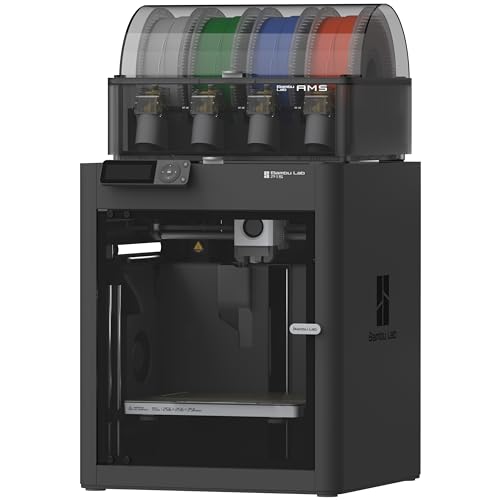
- Includes P1S printer and AMS
- Supports up to 16 colors
- 500mm/s printing with auto bed leveling
Best For: Colorful models and multi-material projects
Best High-Temperature Enclosed 3D Printer
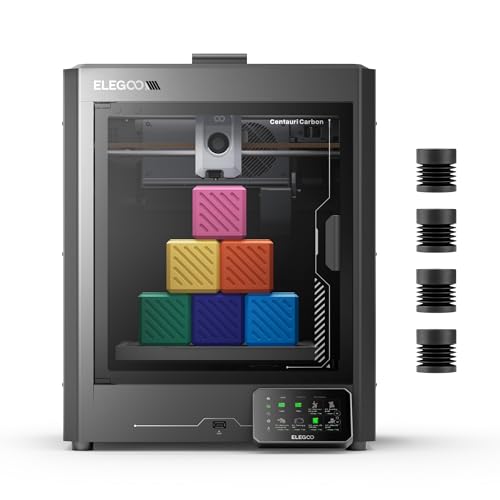
- 320°C hardened-steel nozzle
- Supports carbon-fiber-reinforced filament
- 500mm/s CoreXY printing with built-in camera
Best For: Strong, heat-resistant functional parts
Best All-Rounder

- 600 mm/s printing with active flowrate compensation
- AMS 2 Pro enables multi-color printing and filament drying
- AI detection and automatic calibration simplify setup
Best For: Fast, convenient multi-color printing for beginners and experienced makers
Best Plug-and-Play Value

- Pre-assembled for quick setup
- Up to 600 mm/s with a 260 mm cubic build volume
- CFS expansion supports up to 16 colors
Best For: Users wanting quiet, expandable color printing with minimal setup
Best for Engineering Materials

- Four toolheads reduce purge waste during color changes
- 65 °C heated chamber supports advanced filaments
- HEPA and carbon filtration help manage fumes
Best For: Industrial and engineering prints using ABS, PC, PA, and other advanced materials
Fast Multicolor Pick
ELEGOO Centauri Carbon 2 Combo
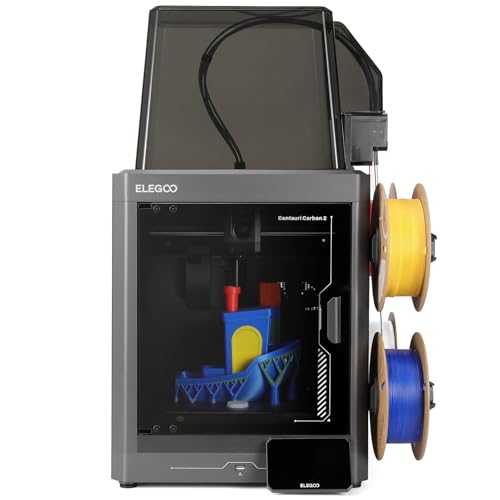
- Four-color CANVAS printing with filament monitoring
- Up to 500 mm/s CoreXY speed
- Automated calibration and broad material support
Best For: Fast, hands-off multicolor printing
Precision Speedster

- Four-color printing with CoreXY speeds up to 600 mm/s
- One-click auto leveling and power-loss resume
- 300°C direct drive with four nozzle options
Best For: Fast prototyping and small batch production
Expandable Color Choice

- Native four-color printing, expandable to 19 colors
- 600 mm/s speed with 49-point auto leveling
- Supports flexible and engineering-oriented filaments
Best For: Schools, makerspaces, and expandable multicolor setups
Best Overall Enclosed 3D Printer – Bambu Lab P1S
The Bambu Lab P1S is a strong all-around choice among enclosed 3D printers, combining a fully enclosed body, automatic bed leveling, and high-speed FDM printing. It is ready to set up in about 15 minutes and supports common materials such as PLA, PETG, TPU, PVA, PET, ABS, and ASA.
Best For: Makers who want fast, user-friendly enclosed printing with broad everyday filament support.
Pros:
- Print speeds up to 500mm/s with 20,000mm/s² acceleration.
- Automatic bed leveling simplifies first-layer setup.
- Enclosed design supports more advanced filaments.
- Can support up to 16 colors when paired with the Bambu Lab AMS.
Cons:
- Multi-color printing requires the separately required Bambu Lab AMS connection.
- Carbon- and glass-fiber-reinforced polymer is not recommended.
The P1S balances speed, convenience, and enclosure benefits well, making it a practical default for users who want capable printing without a lengthy setup.
Best Filtered Enclosed 3D Printer – FLASHFORGE Adventurer 5M Pro
The FLASHFORGE Adventurer 5M Pro stands out among enclosed 3D printers with a fully enclosed chamber, HEPA13 and activated-carbon filtration, and printing noise rated below 50dB. Its CoreXY system, automatic leveling, camera, and quick-swap nozzle system make it well suited to convenient, monitored printing.
Best For: Home, classroom, or office users who want a quieter enclosed printer with filtration and remote monitoring.
Pros:
- Up to 600mm/s speed with 20,000mm/s² acceleration.
- HEPA13 dual filtration blocks 99% of particles and VOCs according to the supplied specifications.
- Supports PLA, ABS, PETG, ASA, TPU, PC, PLA-CF, and PETG-CF.
- Includes automatic leveling, filament detection, camera monitoring, and a 10-minute setup claim.
Cons:
- Its 280°C extruder may be less suitable for materials requiring higher nozzle temperatures.
- Remote monitoring and adjustments rely on the Flash Maker app.
With strong automation and filtration features, the Adventurer 5M Pro is especially appealing when the printer will operate around people or in shared indoor spaces.
Best Multicolor Enclosed 3D Printer – Bambu Lab P1S Combo
The Bambu Lab P1S Combo combines the enclosed P1S platform with an AMS for multi-color and multi-material printing. It offers automatic bed leveling, up to 500mm/s printing, and a quick setup process, making it a convenient option for colorful prototypes, models, and display pieces.
Best For: Makers who want an enclosed printer with multi-color capability included in the package.
Pros:
- Includes the P1S printer and AMS for multi-color printing.
- Supports up to 16 colors according to the supplied specifications.
- Prints at up to 500mm/s with 20,000mm/s² acceleration.
- Automatic bed leveling and a roughly 15-minute setup simplify operation.
Cons:
- Carbon- and glass-fiber-reinforced polymer is not recommended.
- The combo weighs more than the standard P1S at 40.8 pounds.
The Combo is the more complete choice for users who already know they want color changes or multi-material workflows, avoiding the need to add the AMS separately.
Best High-Temperature Enclosed 3D Printer – ELEGOO Centauri Carbon
The ELEGOO Centauri Carbon is a high-speed enclosed 3D printer designed for users who need a 320°C brass-hardened steel nozzle and support for carbon-fiber-reinforced filament. It arrives assembled and pre-calibrated, with a 256 x 256 x 256mm build volume, automatic calibration, and a built-in camera.
Best For: Makers printing strong, heat-resistant parts with advanced or carbon-fiber-reinforced materials.
Pros:
- 320°C brass-hardened steel nozzle supports demanding materials.
- Enclosed chamber is optimized for carbon-fiber-reinforced filament.
- CoreXY system reaches up to 500mm/s with 20,000mm/s² acceleration.
- Die-cast frame, vibration compensation, camera, and dual LED lighting support consistent monitoring.
Cons:
- The 38.5-pound printer has a relatively substantial footprint.
- Its advanced-material focus may be more capability than casual PLA users need.
The Centauri Carbon is a compelling option when material capability matters as much as speed, while its pre-calibrated setup keeps the initial experience approachable.
Best All-Rounder – Bambu Lab P2S Combo
For shoppers comparing enclosed 3d printers, the Bambu Lab P2S Combo stands out as a streamlined, high-speed option with automatic calibration, AI failure detection, and included multi-color capability through the AMS 2 Pro. It reaches speeds up to 600 mm/s and can be ready to print in about 15 minutes.
Best For: Beginners and experienced makers who want fast, low-friction multi-color printing with broad filament flexibility.
Pros:
- Prints up to 600 mm/s with active flowrate compensation for consistent layers.
- AMS 2 Pro supports multi-color and multi-material printing with filament drying up to 65 °C.
- Automatic calibration, quick-swap nozzles, and AI failure detection simplify setup and monitoring.
- Adaptive airflow can cool overhangs or maintain a chamber temperature up to 50 °C.
Cons:
- The P2S printer itself does not support multi-color printing; the Combo version is required.
- At 46.3 pounds, it is a substantial machine to place and move.
The P2S Combo is a practical choice when convenience and workflow matter as much as print speed. Its enclosed design, adaptive thermal management, and integrated software ecosystem make it especially appealing for users who want to move quickly from model selection to finished prints.
Best Plug-and-Play Value – Creality K2 Combo
The Creality K2 Combo is one of the more accessible enclosed 3d printers for users who want a largely pre-assembled machine, high-speed printing, and a path to expanded color output. It includes one CFS unit, while connecting up to four CFS units can enable printing in as many as 16 colors.
Best For: Makers seeking a quiet, pre-assembled printer with automatic leveling, camera monitoring, and expandable multi-color printing.
Pros:
- Pre-assembled design supports a straightforward plug-and-play setup.
- Prints at speeds up to 600 mm/s with a 260 × 260 × 260 mm build volume.
- Automatic target-area leveling and an AI camera monitor for spaghetti failures and idle conditions.
- Supports materials including PLA, PETG, ABS, PLA-CF, and PET.
Cons:
- The Combo includes one CFS unit; additional units are needed to reach the stated 16-color capacity.
- At 65.9 pounds, it is heavier than the other listed options.
With its pre-assembled format and quiet operation, the K2 Combo is suited to buyers who want fewer setup steps without giving up advanced features. Its CFS expansion option also leaves room to grow into more ambitious color-printing projects.
Best for Engineering Materials – FlashForge Creator 5 Pro
For demanding enclosed 3d printers applications, the FlashForge Creator 5 Pro combines four independent toolheads with a 65 °C active heated chamber. Its CoreXY structure, near-zero-waste tool changing, and filtration system make it geared toward industrial multi-material and color work.
Best For: Engineering-focused users printing advanced materials such as ABS, PC, and PA, while minimizing purge waste.
Pros:
- Four independent toolheads and a 7-second FlashSwap changer reduce flushing and material waste.
- Active heated chamber reaches 65 °C to help prevent warping with advanced filaments.
- CoreXY motion, linear rails, and high-torque belts support speeds up to 600 mm/s.
- Dual HEPA 13 and activated carbon filtration helps trap ultrafine particles and fumes.
Cons:
- Its industrial feature set may be more than casual hobbyists need.
- The supplied notes do not specify a build volume.
The Creator 5 Pro is the strongest fit here for users prioritizing material capability, reduced multi-color waste, and controlled chamber conditions. Automated calibration and remote monitoring add useful oversight for longer or more complex production runs.
Fast Multicolor Pick – ELEGOO Centauri Carbon 2 Combo
The ELEGOO Centauri Carbon 2 Combo is a strong option for shoppers comparing enclosed 3d printers with automated multicolor printing, broad material support, and high-speed CoreXY performance. Its CANVAS system handles up to four colors, while automated calibration and monitoring simplify the setup-to-print process.
Best For: Makers who want fast, hands-off multicolor printing and the flexibility to work with basic through engineering-grade materials.
Pros:
- Supports four-color printing with smart filament detection, auto refill, and tangle detection.
- Reaches speeds up to 500 mm/s with 20,000 mm/s² acceleration.
- Offers automated calibration, active vibration compensation, and a rigid aluminum CoreXY frame.
- Supports a wide range of materials through advanced process and temperature control.
Cons:
- Its 42.6-pound weight and nearly 30-inch height may require a dedicated location.
- The feature-rich ecosystem may be more than beginners need for simple single-color prints.
Choose this model if speed, material versatility, and automated four-color operation matter more than a compact footprint. Its integrated workflow is designed to reduce routine intervention while maintaining detailed results.
Precision Speedster – FLASHFORGE AD5X
The FLASHFORGE AD5X is a practical choice among enclosed 3d printers for users who want rapid multicolor production without giving up convenient controls. It combines four-color support, one-click leveling, a 300°C direct-drive extruder, and remote monitoring in a compact CoreXY design.
Best For: Home users, prototyping workflows, and small batch projects that benefit from fast prints and straightforward automation.
Pros:
- Supports up to four colors simultaneously.
- Provides speeds up to 600 mm/s with 20,000 mm/s² acceleration.
- Includes one-click auto leveling, automatic filament feeding and retraction, and power-loss resume.
- Supports four nozzle sizes from 0.25 mm to 0.8 mm for detail or faster larger prints.
Cons:
- Its 220 x 220 x 220 mm build volume is smaller than some larger-format options.
- Remote control requires the Flash Maker mobile app and compatible connectivity.
The AD5X stands out when efficient operation and production speed are priorities. Its flexible nozzle options and multicolor capability make it adaptable, while automated leveling reduces recurring setup work.
Expandable Color Choice – Anycubic Kobra X
The Anycubic Kobra X is an appealing enclosed 3d printers option for makers who want native four-color printing and room to expand. With additional ACE 2 Pro units, its palette can grow to 19 colors, while 49-point leveling, AI monitoring, and a 260 mm cubed build volume support convenient everyday use.
Best For: Homes, schools, and makerspaces seeking expandable multicolor printing, remote monitoring, and flexible filament compatibility.
Pros:
- Includes native four-color printing and can expand to up to 19 colors with four ACE 2 Pro units.
- Offers up to 600 mm/s speed and reduces filament purging and travel paths by 81.25%.
- Uses LeviQ 3.0 with 49-point auto bed leveling for a more consistent first layer.
- Supports PLA, PETG, TPU, PVA, and ASA with a 300°C nozzle.
Cons:
- Additional ACE 2 Pro units are needed to reach the expanded 19-color capacity.
- Filament is not included.
- Its 23 x 13 x 22-inch dimensions may require substantial desk space.
The Kobra X is best suited to users who value a growing color system and broad material support. Its app control, detection features, and large model library add convenience for shared or frequent-use environments.
How We Picked These Enclosed 3d Printers
We focused on machines with a substantially enclosed print area or enclosed-style design, then compared the features that most affect daily use. Our evaluation priorities included print speed, automatic bed leveling, calibration, extrusion temperature, build volume, chamber temperature control, camera or monitoring features, and support for multicolor or multi-material printing.
We also considered setup complexity and workflow. A printer that produces impressive specifications but requires constant tuning may be a poor fit for beginners, classrooms, or busy makers. Conversely, advanced users may value an actively heated chamber, multiple toolheads, higher-temperature hardware, or broader engineering-material compatibility.
Quick Comparison
| What to Compare | Best For | Why It Matters |
|---|---|---|
| Single-color enclosed FDM | Most everyday projects | Usually offers the simplest setup and lowest operating cost |
| AMS, CFS, or other material systems | Multicolor prints and automatic filament changes | Expands creative options but adds hardware, setup, and material considerations |
| CoreXY motion systems | Fast, detailed production | Can deliver higher speed while maintaining good mechanical accuracy |
| Heated chamber or multiple toolheads | Technical materials and low-waste workflows | Improves performance with demanding filaments and specialized jobs |
Key Buying Factors for Enclosed 3d Printers
Build Volume and Material Compatibility
Check the actual build dimensions against your typical projects. Also confirm which materials the printer supports. PLA and PETG are broadly accessible, while ABS, ASA, nylon, and carbon-fiber blends may require a heated bed, stronger hotend, hardened components, or active chamber heating.
Speed Versus Print Quality
Headline speed is only part of the story. Look for input shaping, reliable extrusion, motion stability, and sensible acceleration controls. Fast printing is valuable when the machine can maintain layer consistency without excessive noise, failed prints, or visible artifacts.
Automation and Monitoring
Automatic leveling, flow calibration, filament detection, power-loss recovery, and a built-in camera can reduce supervision. These features are especially useful for newcomers and unattended jobs, although cameras and cloud-connected functions may raise privacy or network-management considerations.
Multicolor Workflow
Automatic material systems make color changes easier, but they can increase purge waste and require more room beside or above the printer. Toolhead-based systems may reduce waste in some workflows but generally cost more and involve greater mechanical complexity.
Who Should Buy Which Enclosed 3d Printers?
Choose a straightforward enclosed FDM printer if you want dependable everyday printing, practical safety benefits, and minimal setup. A bundled material system is better for creators who regularly make multicolor models, labels, figures, or presentation pieces. High-speed CoreXY models suit users who print frequently and want shorter production times without moving to a larger professional machine.
For engineering parts, prioritize hotend temperature, hardened hardware, build-surface performance, and chamber control over maximum advertised speed. Advanced makers and small businesses may benefit from multi-toolhead or actively heated-chamber designs, particularly when material separation, reduced waste, or repeatable production is more important than the lowest purchase price.