
Choosing the best mixer for turntablism means balancing crossfader feel, layout, connectivity, and the way you actually perform. Scratch DJs need responsive controls, while bedroom and club users may prioritize effects, channels, USB support, or controller integration.
We selected 10 standout options spanning dedicated battle mixers, traditional multi-channel mixers, and DJ controllers with performance-focused layouts. Use the guide below to narrow the list by setup, skill level, and budget.
Best 10 Dj Mixer for Turntablism Picks for 2026
Best Scratch Control

- Adjustable MAGVEL FADER PRO crossfader
- Six Scratch Cutter patterns
- USB-powered Serato DJ mixer
Best For: Scratch-focused Serato DJs
Best Budget Scratch Mixer

- Phono/line switchable RCA inputs
- Replaceable slope-adjustable crossfader
- Three-band EQ on each channel
Best For: Affordable traditional turntable setups
Best Beginner Controller

- Open battle-style scratch layout
- Serato DJ Lite included
- Compact PC/Mac controller
Best For: Laptop-based beginner scratch practice
Best Multi-Channel Mixer
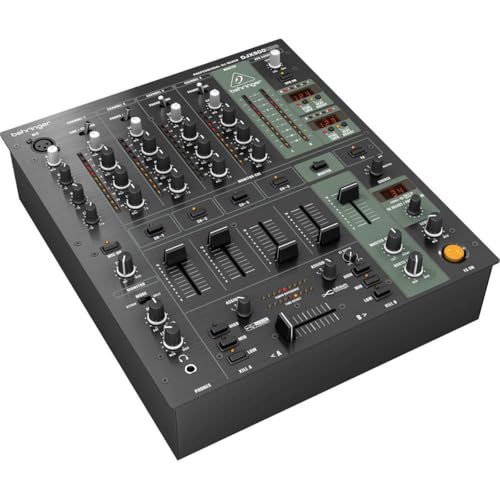
- Five-channel professional mixer
- INFINIUM optical crossfader
- USB recording and digital effects
Best For: Multi-source DJ rigs and recording
Best Beginner All-Rounder
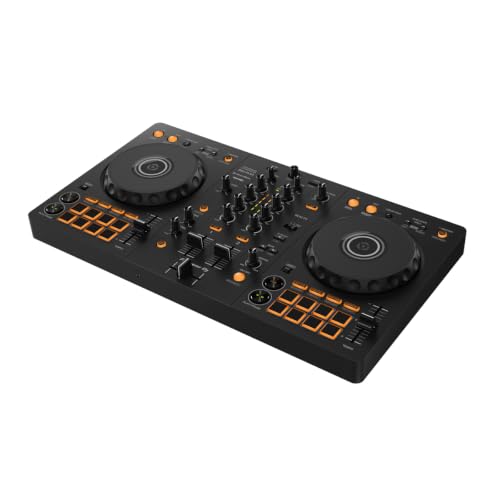
- Two-channel, two-deck layout for approachable practice
- Smart Fader helps with volume, bass, and BPM transitions
- 16 pads plus streaming and livestreaming support
Best For: Beginners who want room to grow
Best Traditional Mixer Features

- Five channels for more connected audio sources
- VCA-controlled crossfader for smooth performance
- Digital effects and dual auto-BPM counters included
Best For: Multi-source setups needing hands-on controls
Best Ultra-Portable Starter
AlphaTheta Pioneer DJ DDJ-FLX2

- USB-C bus-powered design for phone, tablet, or computer use
- Smart Fader assists with volume, BPM, and bass matching
- Streaming support and headphone or speaker playback options
Best For: First-time DJs who prioritize portability
Classic BPM Control
Behringer DX626 3-Channel DJ Mixer

- Three dual-input stereo channels
- Dual auto-BPM counter
- Long-life Ultraglide crossfader
Best For: Flexible multi-channel DJ setups
Compact Value Pick
Rockville RDJ2 2-Channel DJ Mixer
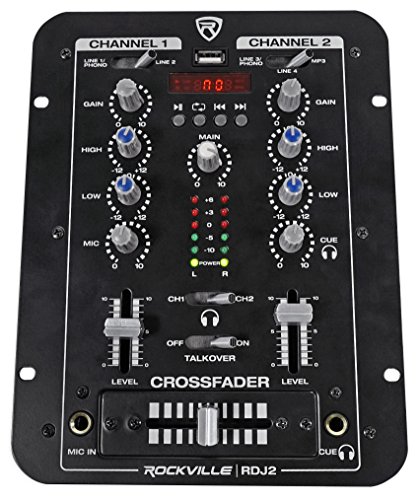
- Four RCA line inputs
- Built-in USB MP3 player
- Lightweight metal housing
Best For: Portable home and mobile DJ setups
Club-Style Scratch Choice
Pioneer DJM-250MK2 2-Channel DJ Mixer

- Club-style two-channel workflow
- Magvel Fader for smooth cuts
- Free rekordbox DVS upgrade
Best For: Turntable practice, DVS, and light scratching
Best Scratch Control – Pioneer DJ DJM-S5
The Pioneer DJ DJM-S5 is a focused two-channel dj mixer for turntablism, built around Serato DJ performance and hands-on scratch control. Its adjustable MAGVEL FADER PRO crossfader, scratch-oriented functions, and USB power make it a flexible choice for battle-style setups and mobile practice.
Best For: DJs who prioritize scratching, crossfader feel, and Serato DJ integration.
Pros:
- MAGVEL FADER PRO crossfader has adjustable weight and resistance.
- Six Scratch Cutter patterns help emulate transformer-style cuts.
- USB-powered design supports flexible placement and mobile use.
- Includes effects levers and Crossfader Hot Cue functionality.
Cons:
- Limited to two channels.
- Its scratch-focused feature set may be more than needed for basic mixing.
The DJM-S5 is the most specialized option here for scratch technique and Serato-based performance. Choose it when crossfader response and battle features matter more than having extra channels.
Best Budget Scratch Mixer – Numark M2
The Numark M2 is a straightforward two-channel dj mixer for turntablism with essential scratch controls and broad analog connectivity. Its switchable phono/line inputs, replaceable crossfader, and rack-mountable design suit practice rooms, parties, and beginner-to-intermediate setups.
Best For: Beginners and practical home setups needing turntable, media-player, and microphone connections.
Pros:
- Two phono/line switchable RCA inputs support turntables and line devices.
- Replaceable crossfader includes reverse and slope controls.
- Three-band EQ is available on both channels.
- Includes mic, record, master, and headphone connections.
Cons:
- Only two channels are provided.
- USB connectivity is listed, but the supplied inputs and outputs are primarily analog RCA and 1/4-inch connections.
The M2 keeps the feature set focused on core mixing and scratching rather than software-driven performance. It is a sensible pick when you want accessible controls and traditional connections at a compact size.
Best Beginner Controller – Pioneer DJ DDJ-REV1
The Pioneer DJ DDJ-REV1 is a compact controller alternative for anyone learning dj mixer for turntablism techniques with a laptop. Its open battle-style layout, Serato DJ Lite support, tall pitch faders, and quick effects controls are designed around beginner-friendly scratch and battle practice.
Best For: New hip-hop, scratch, and open-format DJs who want a laptop-based starting point.
Pros:
- Battle-style layout mirrors a turntable-and-mixer arrangement.
- Includes access to Serato DJ Lite for immediate computer-based use.
- Tall pitch faders and accessible effects controls support battle techniques.
- Tracking Scratch helps trigger scratch routines with one motion.
Cons:
- It is a controller rather than a standalone mixer.
- Requires a compatible PC or Mac for operation.
- Its single USB port may limit connection flexibility.
The DDJ-REV1 is best viewed as an affordable learning platform, not a replacement for a dedicated mixer and turntables. Its layout and guided features can help beginners build confidence before moving to more specialized hardware.
Best Multi-Channel Mixer – Behringer DJX900USB
The Behringer DJX900USB expands the dj mixer for turntablism format with five channels, a contact-free optical crossfader, digital effects, and a built-in USB interface. It is suited to larger or more varied DJ rigs where multiple sources, recording, playback, and onboard processing are useful.
Best For: DJs who need five channels, adjustable crossfader control, digital effects, and USB recording or playback.
Pros:
- Five-channel layout accommodates a wider range of sources.
- INFINIUM optical crossfader offers adjustable tension and fader curve.
- 24-bit digital effects include advanced parameter control.
- Built-in USB interface supports recording and playback with a PC or Mac.
Cons:
- Its 8.2-pound weight is higher than the compact two-channel options.
- The larger feature set may be unnecessary for simple two-deck practice.
- The supplied details do not specify turntable input types.
The DJX900USB is the versatile choice for complex setups and multi-source performances. Select it when channel count and built-in effects are more important than a minimal, battle-mixer layout.
Best Beginner All-Rounder – Pioneer DJ DDJ-FLX4
If you want a capable dj mixer for turntablism that is easy to learn on, the Pioneer DJ DDJ-FLX4 combines a straightforward two-deck layout with helpful automated mixing features. Its compact design, broad device compatibility, and streaming support make it practical for home practice and beginner performances.
Best For: Beginners who want room to develop beyond basic mixes.
Pros:
- Simple Pioneer DJ-style layout with two-channel, two-deck control.
- Smart Fader can automatically adjust volume, bass, and BPM while blending.
- Sixteen performance pads support Hot Cues, Pad FX, Beat Jump, and Sampler functions.
- Works with PC, Mac, iPhone, iPad, and Android, with streaming and livestreaming support.
Cons:
- It is a controller rather than a traditional standalone mixer.
- Its two-channel layout may feel limiting for more advanced multi-deck setups.
The DDJ-FLX4 is a strong growth-oriented choice for new DJs: approachable at first, but equipped with enough controls and software compatibility to support continued practice.
Best Traditional Mixer Features – Behringer PRO MIXER DJX750
For DJs seeking a more traditional dj mixer for turntablism, the Behringer PRO MIXER DJX750 provides five channels, a VCA-controlled crossfader, digital effects, and an onboard BPM counter. Its XLR and 1/4-inch connections suit a more permanent setup with multiple audio sources.
Best For: DJs who need multiple channels and hands-on effects control.
Pros:
- Five-channel design accommodates a broader range of connected sources.
- VCA-controlled crossfader is designed for reliable, smooth audio performance.
- Includes digital effects with adjustable parameters and an XPQ stereo surround effect.
- Dual auto-BPM counters provide time and beat-sync information.
Cons:
- At 11.9 pounds, it is less portable than the compact controller options here.
- It requires corded power rather than bus power from a mobile device.
- The supplied notes do not specify current software-update support.
The DJX750 is the clearest fit when channel count and physical mixer controls matter more than portability or beginner-focused software features.
Best Ultra-Portable Starter – AlphaTheta Pioneer DJ DDJ-FLX2
The AlphaTheta Pioneer DJ DDJ-FLX2 is a compact entry point for anyone comparing a portable dj mixer for turntablism. USB-C bus power, Smart Fader, streaming-app compatibility, and flexible monitoring make it convenient for learning and casual mixing from a phone, tablet, or computer.
Best For: First-time DJs who prioritize portability and quick setup.
Pros:
- Lightweight, compact design powered through USB-C from a phone, tablet, or computer.
- Smart Fader automatically matches volume, BPM, and bass during crossfader movements.
- Supports music from services including Apple Music, Spotify, and Tidal through compatible apps.
- Offers speaker and headphone playback options, including a 3.5 mm output.
Cons:
- Its two-channel design is aimed at beginners rather than complex setups.
- Feature support depends on compatible software such as rekordbox, djay, or Serato DJ Lite.
- The supplied notes do not indicate built-in performance pads.
The DDJ-FLX2 makes the most sense for learners who want the smallest, simplest setup and expect to practice with mobile devices or a laptop.
Classic BPM Control – Behringer DX626 3-Channel DJ Mixer
Behringer Pro Mixer Dx626 Professional 3-Channel Dj Mixer With Bpm Counter, Black
Check Price On AmazonIf you want a dj mixer for turntablism with extra channel flexibility, the Behringer DX626 combines three dual-input stereo channels with a crossfader designed for frequent performance use. Its dual auto-BPM counter and kill-style EQ make it practical for beatmatching and hands-on transitions.
Best For: DJs who want three-channel mixing, BPM assistance, and a durable crossfader for home or performance setups.
Pros:
- Three dual-input stereo channels with gain and 3-band kill EQ.
- Dual auto-BPM counter supports beatmatching.
- Ultraglide crossfader is rated for up to 500,000 life cycles.
- Includes PFL monitoring with a master/PFL mix option.
Cons:
- Its 14.9-inch depth and 11.8-inch width require more desk space than compact two-channel mixers.
- The supplied specifications list RCA audio inputs and outputs, which may limit connection choices for some setups.
The DX626 stands out when channel count and BPM support matter more than a minimalist footprint. It is a practical choice for DJs building a flexible, traditional mixer setup.
Compact Value Pick – Rockville RDJ2 2-Channel DJ Mixer
For a compact dj mixer for turntablism, the Rockville RDJ2 offers two channels, four RCA line inputs, cue monitoring, and a built-in USB MP3 player. Its straightforward controls and lightweight metal housing suit home practice, mobile use, and simple turntable-based setups.
Best For: Home DJs and mobile users who need an affordable, portable mixer with USB playback and basic performance controls.
Pros:
- Four RCA line inputs with selectable input switches.
- Separate gain, bass, and treble controls on each channel.
- Built-in USB MP3 player with LCD display.
- Compact 3.1-pound design with cue monitoring and microphone/headphone jacks.
Cons:
- Only two channels are provided.
- Its listed RCA output connections may be less suitable for setups requiring XLR outputs.
- The supplied notes describe a basic 3-band EQ rather than a dedicated filter section.
The RDJ2 is focused on accessible mixing rather than advanced club features. Its small footprint, USB player, and flexible RCA input layout make it a convenient option for straightforward home or mobile rigs.
Club-Style Scratch Choice – Pioneer DJM-250MK2 2-Channel DJ Mixer
The Pioneer DJM-250MK2 is a strong dj mixer for turntablism pick for learning a club-style workflow. It pairs a dedicated filter on each channel with the smooth Magvel Fader, while the included rekordbox DVS upgrade supports digital-file mixing through turntables or media players.
Best For: Beginners and home DJs who want a professional-style two-channel layout with DVS support and a crossfader suited to blending and light scratching.
Pros:
- Club-style two-channel layout helps build professional booth familiarity.
- Magvel Fader is designed for smooth, durable cuts.
- Dedicated Sound Color FX Filter on each channel.
- Free rekordbox DVS upgrade supports digital mixing with turntables or media players.
Cons:
- It is limited to two channels.
- The supplied dimensions indicate a larger footprint than the compact Rockville RDJ2.
- Its feature set is intentionally streamlined rather than built around extensive effects.
The DJM-250MK2 is the most directly aligned with a turntable-focused learning path in this group. Its DVS capability, channel filters, and Magvel Fader make it a useful bridge between home practice and club-style mixing.
How We Picked the Best Dj Mixer for Turntablism
We evaluated each option for the demands of turntablism: crossfader responsiveness, channel layout, cueing controls, input flexibility, portability, and compatibility with common DJ software or hardware. We also considered whether each product suits scratch practice, live performance, mobile use, or broader mixing duties.
The list includes dedicated two- and three-channel mixers, five-channel models for more complex systems, and controllers that can be useful alternatives when you want built-in decks and software control. Because features vary significantly, the best choice depends on your turntables, audio interface, software, and performance goals.
Quick Comparison
| Best For | What to Prioritize | Shortlist Direction |
|---|---|---|
| Scratch-focused setups | Fast, replaceable crossfader and clean battle layout | Pioneer DJM-S5 or Numark M2 |
| Traditional multi-channel mixing | More inputs, effects, BPM tools, and flexible routing | Behringer DJX900USB or DJX750 |
| Portable software setups | Built-in decks, USB connectivity, and performance pads | Pioneer DDJ-REV1, DDJ-FLX4, or DDJ-FLX2 |
| Simple budget systems | Essential channels, talkover, and straightforward controls | Rockville RDJ2 or Behringer DX626 |
Key Buying Factors for a Dj Mixer for Turntablism
Crossfader and Scratch Layout
The crossfader is the central control for scratching. Look for a short-throw, smooth fader with a sharp cut-in and, ideally, adjustable curve settings. A replaceable or upgradeable fader can extend the mixer’s useful life. A battle-style layout keeps channel faders and EQ controls accessible without forcing awkward hand movements.
Inputs, Outputs, and Expansion
Confirm that the mixer has enough phono inputs for your turntables and line inputs for media players or other sources. Check the master, booth, and headphone outputs as well. USB connectivity is valuable for recording, software integration, or routing computer audio, but it does not replace dedicated phono inputs for traditional turntables.
Software and Controller Features
If you are considering a controller as a Dj Mixer for Turntablism, verify its software compatibility and whether it supports the performance features you need. Pads, deck controls, effects, and plug-and-play integration can be convenient, but a controller does not provide the same modular setup as a standalone mixer and separate turntables.
Effects, Monitoring, and Durability
Built-in effects and BPM tools can add creative options, especially for longer blends, but they should not outweigh reliable monitoring and a solid control surface. Look for clear cue controls, practical channel meters, sturdy knobs, and a crossfader that matches your technique. For frequent gigs, also consider dimensions, weight, replacement parts, and power requirements.
Who Should Buy Which Dj Mixer for Turntablism?
Scratch Beginners
Start with a simple two-channel mixer or a scratch-oriented controller. A clear layout and forgiving price make it easier to learn fader cuts, transforms, and basic transitions without paying for channels you will not use.
Intermediate and Performance DJs
Choose a model with a faster crossfader, adjustable curve, USB or software support, and enough inputs for your expanding setup. Dedicated battle mixers are usually the better fit when scratching is the main priority.
Club-Style and Multi-Source Users
A three- or five-channel mixer makes more sense if you mix multiple players, microphones, or external effects. These models offer broader routing and performance flexibility, though their layouts may be less specialized for fast scratch routines.
Mobile and Bedroom DJs
Controllers such as the DDJ-REV1, DDJ-FLX4, and DDJ-FLX2 can provide an accessible all-in-one system with software control and built-in decks. Choose one when portability and convenience matter more than a standalone turntable-based rig.