
Choosing the best condenser microphone for acoustic guitar means balancing natural detail with the room, recording interface, and playing style you already have. The right mic can capture pick attack, string texture, and body resonance without making the instrument sound harsh or boomy.
This roundup compares 10 XLR condenser microphones, including large-diaphragm studio models, small-diaphragm instrument mics, and flexible options for home recording, streaming, and live applications.
Best 10 Condenser Microphone for Acoustic Guitar Picks for 2026
Reliable Studio Value
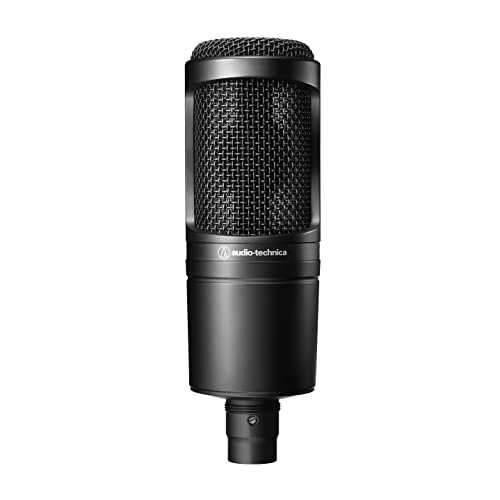
- Cardioid pattern improves source isolation
- Wide dynamic range for flexible recording
- XLR design for interface-based studios
Best For: Home-studio acoustic guitar recording
Focused Instrument Detail

- Small-diaphragm condenser for instruments
- Attenuation pad handles up to 155 dB SPL
- Rugged all-metal construction
Best For: Detailed acoustic guitar and instrument recording
Quiet Complete Package
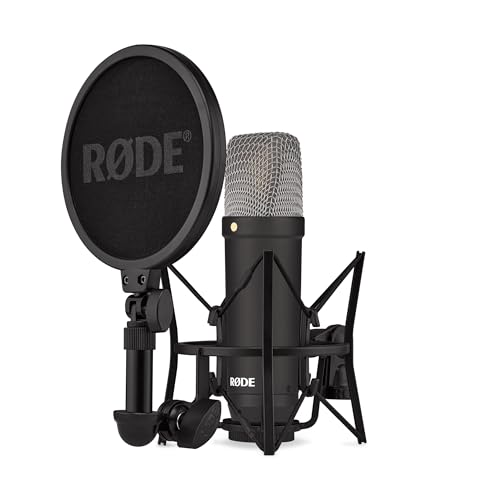
- 4.5 dBA self-noise for quiet recording
- Tight cardioid pickup reduces room sound
- Includes shock mount, cable, and dust cover
Best For: Quiet home-studio guitar and vocal recording
Roadworthy Alternative Listing

- All-metal construction is designed for regular use
- Switchable attenuation supports loud sources
- Supplied notes flag an ASIN mismatch
Best For: Shoppers verifying the correct AKG P170 listing
Best Guitar-Mounted Pick

- Gooseneck design for acoustic guitar mounting
- Unidirectional XLR condenser microphone
- Includes adapter, mounting kit, and case
Best For: Lightweight, guitar-mounted recording setups
Best Versatile Studio Pick

- Cardioid large-diaphragm condenser
- High SPL handling and wide dynamic range
- Includes shock mount, filter, and 10 dB pad
Best For: Flexible studio and live acoustic guitar recording
Best Budget Studio Pick

- Affordable large-diaphragm condenser
- Cardioid pattern reduces ambience
- Includes shock mount and XLR cable
Best For: Budget-friendly home-studio acoustic guitar recording
Focused String Detail

- Wide response for crisp, balanced instrument detail
- Cardioid pickup reduces off-axis sound
- Includes clip, foam cover, bag, and manual
Best For: Acoustic guitar, strings, percussion, and overhead recording
Home Recording Value
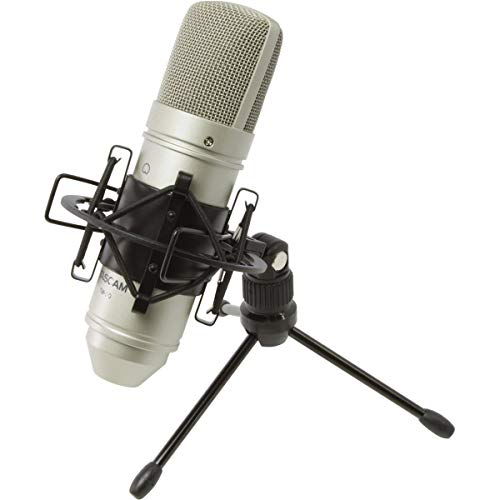
- 18mm diaphragm for vocals and acoustic instruments
- Handles sources up to 136dB SPL
- Includes stand, XLR cable, and shockmount
Best For: Home studios recording guitar, vocals, amps, and drums
Quiet Studio Versatility

- 30Hz–18kHz response for guitar and vocals
- Low self-noise with cardioid sound isolation
- Includes cable, shock mount, windscreen, and pouch
Best For: Guitar, vocals, podcasts, streaming, and home recording
Reliable Studio Value – Audio-Technica AT2020
The Audio-Technica AT2020 is a practical starting point for anyone choosing a condenser microphone for acoustic guitar. Its cardioid pattern helps reduce sound from the sides and rear, while high SPL handling and a wide dynamic range support versatile home- and project-studio recording.
Best For: Home-studio musicians and creators seeking a versatile XLR condenser microphone for acoustic guitar and other sources.
Pros:
- Cardioid pickup helps isolate the guitar from surrounding sound.
- Low-mass diaphragm supports extended frequency response and transient detail.
- High SPL handling and wide dynamic range add recording flexibility.
- Includes a two-year parts-and-labor warranty.
Cons:
- Requires phantom power through an audio interface or compatible setup.
- XLR connectivity is less plug-and-play than USB.
- The package is listed as microphone-only, so additional recording accessories may be needed.
The AT2020 is a sensible all-around option when you want dependable cardioid performance and studio-oriented flexibility without moving beyond a straightforward XLR setup.
Focused Instrument Detail – AKG P170
The AKG P170 is a small-diaphragm condenser microphone designed specifically for instruments, making it a focused choice for a condenser microphone for acoustic guitar. Its true condenser diaphragm is built for clarity and transient response, while the switchable attenuation pad handles sources reaching up to 155 dB SPL.
Best For: Players and engineers who want a compact, instrument-focused XLR microphone for acoustic guitar, percussion, and other strings.
Pros:
- Small-diaphragm design delivers clear transient response.
- Designed for acoustic guitars, percussion, overheads, and other strings.
- Switchable attenuation pad supports high-SPL applications up to 155 dB SPL.
- Rugged all-metal body is suited to regular use.
Cons:
- Requires a corded XLR connection and suitable recording equipment.
- Its focused instrument design may be less versatile for broad studio duties than a large-diaphragm model.
- The supplied package notes list a stand adapter but no cable.
Choose the P170 when acoustic-guitar detail and fast response are priorities. The attenuation pad and durable construction also make it a practical choice for louder instruments and repeated use.
Quiet Complete Package – RØDE NT1 Signature
The RØDE NT1 Signature is a large-diaphragm condenser microphone for acoustic guitar that arrives with useful recording accessories. Its tight cardioid pattern focuses on the source, and its 4.5 dBA self-noise rating is designed to keep the recording chain especially quiet.
Best For: Home-studio users who want a quiet XLR microphone and a ready-to-record accessory package.
Pros:
- Very low 4.5 dBA self-noise helps preserve a clean recording.
- Tight cardioid pattern focuses pickup and rejects room sound.
- Includes an SM6 shock mount, pop filter, XLR cable, and dust cover.
- Ten-year warranty is available with registration.
Cons:
- Requires an audio interface and XLR connection.
- Large-diaphragm design may be less specialized for fast acoustic-guitar transients than a small-diaphragm instrument microphone.
- The included pop filter is more directly useful for vocals than guitar.
The NT1 Signature stands out for quiet operation and included accessories. It is a strong choice if you record acoustic guitar alongside vocals and want one polished, studio-oriented setup.
Roadworthy Alternative Listing – AKG P170 Listing Check
This listing describes the AKG P170 as a small-diaphragm condenser microphone for acoustic guitar and other live instruments, with a robust all-metal body and switchable attenuation. However, the supplied notes identify B00M9CUL60 as the correct ASIN for the P170, so verify the listing details carefully before purchasing.
Best For: Shoppers considering an AKG P170 but willing to confirm the correct product listing and ASIN first.
Pros:
- Described as having heavy-duty, roadworthy all-metal construction.
- Switchable attenuation is intended for high-SPL applications.
- Unidirectional pickup is suitable for focused instrument recording.
Cons:
- The supplied notes explicitly flag this as the wrong ASIN for the P170.
- Product details conflict with the identified correct listing.
- Requires XLR equipment and corded power.
Because the notes flag an ASIN mismatch, this should not be the first choice for a condenser microphone for acoustic guitar. Compare the listing carefully and consider the correctly identified P170 ASIN instead.
Best Guitar-Mounted Pick – Behringer CB100
The Behringer CB100 is a practical condenser microphone for acoustic guitar when you want a compact, instrument-mounted setup. Its gooseneck form factor, unidirectional pickup pattern, XLR connection, and phantom-power operation suit direct acoustic guitar recording with compatible equipment.
Best For: Acoustic guitarists seeking a lightweight, guitar-mounted XLR microphone system.
Pros:
- Gooseneck design is intended for instrument applications and acoustic guitar mounting.
- Unidirectional pattern helps focus pickup toward the guitar.
- Includes a mounting kit, phantom power adapter, and case.
Cons:
- Requires phantom power and XLR-compatible equipment.
- Its specialized mounting design is less versatile than a general studio microphone.
The CB100 stands out for players who prioritize convenient guitar placement over a traditional stand-mounted studio setup. Confirm that your recording chain supports XLR and phantom power before buying.
Best Versatile Studio Pick – Audio-Technica AT2035
The Audio-Technica AT2035 is a versatile condenser microphone for acoustic guitar and other recording applications. Its cardioid pattern, large diaphragm, low-noise design, high SPL handling, and wide dynamic range make it suitable for home, project, professional studio, and live-performance use.
Best For: Musicians who want one XLR condenser microphone for acoustic guitar, studio recording, and live performance.
Pros:
- Cardioid pickup helps reduce sound from the sides and rear.
- Large diaphragm is designed for smooth, natural sound and low noise.
- Includes a custom shock mount for improved isolation.
- Switchable 80 Hz high-pass filter and 10 dB pad add recording flexibility.
Cons:
- Requires an XLR setup rather than a direct USB connection.
- Its broad studio feature set may be more than needed for a simple guitar-only rig.
The AT2035 is the strongest all-around option here for buyers who want acoustic guitar capability without limiting themselves to a specialized mounting system. Its filter, pad, shock mount, and high SPL handling support varied recording situations.
Best Budget Studio Pick – Mackie EM-91C
The Mackie EM-91C is an affordable large-diaphragm condenser microphone for acoustic guitar and other studio instruments. It uses a cardioid pattern to reduce ambience and connects through XLR, making it a straightforward choice for home-based or larger studio setups.
Best For: Budget-conscious home-studio musicians looking for a conventional stand-mounted instrument microphone.
Pros:
- Affordable professional-quality design for home or large studios.
- Large-diaphragm condenser capsule is suited to vocals and instruments.
- Cardioid pattern helps reduce ambient sound.
- Includes a shock mount and XLR cable.
Cons:
- Requires an XLR-compatible audio mixer or interface.
- Does not include specialized acoustic-guitar mounting hardware.
The EM-91C offers a simple, value-focused path into acoustic guitar recording with a large-diaphragm XLR microphone. Choose it when you already have a suitable stand and recording interface and want the included cable and shock mount.
Focused String Detail – Phenyx Pro PDM35
The Phenyx Pro PDM35 is a practical condenser microphone for acoustic guitar when you want a focused, detailed sound through an XLR setup. Its cardioid-style pickup, wide frequency response, and metal housing make it suitable for home recording and other string-instrument applications.
Best For: Acoustic guitar, string instruments, percussion, and overhead recording where off-axis noise rejection is useful.
Pros:
- Wide frequency response designed to capture crisp high-frequency detail and balanced instrument tone.
- Cardioid pickup helps focus on the source while reducing sound from the sides and rear.
- Includes a mic clip, foam cover, carrying bag, and user manual.
- Metal housing and a standard XLR connector support durable, balanced connections.
Cons:
- Requires an XLR connection and suitable power from compatible equipment.
- Its overhead/pencil-stick design may be less convenient for users seeking a desktop microphone.
The PDM35 is a sensible choice if you want a compact instrument mic with focused pickup and straightforward XLR connectivity. It is especially appealing for players recording acoustic guitar alongside percussion or other string instruments.
Home Recording Value – Tascam TM-80
The Tascam TM-80 is a large-diaphragm condenser microphone for acoustic guitar and home recording. Its 18mm aluminum diaphragm, cardioid pickup pattern, and included shockmount help produce a rich, focused recording while limiting rumble and unwanted sound.
Best For: Home studios recording acoustic guitar, vocals, guitar amps, drums, and other acoustic instruments.
Pros:
- 18mm aluminum diaphragm is designed for vocals and acoustic instruments.
- Cardioid pickup pattern provides focused, unidirectional sound capture.
- Handles up to 136dB SPL, making it suitable for loud sources such as guitar amps and drums.
- Includes a tabletop stand, six-foot XLR cable, and elastic shockmount.
Cons:
- Uses wired XLR connectivity, so it needs compatible audio equipment.
- The included tabletop stand may not suit every microphone-positioning setup.
With its generous accessory bundle and high maximum SPL rating, the TM-80 offers flexibility beyond acoustic guitar. It is a strong fit for beginners and home recordists who want one condenser mic for both quieter instruments and louder sources.
Quiet Studio Versatility – Blucoil Studio XLR Microphone
The Blucoil Studio XLR microphone is a versatile condenser microphone for acoustic guitar, voiceovers, streaming, and home recording. Its 16mm low-mass diaphragm covers 30Hz–18kHz, while the cardioid pattern and low self-noise support cleaner recordings through a 48V phantom-powered interface or mixer.
Best For: Acoustic guitarists who also record vocals, woodwinds, percussion, podcasts, or streaming content.
Pros:
- 30Hz–18kHz frequency range is designed to reproduce detailed guitar and vocal sound.
- Cardioid pickup rejects sound from the sides and rear, helping isolate the main source.
- 15dB self-noise and up to 125dB SPL handling support both quiet and louder recordings.
- Includes XLR cable, shock mount, windscreen, and protective pouch.
Cons:
- Requires a 48V phantom-powered USB audio interface or mixer for operation.
- Its bundled setup is oriented toward XLR recording rather than standalone USB use.
The Blucoil stands out as an all-purpose recording package for musicians and creators. It combines acoustic-guitar detail with useful vocal, podcast, and streaming accessories, making it a practical option when one microphone needs to cover several tasks.
How We Picked the Best Condenser Microphone for Acoustic Guitar
We focused on microphones suited to acoustic-guitar recording and compared their capsule styles, pickup patterns, attenuation features, form factors, connection requirements, and likely use cases. The selection includes established studio microphones as well as compact instrument-focused models, so buyers can match the microphone to their room, interface, and recording goals.
Because microphone performance depends heavily on placement and the room, we did not treat specifications alone as a guarantee of sound quality. Instead, we prioritized practical versatility, useful control features, compatible XLR connectivity, and designs that can work in home studios or more demanding recording setups.
Quick Comparison
| Best For | What to Look For | Typical Advantage |
|---|---|---|
| Detailed fingerpicking | Small-diaphragm condenser | Fast, focused transient response |
| Full strumming and vocals | Large-diaphragm condenser | Broad, polished overall capture |
| Loud playing or close placement | Pad or high SPL handling | Lower risk of overload |
| Home studios | Cardioid XLR microphone | Better front-facing isolation |
| Instrument-specific mounting | Compact or gooseneck design | Flexible placement near the guitar |
Key Buying Factors for a Condenser Microphone for Acoustic Guitar
Diaphragm Size and Sound Character
Small-diaphragm condenser microphones often deliver precise attack and a focused tonal balance, making them useful for fingerstyle parts and layered arrangements. Large-diaphragm models can provide a fuller, smoother presentation that works well for strumming, vocals, and general studio recording.
Polar Pattern and Placement
Cardioid microphones emphasize sound from the front and help reduce room reflections from behind. Start by aiming at the area between the 12th fret and the sound hole, rather than directly at the sound hole, then adjust distance and angle to control bass and pick brightness. A less reflective room usually makes placement easier.
Power, Compatibility, and Accessories
Most XLR condenser microphones require 48V phantom power from an audio interface, mixer, or preamp. Check that your recording setup supplies it before buying. Also budget for a stand, XLR cable, pop filter when recording vocals, and a shock mount if the microphone does not include one.
Noise, Sensitivity, and Headroom
Condenser microphones capture subtle detail but may also reveal computer fans, traffic, and untreated-room reflections. Look for a suitable self-noise rating when available, and consider a pad or strong maximum SPL handling if you play aggressively or record close to the instrument.
Who Should Buy Which Condenser Microphone for Acoustic Guitar?
Choose a small-diaphragm instrument microphone if your priority is articulate fingerstyle, picking detail, or a compact setup. A large-diaphragm studio condenser is the more flexible choice for players who also record vocals, acoustic demos, podcasts, or streaming content. If you are recording in an untreated room, prioritize a cardioid pattern and experiment with distance before upgrading equipment.
For occasional or budget-conscious recording, a straightforward XLR condenser can provide a strong starting point when paired with a decent interface and careful placement. Players who need unusual mounting positions or close instrument placement may prefer a compact pencil-style or gooseneck design. Whatever you choose, leave enough headroom in the preamp and listen for the best position before making major EQ changes.