
Wedding videography demands steady footage, smooth camera movement, and equipment that can adapt quickly from the ceremony to the reception. The right tripod can help you capture long vows, speeches, entrances, and detail shots with less camera shake and fatigue.
We selected 10 camera tripods for wedding videography across a range of heights, load capacities, materials, head designs, and portability needs. Use the guide below to narrow the list based on your camera setup, shooting style, and working environment.
Best 10 Camera Tripods for Wedding Videography Picks for 2026
Most Stable Heavy-Duty Pick
COMAN FF16LS 74" Fluid Head Tripod

- 22-pound maximum load
- 360-degree fluid-head panning
- Dual-tube aluminum stability
Best For: Heavy camera setups and steady ceremony coverage
Most Flexible Angle Options
NEEWER TP63 90-Inch Overhead Tripod

- 91-inch maximum height
- Horizontal column for overhead shots
- Converts to a monopod
Best For: Overhead details and creative wedding angles
Best Balanced Video Setup
K&F CONCEPT 80" Fluid Head Tripod
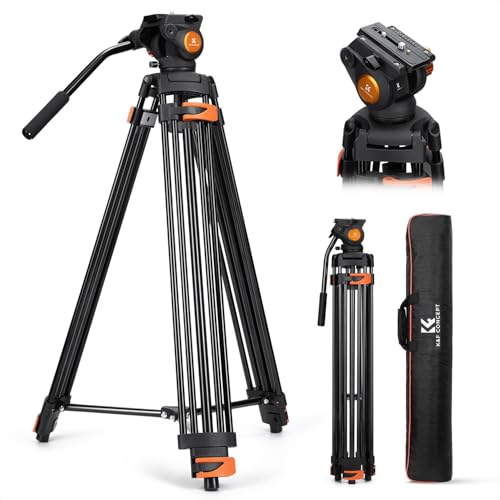
- 17.6-pound maximum load
- Smooth 360-degree fluid-head pan
- Folds to about 36.2 inches
Best For: General DSLR, mirrorless, and camcorder coverage
Best Lightweight Travel Pick

- weighs about 1.5 pounds
- Includes phone holder and remote
- 60-inch height with quick release
Best For: Lightweight cameras, phones, and mobile coverage
Best Heavy-Duty Aluminum Pick
SMALLRIG AD14 Fluid Head Tripod

- 8kg maximum load for substantial camera setups
- Adjustable fluid-head drag for smoother pans and tilts
- Folds to 88cm with case and phone holder included
Best For: Wedding videographers wanting a sturdy, travel-ready aluminum tripod
Most Versatile Support
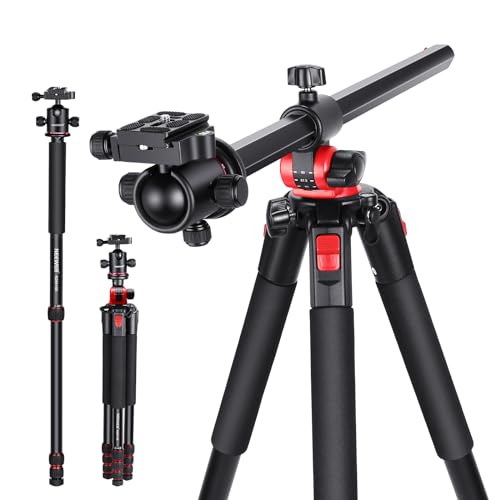
- 15kg maximum load with optional sandbag support
- Center column handles multiple shooting angles
- Removable leg converts the tripod into a monopod
Best For: Wedding shooters needing flexible tripod and monopod positioning
Best Lightweight Fluid-Head Pick

- 10kg maximum load in a 2.7kg tripod
- Adjustable fluid-head drag for controlled movement
- Compact 87cm fold with carrying accessories included
Best For: Mobile wedding videographers prioritizing capacity and lower carry weight
Versatile Field Companion

- Converts to a monopod for flexible coverage
- 71-inch height with low-angle shooting support
- High stated vertical load capacity and accessory threads
Best For: Wedding videographers needing adaptable tripod and monopod functionality
Smooth Ceremony Coverage

- 360-degree fluid drag head for controlled movement
- 78.7-inch maximum height with adjustable bowl base
- 17.6-pound load capacity and dual-size QR screw
Best For: Wedding videographers prioritizing smooth pans and tilts
Portable Content Setup

- Lightweight 3.3-pound design with carrying bag
- Three-way head and hand crank for flexible framing
- Includes rotating phone holder and cold shoe
Best For: Mobile wedding creators using cameras and smartphones
Most Stable Heavy-Duty Pick – COMAN FF16LS 74" Fluid Head Tripod
For wedding videographers who need dependable support for larger camera setups, the COMAN FF16LS is a strong option among camera tripods for wedding videography. Its dual-tube aluminum construction, 60mm bowl base, mid-level spreaders, and 22-pound capacity are suited to stable ceremony and reception coverage.
Best For: Heavy camera and camcorder setups, locked-off ceremony shots, and smooth pans or tilts.
Pros:
- Supports up to 22.04 pounds with a sturdy dual-tube design.
- Fluid head provides 360-degree pan and -75- to +90-degree tilt ranges.
- Flip locks, quick-release plate, and compatibility with 1/4-inch and 3/8-inch screws support efficient setup.
- Reaches approximately 73.2 inches and includes a foldable L-bracket.
Cons:
- Its heavy-duty construction is less travel-friendly than lighter tripods.
- It is not water resistant.
The FF16LS prioritizes stability and controlled movement over minimal weight. It is a practical choice when your wedding kit includes a substantial camera, camcorder, or compatible gimbal setup.
Most Flexible Angle Options – NEEWER TP63 90-Inch Overhead Tripod
The NEEWER TP63 stands out among camera tripods for wedding videography when you need unusual perspectives. Its horizontal center column, 360-degree rotation, 120-degree tilt, tall working height, and convertible monopod function give videographers flexibility for overhead, detail, and tight-space shots.
Best For: Overhead wedding details, creative angles, live streaming, and locations where a monopod is useful.
Pros:
- Adjusts from 25 to 91 inches and supports up to 22 pounds.
- Horizontal center column enables overhead positioning and rotates 360 degrees.
- One leg converts into a monopod with three height options.
- Inverted legs support low-angle shots, while the hook can hold a sandbag.
Cons:
- The sandbag for the stability hook is not included.
- A ball head may provide less dedicated video damping than a fluid head.
- Its specialized column design may take more time to configure than a conventional tripod.
Choose the TP63 if creative positioning matters as much as conventional support. It offers an unusually broad range of shooting configurations for wedding details, décor, and dynamic content.
Best Balanced Video Setup – K&F CONCEPT 80" Fluid Head Tripod
The K&F CONCEPT VA3+BV70 offers a balanced combination of fluid movement, load support, and portability for camera tripods for wedding videography. Its 17.6-pound capacity, 80-inch maximum height, quick-release system, and included carrying bag suit videographers who move between ceremony and reception locations.
Best For: General wedding video coverage with DSLR, mirrorless, or camcorder equipment.
Pros:
- Fluid head supports 360-degree panning and -70- to +90-degree tilting.
- Supports up to 17.6 pounds with aluminum legs and a triangle mid-spreader.
- Extends from 34.6 to 79.5 inches and folds to approximately 36.2 inches.
- Quick-release plate uses 1/4-inch and 3/8-inch screws and includes a carrying bag.
Cons:
- Its 17.6-pound capacity is lower than the COMAN and NEEWER options.
- At 5.6 kg, it is not the lightest choice for frequent relocation.
- It is not water resistant.
This tripod is a sensible middle ground for wedding shooters who want dedicated fluid-head control without stepping up to the heaviest support class. Its quick installation and foldable design are useful during changing event locations.
Best Lightweight Travel Pick – Endurax 60" Camera Tripod
For wedding videographers who value easy transport and quick repositioning, the Endurax ETR60 is a compact option among camera tripods for wedding videography. It weighs about 1.5 pounds, folds to roughly 17.7 inches, and includes a phone or tablet holder plus remote shutter.
Best For: Lightweight cameras, phones, behind-the-scenes clips, and mobile wedding coverage.
Pros:
- Lightweight design weighs approximately 1.5 pounds and includes a carrying bag.
- Extends from 17.5 to 60 inches for flexible positioning.
- Three-way pan head supports swivel, tilt, portrait, and landscape shooting.
- Quick-release plate, bubble level, phone holder, and remote shutter are included.
Cons:
- Its 6.6-pound capacity is not intended for heavier professional video rigs.
- The 60-inch maximum height is lower than the other tripods in this roundup.
- Its pan head is less specialized for smooth video motion than a fluid head.
The ETR60 makes the most sense as a portable secondary tripod or for lightweight shooting kits. It is convenient for travel and quick social-content capture, but larger cameras and long lenses may call for a sturdier video tripod.
Best Heavy-Duty Aluminum Pick – SMALLRIG AD14 Fluid Head Tripod
For wedding videographers who need dependable support without carrying an overly bulky kit, this aluminum SMALLRIG is a practical option among camera tripods for wedding videography. Its fluid head, adjustable height, and leveling bowl are suited to ceremony, reception, and location shooting.
Best For: Wedding videographers who want smooth pans and tilts, solid 8kg support, and a travel-ready aluminum setup.
Pros:
- Fluid head offers adjustable tilt drag for smoother camera movements.
- Supports up to 8kg and includes a 65mm bowl mount for leveling.
- Folds to 88cm and includes a carrying case, phone holder, and hex wrench.
- Offers accessory mounts for monitors or microphones.
Cons:
- At 3.1kg, it is heavier than the carbon-fiber alternative.
- It is not water resistant.
The SMALLRIG AD14 balances stability, portability, and video-focused controls. It is especially appealing when smooth camera motion matters but you prefer the durability and cost profile of aluminum.
Most Versatile Support – NEEWER N284+G0 Tripod Monopod
The NEEWER N284+G0 stands out among camera tripods for wedding videography because it can switch from a full tripod to a monopod. Its center column also supports multiple angles, making it useful when wedding coverage requires changing perspectives quickly.
Best For: Videographers who want flexible tripod, monopod, overhead, and macro-style positioning in one kit.
Pros:
- Supports up to 15kg and includes a carabiner for hanging a sandbag.
- Center column provides vertical, horizontal, and 360-degree panning options.
- One leg converts into a monopod for more mobile shooting.
- Folds to 67cm and includes a carrying bag.
Cons:
- The ball head is less video-specific than a dedicated fluid head.
- At 3.8 pounds, it is not the lightest option listed.
- It is not water resistant.
This NEEWER is a strong choice for shooters who value adaptability over dedicated video-head controls. The monopod conversion and adjustable center column can be useful during dynamic wedding-day coverage.
Best Lightweight Fluid-Head Pick – SMALLRIG Carbon Fiber AD-14
When wedding videography involves frequent location changes, this carbon-fiber SMALLRIG offers a useful combination of low weight and high capacity. Its fluid head and adjustable drag make it one of the more video-oriented camera tripods for wedding videography.
Best For: Mobile wedding videographers who need smooth movement, a 10kg payload, and less carrying weight.
Pros:
- Carbon-fiber legs keep the tripod to 2.7kg while supporting up to 10kg.
- Fluid head includes adjustable tilt drag and a +85 to -78 degree tilt range.
- Folds to 87cm and includes a carrying case, phone holder, and hex wrench.
- 65mm bowl mount helps with leveling on location.
Cons:
- It is not water resistant.
- Its folded length may still be substantial for compact luggage.
The carbon-fiber AD-14 is the strongest fit here for videographers who regularly carry equipment between venues. It delivers the highest stated load capacity of the three while remaining the lightest, without giving up fluid-head operation.
Versatile Field Companion – SmallRig CT-10 Tripod
For wedding videographers who need flexible camera tripods for wedding videography, the SmallRig CT-10 combines a 71-inch maximum height with a convertible monopod design. Its aluminum construction, 360-degree ball head, and low-angle shooting capability make it adaptable for varied ceremony and reception setups.
Best For: Videographers who want one adaptable tripod for standard, low-angle, and monopod shooting.
Pros:
- Converts from a tripod to a monopod for changing shooting positions.
- 360-degree ball head supports horizontal and vertical compositions.
- Adjusts from 16 to 71 inches and folds to about 16.9 inches.
- Supports up to 33 pounds vertically and includes three 1/4-inch accessory threads.
Cons:
- The ball head is less specialized for smooth video pans than a fluid head.
- Telephoto zoom lenses may require an additional tripod or lens mount for balance.
- It is not water resistant.
The CT-10 is a strong choice when wedding coverage requires portability and shooting flexibility. Its ball head favors quick repositioning and mixed photo-video use rather than dedicated fluid-motion work.
Smooth Ceremony Coverage – NEEWER TP-M200 Video Tripod
The NEEWER TP-M200 is built for wedding videographers who prioritize smooth camera movement in camera tripods for wedding videography. Its 360-degree fluid drag head, adjustable bowl base, and sturdy double-tube aluminum legs suit ceremony recording, speeches, and other locked-off or panning shots.
Best For: Wedding videographers seeking a dedicated video tripod with fluid panning and tilting.
Pros:
- Fluid drag head pans 360 degrees and tilts from -70 to 90 degrees.
- 70mm bowl base helps level the tripod on different surfaces.
- Height adjusts from 34.6 to 78.7 inches with strong flip locks.
- Supports up to 17.6 pounds and includes a 1/4-inch and 3/8-inch quick-release plate.
Cons:
- At 5.58 kg, it is substantially heavier than the other listed options.
- Its 91cm folded length may be less convenient for compact transport.
- It is not water resistant.
For wedding video work where controlled pans and tilts matter, the TP-M200 is the most video-focused option in this group. The tradeoff is its heavier build and longer packed size.
Portable Content Setup – NEEWER BASICS TP55 Tripod
The NEEWER BASICS TP55 offers a lightweight option for camera tripods for wedding videography, with a 71-inch height, three-way pan-tilt head, and included phone holder. Its hand crank and compact carrying design are useful for mobile coverage, behind-the-scenes footage, and hybrid camera-and-smartphone setups.
Best For: Mobile wedding creators who need a lightweight tripod for cameras, phones, and overhead angles.
Pros:
- Weighs about 3.3 pounds and folds into the included carrying bag.
- Three-way head supports 360-degree rotation, 180-degree tilt, and vertical shooting.
- Five-section legs adjust from 19.3 to 70.9 inches, with a hand crank for fine height changes.
- Includes a smartphone holder with 360-degree rotation and a cold shoe for a light or microphone.
Cons:
- Its 11-pound stated camera support is lower than the SmallRig CT-10’s vertical rating.
- The construction uses aluminum alloy and plastic rather than an all-metal design.
- It is not water resistant.
The TP55 is a practical travel-oriented pick for creators who switch between a camera and smartphone. Its three-way head and phone accessories add versatility, while the lightweight build favors portability over heavy-duty cinema support.
How We Picked These Camera Tripods for Wedding Videography
We focused on features that matter during real wedding shoots: dependable stability, useful working height, smooth camera positioning, practical load support, and portability between locations. The selection includes fluid-head video tripods for pans and tilts, ball-head models for flexible framing, tall tripods for elevated perspectives, and lighter options for travel or secondary cameras.
We also considered whether each tripod suits common wedding setups, including mirrorless and DSLR cameras, video cameras, zoom lenses, microphones, monitors, and other accessories. A tripod’s stated maximum load is only a starting point; the safest choice leaves room for the complete rig rather than just the camera body.
Quick Comparison
| Priority | Look For | Best-Fit Options |
|---|---|---|
| Smooth pans and tilts | Fluid video head and adjustable drag | COMAN, K&F CONCEPT, SMALLRIG video tripods |
| Maximum height | Extended center column or tall legs | NEEWER TP63 and 79-inch models |
| Lower weight | Carbon-fiber construction or compact design | SMALLRIG carbon-fiber and travel-friendly models |
| Flexible framing | Ball head or convertible tripod-monopod design | NEEWER, Endurax, and SmallRig CT-10 |
Key Buying Factors
Head Type and Movement
For locked-off ceremony coverage, almost any stable head can work. For tracking a processional or following movement across a reception space, a fluid head is generally the better choice because it offers smoother pans and tilts. Ball heads are faster to reposition but may be less controlled for deliberate video movement.
Height and Line of Sight
Choose enough height to clear guests without extending the tripod beyond its stable range. Tall models can provide a better view over crowds, while a lower setup may be safer in busy aisles and easier to reposition. Check folded length and leg-lock design if you frequently move between venues.
Capacity and Stability
Calculate the total weight of the camera, lens, battery, microphone, monitor, and quick-release plate. A tripod with additional capacity should resist vibration better and remain steadier during long recordings. Wider leg angles, strong center columns, and secure locks are especially useful on uneven floors or outdoor locations.
Material and Portability
Aluminum models commonly offer strong value and durability. Carbon fiber can reduce carrying weight, which matters during full-day coverage, though it may cost more. For wedding professionals, a carrying case, reliable leg locks, and fast setup can be as important as headline height.
Who Should Buy Which Camera Tripods for Wedding Videography?
Choose a heavy-duty fluid-head model if you use a larger camera rig or prioritize controlled cinematic movement. A tall tripod is useful for elevated ceremony, crowd, or overhead-style angles. Pick carbon fiber when you carry equipment between multiple locations and need to reduce fatigue. Ball-head and tripod-monopod designs suit shooters who switch quickly between stills, video, and changing compositions.
If you are building a lightweight backup kit, recording with a phone or small camera, or working in tight spaces, a compact aluminum model may be the most practical choice. Before buying, confirm the head’s mounting system, the tripod’s folded size, and compatibility with your camera plate and accessories.