
Choosing the best AV receiver for a large home theater means balancing speaker-channel support, HDMI connectivity, room correction, streaming features, and real-world power. A receiver should fit your current system while leaving enough room for future upgrades.
We compare 10 popular models across premium, midrange, and budget categories so you can find the right match for a spacious room, immersive surround sound, and modern 4K or 8K sources.
Best 10 Av Receiver for Large Home Theater Picks for 2026
Balanced Immersion Pick

- 7.2-channel Dolby Atmos and DTS:X support
- Three dedicated 8K HDMI inputs
- HEOS, Wi-Fi, AirPlay 2, and Bluetooth
Best For: Flexible home theaters with streaming and modern video needs
High-Power THX Choice

- THX Select Certified amplification
- Three 40Gbps HDMI 2.1 inputs
- Discrete Zone 2 audio and video
Best For: Large rooms with demanding sources and multi-zone needs
Smart 8K Value

- 8K video and 4K/120Hz pass-through
- VRR and ALLM for gaming
- HEOS, Wi-Fi, and Bluetooth streaming
Best For: Connected theaters balancing 8K, gaming, and streaming
Flexible Network Performer
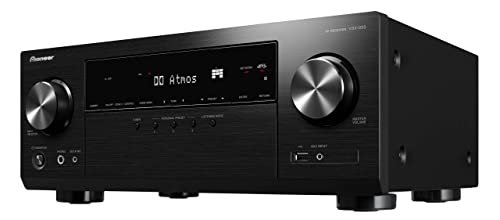
- 7.2-channel Dolby Atmos and DTS:X
- Eight HDMI ports for multiple sources
- Height virtualization and surround upmixing
Best For: 7.2 theaters needing flexible connections and immersive processing
Compact 8K Foundation

- 5.2 channels at 75 watts per channel
- 8K, 4K/120Hz, HDR, VRR, and ALLM support
- HEOS, Wi-Fi, Bluetooth, and voice control
Best For: Straightforward 8K home theater and multi-room streaming
Gaming-Ready 7.2 Upgrade

- 7.2 channels at 80 watts per channel
- 4K/120Hz HDR, VRR, ALLM, and QFT
- Dolby Atmos, DTS:X, eARC, and streaming features
Best For: Gaming-focused 7.2-channel surround systems
Flexible Immersive Hub

- 7.2 channels and 5.2.2 Dolby Atmos support
- Three dedicated 8K inputs plus 4K/120Hz
- HEOS, Wi-Fi, AirPlay 2, and guided setup
Best For: Expandable immersive audio with multiple 8K sources
Best Overall Value

- Dolby Atmos with flexible 3.1.2 layouts
- 4K/120 and 8K/60 HDMI support
- Automatic room correction and Bluetooth Multipoint
Best For: Easy-to-configure immersive home theaters
Best for HDMI 2.1 Connectivity

- Four HDMI 2.1 8K inputs
- eARC, VRR, QFT, and dynamic HDR support
- Bluetooth, streaming services, and app control
Best For: Multi-source TV and gaming setups
Best Budget High-Power Option

- 5.2-channel surround sound with 4K pass-through
- Bluetooth, USB/MP3, and DAC connectivity
- Built-in electrical protection features
Best For: Simple, budget-focused home audio systems
Balanced Immersion Pick – Denon AVR-X1700H
For shoppers seeking an av receiver for large home theater setups, the Denon AVR-X1700H combines seven-channel amplification, Dolby Atmos and DTS:X support, and a capable 8K HDMI section. Its guided setup and color-coded connections make installation more approachable.
Best For: Home theaters needing flexible 7.2-channel surround sound, modern gaming and video support, and multi-room streaming.
Pros:
- Supports Dolby Atmos, DTS:X, DTS Virtual:X, and Dolby Atmos Height Virtualization.
- Three dedicated 8K inputs support 8K/60Hz and 4K/120Hz pass-through.
- Built-in HEOS, Wi-Fi, AirPlay 2, Bluetooth, and voice-control compatibility.
- On-screen setup guide and color-coded rear connections simplify configuration.
Cons:
- Seven channels may limit expansion for especially large, fully immersive systems.
- Rated output is 80 watts per channel, so demanding speakers may need more power.
The AVR-X1700H is a well-rounded choice when ease of setup, 8K connectivity, and streaming matter as much as surround performance. It is best suited to a substantial but not highly elaborate theater build.
High-Power THX Choice – Onkyo TX-NR6100
The Onkyo TX-NR6100 is a compelling av receiver for large home theater systems that need strong amplification and broad connectivity. THX Select certification, 7.2-channel processing, and three 40Gbps HDMI 2.1 inputs make it well equipped for movies and current gaming hardware.
Best For: Larger rooms and entertainment systems that prioritize THX-certified playback, high output, and multiple HDMI sources.
Pros:
- THX Select Certified and specified with a 210W-per-channel dynamic audio amplification system.
- Supports Dolby Atmos and DTS:X in a 5.2.2-channel configuration.
- Three HDMI 2.1 inputs provide 8K connectivity with 40Gbps bandwidth.
- Discrete Zone 2 audio and video support adds multi-room flexibility.
Cons:
- Its advanced feature set may be more than needed for a basic surround setup.
- The supplied specifications list differing power figures, so speaker and room matching deserve attention.
With THX certification, high stated amplification, and useful Zone 2 capability, the TX-NR6100 is particularly attractive for a larger, source-heavy theater. Confirm speaker requirements and available rack space before buying.
Smart 8K Value – Denon AVR-S770H
The Denon AVR-S770H offers a practical route to an av receiver for large home theater setups, with seven channels, 8K/60Hz pass-through, and gaming-focused features such as VRR and ALLM. Dolby Atmos, DTS:X, and virtual height processing help it adapt to different speaker layouts.
Best For: Connected home theaters seeking 8K video, low-latency gaming features, and convenient whole-home music streaming.
Pros:
- Supports 8K/60Hz, 4K/120Hz, HDR10+, HLG, Dolby Vision, and Dynamic HDR.
- Includes VRR, ALLM, QFT, Dolby Atmos, DTS:X, and virtual height options.
- Built-in HEOS, Wi-Fi, Bluetooth, and voice control support multi-room listening.
- Eight HDMI ports provide useful connectivity for multiple devices.
Cons:
- Its 75W-per-channel rating may be less suitable for very power-hungry speakers.
- Seven channels limit expansion compared with receivers designed for larger immersive layouts.
The AVR-S770H is a sensible choice for buyers who want current video and gaming compatibility without moving beyond a seven-channel platform. It works best when the room and speakers do not demand substantial additional amplification.
Flexible Network Performer – Pioneer VSX-935
The Pioneer VSX-935 is a flexible av receiver for large home theater installations that need seven-channel surround processing and a broad connection set. Dolby Atmos, DTS:X, and their upmixing technologies can help create an enveloping presentation from compatible content.
Best For: Traditional 7.2-channel theaters with several HDMI devices, network connectivity, and a preference for virtual or upmixed height effects.
Pros:
- Provides 7.2-channel processing with Dolby Atmos and DTS:X support.
- Includes Dolby Atmos Height Virtualizer, Dolby Surround Upmixer, and DTS Neural:X Upmixer.
- Eight HDMI ports accommodate multiple consoles, players, and displays.
- Supports Bluetooth, Wi-Fi, USB, and network-related streaming features.
Cons:
- The supplied notes do not identify 8K HDMI support.
- Seven powered channels may not satisfy buyers planning a larger immersive speaker array.
- Its listed output figures vary by measurement conditions, so careful system matching is important.
The VSX-935 makes the most sense for a conventional 7.2 setup that values connection flexibility and surround upmixing. Buyers specifically planning an 8K-focused system should verify video requirements before choosing it.
Compact 8K Foundation – Denon AVR-S670H
If you need an AV receiver for large home theater setups but want a straightforward 5.2-channel starting point, the Denon AVR-S670H offers 75 watts per channel, 8K video pass-through, and support for modern HDR and gaming features. Its HEOS, Wi-Fi, and Bluetooth connectivity also make it useful beyond movie nights.
Best For: Buyers who want a feature-rich 5.2-channel receiver with 8K support, multi-room streaming, and voice-control compatibility.
Pros:
- Supports 8K/60Hz and 4K/120Hz pass-through with Dolby Vision, HDR10+, HLG, and Dynamic HDR.
- Includes VRR, ALLM, and QFT features for compatible gaming setups.
- Offers HEOS, Wi-Fi, Bluetooth, Spotify, TIDAL, and voice control through Alexa and other major voice agents.
- Provides eight HDMI ports and HDMI ARC/eARC connectivity.
Cons:
- Its five-channel design is less expandable than the seven-channel models in this roundup.
- The 75-watt output may be a better fit for moderate systems than demanding, very large rooms.
The AVR-S670H is a practical choice when connectivity and current video standards matter more than adding numerous surround or height channels. For a truly expansive theater, its five-channel layout is the main limitation to consider.
Gaming-Ready 7.2 Upgrade – Onkyo TX-NR5100
The Onkyo TX-NR5100 is a sensible AV receiver for large home theater systems that need seven-channel surround sound and current gaming connectivity. It delivers 80 watts per channel, supports 7.2-channel playback, and adds eARC, Dolby Atmos, and DTS:X compatibility.
Best For: Gamers and movie watchers who want a 7.2-channel receiver with HDMI 2.1 gaming features and immersive audio support.
Pros:
- Provides 7.2-channel surround sound with 80 watts of output power.
- Supports 4K/120Hz HDR pass-through, VRR, ALLM, and QFT for smoother gaming.
- eARC supports high-bitrate formats including Dolby Atmos, DTS:X, DTS-HD Master Audio, and Dolby TrueHD.
- Includes Chromecast built-in, AirPlay 2, DTS Play-Fi, and Bluetooth connectivity.
Cons:
- It has four HDMI ports, fewer than the Denon AVR-S670H listed here.
- The supplied notes do not specify built-in Wi-Fi or voice-control support.
With seven channels and gaming-focused HDMI features, the TX-NR5100 is a strong middle-ground option for a larger surround layout. Check your source count carefully, since four HDMI inputs may feel limiting in a heavily connected system.
Flexible Immersive Hub – Denon AVR-X1800H
For shoppers comparing an AV receiver for large home theater use, the Denon AVR-X1800H adds seven-channel flexibility, 80 watts per channel, and support for Dolby Atmos and DTS:X. Its three dedicated 8K inputs, guided setup, and HEOS streaming make it especially convenient for a modern, expandable system.
Best For: Users who want 7.2-channel sound, immersive audio, multiple 8K sources, and easy setup with multi-room streaming.
Pros:
- Supports 7.2 or 5.2.2 Dolby Atmos and DTS:X configurations at 80 watts per channel.
- Includes three dedicated 8K inputs and one 8K output, with 4K/120Hz pass-through.
- Supports Dolby Vision, HDR10+, Dynamic HDR, VRR, and other modern video features.
- Offers HEOS multi-room streaming, Wi-Fi, AirPlay 2, Bluetooth, and an on-screen setup guide.
Cons:
- The supplied description positions it for small-to-medium rooms, so it may not be ideal for the largest spaces.
- It has four HDMI ports overall, despite offering three dedicated 8K inputs.
The AVR-X1800H is the most flexible pick here for adding height effects and connecting several 8K sources. Its guided setup and multi-room features further improve usability, though buyers with exceptionally large rooms should evaluate speaker sensitivity and room size carefully.
Best Overall Value – Yamaha RX300A
For shoppers comparing an av receiver for large home theater setups, the Yamaha RX300A combines Dolby Atmos, flexible speaker layouts, modern HDMI features, and automatic room correction in a practical 5.2-channel package. Its 70W output is suited to a well-planned system, while support for 4K/120, 8K/60, and current gaming features keeps it versatile.
Best For: Buyers who want easy setup, immersive sound, and strong TV and gaming connectivity in one receiver.
Pros:
- Dolby Atmos and DTS Virtual:X support immersive 3D-style sound, with 3.1.2-channel layouts available.
- Supports 4K/120 and 8K/60 video, Dolby Vision, HDR10+, eARC, ALLM, and VRR.
- Included setup microphone automatically calibrates sound for the room.
- Bluetooth Multipoint allows two source devices to be paired for quick switching.
Cons:
- Its 5.2-channel design may limit expansion for especially large or complex theater systems.
- 70W output may be less suitable for very demanding speakers or exceptionally large rooms.
The RX300A stands out when straightforward installation and broad modern-format support matter more than a high channel count. Its room correction and clear setup guidance make it particularly approachable for building a capable theater system.
Best for HDMI 2.1 Connectivity – Denon AVR-S570BT
The Denon AVR-S570BT is a sensible av receiver for large home theater shoppers who prioritize multiple HDMI 2.1 connections and 8K-ready video. With four 8K HDMI inputs, eARC, 70W per channel, and 5.2-channel surround, it offers a focused foundation for movie, TV, and gaming systems.
Best For: Home theaters with several HDMI 2.1 sources, modern TVs, and gaming devices.
Pros:
- Four HDMI 2.1 8K inputs provide useful connectivity for multiple compatible sources.
- Supports eARC up to 40 Gbps along with HDR, Dolby Vision, HDR10+, Dynamic HDR, VRR, and QFT.
- Built-in Bluetooth and support for Spotify, TIDAL, Pandora, Deezer, and TuneIn broaden music options.
- On-screen setup assistance and app control simplify installation and everyday operation.
Cons:
- The 5.2-channel configuration is less expandable than receivers designed for larger surround layouts.
- At 70W per channel, it may not be the ideal match for highly demanding speakers in a very large room.
The AVR-S570BT is strongest as a connectivity-focused receiver. It makes sense for systems built around several current-generation HDMI devices, though buyers planning extensive height-channel expansion should consider a higher-channel model.
Best Budget High-Power Option – Pyle PT865BT
The Pyle PT865BT takes a straightforward approach for shoppers seeking an av receiver for large home theater use with prominent power specifications and basic surround functionality. It provides 5.2-channel audio, 4K Ultra HD pass-through, Bluetooth streaming, USB/MP3 support, and built-in protection features.
Best For: Budget-conscious users who want a simple 5.2-channel receiver with Bluetooth, digital audio connectivity, and 4K pass-through.
Pros:
- 5.2-channel surround processing supports a cinematic-style speaker arrangement.
- Passes through 4K Ultra HD content for compatible televisions.
- Bluetooth, USB/MP3, and DAC connectivity support several music and audio sources.
- Overcurrent, short-circuit, and overvoltage protection are built in.
Cons:
- The supplied notes do not list Dolby Atmos, advanced room correction, or 8K support.
- Its advertised 1000W maximum specification may not directly indicate continuous power per channel.
- A one-year warranty is shorter than the two-year warranties listed for the Yamaha and Denon models.
The PT865BT is best viewed as a feature-oriented, entry-level option rather than a high-end large-room processor. Its broad basic connectivity and protection features can suit simpler systems, but buyers wanting the latest immersive formats should look elsewhere.
How We Picked the Best Av Receiver for Large Home Theater
We focused on the features that matter most in a larger entertainment space: available amplifier channels, speaker-layout flexibility, HDMI inputs and outputs, support for 4K or 8K video, immersive audio formats, networking, and room correction. We also considered ease of setup, brand ecosystem, stated power ratings, and value.
Power figures are not directly comparable across every manufacturer because testing methods can differ. Treat wattage as one factor, not a guarantee of louder or better performance. Speaker sensitivity, room size, listening distance, and whether you use a separate amplifier matter just as much.
Quick Comparison
| What to Compare | Why It Matters |
|---|---|
| 5.2 or 7.2 channels | Determines whether you can run a basic surround setup, rear surrounds, or multiple subwoofers. |
| HDMI 2.1 features | Important for 4K/120Hz gaming, newer consoles, and compatible displays. |
| Dolby Atmos and DTS:X | Enables overhead or height-based immersive sound when paired with suitable speakers. |
| Room correction | Helps adjust timing, levels, and tonal balance for your room’s acoustics. |
| Network and streaming | Adds app control, music services, multiroom playback, and firmware updates. |
Key Buying Factors for an Av Receiver for Large Home Theater
Channel Count and Expansion
A 7.2-channel model is usually a better starting point for a large room than a 5.2-channel receiver because it can support rear surrounds or a more flexible layout. If you plan to add multiple height speakers, check the receiver’s processing limits and whether external amplification is supported.
Power, Speakers, and Subwoofers
Match the receiver to your speakers’ impedance and sensitivity, then consider the distance from the receiver to the listening position. Large rooms and demanding speakers may benefit from a higher-end receiver or a separate power amplifier. Dual subwoofer outputs can improve bass consistency across several seats.
HDMI, Video, and Connectivity
Count your sources before buying, including game consoles, streaming devices, disc players, and cable boxes. Look for enough HDMI inputs, compatible eARC support, and the video features you actually need. 8K labeling is useful for future readiness, but HDMI 2.1 functions such as 4K/120Hz may matter more today.
Calibration and Everyday Usability
Automatic room correction is especially valuable in a large or acoustically irregular room. Also consider the on-screen setup process, remote control, app quality, Bluetooth, Wi-Fi, and multiroom compatibility. A receiver that is easy to configure is more likely to deliver its full potential.
Who Should Buy Which Av Receiver for Large Home Theater?
Choose a 7.2-channel Denon or Onkyo model if you want a well-rounded system with room to expand, network audio, and modern HDMI connectivity. These are strong choices for family rooms, dedicated theaters, and mixed movie-and-gaming systems.
A 5.2-channel receiver is a better fit for a large room with a simpler speaker plan, especially when you are using a soundbar replacement-style layout or do not need rear surrounds. Prioritize the models with the video inputs and calibration features your system requires.
Budget-focused shoppers should verify power claims, speaker compatibility, warranty coverage, and connectivity before choosing a low-cost option. For the most demanding large theater, select the receiver with the best channel-processing capability and expansion path rather than simply the highest advertised wattage.