
Choosing the best audio mixer for church sound means balancing input capacity, ease of operation, speech clarity, monitor control, and the needs of your worship team. The right console should handle microphones, instruments, playback, and streaming without adding unnecessary complexity.
This roundup covers compact analog and powered mixers alongside flexible digital models, so you can match your church’s room size, volunteer experience, speaker system, and future expansion plans.
Best 10 Audio Mixer for Church Sound Picks for 2026
Best Digital Control
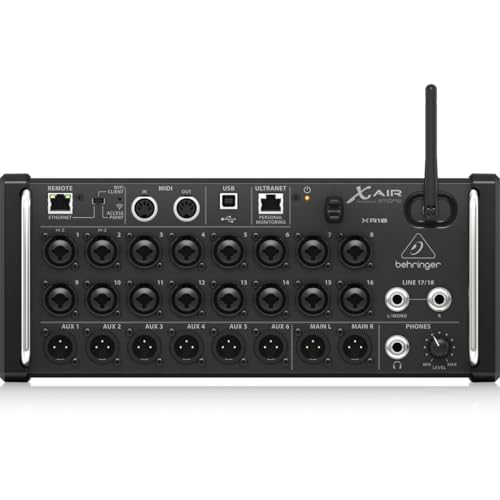
- 18 channels and 12 buses
- Tablet control with built-in Wi-Fi
- 18 x 18 USB recording interface
Best For: Churches needing flexible remote mixing and multichannel recording
Best Powered Mixer

- 6000W peak powered mixer
- 14 mic preamps with phantom power
- Dual 7-band EQ and USB/SD recording
Best For: Large church events needing integrated power and flexible inputs
Best Slim Bluetooth Board

- 16-channel mixer with Bluetooth
- USB audio and MP3 recording
- Slim design with phantom power
Best For: Small churches combining live sound, playback, and streaming
Best Compact Powered Option
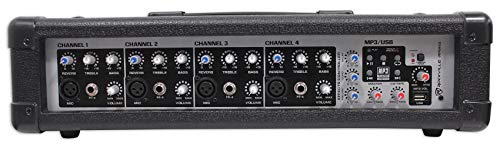
- Four-channel powered mixer
- 1800W peak power listed
- USB, AUX, effects, and phantom power
Best For: Small churches with simple, portable sound systems
Compact Church Mixer

- Four XLR inputs with selectable 48V phantom power
- Bluetooth, USB playback, and USB audio interface
- 3-band EQ plus 16 built-in DSP effects
Best For: Small worship setups and basic live sound
Full-Band Church Console
W IN-MIX DX16 16-Channel Mixer

- 14 combo inputs plus 2 stereo channels
- 99 DSP effects and 7-band master EQ
- Bluetooth, USB recording, and 48V phantom power
Best For: Full worship bands and larger church productions
Flexible Worship Board

- Eight XLR and 1/4-inch input channels
- USB playback and recording plus Bluetooth
- PFL monitoring, 3-band EQ, reverb, and delay
Best For: Small to midsize churches and livestream-friendly setups
Feature-Rich Pick
16-Channel Mixer with 99 DSP Effects

- 16 channels with independent gain, EQ, AUX, PAN, and mute controls
- 99 DSP effects and 7-band main-output EQ
- Bluetooth, USB playback and recording, plus 48V phantom power
Best For: Churches needing extensive input capacity and built-in sound-shaping tools
Compact Value Pick
FULUODE 8-Channel Mixer with Bluetooth

- Eight channels for microphones, instruments, and other sources
- Bluetooth 5.0, MP3/USB input, LED display, and reverb
- Slim 1.77-inch profile with a 3.3 kg listed weight
Best For: Smaller church rooms and portable multipurpose sound setups
Live-Service Control Pick
16-Channel Mixer with Mute Function

- Individual channel mutes, 3-band EQ, gain, and fader controls
- 99 DSP effects with reverb, delay, and ambience
- Bluetooth, U-disk playback, 48V phantom power, and 7-band master EQ
Best For: Live worship teams that need fast muting and flexible playback control
Best Digital Control – Behringer X AIR XR18
For churches seeking an audio mixer for church sound with flexible remote control, the Behringer X AIR XR18 combines 18 channels, tablet operation, and programmable MIDAS-designed preamps in a compact digital format. Its built-in Wi-Fi and bidirectional USB interface support live mixing and recording workflows.
Best For: Churches that want tablet-controlled mixing, multiple microphone inputs, and direct USB recording.
Pros:
- 18-channel, 12-bus design supports complex live setups.
- 16 programmable MIDAS-designed mic preamps provide flexible input control.
- Built-in tri-mode Wi-Fi enables direct tablet operation without an external router.
- 18 x 18 bidirectional USB interface supports recording and playback.
Cons:
- Requires a tablet or compatible device for remote mixing.
- It is a digital mixer rather than a powered mixer, so separate amplification is needed.
The XR18 is a strong fit when a worship team needs many inputs and remote control from the sanctuary or platform. Its feature set is more advanced than a basic analog board, making setup and operator familiarity important.
Best Powered Mixer – Rockville RPM1470
The Rockville RPM1470 is a practical audio mixer for church sound when you need substantial speaker power and traditional front-panel control. It combines 14 XDR2 mic preamps, dual 7-band graphic EQs, built-in effects, USB and SD recording, and Bluetooth playback.
Best For: Larger church events and fixed or mobile setups that need an integrated powered mixer for speaker systems.
Pros:
- Delivers 750W RMS per channel at 4 ohms, with 6000W peak power listed.
- Includes 14 mic preamps with +48V phantom power for condenser microphones.
- Dual 7-band graphic EQs allow separate main and monitor shaping.
- USB, SD, and Bluetooth features support playback and recording.
Cons:
- At 28.9 pounds, it is less convenient to transport than a compact mixer.
- Its powered design may be unnecessary if the church already uses separate amplifiers.
Choose the RPM1470 when built-in amplification and hands-on controls matter more than tablet-based operation. The effects and independent EQ sections can help adapt the system to different rooms and service formats.
Best Slim Bluetooth Board – XTUGA CT160
For churches wanting an affordable, versatile audio mixer for church sound, the XTUGA CT160 offers 16 channels, Bluetooth playback, USB connectivity, and +48V phantom power. Its slim build suits compact sound desks, streaming stations, and mobile ministry setups.
Best For: Small churches and ministry teams handling live sound, streaming, podcasting, or playback from phones and computers.
Pros:
- 16-channel layout supports multiple microphones and external sources.
- Bluetooth works with phones, computers, and other compatible devices.
- Includes +48V phantom power, USB audio, and built-in MP3 playback and recording.
- Slim construction with sealed rotary knobs is suited to compact workspaces.
Cons:
- The supplied details do not identify a built-in power amplifier.
- Its broad feature set may require operator familiarity for church volunteers.
The CT160 is a flexible choice when wireless playback and computer-based audio are part of the church workflow. It is especially useful for teams that combine worship sound with livestreaming or recorded content.
Best Compact Powered Option – Rockville RPM45
The Rockville RPM45 is a compact audio mixer for church sound setups with four microphone channels and built-in amplification. It adds USB, AUX, effects, phantom power, and separate tone controls for small services, presentations, and community events.
Best For: Small churches needing a portable powered mixer for a limited number of microphones and straightforward events.
Pros:
- Four XLR and 1/4-inch TRS inputs accommodate microphones and instruments.
- Provides 225W RMS per channel at 8 ohms, with 1800W peak power listed.
- Includes USB, RCA AUX, effects loop, and recording output connections.
- Echo, delay, reverb, bass, treble, and channel volume controls support basic sound shaping.
Cons:
- Four channels may be limiting for larger worship teams or multiple speakers.
- It weighs 19 pounds, so it is portable but not ultralight.
The RPM45 makes sense for smaller rooms where simplicity and integrated amplification are priorities. Its limited channel count is best suited to lean setups rather than full worship bands or multi-mic productions.
Compact Church Mixer – 6-Channel Bluetooth DSP Mixer
For buyers seeking an audio mixer for church sound in a compact format, this six-channel board combines microphone inputs, Bluetooth playback, USB functionality, phantom power, and onboard effects. It can suit smaller worship setups, spoken-word events, and music playback where straightforward analog controls are useful.
Best For: Small churches, worship teams, karaoke, and basic live sound setups needing Bluetooth and USB playback.
Pros:
- Four XLR inputs support microphones, including condenser microphones with selectable 48V phantom power.
- Bluetooth and USB functions allow wireless playback, flash-drive playback, and mixing or recording through USB.
- Three-band EQ, individual faders, and 16 DSP effects provide useful control over vocals and instruments.
Cons:
- Six channels offer less input capacity than larger mixers for full bands or expanded church productions.
- The listed warranty is limited to 90 days.
- Its analog design may require careful setup to avoid operation-related no-sound issues.
This mixer is a practical choice when a church needs core microphone connectivity and built-in playback effects without moving to a larger console. Confirm that six inputs and its analog workflow match the service’s equipment needs.
Full-Band Church Console – W IN-MIX DX16 16-Channel Mixer
For larger worship teams and production crews, this 16-channel audio mixer for church sound provides substantially more input capacity than compact boards. Its combo inputs, stereo channels, channel EQ, extensive DSP effects, USB recording, and Bluetooth playback support live services, bands, and recording workflows.
Best For: Churches running full bands, multiple vocalists, live events, and more demanding sound setups.
Pros:
- Fourteen XLR/6.35mm combo inputs plus two stereo channels accommodate microphones, instruments, and keyboards.
- Each channel includes independent gain and three-band EQ, while the master section adds a seven-band EQ.
- Ninety-nine DSP effects, Bluetooth playback, USB recording, and 48V phantom power expand its live and recording capabilities.
Cons:
- The larger chassis requires more rack, table, or transport space than smaller mixers.
- XLR cables are sold separately.
- The listed warranty information includes a 30-day refund period and one-year warranty, so buyers should confirm coverage terms.
The DX16 is the strongest fit of these options for a church that needs room to connect a full ensemble and manage multiple sources. Its larger layout and feature set are most worthwhile when the extra channels and routing flexibility will be used regularly.
Flexible Worship Board – 8-Channel USB Bluetooth Mixer
This eight-channel audio mixer for church sound offers a middle ground between compact boards and larger consoles. It includes XLR and 1/4-inch connectivity, USB playback and recording, Bluetooth, headphone monitoring, channel-level controls, and simple reverb and delay effects for worship services and small events.
Best For: Small to midsize churches, livestreams, meetings, weddings, and worship teams needing flexible monitoring and playback.
Pros:
- Eight channels accept XLR and unbalanced 1/4-inch connections, with REC and TAPE input/output options.
- USB recording and playback, Bluetooth streaming, and computer or mobile connectivity support varied church media needs.
- Each channel provides gain, FX, PFL, three-band EQ, a fader, and peak indication, with headphone monitoring available.
Cons:
- Eight channels may be limiting for large choirs, full bands, or complex stage setups.
- The listed effects are reverb and delay, offering less variety than mixers with larger DSP libraries.
- As a corded mixer, it requires access to mains power during operation.
This model is a balanced option for churches that want more inputs and monitoring controls than a basic compact mixer without stepping up to a 16-channel console. Its USB, Bluetooth, and recording features are especially useful for services that combine live sound with media playback or streaming.
Feature-Rich Pick – 16-Channel Mixer with 99 DSP Effects
For churches seeking an audio mixer for church sound with extensive routing and tone-shaping options, this 16-channel console offers independent channel controls, built-in effects, and flexible playback connections. Its 7-band main-output EQ can help tailor the overall mix for different services and spaces.
Best For: Churches needing many inputs, built-in effects, Bluetooth playback, and USB recording in one console.
Pros:
- 16 channels with XLR and stereo line inputs for microphones, instruments, and other sources.
- 99 DSP effects plus 3-band channel EQ and 7-band main-output EQ.
- 48V phantom power, PAD switching, Bluetooth, USB playback, and recording support.
- Individual channel mute buttons allow quick silencing during services or events.
Cons:
- The broader feature set may require more setup time than a basic mixer.
- It is a corded 110-volt console rather than a compact portable mixer.
This is a versatile option for worship teams and church production setups that need room for multiple microphones and instruments. The combination of channel control, effects, connectivity, and recording functions makes it suitable for services, rehearsals, and additional church events.
Compact Value Pick – FULUODE 8-Channel Mixer with Bluetooth
This FULUODE console is a practical audio mixer for church sound when the setup calls for eight channels, straightforward playback, and a slim enclosure. It supports microphones, instruments, and wireless or wired connections for smaller services, meetings, and community events.
Best For: Smaller churches and multipurpose rooms that need an uncomplicated eight-channel mixer with Bluetooth and USB features.
Pros:
- Eight-channel design supports microphones, instruments, and other connected sources.
- Includes 48V phantom power for compatible condenser microphones.
- Built-in Bluetooth 5.0, MP3/USB input, LED display, and reverb functionality.
- Ultra-thin design measures about 1.77 inches high and weighs 3.3 kg.
Cons:
- Eight channels provide less expansion room than the 16-channel alternatives.
- The supplied details do not specify advanced channel-by-channel EQ controls.
- Listed for 110V power with an American plug, which may limit installation flexibility.
With its slim profile and essential playback and microphone features, this mixer fits smaller church sound systems where space and channel count are priorities. It is also suited to conferences, campus activities, karaoke, and live music applications.
Live-Service Control Pick – 16-Channel Mixer with Mute Function
Church teams comparing an audio mixer for church sound may appreciate this 16-channel console for its combination of individual mute buttons, built-in effects, and flexible music playback. The master 7-band graphic EQ and per-channel controls provide practical ways to shape a live service mix.
Best For: Live worship, rehearsals, and small venues that need fast track muting, wireless playback, and multiple input options.
Pros:
- 16 channels with individual gain, 3-band EQ, fader, and mute controls.
- 99 DSP effects include reverb, delay, and ambience options.
- Bluetooth and U-disk playback with an onboard display and transport controls.
- 48V phantom power supports compatible condenser microphones and other input sources.
Cons:
- The 8.26 kg listed weight is less convenient for frequent transport.
- Bluetooth range is listed at up to 33 feet, so placement matters.
- The supplied details do not identify supported software updates.
This model is particularly useful when a church needs quick control during live mixing. Its channel mutes, dedicated EQ, effects, and playback controls support worship services while retaining enough input capacity for microphones, instruments, and auxiliary audio.
How We Picked the Best Audio Mixer for Church Sound
We focused on the features that matter most in worship spaces: usable input count, microphone preamp capability, phantom power, EQ, onboard effects, USB or Bluetooth playback, monitor flexibility, and overall setup practicality. We also considered whether each mixer suits a volunteer-operated system, a portable ministry rig, or a more advanced installation.
Powered mixers receive special consideration because they can simplify smaller systems by combining mixing and amplification in one chassis. Digital mixers stand out when remote control, scene recall, multiple monitor mixes, and precise processing are priorities.
Quick Comparison
| Best For | Recommended Mixer Type | Why It Helps |
|---|---|---|
| Small churches and speech-focused services | Compact analog mixer | Simple controls and quick setup |
| Portable worship teams | Powered mixer | Combines mixing and amplifier functions |
| Multiple monitor mixes | Digital mixer | Greater routing and processing flexibility |
| Streaming and recorded services | USB-equipped mixer | Convenient computer audio connection |
| Growing bands and larger teams | 16-channel or larger model | More inputs for microphones and instruments |
Key Buying Factors for an Audio Mixer for Church Sound
Input Count and Connection Types
Count every vocal microphone, pulpit microphone, instrument, playback source, and livestream feed you currently use, then leave room for growth. XLR microphone inputs are essential for most church systems, while line inputs help accommodate keyboards, media players, and other sources.
Powered Versus Unpowered Design
A powered mixer can drive compatible passive speakers and reduce the number of separate components. However, an unpowered mixer paired with external amplifiers or powered speakers often provides more flexibility for larger rooms, distributed speakers, and future upgrades.
Digital Control and Signal Processing
Digital consoles can provide compression, gates, parametric EQ, effects, scene saving, and remote control from a tablet. These features are valuable when one operator manages several sources, but they may require more training than a traditional analog layout.
Phantom Power, Effects, and Monitoring
Look for switchable 48V phantom power if you use condenser microphones or active direct boxes. Reverb can improve vocals, while independent monitor outputs help performers hear themselves without changing the house mix. Confirm that the mixer offers enough buses and outputs for your stage setup.
Playback, Recording, and Livestreaming
Bluetooth and USB can simplify music playback and computer recording, but they should not replace dependable wired connections for critical sources. For streaming, verify how the USB interface routes the main mix and whether separate control of the stream mix is available.
Who Should Buy Which Audio Mixer for Church Sound?
Choose a Compact Analog Mixer If…
You need straightforward controls for a small sanctuary, chapel, classroom, or occasional event. Analog models are often easier for volunteers to understand and troubleshoot quickly.
Choose a Powered Mixer If…
You run a portable setup with passive speakers and want fewer separate components. Confirm the amplifier’s output matches your speakers’ impedance and power requirements.
Choose a Digital Mixer If…
Your church needs several monitor mixes, repeatable service presets, remote adjustment, or more detailed vocal and instrument processing. Allow time for training and network setup.
Choose a Larger 16- or 18-Channel Model If…
You have a full worship band, multiple vocalists, drum microphones, media playback, or plans to expand. Extra inputs cost less than replacing an undersized mixer later.