
Choosing the best 3D printer for ceramic clay requires more than comparing print speed. Clay extrusion, material compatibility, build volume, leveling, drying, and firing requirements all affect the finished piece.
This roundup includes dedicated ceramic printers, conventional 3D printers, printable clay materials, and useful forming tools so you can match your budget and workflow to the right setup.
Best 10 3d Printer for Ceramic Clay Picks for 2026
Best Dedicated Clay Printer

- Purpose-built for ceramic clay and slurry
- Electric feeding requires no air compressor
- 250 × 250 × 260 mm build volume
Best For: Beginners and makers printing clay regularly
Best Ceramic-Look Filament
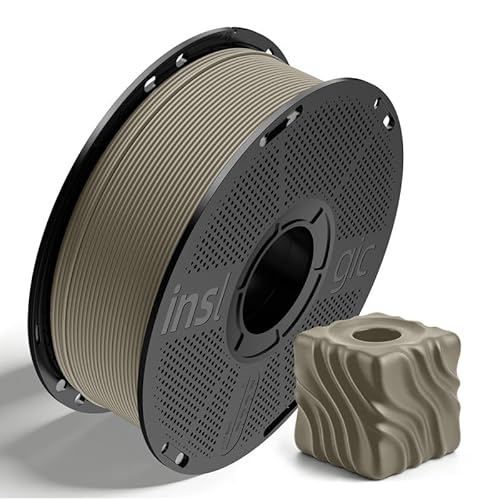
- Clay-colored matte finish
- Helps hide visible layer lines
- Pre-dried 1.75 mm filament
Best For: FDM decorative models and pottery-style projects
Best Fine-Detail Resin Option
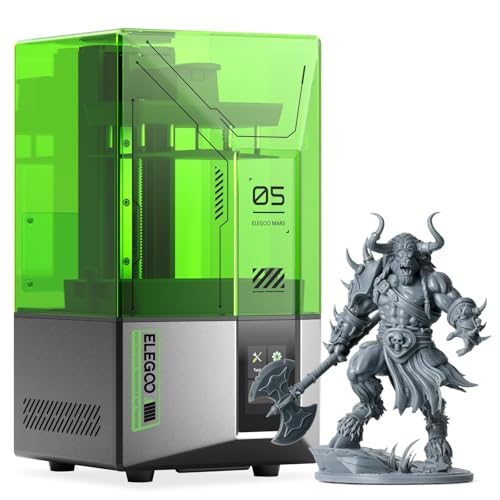
- 4K mono LCD for detailed resin prints
- One-click automatic leveling
- Built-in residue and overheat protection
Best For: Detailed resin models, not fired ceramic clay
Best High-Fire Printing Clay

- Fires from Cone 6 to Cone 10
- 22% water content for printing
- White ivory body accepts glazes well
Best For: Fired and glazed ceramic 3D-printing projects
Best for Comfort
TRONXY Moore 2Pro Clay 3D Printer

- Supports clay and ceramic slurry
- 250 x 250 x 260 mm build size
- Electric feeding system needs no compressor
Best For: Direct ceramic-clay and liquid-deposition printing
Best High-Speed Option

- 600mm/s CoreXY printing
- Automatic bed leveling
- 280°C direct-drive extruder
Best For: Fast, versatile general-purpose printing
Best Dedicated Clay Choice

- Designed for ceramic slurry and clay
- No air compressor required
- 250 × 250 × 260mm build area
Best For: Ceramic artists printing liquid materials
Best Easy-Use Filament Alternative

- 600mm/s CoreXY printing
- Fully automatic leveling
- 280°C direct extruder
Best For: Easy, fast general-purpose printing
Best Dedicated Clay Printer – TRONXY Moore 2 Pro
If you need a true 3d printer for ceramic clay, the TRONXY Moore 2 Pro is purpose-built for liquid deposition molding. It supports clay, ceramic slurry, red porcelain, and other flowable materials, with a 250 × 250 × 260 mm build volume and electric feeding that eliminates the need for an air compressor.
Best For: Beginners and makers who want a dedicated ceramic-clay printer with a straightforward electric feeding system.
Pros:
- Designed specifically for clay, ceramics slurry, and porcelain materials.
- Electric putter feeding system avoids requiring an air compressor.
- Adjustable layer thickness from 0.3 to 3 mm and speeds up to 40 mm/s.
- Dual-axis metal guide rails support smooth, stable operation.
Cons:
- Its 22-pound size and dedicated design may require substantial workspace.
- Maximum build size is limited to 250 × 250 × 260 mm.
Choose this model when ceramic clay is your central use case rather than an occasional experiment. Its dedicated material support and compressor-free feeding make it the most directly aligned option here.
Best Ceramic-Look Filament – Inslogic Matte PLA
Although it is not ceramic clay, Inslogic Matte PLA is a practical alternative for anyone searching for a 3d printer for ceramic clay and wanting a pottery-style appearance from a standard FDM printer. Its clay-colored matte finish helps reduce visible layer lines and is supplied pre-dried for easier extrusion.
Best For: FDM users who want decorative models, vases, or prototypes with a subdued ceramic-like finish without printing actual clay.
Pros:
- Matte, non-reflective surface creates a pottery-style visual effect.
- Texture helps conceal layer lines on decorative prints.
- Pre-dried and vacuum-sealed with desiccant to help reduce moisture issues.
- Compatible with many FDM printers, including Bambu, Creality, Ender, and Prusa.
Cons:
- It is PLA filament, not ceramic clay or a ceramic slurry.
- Requires an FDM printer and the supplied temperature range for printing.
This is the better fit when appearance matters more than genuine ceramic processing. It offers an accessible clay-colored finish, but finished parts will remain PLA rather than fired pottery.
Best Fine-Detail Resin Option – ELEGOO Mars 5
The ELEGOO Mars 5 is not a ceramic-clay printer, but it may interest shoppers comparing technologies under the 3d printer for ceramic clay category. This resin model focuses on detailed prints, using a 4K monochrome LCD, automatic leveling, residue detection, and one-click self-checks.
Best For: Users prioritizing small, highly detailed resin models instead of direct clay extrusion.
Pros:
- 4K mono LCD and COB light source target fine detail and texture reproduction.
- One-click automatic leveling simplifies initial setup.
- Residue detection and resin-shortage alerts can help prevent printing problems.
- Overheat protection stops printing if LED temperature exceeds 80°C.
Cons:
- It uses resin rather than ceramic clay or ceramic slurry.
- Its supplied notes do not indicate ceramic-material compatibility.
Consider the Mars 5 only if your priority is resin detail and automated setup. For actual ceramic-clay extrusion, a dedicated clay printer such as the TRONXY is the more appropriate choice.
Best High-Fire Printing Clay – SIO-2 PRAI 3D Ceramic Clay
For shoppers choosing materials for a 3d printer for ceramic clay, SIO-2 PRAI 3D is a ready-to-use high-fire stoneware option. It is formulated for 3D printing, contains 22% water, and fires from Cone 6 to Cone 10 while accepting glazes across its white ivory surface.
Best For: Ceramic artists and pottery makers who need printable clay for fired, glazed stoneware projects.
Pros:
- High-fire range of Cone 6–10, or 1240°C to 1300°C.
- 22% water content is optimized for consistent 3D printing.
- White ivory fired finish can enhance glazes and coloring oxides.
- Works with brass, metal, or plastic nozzles and multiple nozzle sizes.
Cons:
- Finer 0.4–0.6 mm nozzles may require a high-pressure compressor.
- At 3.5 pounds, the package may be limited for larger projects.
- Printed pieces still require appropriate drying and kiln firing.
This is the most relevant material purchase in the roundup for genuine ceramic printing. Match the clay to a compatible extrusion system and select nozzle size according to the printer’s pressure and detail capabilities.
Best Filament Option – ELEGOO Neptune 3 Pro
The ELEGOO Neptune 3 Pro is a conventional filament printer rather than a dedicated 3d printer for ceramic clay. Its 225 x 225 x 280 mm build volume, direct-drive extruder, and auto-leveling system make it a practical choice for PLA, TPU, PETG, and ABS projects, but it is not designed to extrude ceramic slurry.
Best For: Makers who want an easy-to-set-up filament printer for general prototypes, tools, and models—not direct ceramic-clay printing.
Pros:
- 36-point auto bed leveling simplifies first-layer setup.
- Direct-drive extruder supports PLA, TPU, PETG, and ABS.
- Power-loss resume and filament runout detection add convenience.
- Dual lead screws provide stable Z-axis movement.
Cons:
- Not intended for ceramic clay, slurry, or liquid-deposition printing.
- Its build volume is smaller than some specialized clay-printing setups.
Choose this model only if your priority is standard filament printing. For actual ceramic clay extrusion, a purpose-built clay printer is the more appropriate option.
Best Manual Clay Tool – Medonala Clay Extruder
The Medonala Clay Extruder is a manual shaping tool, not a programmable 3d printer for ceramic clay. It can press ceramic clay, air-dry clay, and polymer clay through interchangeable spacers, making it useful for creating consistent rods and decorative profiles by hand.
Best For: Pottery students, classroom projects, and makers who need manually extruded clay shapes rather than automated 3D printing.
Pros:
- Includes 14 model spacers for different clay shapes.
- Works with ceramic clay, air-dry clay, and polymer clay.
- Aluminum and stainless-steel construction is designed for heavy use.
- Manual operation needs no compressor or electronic setup.
Cons:
- It does not automate layers or create 3D-printed objects.
- Manual extrusion requires hands-on effort.
This is a useful companion tool for clay work, but shoppers specifically seeking automated ceramic-clay printing should look for a dedicated clay printer with a feeding system.
Best for Comfort – TRONXY Moore 2Pro Clay 3D Printer
The TRONXY Moore 2Pro is the strongest match here for anyone shopping for a 3d printer for ceramic clay. This liquid-deposition printer has a 250 x 250 x 260 mm build area, supports clay and ceramic slurry, and uses an electric putter feeding system instead of an air compressor.
Best For: Beginners and studios seeking a purpose-built ceramic-clay printer with a relatively straightforward electric feeding system.
Pros:
- Designed for clay, ceramics slurry, red porcelain, and other flowing materials.
- 99% pre-installed and supplied with two packs of clay.
- Electric putter eliminates the need for an air compressor.
- Supports layer thickness from 0.3 to 3 mm and speeds up to 40 mm/s.
Cons:
- Its 250 x 250 x 260 mm build size limits very large pieces.
- Clay printing still requires material preparation and post-processing.
- The supplied notes do not specify software compatibility or firing guidance.
Among these three products, the Moore 2Pro is the clear choice for direct ceramic-clay printing. Its dedicated material support and compressor-free feeding system make it more relevant than a filament printer or manual extruder.
Best High-Speed Option – FLASHFORGE AD5M
The FLASHFORGE AD5M is a fast, versatile choice for makers who are comparing a 3d printer for ceramic clay but also need a machine for conventional filament printing. Its 280°C direct-drive extruder, automatic leveling, and open-source design support flexible material experimentation, although the supplied specifications do not identify it as a dedicated clay printer.
Best For: Makers, educators, engineers, and print farms prioritizing speed and versatility.
Pros:
- CoreXY design supports speeds up to 600mm/s with 20,000mm/s² acceleration.
- One-click automatic leveling helps produce consistent first layers.
- 280°C direct-drive extruder, quick-swap nozzles, and 0.25–0.8mm nozzle options.
- Remote monitoring, power-loss recovery, and filament runout detection add convenience.
Cons:
- It is not presented in the supplied notes as a purpose-built ceramic clay printer.
- An enclosure is optional rather than included.
Choose the AD5M when high-speed general-purpose printing matters more than dedicated liquid-clay extrusion. For ceramic work specifically, verify material compatibility before buying.
Best Dedicated Clay Choice – TRONXY Moore 2 Pro
The TRONXY Moore 2 Pro is the most direct match for shoppers seeking a 3d printer for ceramic clay. It is designed for liquid deposition molding and supports clay, ceramic slurry, red porcelain, and other flowing materials in a 250 × 250 × 260mm build area.
Best For: Ceramic artists and makers who want a dedicated liquid-material printing system.
Pros:
- Purpose-built for clay, ceramic slurry, red porcelain, and similar liquid materials.
- Foldable frame simplifies setup and storage.
- Electric putter eliminates the need for an air compressor.
- Power-outage resume, dual-axis metal guide rails, and a 32-bit silent board support practical operation.
Cons:
- Maximum listed print speed is 40mm/s, far below the Flashforge models.
- Its 40-pound weight and 16 × 16 × 20-inch dimensions require dedicated space.
- The notes mention microwave-kiln use, but firing suitability depends on the specific clay and finished piece.
For genuine ceramic-clay printing, the Moore 2 Pro is the clearest fit in this group. Its slower speed is a reasonable tradeoff for dedicated liquid-material handling.
Best Easy-Use Filament Alternative – FLASHFORGE Adventurer 5M
The FLASHFORGE Adventurer 5M is a convenient high-speed filament printer to consider alongside a 3d printer for ceramic clay. Automatic leveling, a 280°C direct extruder, and quick nozzle changes make it approachable for general projects, but the supplied information does not indicate dedicated support for clay or ceramic slurry.
Best For: Beginners and makers who value automatic setup, speed, and remote monitoring.
Pros:
- CoreXY structure delivers up to 600mm/s travel speed and 20,000mm/s² acceleration.
- Fully automatic leveling simplifies first-layer preparation.
- Quick 3-second nozzle changes and optional 0.25–0.8mm nozzle sizes support different print needs.
- Dual-sided PEI platform, vibration compensation, and app monitoring improve workflow convenience.
Cons:
- It is not identified as a clay or ceramic printer in the supplied notes.
- The 220 × 220 × 220mm build volume is smaller than the TRONXY Moore 2 Pro’s listed volume.
The Adventurer 5M is a strong general-purpose alternative, not a direct substitute for a clay-focused machine. Select it if speed and ease of use outweigh ceramic-material capability.
How We Picked the Best 3d Printer for Ceramic Clay Options
We compared the selected products by their role in a ceramic-printing workflow, including dedicated clay printers, standard filament and resin machines, ceramic clay, and hand tools. Key considerations included extrusion or deposition method, usable build area, material compatibility, setup requirements, automation, temperature capability, and the kind of projects each product can realistically support.
Dedicated machines such as the TRONXY Moore 2 Pro are designed for clay deposition and are the most direct choice for printable ceramics. Conventional printers from ELEGOO and FLASHFORGE are better suited to plastic prototypes, molds, patterns, or general-purpose fabrication. Ceramic clay and manual extrusion tools can complement either approach but do not replace a complete printer.
Quick Comparison
| Product type | Best for | What to check |
|---|---|---|
| Dedicated clay printer | Direct ceramic forms and pottery prototypes | Clay consistency, cleaning, firing compatibility |
| Filament printer | Molds, templates, and non-ceramic models | Extruder temperature, build volume, leveling |
| Resin printer | Small, highly detailed masters | Resin handling, post-processing, and size limits |
| Printable ceramic clay | Material replenishment for clay systems | Firing range, moisture, shrinkage, and cone rating |
| Clay extruder | Manual forming and small creative projects | Nozzle options, pressure, and clay preparation |
Key Buying Factors for a 3d Printer for Ceramic Clay
Deposition Method and Clay Handling
A ceramic printer must move prepared clay consistently without clogging or collapsing the print. Look for a dedicated feeding system, controllable extrusion, suitable nozzle options, and straightforward cleaning. Clay moisture and stiffness are just as important as printer specifications.
Build Volume and Stability
Check the actual build dimensions against your intended vessels, sculptures, or tiles. Larger prints need a rigid frame and reliable motion system, while tall forms may require careful speed and wall-thickness adjustments to prevent slumping.
Material and Firing Requirements
Confirm that the clay is intended for 3D printing and matches your kiln process. High-fire materials may require specific cone ranges, drying time, and firing schedules. Account for shrinkage and test small forms before committing to a large design.
Automation and Setup
Auto-leveling, quick assembly, removable components, and accessible controls can reduce setup time. However, automation cannot compensate for poorly prepared clay or unsuitable supports, so prioritize a manageable overall workflow.
Who Should Buy Which 3d Printer for Ceramic Clay?
Choose a dedicated TRONXY clay printer if your main goal is direct ceramic extrusion and you are prepared to manage clay preparation, drying, and kiln firing. Select SIO-2 PRAI or a comparable printable ceramic material when you already have a compatible deposition system and need a known high-fire clay option.
A FLASHFORGE or ELEGOO filament printer is a better fit for makers who want fast, versatile machines for prototypes, molds, jigs, or general plastic printing rather than direct clay printing. The ELEGOO Mars 5 is most appropriate for small, detailed resin masters. A Medonala clay extruder suits hands-on experimentation and simple manual forms, especially when you do not need automated printing.